Feeds:
Posts
Comments

Fruit or Fruitless

Print by Missy Mohn Schwartz

In how many ways do I have to be told that the essence of walking after Christ is birthed in the Spirit. This is an inside-out faith, not the outside-in. The law was created to initiate the “external” expression of faithfulness. The Messiah finished this work by planting it within.

Galatians 5:22-23
But the fruit of the Spirit is love, joy, peace, patience, kindness, goodness, faithfulness, gentleness and self-control. Against such things there is no law.

If I can operate in the center of love, joy, peace, etc. then the law is unnecessary because I wouldn’t break the essential laws (10 commandments at the least). One doesn’t lie or covet or kill someone we love or cherish. The gentle soul does not rage or participate in sexual orgies. Self-control brings all things under its umbrella.

At the same time, none of these Spirit fruits can be manufactured externally alone. I can’t act in a patient way without being patient. I can’t exhibit kindness without knowing what kindness is . . . or goodness. . . or peace. Love (in this context) is not just a that girly-boyfriend feeling, it’s “agape” and carries the deepest of meanings and expressions. There are inner motives that drive these fruits of the Spirit. They are fruits that must come directly off the tree of life and the tree of knowledge of good and evil.

And as these fruits become ripe within, they become ready for harvest. And when they are harvested, they are distributed freely to all those around us. . . slave or free, gay or straight, black or white or brown or red or yellow or mixed media, Muslim or Hasidim, Mormon or Witnesses, young or old, male or female, . . .

If we are fruitless, then there is nothing to harvest and the only protection we have, the only way to curb our less admirable desires, is the law. First, there is the spiritual law that God gave as a covenant to the people. But, if that fails, then there is the secular law. Neither is particularly known for mercy or grace.

Perhaps we should be more like those cliche mothers who are reaching out encouraging others to “Eat, Eat, Eat,” or like Jesus, “Take, eat; this is My body.” [Matthew 26:26b]


Live By the Spirit

Easy, peasy. Just live by the Spirit and all shall be well. Why? Because the Spirit can crowd out my desire for all the other stuff. The Spirit is big, a consuming fire, a powerhouse, a counselor, a wise and holy One. So what’s the problem? Apparently, the Spirit is also a bit finicky about the conditions of its dwelling place.

Galatians 5:16-17a
So I say, live by the Spirit, and you will not gratify the desires of the sinful nature. For the sinful nature desires what is contrary to the Spirit, and the Spirit what is contrary to the sinful nature.

Photo by Cherie Stangis

If I were to compare my inner habitat to a house with many rooms, I think, most of the rooms would be considered pig pens while the Spirit is hanging out in one of the closets. Don’t get me wrong. I’ve seen this closet. I’ve even been in there. It’s immaculate, orderly, clean, and full of light and color. Additionally, it’s not unlike the Tardis from Dr. Who: once I step in there, it’s a lot bigger on the inside than it looks from the outside.

All right, it might not be quite as bad as that. I mean, there have been seasons of my life, when the Spirit had an expanded domicile into some of the other rooms, but I haven’t been very cooperative and a lot of those rooms have gone back to their original condition. You know how it is, the Spirit wants to paint a room yellow and I’m in the mood for red. So what does polite Spirit do? Lets me have a red room with all that goes with it. One difference, the Spirit doesn’t hang in there with me. My choice. My free will. My loss.

Intellectually I understand all of this. If I just let the Spirit re-decorate the whole place, without my interference, it would look and feel so much different. And the more I consider and study, I’m sure a wholly Spirit-run establishment would become a miracle-working address (mountain moving and so forth).

Face it. I still want to be in control (Harumph! As though I have “interior” decorating experience). I’m not that different from the original Sarah (you know the story: “let me show you how to make God’s promise happen with little Hagar here”). [Genesis 16]

Red, green, and black rooms, all stuffed with furniture while windows are covered with heavy blinds, and electronic gizmos sit in every corner. You know, of course, every room has a refrigerator and a pantry too. There’s one room that has nothing in it but disappointments. Another room has chalk boards filled with all the things I’ve said to hurt others. Another room has pictures of people in my past plastered everywhere; I go in there for target practice. But undoubtedly, the biggest room of all is the courtroom. I have my own dais and gavel and when the memories float by, I pound out my judgments. It’s quite crowded and noisy in there.

How do I begin to tackle all of this? Mind boggling. Frightening. HUGE.

Does this sound possible? First, I find my way back to the Spirit Closet and call that “home base” (need to be sure I can get there from anywhere). Then, from there, with the closet light shining out, I will start on the immediate area near the closet. One square foot at a time.

In the organization business, there are only three choices: throw it away, file it, or act on it. Although I know that courtroom is the biggest and hardest room to clean up, I won’t jump in there just yet. I will start smaller and get a little experience behind me, particularly the “throwing away” choice.

If I give over each of these rooms to the Spirit, I know, most of the stuff I’ll find is junk. I’ve been hoarding. I know it. But, confession, I’m pretty sure, when I get to those really messy rooms, I’ll probably need some help. That’s where community comes in. Can I count on you to help?

It’s time for a little Light housekeeping.

A Single Command

Photo by Vincent Rodriguez

Despite the simplicity of the command, there is still quibbling: Who is my neighbor? What is love? What if I don’t love myself? Who am I? What is my purpose? And the next thing we know, the focus is back on me and not about my neighbor at all.

Galatians 5:14
The entire law is summed up in a single command: “Love your neighbor as yourself” [Leviticus 19:18].

Some people have found some peace and revelation by asking the question, “What Would Jesus Do?” By asking this to themselves, they are able to adjust their responses, their behaviors, and so forth. Personally, I don’t really know what Jesus would do, I mean, not really. But I do know, without a doubt, whether or I not I want someone to say or behave toward me as I have done to them.

Here’s what I do for myself out of self-care. I keep myself clean, fed, clothed, and sheltered. I work to earn enough money to provide for my needs as well as several non-essential desires. I choose how to use my time. I entertain myself with people, books, technology, music, daydreams, and outings. On good days, I take care of my body through exercise. I sleep to ensure I am rested. I spend time with my young adult children, relatives, and friends, but pretty much on my terms and time table. These are the outward benefits.

Internally, I am usually kind to myself, I give myself encouragement and pep talks, I pray for my circumstances, friends, and family, I soothe myself, and I forgive myself (although I’m not very good at it).

Nonetheless, is there any reason to withhold any of these things from others? Where is the stumbling block? I think it goes back to judging. I look at others and instead of seeing the “sacred,” I see differences that separate us. I imagine that the same things that comfort me may not comfort them. Or, there’s another voice that complains about their abuse of whatever I might give: money spent on something frivolous, junk food instead of “nutritious” food, alcohol instead of milk, and so forth. I judge before the gift is out of my hands.

Forgive me for putting a silo around myself.

Yeast in Dough

I should write a book: “My Favorite Bible Metaphors.” There are a zillion ways that Jesus used to communicate with the people about faith and the Kingdom of God from seeds to light to fish to sheep to salt to cooking. These word pictures were then passed down through stories. They still work today.

Galatians 5:7, 9
You were running a good race. Who cut in on you and kept you from obeying the truth? . . . “A little yeast works through the whole batch of dough.”

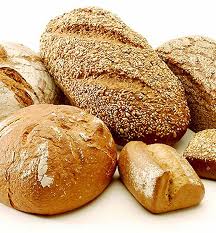
One of my good friends bakes bread several times a week to provide this staple for her family. Her father baked it for their family when she was growing up and it’s a tradition she has continued. Whenever I think of yeast-rising bread, I think of her.

I did my own stint at bread making some years ago. At first, the hand method (which is preferable) and eventually to a bread machine. The smell would envelop our house. I actually gave up the practice because my husband and I were devouring a loaf a day and our waists followed suit. But it might be time, with teens in the house, to return to this simple practice of adding yeast, working dough, watching it rise, and then shaping into a tasty loaf. There’s something a little “zen” about it.

Bread of all kinds is staple for all cultures. Everyone understands the yeast/dough image. It only takes a small amount of yeast to transform bread from flour, salt and water. Yeast affects all the dough. It too transforms itself to have the effect.

As a metaphor, it is a simple message. In Galatians, Paul refers to the “yeast” of a misleading but charismatic preacher who was drawing the original Christ believers back toward Jewish law, particularly circumcision.

It only takes one person to change a group. It only takes one to deadlock a jury. It only takes one to break consensus. It only takes one to undermine a team. It only takes one to start a war. But it also works the other way, it can be the one who motivates a group to higher challenges, or one to bring a family back together, or one to inspire a nation, or one to raise the flag of peace, or one to be the watchman crying out a warning.

Many years ago, I was on a women’s retreat and we were all assigned to a certain discussion group that would meet and discuss the teaching sessions. (For those in the know, this format is used in a variety of parachurch organizations like Cursillo, Walk to Emmaus, Tres Dias, and so forth.) The first day I was sure I was assigned to the wrong group. Each woman came with so much baggage, even the assigned facilitators were a mess. The first couple of discussion sessions were painfully dull or fraught with misunderstandings and confusion. I cried. Can’t anyone see I’m miserable? Can’t I change to that happy group over there? Can’t I be with the fun group on the far side of the room, or the clever group behind us? Finally, God “smacked me up side the head!” And I literally heard a voice from within say, “It’s you! You! You are not being the yeast or the salt.” I had come to that retreat experience with some expectations, not realizing that I wasn’t entering the story. I was sitting back and waiting for story to come to me. When I finally engaged fully and lovingly, everything changed. By the end of that weekend, our group became the most impacted, the most cohesive, warm, and authentic. There was much healing.

Lord, give me courage to be yeast in the right circumstances. And when it’s yeast coming against me, help me jump out of the bowl. 🙂

I am surprised again how so many weighty discourses in the Epistles come back around to the one foundational element that is the under girding of a believer’s life: love. My faith is nothing if it isn’t reflected through the words and actions of love. And not just the actions or words themselves, but the intent.

Galatians 5:6
For in Christ Jesus neither circumcision nor uncircumcision has any value. The only thing that counts is faith expressing itself through love.

I think too many Christians (including me) get caught up in all things “should.” I should be praying more, I should be working with the poor in the inner city, I should be attending church every Sunday, I should be volunteering at the church, I should teach at Vacation Bible School, I should go on a mission trip, I should be tithing and so on and on and on.

The flip side: I should not be watching R rated movies, I should not be cursing, I should not be reading fantasy or horror or literature with bad words in it, I should not be listening to New Age music or Rock and Roll or God forbid–HipHop or Rap, I should not wear a bikini, I should not go out with non-believers, I should not be in debt, I should not buy a 2500 square foot house with 3.5 bathrooms while people are starving in “pick a place,” I should not watch television, and of course, the “should not” list can much longer than the “shoulds.”

Here’s my point. I could do any or all of these things the right way and still miss Jesus. I could follow all the shoulds and the should nots and still be without the peace of Christ. If love is not there binding my heart and soul to the action or inaction, I am kidding myself and the people I serve.

Many of the “shoulds” are important and are examples of how the love of Christ might manifest. And, in the same breath, the “should nots” may be red flags in our lives that our path is being diverted away from a better way. But in an of themselves, they are not the litmus test of my faith.

I want an inner life so rich in Christ that the “should nots” are a non-issue and the “shoulds” are a natural outgrowth of that love, devotion, and relationship with the Spirit within.

Does it matter–our genealogy? our heritage? our family line? In scripture, it’s recorded in many ways as quite significant, from the “begats” in Matthew to the repetitive list of kings and their fathers and their fathers. Am I a child of the promise, a child of the free woman?

Galatians 4:31
Therefore, brothers [and sisters], we are not children of the slave woman, but of the free woman.

Paul goes into a longish discussion of the “figurative” nature of Hagar (the slave woman) and Sarah (the free), who bore children, one “naturally” and the other as the result of a God-promise and power of the Spirit (a supernatural birth). The slave child (and subsequent generations) is born to a time and place in history, while the implication is that the child (and following generations) is of a “new Jerusalem,” a place out of time.

Despite the fact that Sarah and Abraham are usually considered the “father and mother” of the Jews (who we know followed the law), now the focus is on the next step when the Abrahamic children come into their true inheritance. The long-awaited Messiah was part of the promise, the miracle of Isaac. Christ too was born supernaturally. (Isaac was born from an old woman’s barren womb and Jesus from a very young woman’s virginal womb.)

And just so, because I have accepted that same long-promised Messiah as my Messiah too, I become a child of the free woman, the metaphysical, the kingdom of God. I now have a different genealogy than I did before. This is a truer meaning of “new creation.”

“Therefore, if anyone is in Christ, he is a new creation; the old has gone, the new has come!” [II Corinthians 5:17]

I’m not living in this freedom really. It’s positional only, not internalized. It’s head knowledge, not heart knowledge.

It’s like I’m so close to really understanding the enormity of this truth but not quite. It’s a thought butterfly flitting around my head. I can’t quite grab hold of it. But someday I will. And when I do, I will be changed.

Behaviors Can Separate

Paul is really pulling my chain in the entire 5th chapter of I Corinthians. I can’t say I’m going to disassociate with folks who are believers and yet behave badly. I’m too close to behaving badly myself. So what can I glean?

I Corinthians 5:11
But now I am writing you that you must not associate with anyone who calls himself a brother but is sexually immoral or greedy, an idolater or a slanderer, a drunkard or a swindler.

Basically, whether we are believers or not believers, our behaviors will act like the Sorting Hat in the Harry Potter novels. Unconsciously, we tend to either congregate with those who behave similarly or avoid those who don’t. Some behaviors I can simply tolerate. Others I cannot.

I struggle enough with “judging” others without escalating that condition. And yet, if I am personally hurt by someone through one of these negative acts, I don’t think I’d go out of my way to have tea with them either. But I cannot rail against them, for ultimately, I would merely be one of the angry crowd who chased after the woman who was caught in adultery. She had truly done that thing, but Christ offered mercy. Can I do any less?

(This post was started on May 2nd, but not completed until September. Oh well.)