Feeds:
Posts
Comments

Blinding Darkness

I don’t hate anyone. I don’t think I hate anyone. It’s such a strong word, so bitter. It conjures up all kinds of negative feelings, dark looks, hostile language. But of course, I have said “I can’t stand her” or “I can barely tolerate being around him.” Am I any better? Have I split the “hate” hairs?

I John 2:11
But anyone who hates a brother or sister is in the darkness and walks around in the darkness. They do not know where they are going, because the darkness has blinded them.

So, here’s what I know right now. There’s been enough negativity coming out of my mouth, right off the top of my heart, that I’m living in twilight… not darkness, but not light either.

And the twilight is casting shadows in my relationships.

The Last Hour

Oh, there’s lots to be read about the “last hour” or the “last time” or the “end times.” Books and books and books can be found so what can I possibly add. Some speak of the “last dispensation” meaning this period, after Christ, is the last big chance from God for humans to “get it.” Maybe so.

I John 2:18
Dear children, this is the last hour; and as you have heard that the antichrist is coming, even now many antichrists have come. This is how we know it is the last hour.

Clearly, John was worried about this last hour, whether it’s dispensational or just post-apostolic (since he was the last living apostle by the time he wrote this letter). And here we are, still in it: the last hour.

We’re in a time, a human time, that has stretched out for two thousand years and yet, we haven’t come to the end of the hour. Some say we’re in the last five minutes of that hour.

Is it all coming together? Is it the Christian version of 2012? Are we in the wrap-up?

The world is so full of everything: all kinds of teachings and faiths; personalities and predictions; anti-christs and anti-muslims; wars and rumors of wars; cataclysmic weather and heavenly anomalies.

And have I been chosen to walk out the last hour? Have you?

There were those who were chosen to walk in the time of Christ: a time like no other time. And yet, there is still another time: the last hour.

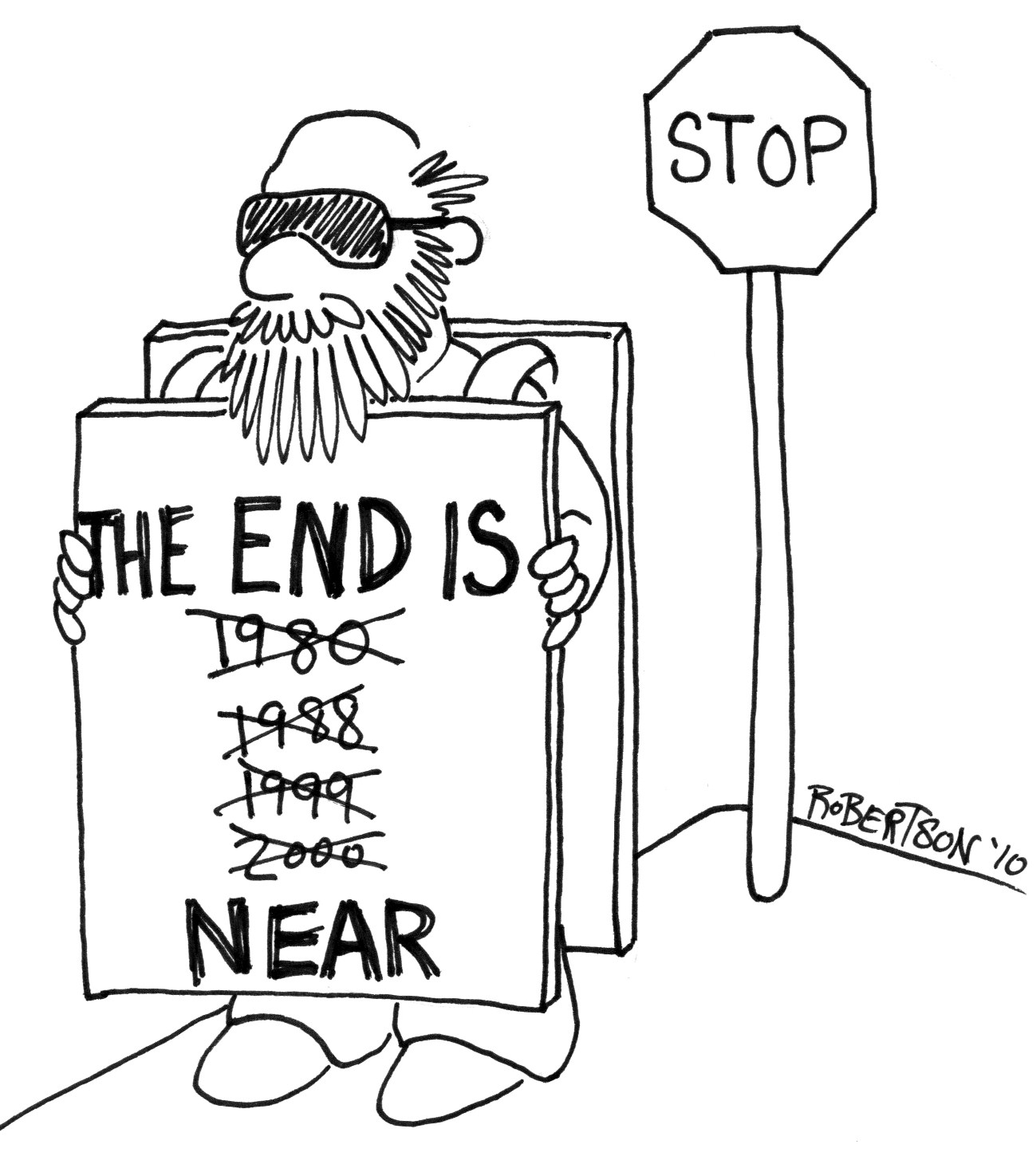
So many times people have proclaimed the end of time. Sometimes, the predictions were ludicrous; sometimes dangerous. More often than not, it seemed like foolish eccentricity.

And yet, and yet. I wonder.

This text caught me off guard today. I’ve always thought of “the world” as those “things” that suck me away from the heart of God. But it’s not the things at all. It’s the verbs in me. Just like we mistake money as evil when it’s the “love of money” that is the problem: so it is with everything else.

I John 2:16
For everything in the world—the cravings of sinful man [or woman], the lust of his [her] eyes and the boasting of what he [she] has and does—comes not from the Father but from the world.
[NIV, 1984]

It’s my intentions, my desires, my personal cravings that drive me into the world. I see and then I want. I listen and then I desire. I remember and then I pine for the source of that memory. I am Edmund (The Lion, the Witch & the Wardrobe).

Craving is an intense desire. Do I crave God or what God can do for me?

Among the definitions for lusting (beyond the obvious sexual context) is a “passionate or overmastering desire or craving, usually followed by a lust for power.” At my age, sex is not much of a driver, but power, well, who am I kidding if I say that has no enticement? In my head, I know it’s the antithesis of all things Christ, and yet I know it’s there, waiting for the cage door to open and spring out. I think it’s married to another secret desire I have had throughout the years: Fame. It has tainted every venture. It has muddied every project. And lust laughs every time.

Boasting has two elements: one is exaggeration and the other is pride. Hence, in subsequent translations of this verse, it is wrapped up in a single phrase, “the pride of life.” It’s simple really, like a two-year old who insists on “doing it alone.” In some ways, I can see the root of it in the disappointments of my early years where there didn’t seem to be anyone to truly guide. My mother was caught in her own web of pride and self-control. From her perspective, if she didn’t do the work, no one would. If she didn’t make it happen, it wouldn’t happen. And this “gift” she passed along with a vengeance.

Again, the head knows all of this intellectually. But the soul cries out to surrender, to trust, to let go, to accept, to embrace contentment, to engage the interior life and not the ephemeral cravings, lustings, and boastings of the ads in the New York Times, the promotions, the landscaped yards, the exquisite furniture, the honor roll students, the wine cellars, the brilliant geeks, the skinny models, the tech toys, the romances, the published authors, the movies, the stars, the travel guides, the vistas, the sailboats, the beach houses, the Old Spice man, and even the full breed dogs and cats. Stupid, right?

I want, I wish, I desire. I crave, I lust, I boast.

When he noticed how the guests picked the places of honor at the table, he told them this parable: “When someone invites you to a wedding feast, do not take the place of honor, for a person more distinguished than you may have been invited. If so, the host who invited both of you will come and say to you, ‘Give this person your seat.’ Then, humiliated, you will have to take the least important place. But when you are invited, take the lowest place, so that when your host comes, he will say to you, ‘Friend, move up to a better place.’ Then you will be honored in the presence of all the other guests. For all those who exalt themselves will be humbled, and those who humble themselves will be exalted.” [Luke 14:7-11]

It’s not the perfection but the imperfections of our lives that make place for the Word, the divine message, the working out of becoming more like Christ. When I try to act like Christ on my own, I crowd out the essence of my formation and transformation within.

I John 1:10
If we claim we have not sinned, we make him out to be a liar and his word has no place in our lives.

Our new church is starting a series of services that are being coined “Deeper.” I like this characterization of the process of becoming, of making place, of re-engineering our interior maps. In order to have a deeper relationship with our God, we must be more courageous–that is, courageous about revealing the truth, or better said, revealing the lies we tell ourselves.

In the deeper place, the sins are equally prevalent as the ones people can see on the outside: the over-eating, the lusting, the coveting, the breaking of laws (both small and large), the deceptions. Those manifestations found root inside first.

The first lie is the one we tell ourselves.

Light and Me

I am no scientist so I don’t have much to add to any discussion about “light” as a phenomenon. I know that light travels very fast and mostly we see light as a reflection. I know light can be a wonderful respite in a dark place and intolerable with a migraine. But am I in relationship with Light?


I John 1:5, 7a
This is the message we have heard from him and declare to you: God is light; in him there is no darkness at all. . . . But if we walk in the light, as he is in the light, we have fellowship with one another, . . .

It’s difficult to talk about light in some new way that hasn’t already been investigated, sermonized, or otherwise been fully covered through exegesis. The only opening in this very crowded marketplace would be something very personal.

So what could that be? How do I engage light in my daily life? The light I read by at night in my bed? The lights of my car when I’m driving at night, less and less securely? The light of the computer screen? The light of candles that dot most of the surfaces in my home? The only time my family doesn’t complain about the candles are those infrequent days when the electricity goes out. There is the light in the refrigerator that I take for granted. There is the light in my stove that has never worked. There is the street light outside that manages to seep through my blinds and twinkle just enough to wake me in the middle of the night. There is the light show from my cable and router, day and night, pulsing out the information bits that stream across my desk.

But all of these lights are outside of me.

Do I know the light within? Is it just an idea, a way of expressing an unknowable, unseen presence? Or is there light in the soul, the heart, the spirit?

Other faiths speak of the light as well. New Age folks as well as various Eastern religions follow the idea that the light within is one of the most powerful energies in the Universe. The Light of the World.

Light to light: heart to heart: human to human: God to human and back again.

Don’t get me wrong, I don’t want to artificially “glow in the dark” which is apparently now possible in animals through some kind of scientific hi jinx. Here’s a story about glowing cats. But I would like to experience the light within in a tangible way. Is that stupid? I suppose some would say I’m talking about “aura” or some other para-psychological phenomenon.

I don’t mean that either. God is Light and God is within. Therefore, light is within and that light must be of greater value than just a nice metaphor.

Relax, everyone. I’m just thinking out loud. Has anyone out there had a Christ-based experience with Light? I’d be interested in your stories.

From the web: (an excerpt from the publication, Sacred Architecture)
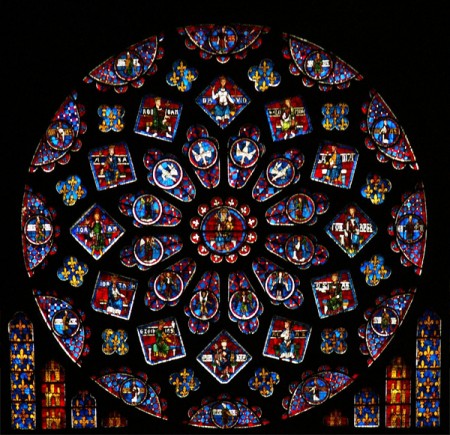
Light, then, formed the “medium and message” for illiterate Christians of the Middle Ages, using narrative and metaphoric imagery to convey the truths of the Faith while steeping the faithful in the spiritually evocative experience of the beauty of God with a mystical atmosphere created by jewel-toned pictures written in light, as well as subtly changing colors in the air and on interior stone walls. The faithful, accustomed to learn aurally, received the message of the Gospel verbally—but with reinforcing visual images created by light, sources of beauty and awe that, it was believed, could mystically connect the eyes of the beholder with the truths depicted, and thus remain lifelong reminders of catechetical knowledge and of the experience of God.

The modern church would do well to rediscover these proven catechetical techniques, filling church interiors with beautiful images of colored light, thereby satisfying human desires for visual stimulation, symbolic representations of theological truths, and the touch of the mystical in prayer. Modern eyes are exposed to so much sophisticated visual imagery; our catechetical efforts should include much more than written words by building upon the rich heritage of visual catechesis displayed by the traditions associated with stained glass windows. The Church teaches that eternal bliss in Heaven is the Beatific Vision—an experience expressed as a “visual” encounter with the knowledge of God, a “light” that fulfills and completes each person’s existence for all eternity. By providing visual and atmospheric beauty that captures the eternal truths in “lights of Faith,” the windows in our churches can teach as before and give an experience of the transcendent to the faithful, to “go beyond mere teaching—unless the sudden instinctive recognition of beauty is the greatest lesson of all.” — Lights of Faith, Stained Glass Windows as Tools for Catechesis by Carol Anne Jones

Who I Ought to Be?

That old Saint Peter can be such a downer. I’m already fighting for air these days and with each little foray in II Peter, I’m given another twirl around the circle of beginnings and endings. My last few years have been working against the “shoulds” and “oughts.” But Peter yanks be back.

II Peter 3:11
Since all these things [universe and earth] are thus in the process of being dissolved, what kind of person ought [each of] you to be [in the meanwhile] in consecrated and holy behavior and devout and godly qualities. . .
[Amplified]

Nope. Just can’t go there today. Grace. Grace. Need more grace today.

The Sacred Command

I thought a quick search on “sacred command” would reveal what this really means. Not so. There are some who believe it’s the whole of the ten commandments and some who believe it’s the whole of the gospel and still others who say it is the law in its totality. Only Clark’s Commentary hit the nail on the head.

II Peter 2:21
It would have been better for them not to have known the way of righteousness, than to have known it and then to turn their backs on the sacred command that was passed on to them.

The holy commandment – The whole religion of Christ is contained in this one commandment, “Thou shalt love the Lord thy God with all thy heart, with all thy soul, with all thy mind, and with all thy strength; and thy neighbor as thyself.” He who obeys this great commandment, and this by the grace of Christ is possible to every man, is saved from sinning either against his God or against his neighbor. Nothing less than this does the religion of Christ require.

And there you have it. Didn’t Jesus say the same thing in Matthew 22:36-40? The simplicity of it is its greatest power. Sometimes, we make our faith walk too complicated, to ethereal, too full of mumbo-jumbo.

If anyone turns his/her back on this sacred command, no longer loves (acknowledges or “fears”) God, more than likely, he/she will be unable to authentically love others, and person’s road will spiral away from him/her. Some might believe that they can love their neighbor without loving God, but I disagree, since love is God and God is love. It becomes a quality issue. We can love as human, but love through God is different. God’s love flows, like a spring, it is endless. Human love is finite. It just is. I’m sure of it. If it were not so, we would be able to love the unlovely more readily; we would not hold back; we would give freely; we would step down so others could step up; we would live the paradox of love.

Oh, Sacred Command, find root in me this day.