Feeds:
Posts
Comments

Tiny Slave Masters

Peter echoes Paul in Romans 6:16a, “Don’t you know that when you offer yourselves to someone as obedient slaves, you are slaves of the one you obey. . . ” In both cases, the slavery is chosen. We agree to the terms. We enter willingly. We accede.


II Peter 2:19
They promise them freedom, while they themselves are slaves of depravity—for “people are slaves to whatever has mastered them.”

Who are my slave masters? I have turned myself over to a number of masters: excess foods, a loose tongue, self-deceptions, self-promoting ambitions, and cynical judgments, just to name a few. I am not alone.

The stupidity of it all is that I know someone who is in the business of setting people free.

The Spirit of the Lord is on me [Christ Jesus],
because he [God] has anointed me
to proclaim good news to the poor.
He has sent me to proclaim freedom for the prisoners
and recovery of sight for the blind,
to set the oppressed free, . . .

[Luke 4:18]

Why am I still oppressed by my own habits and behaviors? Why do I allow these wars to continue? It could be worse, I know, I could be a drug addict, an alcoholic, or sexually promiscuous. Instead, I am being nickeled and dimed to death. I am allowing the Lilliputians to restrain me.

I’m getting stuck in 2nd Peter Two. Holy Moly. Do I know any of these people? I keep checking back to the first verses, “they” this and “they” that; who are “they” who are on the short end of Peter’s wrathful indignation? False prophets, false teachers, and heretics! Whoa!

II Peter 2:10b,12a,17a
Bold and arrogant, they are not afraid to heap abuse on celestial beings; . . . these people blaspheme in matters they do not understand. . . .These people are springs without water and mists driven by a storm.

Peter is writing some strong stuff here and although I do not take him lightly, how do I apply this chapter to my own life now? Who are “these” people in my world?

Some time ago, there were folks who attacked Rob Bell for his book, Love Wins in public places like television shows, Facebook, blogs, and magazine articles. They reviled the author (and his family) and called him a number of names, of which heretic was intentionally the most inflammatory.

Just looking at Peter’s use of the word heretic shows it to be a compelling word that carries lots of emotional baggage. Interestingly enough, a modern day dictionary is less provocative. Heretic is defined as someone who “has opinions contrary to those accepted by his church and/or one who rejects doctrines proscribed by the church,” or “one who doesn’t conform to established attitudes, doctrines, or principles.” That doesn’t sound so bad; gives me pictures of those “Wild West” Americans or even the Pilgrims who left England for religious freedom.

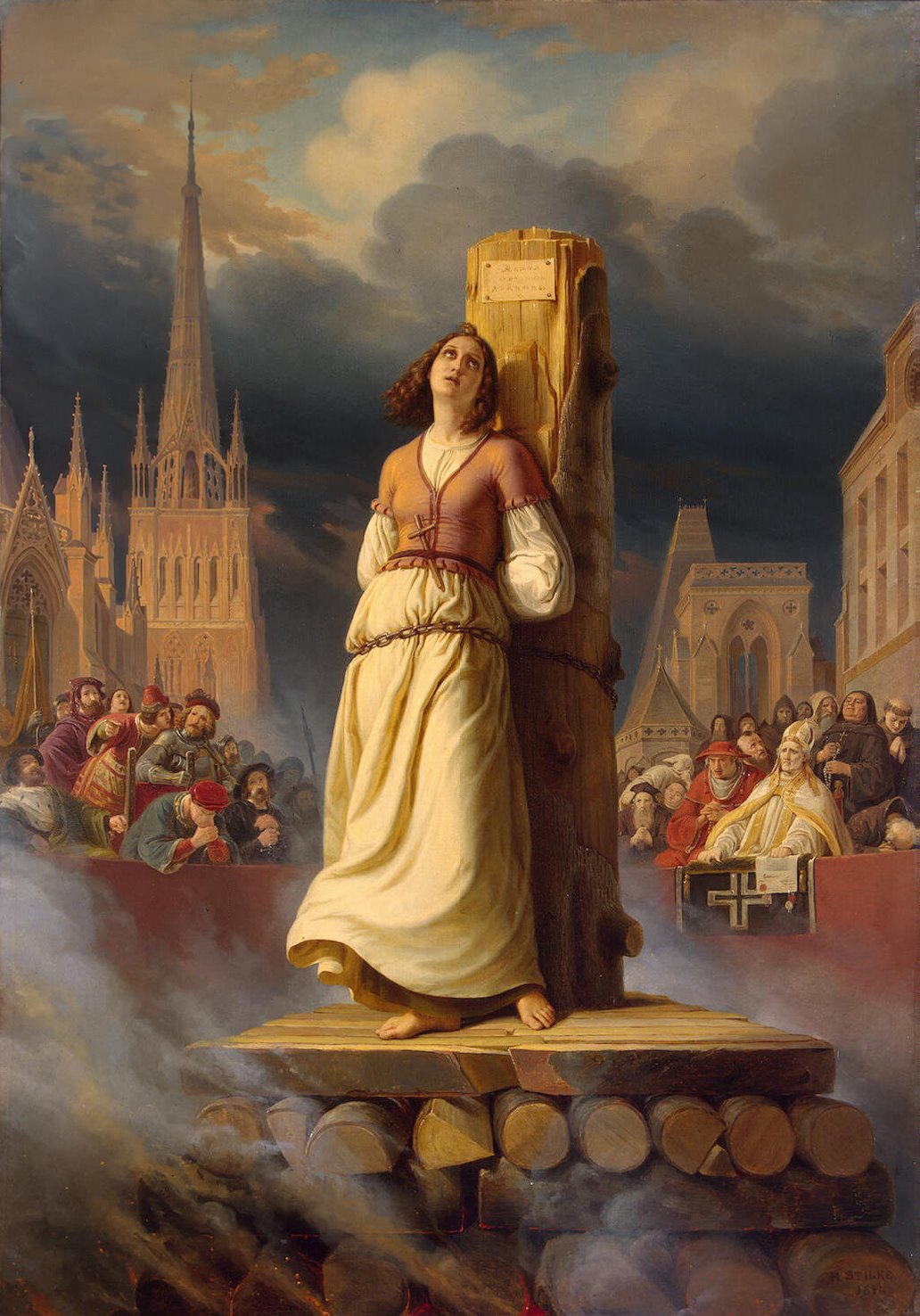
An old friend of mine, Kathleen Kent, wrote a wonderful book called The Heretic’s Daughter, that chronicled the life of a woman accused of being a witch, from her daughter’s point of view. Good stuff. But clearly, heretic in those days of Salem, Massachusetts, was a label that could get someone burned to the stake quickly.

But Peter had other concerns: the teachings he condemned were teachers/prophets who seduced others and committed blatant sexual acts, used formidable cursing, flagrantly blasphemed anything and everything that remotely smacked of God, and worst of all, they “faked the faith.” [verse 13] The listeners who were most in danger were those he called “unstable.” Why? Because an insecure or unsettled person can be swayed more easily. A person without a solid sense of self and knowledge/faith of the presence of the Holy Spirit, will be blown about by the winds of charm or magnetism.

In October (2011) another book is coming out about Jim Jones and his “People’s Temple” (circa 1978), A Thousand Lives: The Untold Story of Hope, Deception, and Survival at Jonestown by Julia Scheeres. How could all those people be duped? How could nearly 1000 people commit suicide at the command of a single man? We shake our heads and yet, wasn’t Peter describing “heretics” of that order?

When I was a young believer, one of my greatest fears was that I would follow the wrong denomination or get sucked into something unholy because I didn’t know better. Since I came into my faith in those days of charismata, giftings, miracles, and exuberant praise, there were many in the mainline denominations who called those practices heretical at their worst, and misguided at best. Was I in danger? Had I missed it? Was my faith real? I have to assume I survived in tact: still a believer after thirty years.

Of course, Martin Luther had the same problem back in his day. And let us not forget Jesus, himself crucified for his heresies.

I’m not saying there aren’t heretical people in the world. There are, just as there is true evil and darkness. Some say it’s the culture itself that has betrayed humankind and is ultimately heretical and sexual and misleading.

I believe we are in a time of transition, much like Phyllis Tickle teaches in her wonderful book, The Great Emergence: How Christianity is Changing and Why.

We need to spend less time looking for the heretics and more time looking for the hungry, the poor, the unclothed [Matthew 25]. Doing this, we will never need fear heresy, for love and empathy and mercy will drive us.

Power of Witness

Despite the fact that “eyewitnesses” usually screw up the details of what they witness, they do get the big picture: they know it was a bank robbery, a car accident, a outpouring of power. And then, too, repetition tends to solidify an account, like one miracle after another.

II Peter 1:15-16
And I will make every effort to see that after my departure you will always be able to remember these things. For we did not follow cleverly devised stories when we told you about the coming of our Lord Jesus Christ in power, but we were eyewitnesses of his majesty.

Peter was “all in” (the new phrase moving through contemporary churches). While accompanying Jesus he was a doubter, a slacker, and a chameleon even, but once the Christ was revealed fully through his death and resurrection, he got it. It was just at the point when his world fell apart that his world fell together. And there was no turning back. There was only forward and the story, that one story that everyone had to hear.

In the same way that people recount eye-witnessed tragedies over and over again(the falling of the twin towers, the floods, the tsunamis, etc.), so also would transformative experiences be on the tip of the tongue. We remember because we tell the tale. Families reminisce at the dinner table and stories live on, memories are stirred, feelings are reborn. Where there was joy, joy is recreated (and the same for sorrow, but somehow, the sorrow is more tempered by time).

What is my story? Isn’t my writing part of this process? Remembering, reviewing, reliving. Re-re-re… again and again.

Thirty plus years ago, I encountered Peter’s same Christ, and it was real and true and life changing. That’s my story and I’m sticking to it.

Divine Power

I have heard it said that everything we need—we have, in order to accomplish what is needed to fulfill God’s destiny. This is so easy to say but so hard to live, to believe. If anything, I see myself (and those around me) always looking for more and still more, thinking that will make the difference.

II Peter 1:3
His divine power has given us everything we need for a godly life through our knowledge of him who called us by his own glory and goodness.

I remember during the season of the “Toronto Blessing” when a great outpouring of delights and miracles seemed to be endless at the Toronto Airport Vineyard Church of the mid-nineties. In addition to a variety of phenomenon from laughing to falling out in the Spirit to shaking, a buzz word of that time was “soaking” in the Spirit and asking for “more.” More, Lord, more.

In hindsight, this call seems self-indulgent. It feels too much like more Edmund in The Lion, The Witch, and the Wardrobe who, under the influence of the evil White Witch, could not get enough of Turkish Delight. When she asked what he liked the best, this was the first thing that came to mind, this sickly sweet candy. And then, he was driven by his desire for it, excluding all else.

Do we really want more? Do we really want Divine Power? Would we know how to wield it if had hold of it consciously? Would we merely laugh and shake and cry? Or worse, be like Bruce Almighty, who uses this temporary power for personal gain.

Or, do we want “more” power because we have our own vision of what we want to do or be?

God’s divine power is available to us for one purpose, to live a godly life. And what is a godly life: to love others, to serve those less fortunate that we are, to worship and adore God.

And out of that, comes, on occasion, an opportunity to make a difference.

That Enemy of Mine

Who is that devil? Who likes to talk about the “devil,” “Satan” or evil? Culture has morphed the devil into a red-horned little man with a pitch fork at Halloween, or a dark looming evil suction machine ready to drag me into Hell, or the scapegoat for everything wrong with us.

I Peter 5:8
Be well balanced (temperate, sober of mind), be vigilant and cautious at all times; for that enemy of yours, the devil, roams around like a lion roaring [in fierce hunger], seeking someone to seize upon and devour.
[Amplified]

In Peter’s voice, the evil entity takes on a very personal nature: that “enemy of yours.” It’s a specific adversary who is lurking around my world, ready to take advantage of some negligence or self-indulgence, ready to ruin a situation, break apart a plan, or discourage a goal.

The NIV translation is simple, “be self-controlled and alert.” Therefore, in the face of Peter’s recommendations, it means behavior that is out of control, intemperate, or incautious, will be a set up for a fall, a slippery slide at the water park. Interestingly enough, I think these moments of imbalance are specific to each person. They are my battles and my particular challenges. “My” enemy may not be your enemy. My indulgences may not be yours. That means, the other guy or gal over there, may have equally unique hazards or threats that may not look all that difficult to me.

I believe this “personal enemy” works from the inside out, just like everything else. Oh, there may be some global enemy who hates the Earth, let’s say, and brings on tsunami’s and famines. Why not? But right now, I’m considering how this enemy of mine gets a foothold inside me.

It doesn’t take long to figure this out. There are several easy “ins” for that enemy of mine such as my issues of food, weight, exercise, and discipline. Or what about those procrastinations that expand from a few minutes to days, weeks, or even months? And in relationships, what about consistency and honesty? I can see how an imbalance in any of these spheres play heavily on my sense of worth and well-being, my trust in God.

So often the imbalance is not just in “not” doing, it’s also in doing too much. Perfectionism and performance-based choices are equally distracting. I’m like a pendulum, swinging back and forth between the two and that enemy of mine swings right along with me.

And so, I ask myself, how do I achieve true balance? How can I be vigilant without being controlling? How can I be cautious and yet be a risk-taker? How can I find the “de-militarized zone” where there is no condemnation and no fear?

Time away. Prayer. Forgiveness. Each day: manna.

Want to experience authentic Christ followership? It’s the opposite of everything imaginable: love enemies, serve to lead, sit to stand, humbleness for glory, just to name a few. The key to all faith paradoxes is trust and confidence in the God who operates outside of natural laws, basics, like gravity.

I Peter 5:6-7
Humble yourselves, therefore, under God’s mighty hand, that he may lift you up in due time. Cast all your anxiety on him because he cares for you.

Grace is a paradox too.

I’ve been captivated by paradox within my faith for the last three years. I can’t seem to get away from it, as though this one understanding is waiting to be fully embraced, as though I am on the precipice of really “getting it.” Something inside me keeps saying, “once this truth is broken apart, I will be stepping into the deepest places where faith, trust, hope, and love are the norm.

It would be a spiritual Sadie Hawkins life when those seemingly opposite behaviors would be natural. Expectations would no longer drive my emotional responses; disappointment wouldn’t overpower faith; fear would be a memory; anger wouldn’t be a useful tool to get my way; and controlling words would be unfamiliar.

If I could “cast my anxieties” on Christ, there would be nothing to carry.

A popular teaching among Christians emphasizes a person’s weaknesses and God’s ability to work with them to create strength [2nd Corinthians 12:9] and I don’t necessarily disagree. But perhaps we have lost sight of the importance of gifted strengths.

I Peter 4:10
Each one should use whatever gift he has received to serve others, faithfully administering God’s grace in its various forms.
[NIV 1984] or As each of you has received a gift (a particular spiritual talent, a gracious divine endowment), employ it for one another as [befits] good trustees of God’s many-sided grace [faithful stewards of the extremely diverse powers and gifts granted to Christians by unmerited favor]. [Amplified]

I have given a number of workshops on problem solving and the core usually revolves around some type of brainstorming, a wild explosion of crazy ideas tossed onto the table without concern for viability or ridiculousness. It’s a tool for tackling that worn-out saying, “think outside the box.” It’s a tool for generating creativity.

But many people will shy away from this term, creativity, saying they don’t have it. I disagree. I believe everyone is creative to one degree or another. Most people put some energy into selecting clothes in the morning, making a meal, purchasing an item, planning a party or other event, etc. These decisions are made out of that creative place within. It’s directing oneself toward an end. It’s seeing beforehand, it’s dreaming and imagining.

Divine gifts: some people nurture their creativity and as a result, it is more accessible to them. But everyone has it, because God is creative. And we are extensions of God’s mind. And it’s a definite strength, foundational to human, unique and elastic.

But we must also remember that gifts are a personal responsibility. Like the parable of the talents [Mathew 25:14-30], we have to administer the gifts entrusted to us: we have to use them, not exercise false modesty saying, “Oh, I couldn’t do that.” Baloney.

I understand there are concerns about working our talents and, as a result, getting prideful or self-absorbed. But it’s not the gift that’s the problem, it’s the motive.

It’s the same misunderstanding many people have about money, thinking that money is evil, when it’s the “love of money” that strangles the soul [I Timothy 6:10].

Perhaps we should all try this: create a resume for serving God and others.