Feeds:
Posts
Comments

Posts Tagged ‘I John’

It’s so much easier to speak of the spirit world in different contexts, fantasy for instance. In those circles, it’s the norm to speak of spirits, magic, miracles, powers, spiritual enemies and spiritual good guys. But we have lost our ability in this age to speak of the Spirit World.

I John 4:4
You, dear children, are from God and have overcome them, because the one who is in you is greater than the one who is in the world.

Despite the fact that numerous references are made to this spirit world in scripture; I am particularly thinking of Ephesians 6:12 as a good example, “For our struggle is not against flesh and blood, but against the rulers, against the authorities, against the powers of this dark world and against the spiritual forces of evil in the heavenly realms,” we hesitate to claim it as our own. It’s all woohoo stuff! And so, most folks shrug off spirit talk.

But I cannot. The epistle of I John speaks at length about spirit relationships: our own spirits, those of the “anti-christ” opposed to all Christ spirit, the spirits of the world, the spirits of believers, and the spirits of God followers. This is the unseen world and yet, more and more, I do believe it is the most important part of our existence.

We are multi-dimensional for a reason. And there are enough people, even in modern times, who have had significant experiences with Spirit that it seems foolish to disregard this aspect of our humanity, our spirituality, our essence.

I guess the big question is in the tension that arises when we refer to “good” and “evil” spirits. And I understand that hesitancy, but there is simply too much evidence to deny them. For me, the truth of evil places human depravity at the feet of its source: the realm within.

Do we really think that the battles we carry on in the flesh will change the spirit? Will our wars block the power of evil’s presence and influence? Will our gun laws prevent their distribution on the streets of our cities? Will our capture of kilos of cocaine prevent the fields of poppies from being grown again?

We are back to the single word that explains the Way of the Spirit realm: paradox. It’s not the very reasonable approaches to problems of our world that will change it, but the opposite. If not, if it’s all Pollyanna, then why did Jesus bother to say any of it? I know things are bad now, but things were bad then too: almost everyone was poor or under the iron fist of a dictator or slave owner, violence was the norm and so was hunger. There was no “upward mobility,” there was no middle class. Back then, it wasn’t just the 99% but 99.9% of the people who suffered under human indignity and loss.

They had good reason to look and wait for a revolution. Instead, Jesus proclaimed a victory for the interior life as the starting point for change. Do we follow? Do we believe?


Read Full Post »

For years, I have always thought of the “Anti-Christ” as a person. I supposed it’s all that Tim LaHaye & Jerry Jenkins stuff, pre-tribulation, pre-millenialism, and the rapture. Those folks have an entire time line for the appearance of the Anti-Christ. But John sheds a different light on the concept in his letter.

I John 4:2-3
By this you may know (perceive and recognize) the Spirit of God: every spirit which acknowledges and confesses [the fact] that Jesus Christ (the Messiah) [actually] has become man and has come in the flesh is of God [has God for its source]; And every spirit which does not acknowledge and confess that Jesus Christ has come in the flesh [but would annul, destroy, sever, disunite Him] is not of God [does not proceed from Him]. This [nonconfession] is the [spirit] of the antichrist, [of] which you heard that it was coming, and now it is already in the world.
[Amplified]

If John is to be believed, a simple litmus test is the willingness of the spirit to confess that Christ is indeed, the long-awaited Messiah. In biblical times, maybe this was easier to do. After all, the Jewish people had been waiting for the Messiah for centuries, his coming foretold by prophet after prophet. They expected and even longed for that day, anticipating a revolution of epic size that would, once and for all, free Israel from its enemies and usurpers.

Immediately after Christ’s appearance, ministry, execution, and resurrection, the guidelines were clear-cut: a person accepted Christ as the Messiah or not. If there was no Messiah, then there was no Christ, and Jesus was a nice guy who turned their world topsy turvy for for no good cause.

So, anti-Christ is not necessarily an individual per se, but a belief, or rather, a disbelief. And I think it’s called a spirit because belief happens within. It is my spirit that chooses, that part of me that works with my mind and soul, to unify the interior life and direct my actions & choices.

In modern times, this confession or lack of confession, is less understood or accepted. We have more relativism and few people (outside the circles of denominational Christianity) like the “black and white” feel of this mandate. Plus, other requirements have been added such as a verbal confession or attendance in church or getting splashed/dunked with water, just to name a few.

But, I remember vividly, my spirit confessed the Christ, because of statements like these written as the word of Jesus, “If I am telling the truth, why don’t you believe me? Whoever belongs to God hears what God says. The reason you do not hear is that you do not belong to God.” [John 8:46b-47] I could not call Jesus the lie. And I wanted to hear God. I wanted to be part of the God equation, the interaction, the indwelling of Messiah through the Holy Spirit.

And so, this is the one confession: I believe the source of Christ was and is God. And as a result, the Holy Spirit dwells within me.

My primary responsibility as a result of this confession is to love God with all my heart, soul, strength, and mind, and to love my neighbor as myself. The rest is human confusion.

Read Full Post »

Anyone want comfort or rest? Then it is right here: God is greater than our hearts–my heart. God’s spirit occupies more of me than myself, if I so allow. Where many of today’s protest encampments are full of angst and anger, this occupation is mutually agreed upon and full of promise.

I John 3:19-20
This is how we know that we belong to the truth and how we set our hearts at rest in his presence: If our hearts condemn us, we know that God is greater than our hearts, and he knows everything.

But, as I tell my children, over and over again, “Ya gotta want it.” We all know, whether we are in our twenties or in our sixties, life is difficult. There are brick walls that rise up along the way and, in our own strength, we can either choose to climb over, break through, or walk away. Within the presence of God however, these life choices can be different. Why? Because living in the Presence, is walking out an enormous set of paradoxes, one after the other. The brick walls can shift before our very eyes, the pathways re-orient, the solutions morph, the night become day, the sorrow become joy.

In the presence of a Holy God, anything can happen. In the presence of a Holy God, I transform and I can stop the old games, the old scripts, the old desires. I can because I want, I desire to participate in this interior life.

OK, a lot of this is still theory. I mean, I am so sure that this is what can happen within, but I have not quite gotten the hang of it yet. I have not quite surrendered to that Holy Spirit. There are glimpses though, and that’s why I know it’s real. But then, like Peter walking on the water, I become fearful: it’s not the norm, it’s a different “matrix.”

This is where some of the “new age” folks are closer to the truth that the Christ-followers. We keep putting God in a box, as they say, or confine God to our limited understanding. We keep putting a white-haired, long-bearded man on the “throne of heaven” and teach our kids that God is like this – some white-robed Santa or friendly Zeus.

It is my own heart that limits the wonder of God in my life, that constrains the grace of Christ, that distrusts the benevolence of the Holy Spirit.

Lord, forgive me. I want to walk on water in your Presence.

Read Full Post »

Here’s a picture for you, hate as a knife; hate as a gun; hate as a club; hate as a poison dart. They are all tools that a person can use to unleash a violence on someone else and it does damage, sometimes permanent. Hate is potent. Who am I kidding? It’s always within my grasp.

I John 3:15
Anyone who hates a brother or sister is a murderer, and you know that no murderer has eternal life residing in him.

Over the years, I have engaged many people about my faith. And, in particular, my desperate need for forgiveness, for my own sins as well as a willingness to forgive others. So often, their comeback to me is that they haven’t done anything so bad: they haven’t murdered anyone or stolen anything or taken lethal drugs. They speak as though there is such a thing as an “ordinary” life of niceness, their “good person” syndrome, a whitewash.

But I say they have murdered, at one time or another, with hate. And, unfortunately, in the paradoxical world of God, that hate might have appeared justified, the object being a mean, cruel, even evil-seeming person, or an adulterer, a child abuser, a wife beater, a liar, a betrayer. Do any of these descriptions make your blood boil?

That’s different, you say. They deserve to be hated; they broke the laws of humankind. They are “Cain: who slew Abel” [Genesis 4]. Instead of casting them out of the garden, you cast them out of your life. It’s a way to soften the feelings, to put blanks in the pistol, to dull the edge of hate.

There were years I hated my own mother for the emotional damages she brought into my life. There were times I hated my brother out of sheer jealousy for his abilities, for his “position” in our family, for his successes that perpetually outshone my own. There were intervals I hated my husbands (in certain seasons of our shared lives), for their disdain of me as a woman, for their disregard, for their isolations. There were girls I hated who were prettier than me, smarter than me, “in” while I was “out,” or acknowledged while I was invisible. There were lovers who bruised my heart and cast me aside. There were neighbors who crossed the line of decency. There were . . . there are . . . enemies of the state, terrorists, and many, many, unnamed villains.

Oh yes, plenty of people to hate. And yet, none of my hate effective in relieving my own soul, heart or mind of injury. What has been done to me, I cannot re-write, I cannot change my past with the weapons of hate, nor can I pay them forward. Hate perpetuates hate. It feeds upon itself.

Back to the paradox: there is a reason that Jesus taught us to love our enemies [Matthew 12:44]. I think we have mistakenly relegated this command to an ideal, something nice to work toward. But I have come to believe it’s a weapon in its own right, not just as powerful as hate, but more powerful. It’s a neutralizer, a transformer. If hate is a weapon, love is a bomb that changes the landscape completely.

It’s not a suggestion: it’s a guarantee.

Read Full Post »

Go ahead. I dare you. What criteria will you use? There are lots to choose from: kindness, selflessness, sacrifice, humility, and so on. Who do you know? Who’s on the list? Am I? Are you?

I John 3:10
This is how we know who the children of God are and who the children of the devil are: Anyone who does not do what is right is not God’s child, nor is anyone who does not love their brother and sister.

All right, I admit it, I’m being cantankerous. I keep thinking about all the times people say, “Remember who you are, remember that you are a Child of God.” And I wonder, am I only this child positionally (that is, as a result of my belief in the Christ) or is there evidence of my family affiliation? Is there a family resemblance?

Standing in a line-up, do I look any different than I did before Christ?

I am a follower of Christ but have I embraced being a child of God, or as the Amplified translation states, “…by this it is made clear who take their nature from God and are His children. . .”? Am I assimilating the very nature of God?

Or, am I still in the “terrible two’s,”? Investigative three’s? Adventuresome school years? Rebellious teens?

A child, in a happy and secure family, trusts the parent, looks up to the parent, finds comfort in those arms, and is encouraged by the looks and words from the parent. But a child must also grow up. A child must learn to walk in the world and become a parent as well. What is the relationship of an adult child to a healthy parent: respect, appreciation, admiration even, and thankfulness for the gifts of life, love, and wisdom.

I want to grow up.

Read Full Post »

Blinding Darkness

I don’t hate anyone. I don’t think I hate anyone. It’s such a strong word, so bitter. It conjures up all kinds of negative feelings, dark looks, hostile language. But of course, I have said “I can’t stand her” or “I can barely tolerate being around him.” Am I any better? Have I split the “hate” hairs?

I John 2:11
But anyone who hates a brother or sister is in the darkness and walks around in the darkness. They do not know where they are going, because the darkness has blinded them.

So, here’s what I know right now. There’s been enough negativity coming out of my mouth, right off the top of my heart, that I’m living in twilight… not darkness, but not light either.

And the twilight is casting shadows in my relationships.

Read Full Post »

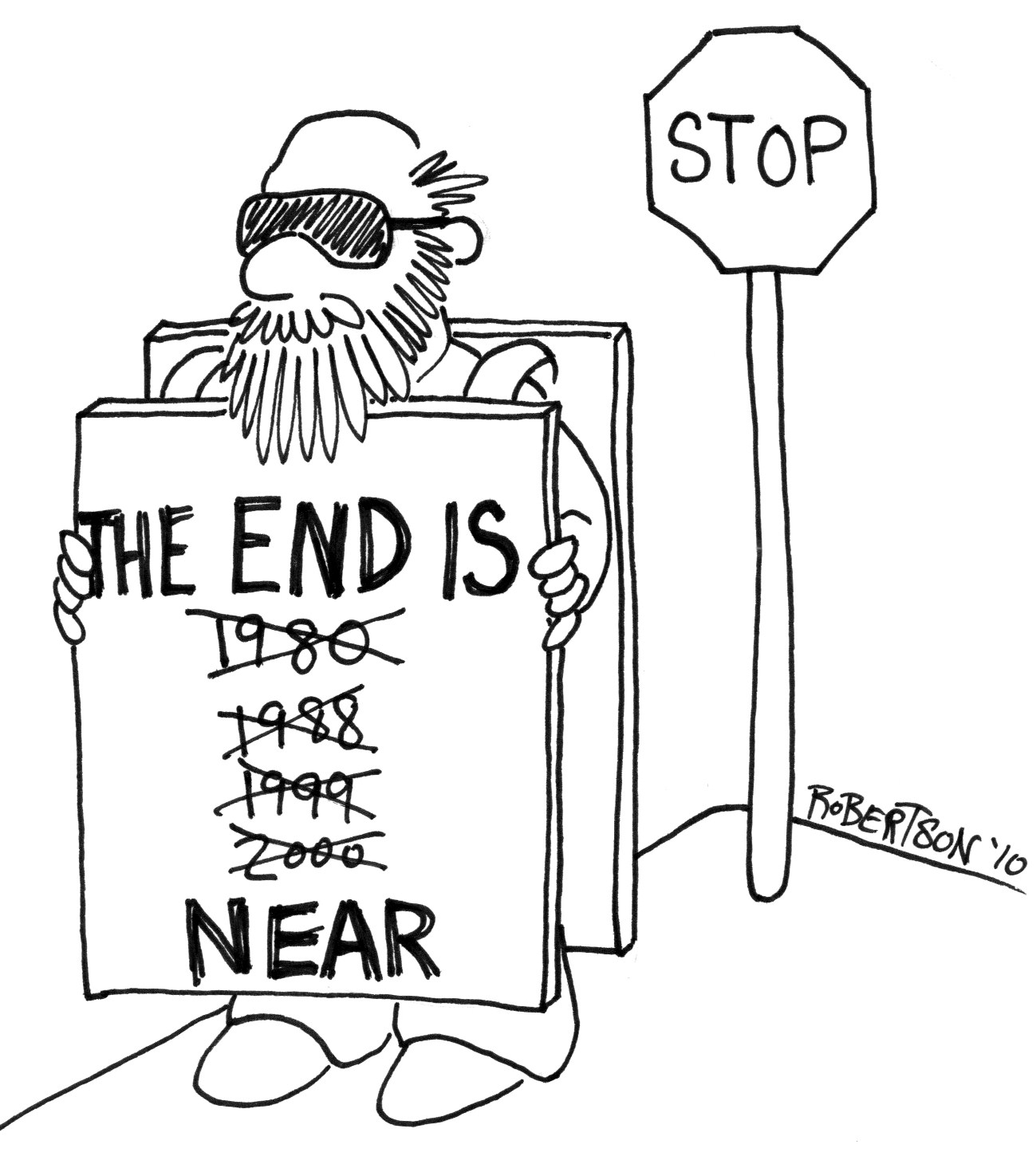
Oh, there’s lots to be read about the “last hour” or the “last time” or the “end times.” Books and books and books can be found so what can I possibly add. Some speak of the “last dispensation” meaning this period, after Christ, is the last big chance from God for humans to “get it.” Maybe so.

I John 2:18
Dear children, this is the last hour; and as you have heard that the antichrist is coming, even now many antichrists have come. This is how we know it is the last hour.

Clearly, John was worried about this last hour, whether it’s dispensational or just post-apostolic (since he was the last living apostle by the time he wrote this letter). And here we are, still in it: the last hour.

We’re in a time, a human time, that has stretched out for two thousand years and yet, we haven’t come to the end of the hour. Some say we’re in the last five minutes of that hour.

Is it all coming together? Is it the Christian version of 2012? Are we in the wrap-up?

The world is so full of everything: all kinds of teachings and faiths; personalities and predictions; anti-christs and anti-muslims; wars and rumors of wars; cataclysmic weather and heavenly anomalies.

And have I been chosen to walk out the last hour? Have you?

There were those who were chosen to walk in the time of Christ: a time like no other time. And yet, there is still another time: the last hour.

So many times people have proclaimed the end of time. Sometimes, the predictions were ludicrous; sometimes dangerous. More often than not, it seemed like foolish eccentricity.

And yet, and yet. I wonder.

Read Full Post »

« Newer Posts - Older Posts »