Feeds:
Posts
Comments

Posts Tagged ‘love’

Photo by Sara Elizabeth

I understand that hate and love cannot co-exist but I never considered that fear cannot live with love either. That’s why “perfect love drives out fear,” they cannot occupy the same space. They are contradictions.

I John 4:18
There is no fear in love. But perfect love drives out fear, because fear has to do with punishment. The one who fears is not made perfect in love.

And further then, fear is a type of anticipation of punishment. How I understand it today, I expect or deserve punishment/pain because of a behavior, decision, or lifestyle. I literally expect something bad to happen when I am afraid, that’s why the fear exists.

I am usually afraid of heights. Why? Because I subconsciously believe I will fall down, drop from that great height, and suffer immeasurably. My expectation is a negative result.

I become afraid in dark areas, small spaces, unknown neighborhoods, heavy wind, unanticipated illnesses, unfamiliar aches and pains, thugs, and so on. Each one, in and of itself, is nothing until I endow it with my fear and my anticipation of pain or loss.

Instead, I could be filling my heart with the love of that God who has promised all good, who has declared sovereignty in my life, who has made covenant with me through Christ.

The trick is to accept those circumstances that have created fear historically in my life and re-tool them by the presence of the Holy Spirit, that love agent in my soul, that abounding presence of Grace. I must learn how to release the fear. I am the one holding on to the familiar.

In recent days, I have been suffering with a condition called “dry eye.” It’s not life-threatening but quite annoying and of course, my old self has taken it to the worst case: blindness and loss. It’s not even a medical prediction that dry eye leads to blindness. This is the fear talking. Again.

Everything in my life, because of the best deal I ever made in my life, with the Christ and invitation to co-dwell with the Holy Spirit, everything is for my good: all of it and everyone who shares it with me. Such a simple equation.

I fear for my children’s future, but even that, I must place in a bubble and blow away. My love for them will carry them further than my fears.

Read Full Post »

It’s an environment. Love is a space, a presence. It’s surround sound. And, like a boat, love has its own rules, it’s own buoyancy, it’s own culture. We can either choose to be in it or not: on the boat or watch the boat go by. God is love. God is the environment.

I John 4:16
And so we know and rely on the love God has for us. God is love. Whoever lives in love lives in God, and God in them.

Unlike the story of Noah and the Ark, there are no limitations to this particular boat, this domain. There is plenty of room for anyone who wants to come aboard.

Sometimes, I think of it as an aura or bubble. I say this because I know I have stepped out of its safety. I’ve jumped ship. I have gotten on bigger boats and smaller boats, thinking, like Pinocchio that my life could be better elsewhere, being lured by the world.

Forgive me Lord. Thanks for the life ring. Again and again and again.

Read Full Post »

St. John is obsessed with love and its power. But to speak of it in today’s world sounds trite and cliche. Love has been relegated to movies and teenagers. Do people really believe love is a power so strong, so rich, that it can change a life, a culture, a world, a civilization? Or is it just a Valentine?

I John 4:12
No one has ever seen God; but if we love one another, God lives in us and his love is made complete in us.

I don’t really feel qualified to write about this topic at length, mostly because of my own anemic love life, and by that, I mean loving the unlovable, the unlovely.

It’s not that I don’t believe God is in the love of family, friends, and loved ones, but I have a sense that loving in the hard places, the paradoxical times, the nontraditional people, the unexpected situations: this is where God manifests more profoundly. These would be the occasions I might actually experience the same God who loved me when I was deeply entrenched in life-killing habits (drugs, alcohol, promiscuity, and the like). That love turned me around. That love upended my perceptions. That love was conscious and real, almost tangible. It was one of the reasons I committed my life to becoming a follower of the Christ: I saw God by being loved unconditionally.

For whom can I do the same? Why am I so afraid? There was so much grace in being on the receiving end and yet, it has become so difficult to get out of my safety net and love others the same way, without judgment, without expectations, without strings attached.

Our current church has a lot of buzz phrases, some more meaningful than others, but without a doubt, the one that resonates the most with me is that we offer love and service to others “with no strings attached.” I know that our pastor, Jess Bousa, pulled this mandate out of his own experiences, out of the God-love that was given to him when he least deserved it. The church, Good Cause Foundation, the open door policy he has established, are all an outgrowth of seeing God and thereby showing God through himself. Jess got it and he’s one of the reasons I’m hanging around this young pastor, I want to catch the fever.

It’s all simple: love others if I want to see God. And as I see God, I will want to love others. Infinity. Circle. Mandala. Synergism.

Read Full Post »

Here’s a picture for you, hate as a knife; hate as a gun; hate as a club; hate as a poison dart. They are all tools that a person can use to unleash a violence on someone else and it does damage, sometimes permanent. Hate is potent. Who am I kidding? It’s always within my grasp.

I John 3:15
Anyone who hates a brother or sister is a murderer, and you know that no murderer has eternal life residing in him.

Over the years, I have engaged many people about my faith. And, in particular, my desperate need for forgiveness, for my own sins as well as a willingness to forgive others. So often, their comeback to me is that they haven’t done anything so bad: they haven’t murdered anyone or stolen anything or taken lethal drugs. They speak as though there is such a thing as an “ordinary” life of niceness, their “good person” syndrome, a whitewash.

But I say they have murdered, at one time or another, with hate. And, unfortunately, in the paradoxical world of God, that hate might have appeared justified, the object being a mean, cruel, even evil-seeming person, or an adulterer, a child abuser, a wife beater, a liar, a betrayer. Do any of these descriptions make your blood boil?

That’s different, you say. They deserve to be hated; they broke the laws of humankind. They are “Cain: who slew Abel” [Genesis 4]. Instead of casting them out of the garden, you cast them out of your life. It’s a way to soften the feelings, to put blanks in the pistol, to dull the edge of hate.

There were years I hated my own mother for the emotional damages she brought into my life. There were times I hated my brother out of sheer jealousy for his abilities, for his “position” in our family, for his successes that perpetually outshone my own. There were intervals I hated my husbands (in certain seasons of our shared lives), for their disdain of me as a woman, for their disregard, for their isolations. There were girls I hated who were prettier than me, smarter than me, “in” while I was “out,” or acknowledged while I was invisible. There were lovers who bruised my heart and cast me aside. There were neighbors who crossed the line of decency. There were . . . there are . . . enemies of the state, terrorists, and many, many, unnamed villains.

Oh yes, plenty of people to hate. And yet, none of my hate effective in relieving my own soul, heart or mind of injury. What has been done to me, I cannot re-write, I cannot change my past with the weapons of hate, nor can I pay them forward. Hate perpetuates hate. It feeds upon itself.

Back to the paradox: there is a reason that Jesus taught us to love our enemies [Matthew 12:44]. I think we have mistakenly relegated this command to an ideal, something nice to work toward. But I have come to believe it’s a weapon in its own right, not just as powerful as hate, but more powerful. It’s a neutralizer, a transformer. If hate is a weapon, love is a bomb that changes the landscape completely.

It’s not a suggestion: it’s a guarantee.

Read Full Post »

Blinding Darkness

I don’t hate anyone. I don’t think I hate anyone. It’s such a strong word, so bitter. It conjures up all kinds of negative feelings, dark looks, hostile language. But of course, I have said “I can’t stand her” or “I can barely tolerate being around him.” Am I any better? Have I split the “hate” hairs?

I John 2:11
But anyone who hates a brother or sister is in the darkness and walks around in the darkness. They do not know where they are going, because the darkness has blinded them.

So, here’s what I know right now. There’s been enough negativity coming out of my mouth, right off the top of my heart, that I’m living in twilight… not darkness, but not light either.

And the twilight is casting shadows in my relationships.

Read Full Post »

I thought a quick search on “sacred command” would reveal what this really means. Not so. There are some who believe it’s the whole of the ten commandments and some who believe it’s the whole of the gospel and still others who say it is the law in its totality. Only Clark’s Commentary hit the nail on the head.

II Peter 2:21
It would have been better for them not to have known the way of righteousness, than to have known it and then to turn their backs on the sacred command that was passed on to them.

The holy commandment – The whole religion of Christ is contained in this one commandment, “Thou shalt love the Lord thy God with all thy heart, with all thy soul, with all thy mind, and with all thy strength; and thy neighbor as thyself.” He who obeys this great commandment, and this by the grace of Christ is possible to every man, is saved from sinning either against his God or against his neighbor. Nothing less than this does the religion of Christ require.

And there you have it. Didn’t Jesus say the same thing in Matthew 22:36-40? The simplicity of it is its greatest power. Sometimes, we make our faith walk too complicated, to ethereal, too full of mumbo-jumbo.

If anyone turns his/her back on this sacred command, no longer loves (acknowledges or “fears”) God, more than likely, he/she will be unable to authentically love others, and person’s road will spiral away from him/her. Some might believe that they can love their neighbor without loving God, but I disagree, since love is God and God is love. It becomes a quality issue. We can love as human, but love through God is different. God’s love flows, like a spring, it is endless. Human love is finite. It just is. I’m sure of it. If it were not so, we would be able to love the unlovely more readily; we would not hold back; we would give freely; we would step down so others could step up; we would live the paradox of love.

Oh, Sacred Command, find root in me this day.

Read Full Post »

I’m getting stuck in 2nd Peter Two. Holy Moly. Do I know any of these people? I keep checking back to the first verses, “they” this and “they” that; who are “they” who are on the short end of Peter’s wrathful indignation? False prophets, false teachers, and heretics! Whoa!

II Peter 2:10b,12a,17a
Bold and arrogant, they are not afraid to heap abuse on celestial beings; . . . these people blaspheme in matters they do not understand. . . .These people are springs without water and mists driven by a storm.

Peter is writing some strong stuff here and although I do not take him lightly, how do I apply this chapter to my own life now? Who are “these” people in my world?

Some time ago, there were folks who attacked Rob Bell for his book, Love Wins in public places like television shows, Facebook, blogs, and magazine articles. They reviled the author (and his family) and called him a number of names, of which heretic was intentionally the most inflammatory.

Just looking at Peter’s use of the word heretic shows it to be a compelling word that carries lots of emotional baggage. Interestingly enough, a modern day dictionary is less provocative. Heretic is defined as someone who “has opinions contrary to those accepted by his church and/or one who rejects doctrines proscribed by the church,” or “one who doesn’t conform to established attitudes, doctrines, or principles.” That doesn’t sound so bad; gives me pictures of those “Wild West” Americans or even the Pilgrims who left England for religious freedom.

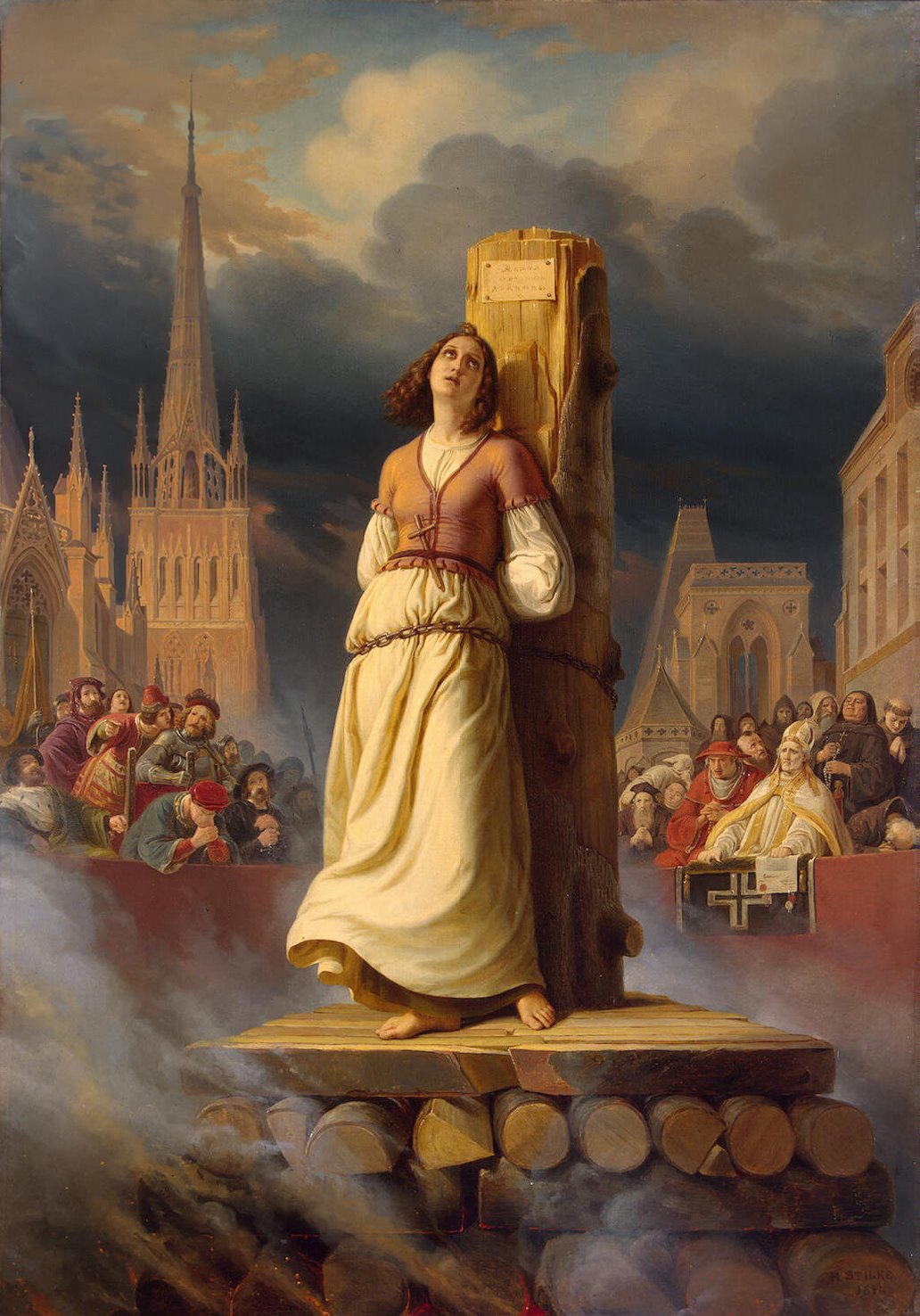
An old friend of mine, Kathleen Kent, wrote a wonderful book called The Heretic’s Daughter, that chronicled the life of a woman accused of being a witch, from her daughter’s point of view. Good stuff. But clearly, heretic in those days of Salem, Massachusetts, was a label that could get someone burned to the stake quickly.

But Peter had other concerns: the teachings he condemned were teachers/prophets who seduced others and committed blatant sexual acts, used formidable cursing, flagrantly blasphemed anything and everything that remotely smacked of God, and worst of all, they “faked the faith.” [verse 13] The listeners who were most in danger were those he called “unstable.” Why? Because an insecure or unsettled person can be swayed more easily. A person without a solid sense of self and knowledge/faith of the presence of the Holy Spirit, will be blown about by the winds of charm or magnetism.

In October (2011) another book is coming out about Jim Jones and his “People’s Temple” (circa 1978), A Thousand Lives: The Untold Story of Hope, Deception, and Survival at Jonestown by Julia Scheeres. How could all those people be duped? How could nearly 1000 people commit suicide at the command of a single man? We shake our heads and yet, wasn’t Peter describing “heretics” of that order?

When I was a young believer, one of my greatest fears was that I would follow the wrong denomination or get sucked into something unholy because I didn’t know better. Since I came into my faith in those days of charismata, giftings, miracles, and exuberant praise, there were many in the mainline denominations who called those practices heretical at their worst, and misguided at best. Was I in danger? Had I missed it? Was my faith real? I have to assume I survived in tact: still a believer after thirty years.

Of course, Martin Luther had the same problem back in his day. And let us not forget Jesus, himself crucified for his heresies.

I’m not saying there aren’t heretical people in the world. There are, just as there is true evil and darkness. Some say it’s the culture itself that has betrayed humankind and is ultimately heretical and sexual and misleading.

I believe we are in a time of transition, much like Phyllis Tickle teaches in her wonderful book, The Great Emergence: How Christianity is Changing and Why.

We need to spend less time looking for the heretics and more time looking for the hungry, the poor, the unclothed [Matthew 25]. Doing this, we will never need fear heresy, for love and empathy and mercy will drive us.

Read Full Post »

« Newer Posts - Older Posts »