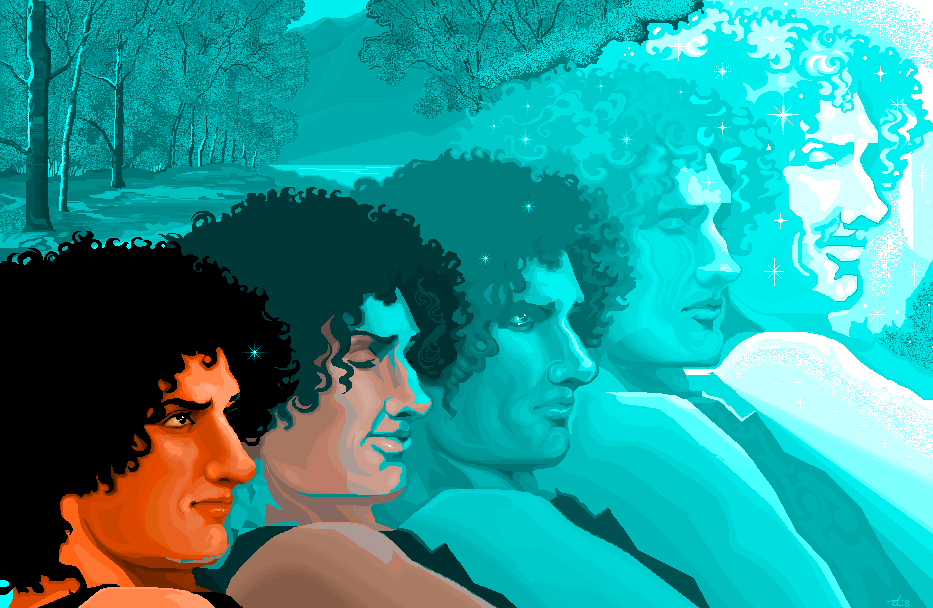
 Enoch was the baby of the Adam line. Unlike his forebears or those who lived after him up into their 800’s and 900’s, Enoch died at 365. Outrageous numbers, all of them. Nobody can live that long. But who can really say? Clearly, Human (Adam/Eve) was different than we are today. So, let’s assume it’s true, just for the heck of it. What is there to learn?
Genesis 5:23-24
Altogether, Enoch lived a total of 365 years. Enoch walked faithfully with God; then he was no more, because God took him away.
Enoch walked with God. Now, since God usually walked in the Garden of Eden and not out with the non-Garden folks, something tremendous had changed here. The story says Enoch walked with God 300 years, presumably all the years after the birth of his son, Mathusaleh (the grandfather of Noah, who, by tradition is said to have died 7 days prior to the flood, which allowed for the proper days of grieving — that piece of trivia comes from the studious rabbis back in the day).
Enoch is the only one of the line who did not die in the natural way. Each patriarch is written as having a specific time of death, along with the presumable birth year of his first-born son and the total number of years he lived after the birth; but then he died. Except Enoch.
Enoch disappeared. God took him away.
Now, if I had to imagine how life looked back then, I would presume that Adam and Eve set up house as close to the Garden borders as possible. Maybe they couldn’t even see the Garden, maybe it had a mysterious “fantasy-like” secret entrance (there is mention of flashing swords and cherubim) or maybe it was a daily reminder. In any case, I can’t imagine them going far. So they set up a community for several hundred years and and with several thousand people, assuming they all had similar fertility and longevity.
But everyone knew and heard about Enoch. After all those silent years without God, about 600 years, Enoch had a special relationship with God, with the Creator, with the Master of the Garden.
People knew about the Garden. Certainly, Adam must have talked about the garden and what it was like, the same way people talk about heaven, or the good old days, or the best vacation ever. When people struggle, they build hope from their memories of better times in the past. If it was good once, it could be good again.
But Enoch was doing it. He was hanging out with God. Either he managed to get into the Garden for his strolls, or he had a pure heart, was recognized by God and rewarded with access. We’ll never know.
But in some way, what Enoch shared with God, he passed to Methusaleh, even if by story alone. And Methusaleh passed to Lamech, who fathered Noah and blessed him proclaiming, “He [Noah] will comfort us in the labor and painful toil of our hands caused by the ground the Lord has cursed.” They believed there was a reason for Enoch’s relationship. They believed in a better tomorrow.
There was an anointing on Noah from the beginning, then. He wasn’t some Steve Carell (an unbelieving Evan Almighty called by God to build a modern-day ark). Noah had the benefit of Enoch’s faith and stories passed down through the generations. It made a difference. We should be telling our faith stories to our children. We should be remembering and keeping track of the blessings of God. They are milestones of faith for those to come.
I believe Enoch is still in the Garden, untouched by the temptation of the other tree, relishing in the Tree of Life.


 Meditations from Zion