I’m sure some of you may be surprised that I am writing about prayer as a dilemma. After all, isn’t it fundamental to our faith? How could that be a problem? But then, if it’s not problematic in some way or another, why are there thousands of books written about prayer: how to do it, when to do it, why we do it, etc. From what I can see, most people spend a good deal of time lamenting how little they pray. I should–I could– if only and so on.

My first realization that there are a variety of ways to pray came from Richard Foster’s book, “Prayer.” Written in the early 90’s, he laid out 21 different types of prayers. Oh dear! I was only really good at the first one: simple prayer. So, I figured I’d read through the book, and one by one, I’d practice these other prayers. Ha! By the time I got to the the third one, I gave up (the prayer of Examen). I didn’t get it. Then.
In later years, I became deft at public prayer. I could really bring the people with me into the holy of holies, calling forth the power of a miraculous God. This was a time of many “Praise the Lords.” In those years, I also practiced praying in the spirit (and singing in the spirit). Looking back, I think the biggest benefit to praying in tongues is that words get out of the way.
I confess I also learned how to pray manipulatively; that is, in such a way as to suggest to God how situations, like my marriage for instance, could be better and what my husband could do to implement that change. He would be sitting next to me. Surely, I was infuriating.
As I began to do more speaking engagements and perform in churches or para-church organizations, I learned to pray for others. That was a sweet time, a meaningful time. There was a flow to touching another person’s spirit with my own through prayer.
When I did my skits, I often made fun of various prayer times: everything from prayer poses to coffee breaks to distractions and of course, falling asleep. People laughed because they recognized themselves in the skits. I drew from my own experience.
I knew and I know that prayer is important: it’s the way we communicate with God. But doesn’t God already know what we need? Healing? Food? Shelter? Work? A new Cadillac. Whoa, should we pray for such things? New acquisitions? A Trip to the Bahamas? More stuff? I don’t think so.
Gradually, year by year, my practice of prayer has changed and changed and changed. And although I can still pray out loud with the best of them, I find that silence is the deeper form of communication with God. In silence, I can experience the Presence of God and surrender to God’s intention. I am with God and God is with me. I am with Christ Jesus and Christ Jesus is with me. Holy Spirit is with me and I am with the Holy Spirit.
Privately, when I pray for others now, I say their names and then I wait. When I pray for our nation or our political turmoil or violence in the street or inequality, I state the situation, and then I release it to God. I read a passage of scripture and sit with it. I read a poem and ponder it. I write. I journal. I sit. I slow down. Prayer is more about listening than speaking. Prayer is dwelling in the secret place, God’s dwelling place. And it is in this place, that the words from that famous song make sense: It is well, it is well, it is well with my soul.
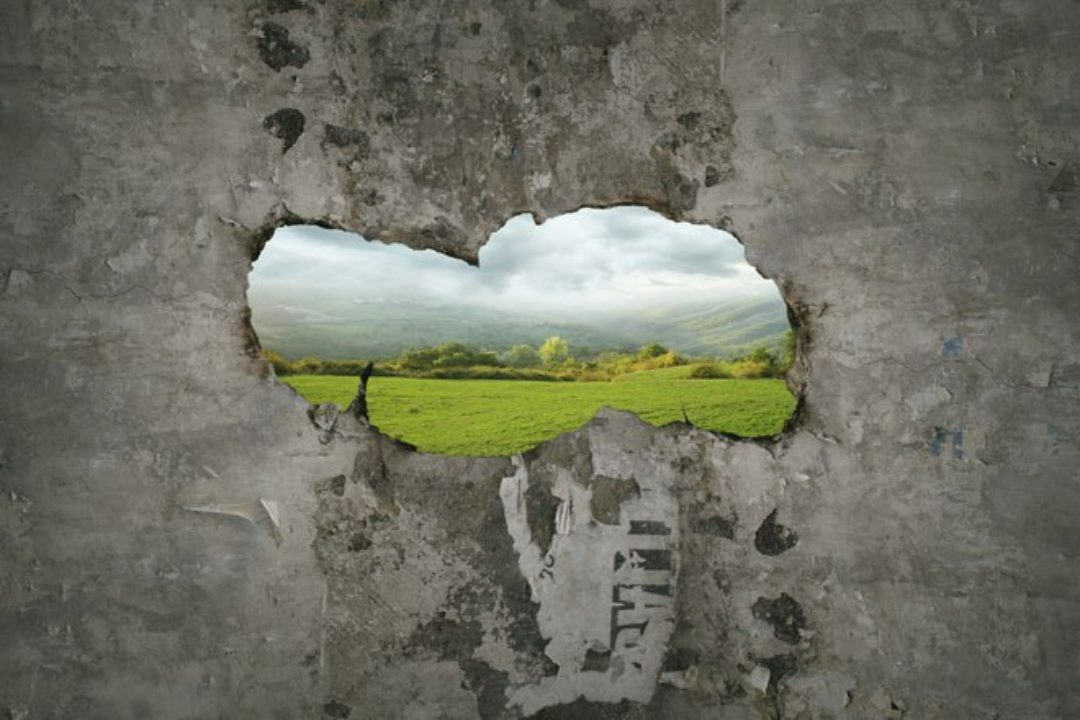 But how does vocation manifest in the lives of regular people? Or does it? Is it a call from God even if the person is not a believer? There is no doubt in my mind that this is so. I can think of no other reason that a person would follow a passion for art (rarely accompanied by financial gain) or service to the poor and disenfranchised or an becoming an unpaid “first responder” or a master gardener or, of course, a true follower of the Christ (or as some now reference God: the Divine).


 And I immediately knew that “impatient” was the operative word for me. Impatience does not happen in the twinkling of an eye. It’s a process and literally, has steps along the way and thought patterns that culminate into full blown impatience. Here are just a few of the steps I discovered about myself.
 Repercussions can develop from impatience that are more wretched than the original. Must I carry on until the “venomous snakes” (Numbers 21:6) show up before I repent? Or, can I breathe into the onslaught of impatient feelings and counter them with gratitude?
 Each place has a story and now a memory. But it’s time to take a breath. A real breath. It’s time to examine “here.”
 I have discovered that resentment is right up there with disappointment. They have the same root in the heart. They are both married to expectations and ultimately “control.” I am resentful when things don’t go the way I expect them to go. I am disappointed when things don’t turn out the way I had dreamed they would. As though I know what is the best way, the best time, the best outcome.
 Meditations from Zion