Feeds:
Posts
Comments

Archive for the ‘Ordinary Time’ Category

In today’s world, unless one participates in a charismatic denomination, the idea of the prophetic smacks of the National Enquirer. So, if most people don’t believe in prophecy, isn’t that already contempt? How does a prophet gain credibility?

I Thessalonians 5:20-22
. . . do not treat prophecies with contempt. Test everything. Hold on to the good. Avoid every kind of evil.

Actually, the scriptures speak of the importance of testing what is said by a prophet. All the way back in the Old Testament, it was written, “If what a prophet proclaims in the name of the LORD does not take place or come true, that is a message the LORD has not spoken.” [Deut 18:22a] This appears to be a straightforward test of a prophecy, if it comes to pass, it’s a true prophecy. Of course, that doesn’t help much in the moment, when a prophecy is uttered.

It’s hard to know, actually. I have experienced a kind of fluttering within my personal spirit upon occasion, a sense of truth being spoken, a type of corroboration or affirmation. But, that’s certainly less than definitive. And so, if the prophecy is important, it’s reasonable to consider putting the words to the test.

But I will say right here, testing a prophecy is about as effective as trusting internal flutterings alone. Oh, I suppose one could compare the prophecy to what is already known and determine if it’s sound and grounded in truth. However, it’s in my mind that a genuine prophecy is outside the normal range of reason. Otherwise, it would just be something the smart folks around us could figure out, they’d be able to predict. You know, those people who love statistics and computers, our weathermen and futurists.

Perhaps the key word here is not the test but the attitude? A prophetic utterance viewed with contempt will rarely find root.

I did check the Greek, as best I am able, and there is a some confusion as to whether the “testing” phrase is about the prophecies or about everything else, that is determining what is good and right vs. what is not. So, perhaps we aren’t supposed to test prophecies alone, but test the world around us.

Others will say that prophecies are not merely predictive, but rather some type of “edification or encouragement.” I think that’s pretty lame. There’s not much danger in doing that, is there? What is there to disregard or disdain?

No, I think it’s all the phrases [20-22] together that have meaning: I cannot hear truth of any kind if I have closed myself off through contempt, either for the speaker or the message. If I have made a decision before the time, then there is no possibility I will hear anything new. In other words, “we hear what we want to hear.”

Also, once we have heard something (anything), we shouldn’t act or react immediately, but let it settle inside. Some testing can be done by comparing the message with what is known, but for what is unknown, it takes a united exploration of those words and ideas with the Holy Spirit. And finally, out of everything spoken, we must hold fast to “good” and truth: once we accept the truth of a prophecy, then we must not let it go. From there comes strength to “avoid evil.”


Read Full Post »

If we are told to NOT quench the Spirit, then it must be possible. We must lean toward quenching on occasion or maybe more often than that. Apparently, it’s a concern. It requires adjustment. It’s a call for change. Or simply: stop doing it!

I Thessalonians 5:19
Do not quench the Spirit.
[NIV]
Do not quench (suppress or subdue) the [Holy] Spirit; [Amplified]

When I finished my most recent fast in November, I became aware of my ongoing struggle with “grieving the Holy Spirit” and how my behaviors and my choices were interfering with the free flow of that Spirit within.

Quenching that same Spirit, is just another way of saying the same thing. It’s putting out the fire. It’s extinguishing, choking off, and dampening the passion. It’s pulling back.

Here’s one problem I can see happening with this directive. Some people don’t recognize the Holy Spirit in their lives and therefore, don’t even realize they’re in the quenching business. It’s hard to “stop” doing something if one doesn’t realize what that might look like. Have I? Have I, in my haste to move on to the next thing, to go for the feeling, or whatever, have I actually drowned the still small voice?

A friend told me of a small group of women who meet regularly for “the wait.” They don’t plan what happens, they wait. They don’t necessarily sing or shout or pray out loud, they don’t seek a miracle or a sign, they respond. They listen first. They wait and then they share what they have heard with one another. They are putting a firebrand to the embers. They are kindling the fire.

“Come Holy Spirit, fill the hearts of us your faithful and kindle in us the fire of Your love. . . ”

Read Full Post »

Never say never but don’t hesitate to say “always” and “continually?” Doesn’t seem quite fair but there it is. In this section of Thessalonians, Paul gives a long list of instructions, straightforward and direct but how do I follow them? Can’t. So what is my appropriate response?

I Thessalonians 5: 16-18
Rejoice always, pray continually, give thanks in all circumstances; for this is God’s will for you in Christ Jesus.

I guess it’s important to know the ideal and the perfect, but it also makes the difference between me and that goal so expansive, so blatantly unreachable that I’m a deer in the headlights.

This is where the Christ stands in the gap.

And yet, just because there is One willing to pray when I stop or rejoice when I give up does not mean I don’t have a responsibility to pursue the “always.” In fact, it’s the opposite. I have to want it. I have to want the manifestation of perfect through the ongoing presence of the Holy Spirit. How else do I become mindful, or conscious, or intentional about transforming?

Is anything perfect? Is nature perfect? Is the sunset or the waning moon or the waves that crash on a beach day in and day out perfect?

“For the creation was subjected to frustration, not by its own choice, but by the will of the one who subjected it, in hope that the creation itself will be liberated from its bondage to decay and brought into the freedom and glory of the children of God.” [Romans 8:20b-21]

We’re in this together. You, me, earth and all the rest.

Read Full Post »

Here’s what I’m thinking about Paul’s references to day and night: it’s not literally day or night that is the issue, but light and darkness. Light can overcome darkness. But darkness can also mean lack of awareness, disconnectedness, isolation, and blindness. It is a personal spirit asleep.

I Thessalonians 5:5, 6a, 7a, 8a, 9
You are all sons of the light and sons of the day. We do not belong to the night or to the darkness. . . . So then, let us not be like others, who are asleep, . . . For those who sleep, sleep at night, . . . But since we belong to the day, . . . For God did not appoint us to suffer wrath but to receive salvation through our Lord Jesus Christ.

Being asleep in this way is a type of wrath, it’s a loss, a handicap to full living.

How often have I chastised my teens for sleeping away the day. For me, it’s time wasted, time lost to an unconscious activity. Oh, I know, that many good things come from sleep and the body and mind both need this time of recovery. But, there is the long sleep, the running away from life sleeping, the disengagement. And just as people sleep overly much when depressed, so can the personal spirit sleep. John Sandford calls it a “slumbering spirit.

As believers, followers of the Christ, we are supposed to be awake. We are encouraged to be awake. We are expected to be awake and to operate in the Light.

Unfortunately, even believers can be asleep in the spirit.

“I tell you the truth, anyone who has faith in me will do what I have been doing. He will do even greater things than these, because I am going to the Father.” [John 14:12]

Gotta be awake to do any of the things that Christ did. Gotta be in the Light. Gotta be transparent. Anything else is living in the wrath of night.

Read Full Post »

I am grateful that I have never had my house broken into. But I know people: my brother’s place was wiped out of all electronics, DVDs, bicycle, etc. A colleague from work lost all of her jewelry to a thief in the night. And one family had all of their children’s gifts stolen from under the tree on Christmas Eve.

I Thessalonians 5:2, 4
. . . for you know very well that the day of the Lord will come like a thief in the night. . . . But you, brothers and sisters, are not in darkness so that this day should surprise you like a thief.

I have been told that it feels like a rape of one’s life, to experience this kind of invasion. It’s usually inexplicable, and unlike TV, where Monk comes in and floats his hands around to figure out why and who and when, there is rarely recovery of one’s things or capture of the thieves.

Paul writes that the coming of Christ, the total renewal of Spirit, and the “end of the age,” will come when least expected by most people. And yet, as believers, we are not to be surprised. I had never picked up on that before; I focused on the unexpected thief and figured we were all in the dark. Not so.

Unfortunately, others have taken this piece of information as an encouragement to set the date and time. Over the years, there have been a number of end time dates announced and yet, the dates have come and gone, and we’re all still here. Things are heating up a bit now and both believers and non-believers are predicting cataclysmic events in 2012. Some base their predictions on complex studies of the prophetic literature and calendar mathematics, while others are enamored of the Mayan calendar and the implications of its final year.

I still believe we “see through a glass darkly” and we will not understand the fullness of the “return of Christ” until it happens. But I will hold to this: as the Holy Spirit within me manifests more each day, as the Light within me finds open avenues to shine out, then this Coming may indeed be anticipated.

But for now, I’ll just wait.

Read Full Post »

In love, in Christ, in trouble, in the weeds, in style, and so on; the preposition “in” has many meanings, but the first one is about inclusion, whether in concrete or abstract terms. And the crux of Paul’s message is about our inclusion in Christ and what that means, in life as well as in death.

I Thessalonians 4:13, 16b-17
We believe that Jesus died and rose again and so we believe that God will bring with Jesus those who have fallen asleep in him. . . . the dead in Christ will rise first. After that, we who are still alive and are left will be caught up together with them in the clouds to meet the Lord in the air.

It’s really the whole point, isn’t it? Some people still think that following one’s belief is merely an attitude or determination to live a better life, to manifest love, kindness, honesty, sincerity along with a number of other behavioral metamorphoses.

I am not discounting this interpretation since transformation is part of the process. But I am also interested in the idea of being included in the Spirit world by my relationship with the Christ. Of late, I have been intrigued by the import of the Holy Spirit “in” me, but today, I am captivated by my presence “in” Christ. It is some kind of mutual inclusion. The biggest difference is that the presence in me is holy and pure and working toward cleansing that which is impure within me while Christ takes my “me” into Self as is and acts as a covering for me, like a mama kangaroo who carries her young in a pouch until the little joey is ready.

Being in Christ is a permanent arrangement, not unlike the traditional marriage vow: “. . . to have and to hold from this day forward, for better or for worse, for richer, for poorer, in sickness and in health, to love and to cherish; from this day forward until death do us part.” But the difference is that death does not “do us part.” We remain “in” each other even then; that’s the promise. It’s a spirit thing, not corporal.

Being of, for, and in Christ, is not just following some teachings, writings, or interpretations by people throughout the ages. It’s an interior experience above all. And that is where it all counts the most.

Read Full Post »

I suppose the quiet life is relative. At first, I was going make a joke about my life being far from quiet and yet, I’m sure government leaders, high-profile businesspeople or emergency room personnel would consider my life downright idyllic.


I Thessalonians 4:11b-12a
. . . make it your ambition to lead a quiet life: You should mind your own business and work with your hands, just as we told you, so that your daily life may win the respect of outsiders . . .

I think many people think of the quiet life as that time when they can lounge around on the deck sipping mint juleps and watch the sun go down, the perfect retirement, let’s say. Or, perhaps the dream is sitting on the beach or overlooking the mountain side. Our current culture equates the quiet life with down time. I’m not so sure that is Paul’s intention here.

Instead, the quiet life is about steadiness and consistency. It’s being responsible and lovingly caring for ourselves and those around us. It’s commanding the small things first and then moving outward.

But in my life, I tend to heap on tasks from the outside first and overload my day so that my small world stuff is lost. My house becomes chaotic within and the stress begins as I try to juggle them all, thinking my outside job and volunteer work is more meaningful than cleaning out the refrigerator.

Truthfully, as much as I love sitting on the beach or walking in the woods, if I neglect the little things in my world, my respite is surface only. The small world does not go away. There is indeed such a thing as “daily life.”

I can’t afford a housekeeper or a secretary which means these responsibilities fall to me and those who share our home with me (but that’s another story). Let me just focus on my part of the puzzle.

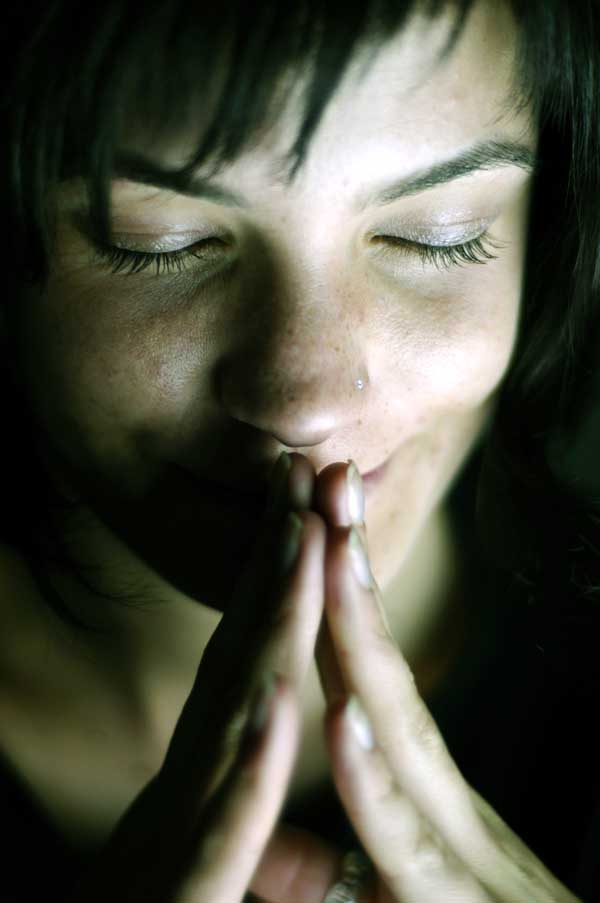
If I sit still and work from the still point within, then the things that need to be done next will show themselves. The quiet life begins within. It’s one of the reasons we are all encouraged to pray or meditate or still the heart before the day begins in earnest.

“Be still and know that I am God.” [Psalm 46:10]

Read Full Post »

« Newer Posts - Older Posts »