Feeds:
Posts
Comments

Whom Shall I Fear

fortressThe Lord is my light and my salvation—
    whom shall I fear?
The Lord is the stronghold of my life—
    of whom shall I be afraid?  [Psalm 27:1]

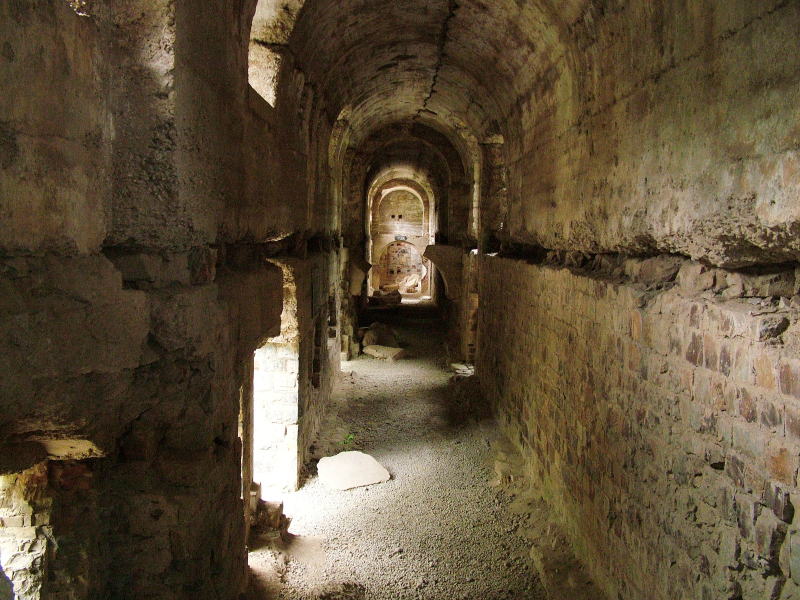
A stronghold is a fortress or castle, a fortified refuge, a secure citadel. In Western culture, this is not a strong concept.

Contemporary forts and military installations may have guards at the gate, but really, it’s not that hard to get onto the property. However, if other military bases are similar to the Aberdeen Proving Ground which is nearby, there is an area that is completely secure, most locals call it “behind the fence.” It’s not that the entire base doesn’t have fencing, but this area is specifically top secret. It is next to impossible to get in there without proper identification. It is secure, it is a citadel and it is inside the larger complex.

In some ways, I think the stronghold of God is the same way. It’s within me. My body may suffer from external harm: I can be injured and I can become ill. But, the soul, my very Spirit, is “behind the fence.” It’s part of the covenant I have with the Christ. This was the agreement God made with human: invite Christ in and a fortress is built.

The only time this stronghold is breached is when I open the doors and windows myself, when I allow danger too close, when I engage with thoughts or activities that can hurt me. Joyce Meyer has a series called “Battlefield of the Mind” and it is one of her best. This is the area that is partially our responsibility. There is  an amusing commercial sponsored by an exterminating company in which a giant bug comes to the front door of a home. The home owners open the door and are stunned at the insect’s presence. There is a choice: let him in or close the door.

This day, I want to be aware of the fortress of Christ within me, the Presence, the strength that is available to me if I trust the walls of Spirit, if I keep the door closed to harm.
Sleep On It

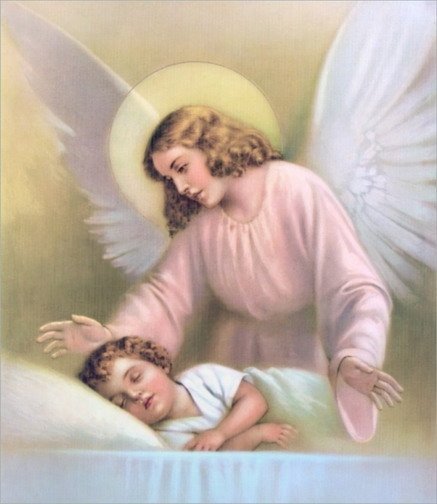
sleep angelAs the sun was setting, Abram fell into a deep sleep, and a thick and dreadful darkness came over him. . . . On that day the Lord made a covenant with Abram and said, “To your descendants I give this land, from the Wadiof Egypt to the great river, the Euphrates— [Genesis 15:12, 18]

Sometimes, it’s all too much to take in, to process. Abraham believed God would do as he promised but couldn’t fathom what part he would play in the promise, if any. God created a picture for him to hold onto: the ritual of covenant making at that time (the sacrifice of animals). God did not need this ritual, Abraham did. And for that reason alone it was done.

Like Abraham, we cannot see how God will work out the situations in our lives. And although we have some rituals, depending on the traditions we have embraced, they may not be enough. So, sleep on it.

I know this sounds flippant at first, but truly, there is so much more that can happen in our subconscious minds and often, our waking time does not give that part of us time to catch up. In our sleep, we are not so quick to edit and manipulate what we see and hear. The fantastic is possible. Even if we don’t remember our dreams, much is done within.

In this story of Abraham, the covenant was completed while he was in a deep sleep. The covenant promise rooted in his soul.

I have a tendency to try too hard to make things happen. Another way of saying this: I’m a bit of a control freak. I try to tell myself to “let go, let God” and a number of other cliche phrases, but they are easier said than done. But, in sleep, in rest, the Spirit is able to do a lot more sorting and clarifying.

So now, I have one last prayer before I rest each night: “Lord, I give this time to you. Teach and guide me within while my body rests.”

Promises, Promises

Why do we picture God?

Why do we picture God?

He took him outside and said, “Look up at the sky and count the stars—if indeed you can count them.” Then he said to him, “So shall your offspringbe.”Abram believed the Lord, and he credited it to him as righteousness. [Genesis 15:5-6]

You have an attitude about promises? I know I do. Apparently, I’m a classic case, too many promises have been broken along the way. The only good thing that came from that is I don’t make my own promises lightly. It’s serious stuff, this promise-making.

But, I am grateful that I also learned that the promises of God are outside the norm.

God cannot be anthropomorphized, giving God human characteristics. And yet, people do it all the time, as though we need a picture to grab onto God. How many pictures have we seen of God in a long white beard sitting on a throne, much like a high-end Santa in flowing robes or a collective consciousness of what Zeus might look like if he wasn’t just a myth. Ha Ha. Why is that funny? Because people are quick to call the Greeks and Romans foolish in their many gods, and yet, our imagined “God” is OK.

It’s one of the reasons the ten commandments include a warning (number four), “You shall not make for yourself a carved image, or any likeness of anything that is in heaven above, or that is in the earth beneath, or that is in the water under the earth.” [Exodus 20:4-6] We are not supposed to make God like us. God is not “like” anything we know. “God is spirit, and his worshipers must worship in the Spirit and in truth.” [John 4:24]

God promises are birthed in Spirit and manifest in our world in a way that cannot be judged by time and space.

And yet, I keep trying to put God in my time box. I keep wanting the promises to either be fulfilled (in a way I recognize) or in a time frame that suits (maybe within my lifetime might be good). And here’s the point of Abraham. He believed without being given the specifics or the time. This wholesale faith in the promises of God makes all the difference.

So, two things I want to carry with me today: One: the image of God that we have been given, one with skin and recognizable human was Jesus, the anointed Christ, the promised Messiah. How long did that take? And two, well, I’m thinking. It’s about the promises. I need to do some extra work on that idea, a series, I guess. What is my life promise, like Abraham’s? Perhaps I have been too scattered all these years. I will be asking for that revelation, that promise revealed.

The Poor in Me

prayerr“Leave her alone,” Jesus replied. “It was intended that she should save this perfume for the day of my burial.You will always have the poor among you,but you will not always have me.” [John 12:7-8]

Priorities. Sometimes, that can be a the problem while serving others in the name of Christ. We lose track of the reason we are giving up our time and energy. I can speak to this, because, “I are one.” That is, I am working, volunteering, going and going and going, but not stopping long enough to give balance to my day by spending time in silence with God.

It’s the still time, the set aside time, the Christ time, that gives meaning and strength to all the other time. I know this. I believe. And yet, I will sleep an extra 4 snoozes on the alarm, I will throw yogurt in my purse as I rush out the door, I will call people while I’m driving, I will make appointments without checking my calendar, I will say yes and yes and yes to people who ask for my time, I will write at all hours of the night, I will make three trips to the grocery store on the same day, I will pay the late fee on my bills, I will visit friends who are sick, and on and on and on I go. But, I will still fail to stop long enough to center down, to breathe, to pray, to meditate, to connect with the Holy Spirit, to utter gratitude in the silence.

Jesus had a very small window in the flesh. Jesus was more than humanity could tolerate. And yet, despite the urgency of need in the world, he found time for solitude. He made time for prayer and listening. He could not do what he had to do without it.

How long is our own time here in the flesh? I cannot even know what the next hour will bring or the next car ride. I have now. I have a choice in the moment.

Will I pour out my ointment to the Christ or dash about?

Christ is with me always now, but in what capacity? Am I conscious of the Presence? Breathe.

Flamboyant Love

Mary and Jesus FeetThen Mary took about a pintof pure nard, an expensive perfume; she poured it on Jesus’ feet and wiped his feet with her hair. And the house was filled with the fragrance of the perfume. But one of his disciples, Judas Iscariot, who was later to betray him, objected, “Why wasn’t this perfume sold and the money given to the poor? It was worth a year’s wages.” [John 12:3-5]

I just got the real picture of Mary and the nard (spikenard oil) and Jesus’s feet. In the past, while reading this passage and other similar ones about a woman who washed or anointed Jesus and then used her hair afterwards, I imagined her holding her long strands of hair to wipe like a cloth. But now I see differently. It’s more like nuzzling. I wish I could explain more clearly what I see in my head, this women kissing, embracing, stroking and pressing her head to Jesus’s feet (or head or hands or mantel); holding him close to her face, her lips, her hair. I think about my own ways of  holding close my kids or my pets. I put them right up to my face and hair, cheek to cheek, head to head. It’s intimate, it’s loving, it’s tender.

Essentially, I don’t believe this act was about washing or cleansing. Instead, it was purely a demonstrative act of love. And I suppose it could be called a humble act but love, but then, in its purest form, isn’t love humble anyway. At least it should be.

Judas’s response is more dramatic in hindsight. After all, we know now, he was the betrayer. But, in that moment, his reaction told a different story: he revealed his inability to recognize love. Following Jesus was never about love, it was about freedom. He must have been a “reasoning” man: perhaps even calculating. His passion was the overthrow of the Romans, the victory of the long-awaited Messiah who would bring Israel back to its former glory. For him, Mary’s act was, at best, sentimental and certainly a waste of resources. He was pragmatic and eventually (sooner than later), this led him to choose unwisely, to “move things along,” to force Jesus’s hand (without knowing what that would really look like). Judas did not expect his rabbi to be crucified. Instead, he expected an uprising of great proportions, a revolution. But he never understood the real revolution was in the heart.

Mary’s heart was already set free. She loved Jesus with abandon.

LazarusSix days before the Passover, Jesus came to Bethany, where Lazarus lived, whom Jesus had raised from the dead. Here a dinner was given in Jesus’ honor. Martha served, while Lazarus was among those reclining at the table with him. [John 12:1-2]

Jesus was on his way to Jerusalem, not only to celebrate the Passover, but undoubtedly he knew, he was going to his suffering and death. On the way, he stopped to be with friends. These were not necessarily disciples as we have no record that Lazarus and and his sisters followed Jesus in his travels. They were, instead, a home base, a place of rest.

I find it amusing that John would mention that Martha served, this very same Martha who Jesus chastised for becoming overly upset about serving while her sister sat at his feet listening (that would have been weeks earlier). I believe it is mentioned intentionally because this was still Martha’s way. Jesus never intended for Martha to stop being Martha, but to simply stop comparing herself to others and stop stressing. She was good at what she did but Jesus wanted her to check her priorities. I can relate to that, the Martha that I am. And so, on this final trip, his  final visit to their home, Martha served her Rabbi and Lord.

But the continuing story of Lazarus has always fascinated me the most (undoubtedly because of my love for fantasy and science fiction). In Romans 6:9, Paul writes about Jesus, “For we know that since Christ was raised from the dead, he cannot die again; death no longer has mastery over him.” And I cannot help but wonder, what happened to the ones Jesus raised from the dead (Lazarus was not the only one, there were a few others)? What was life like afterwards? Did they have awareness of death and then life again? Was there a sense of destiny, a role that needed to be fulfilled by coming back? Did Jesus charge them with a job to do? Did Lazarus die again? Did the widow’s son or Jairus’s daughter, Tabitha, die again?

I’m just asking.

And why did Jesus weep at the death of Lazarus? He delayed coming to the sick bed of Lazarus on purpose. He knew Lazarus was dying. And yet, when Jesus finally arrived in the midst of the raw grief and shock of Mary and Martha, Jesus weeps (John 11:35). So much is assumed is about his weeping, but I am not so sure it is merely for his love for Lazarus. Instead, I believe (and this is pure conjecture on my part) that Jesus wept because of the symbolism that Lazarus’s raising implied. Jesus was seeing himself, for he too would walk from a grave and the stone rolled away.

But Lazarus did not come out with a different body, at least, there is no indication that he could transport himself or walk through walls. In fact, this is the last time we hear of Lazarus at all, reclining at table with his friend, his Rabbi, his Lord.

Is Lazarus still here? I don’t know. But what a story that would be, what an adventure. It’s on my list of tales to write.


What is the Prize?

Painting by Dorothy J. Ross

Painting by Dorothy J. Ross

Brothers and sisters, I do not consider myself yet to have taken hold of it. But one thing I do: Forgetting what is behind and straining toward what is ahead, I press on toward the goal to win the prize for which God has called me heavenward in Christ Jesus. [Philippians 3:13-14]

The prize is not death alone. If that was true, then we’d be lining up for the “big shot” (which is what I used to tell my children when our very sick dogs or cats had to be euthanized — probably not the best description). But if death itself was a prize, we would be racing toward it.

No, it’s not any death, it’s a death that is drenched in the Spirit of Christ and when that happens, death is a doorway.

But that’s not the most important part. At least, it can’t be for me. I am already so results oriented, I don’t really want to add another “ending” to which I am “straining” as Paul states. Instead, I want to be present in the process of knowing Christ. This is a way of living that is not dependent on circumstances. It’s a place so secure within that nothing can shake it loose. This place, this Presence, is the source of love and miracles.

It’s not that “last” death but the small dying to self each day so that God, in Spirit, is more. Or, unified, who I am is not lost entirely but married to the One. We are called the bride for a reason. But until then, we are still guests at the wedding, relatives at the ceremony, even witnesses. The prize is in the marriage vows and certificate. The prize is becoming one with the Christ Spirit within.