Feeds:
Posts
Comments

Bond of Peace

We are asked to cultivate unity by using the “bond of peace.” A bond is something like a rope, handcuffs or Gorilla Glue. It’s a connection, a relationship, a hookup. It’s a union, an agreement, a promise. With these, unity is possible. And without, what do we have? Just watch CNN.


Ephesians 4:3-6
Make every effort to keep the unity of the Spirit through the bond of peace. There is one body and one Spirit . . . one Lord, one faith, one baptism; one God and Father of all, who is over all and through all and in all.

A bond of peace cannot be achieved alone. It takes at least two. Oh, I suppose there is inner peace, but even that comes from an agreement between the mind, soul & spirit. Peace is not achieved by threat, dictatorship or commandment. That is just an absence of conflict. A true bond of peace comes out of mutual desire, love, commitment, and compromise.

There are a couple of people I know from my work who have learned one of the first steps toward creating bonds of peace. One of their distinguishing characteristics is not taking personal offense (even when it’s intended). I watch them in difficult or tense situations and it’s like the verbal attacks or innuendos float across their spirit lakes. They know how to listen fully. They don’t grab onto words or tone of voice and prepare a response ahead of time. They know how to wait. It’s disarming in the best way. In this way, they open a door to unity and understanding.

I want this but I’m not very willing to practice. I confess, I’m always taking offense. I’m always expecting the worst in a situation. I critique the tones, the eyes, the body language and if I come up with an attack assessment, I ready my own arsenal. I’m quick. It doesn’t take long to raise the battle flag.

Unity is all those “ones.” One body, one spirit, one God and so on. Can I let go of mine long enough to enter the One? It begins with small steps, I think. Bonds with family and friends. A peace driven by love.

And so I take a breath today. I take a breath and ask for mindfulness again, to remember, to make peace.

Byproduct of Power

Not as the world gives power, but as God gives power, what do I get? More paradox. We are brought up in a world of Donald Trumps where power means control, self-aggrandizement, immediacy, and ambition. But Christ modeled something else.

Ephesians 3:20, 4:2
Now to him who is able to do immeasurably more than all we ask or imagine, according to his power that is at work within us, . . . Be completely humble and gentle; be patient, bearing with one another in love.

It’s not as though Jesus couldn’t do dynamic things. He had enough power to do it all. Instead, much of that power was channeled toward a more difficult task: humility and gentleness, patience and loving others unconditionally (with forgiveness–a mark of unconditional love).

We tend to be wired for self-protection. We say, “If I don’t take care of myself, who will?” or “I don’t want to become a door mat” or “How long must I wait?” We keep putting ourselves in the center of our universe.

When it took two years to adopt our daughter, I kept pounding on God’s door asking why it was taking so long and how unfair it was and what had we done wrong? Finally, through a friend, I heard these words: “What makes you think this delay is about you?”

To practice the acts of humility and patience and truly loving, is “other” oriented. It’s passing power to them. It’s letting the overflowing water get others wet. Power is energy and cannot be efficiently constrained. But how amazing, that this energy is passed along through release and not the exertion of force.

Help me get this today. Help me practice opening my hands and heart, releasing the power of the Holy Spirit.

These dimensions are what we use to understand our world. Anything outside of them is “spirit” or thoughts or feelings: wind. Scripture implies that unconditional love gives us our only true glimpse or foretaste of God. Except for Christ, who entered our dimensions to show us the the way beyond.


Ephesians 3:17b-18
And I pray that you, being rooted and established in love, may have power, together with all the saints, to grasp how wide and long and high and deep is the love of Christ, . . .

I cannot really strengthen my inner being on my own. About the only thing I can do with that part of myself is work toward discovery. This place is where the Holy Spirit joins with my own personal spirit. And that kind of strength within is a gift.

Ephesians 3:16
I [Paul] pray that out of his glorious riches he may strengthen you with power through his Spirit in your inner being, . . .

Because I have such a terrible tendency to start projects and peter out, I’m much more tentative about long term commitments than I used to be. I know myself that much. I have started and stopped diets, exercise programs, methodical housecleaning, vegetable gardening, interior decorating, and a score of hobbies. In most cases, I go great guns for awhile and then, eventually, the enthusiasm dwindles and I am stuck with half-done projects or worse, I am further back than I started (one step forward, two steps back).

Fortunately, my prayer life and time with God has held a certain amount of consistency that heretofore has been missing. It’s not perfect, but it’s one of the more stable uses of my time and energy. All the same, this relative success has come from a certain determination along with a greater imparting of grace from God.

I believe I will need something more now to step up to the next level, to integrate and implement the truths I have uncovered these past three years, I will need a different kind of strength and power from within. I don’t believe that more prayer or more reading (as in physical exercise) will necessarily give me the power/strength I seek or require. It would be an error on my part to think I can pull myself up to this next stage of devotion and submission to Christ.

Many people like to talk about the “promises of God,” like the various covenants God made with his chosen people from rainbows (not destroying the earth by flood after the time of Noah) to multiplication (the many children and heirs of Abraham). But then, through King David and the prophets, the ultimate promise begin to take shape.

Ephesians 3:4, 6
In reading this, then, you will be able to understand my insight into the mystery of Christ, . . . This mystery is that through the gospel the Gentiles are heirs together with Israel, members together of one body, and sharers together in the promise in Christ Jesus.

This singular promise is about relationship to God, the creator and sovereign head of the Earth. This promise is mystical and eternal. The revelation of this mystery has been a slow unfolding.

God began the process with a small group of people in Israel. Although the initial oracle was fairly simplistic (as in only ten commandments), the message grew into a rather unwieldy collection of laws and interpretations that bogged down the initial intent: Love God: Love Others. Eventually, through hardships, exiles, and even silence, another small group of people of Israel grew hungry for truth and looked for the promised solution: the Messiah who would reopen the door to God.

Hidden within the Messiah solution was a greater mystery: everyone would have now have access to God.

There is something about the idea of “everyone” that is not always palatable. If everyone can have it or do it, there is nothing special about it anymore. And what about the bad people, won’t they abuse it? And what about the ugly people or the smelly people or the people of different color or shape or ability?

It would be like a board of directors of a bank: they have the combination codes for the vault. They are the keepers of the depository and they can decide when to open the vault and when to close it. That is, until some guy comes along and says he’s the one who made the vault in the first place. He’s changing the code to make it easier to open. Sure enough, those directors start freaking out when some real low-lifes from town start opening the vault and taking what appears to be more than their fair share. These new folks are so cavalier about the door, they don’t even bother to close it sometimes. The leave the door ajar. Good grief, anyone could get in there and take everything. The directors keep closing the door and changing the access codes. But then, along comes one of the old directors, some called him Paul and some called him Saul, he starts passing out the universal code, even to people from out of town. The most amazing thing happened, instead of a run on the bank, a lot of people didn’t believe the door could be opened, so they didn’t bother to look.

The mystery is that the vault is never empty. There is always enough in the vault.

It’s the law of plenty.

Most of us think, including me, “if I give it all away, there won’t be enough for me.” [I Kings 17:7-15]

Access to God

The term, access, is such a contemporary word. We think of computer access and Internet access and it’s clear that there is a direct way to get or use these services. And yet, here we have a promise for direct access to God by the Christ. This is really the gospel (good news) for me.

Ephesians 2:18-19a
For through him [Jesus Christ] we both [gentiles and Jews] have access to the Father by one Spirit. Consequently, you are no longer foreigners and aliens, but fellow citizens with God’s people and members of God’s household . . .

It’s funny. If someone said to me, in order to meet or talk with Bill Gates, I’d have to go through a particular secretary, I wouldn’t bat an eye. That would make sense. Or, in order to meet with the President, I’d have to go through a series of requests to various intermediaries before I could get that prized meeting. Or, if I wanted to have an audience with the Pope, I’d have to have very good reasons and very good contacts.

And yet, if I say that the Christ is the access point to God, there is much push back. “God is available to anyone,” they say. And in some ways, that is true. Certainly, all of creation is within God’s purview and if God, as Spirit [John 4:24], wants to communicate or connect with anyone, anywhere or any how, who am I to belittle the idea.

But scriptures are clear that this mysterious “work” (or sacrifice) of Jesus, the long awaited Messiah, is the planned gateway to God. It’s a direct path: easy, loving, and dependable.

For me, the question is not so much about accepting Jesus but whether or not a person really wants to be in relationship with God, big God, Spirit God, Universe God? Do I, as a grain of sand (or even smaller) in relationship to the suns and planets want access to the Creator? Do I have any questions . . . fears . . . hopes? Do I want to know about my place, my role, my meaning?

I do. And I thank this same God for giving me the access code in Jesus.

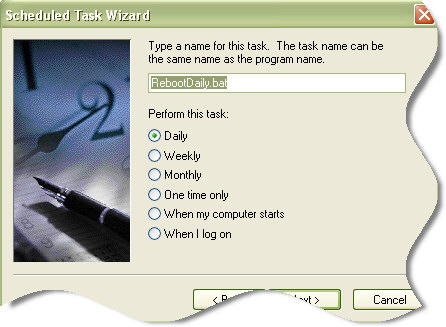
Sometimes my computer is so messed up, the only thing left to do is reboot: shut it down and restart it. And I’m thinking this was God’s plan as well. Humans needed a a restart, a clear way to reboot the system, a specific point in time to begin fresh. Christ is grace personified.

Ephesians 2:4-5
But because of his great love for us, God, who is rich in mercy, made us alive with Christ even when we were dead in transgressions—it is by grace you have been saved.

Of course, a reboot will take care of the current glitches but it doesn’t erase all the old stuff. Right now, my computer is running really slow. I kept thinking it was the Internet connection or the router, but I finally had to go poking around the “C” drive to determine what else might be the cause. Since I’m not a computer expert, this investigation is always a little daunting.

As I scrolled through the “Add/Remove programs” section, I found a number of old programs I no longer use. They were just taking up space. They weren’t hurting anything, they were just memory hogs. As a Christian, there are the same kinds of things that are no longer part of my daily life. I don’t need those rule-sets for anymore. So why hang on to them? Click on remove program.

A second place I looked for memory wasters was the files themselves. Since my family sees the desktop as a “family computer,” I have discovered they leave a bunch of unnecessary files on the hard drive. Many of those were easy to dump since they weren’t mine. However, many other files represented special times in my life. But how much is too much to carry around and store? In our basement, I still have my files from graduate school. OK, that was ten years ago. Isn’t it time to take these boxes of old homework, term papers, and dated books to the landfill? Same for the old computer files.

The biggest file folder turned out to be a music folder of my daughter’s (3.5 gigabytes). I vaguely remember trying to help her salvage her I-tunes from a damaged (trojan/virus infected) laptop. In the end, we put them on the desktop for safe keeping, a holding tank. I was reminded of the times I’ve tried to help other people emotionally and taken on their stuff. I’d forgotten that I had to pass that stuff along to the God who is willing to carry it all. Click on delete … empty the wastebasket.

After I did all this deleting and emptying, I did another reboot, a refresh. Computer is running better.

Same for me. First reboot at accepting Christ was life-changing. But I still need to refresh my system along the way. Sometimes I need a technician to help me ferret out the problems, but sometimes, I just need to delete the old stuff: prayer, confession, thanksgiving.