Feeds:
Posts
Comments

Posts Tagged ‘authenticity’

It’s really not that hard to “look” like the real thing. We live in a “photoshop” world where pictures can be retouched to look like anything and anyone. People put on masks as well. It takes a lot of energy to be convincing.

II Corinthians 11:13-14
For such men are false apostles, deceitful workmen, masquerading as apostles of Christ. And no wonder, for Satan himself masquerades as an angel of light.

To masquerade as someone else requires “just enough” knowledge, lots of props, and the ability to talk it. Sincerity can be faked. Miracles can be helped along. Charisma is used by the honest and the dishonest.

The other day, there was an article in the paper about a man who was arrested for impersonating a police officer. This was his second time. He had a closet full of uniforms, identification, weapons, and other police gear. The tip off happened when he took his car to a shop and asked them to install the police lights he had purchased on the Internet. They said he looked so authentic that he could probably convince another police officer that he was the real deal. Why? Who knows?

He’s not the only one out there who goes to a lot of energy to put on a mask. Somehow, who we really are is no longer enough. And so we create a different persona. We are in total control.

Pretending righteousness seems almost worse than just outright sin.

It’s not for me to say who is masquerading and who is authentic. As an actress, I have put on such a mask from time to time. I am ashamed to even say it, but it’s true. It’s like the quick lie that my kids have perfected. It feels easier on the front end to cover up and delay and maybe even avoid consequences.

But camouflage faith brings nothing but sorrow. The supernatural effects of faith don’t work when it’s not the real thing.

A tiny true faith is better than any mask.

Read Full Post »

Everyone has a sphere of influence. This is taught in leadership workshops, assumed in management sessions, and encouraged in networking seminars. It is no different for the sphere of faith. I have one too. But do I relate to those who populate my sphere honestly?

II Cor 10:13
We, however, will not boast beyond measure, but within the limits of the sphere which God appointed us—a sphere which especially includes you.

Who is in my sphere of faith? Anyone and everyone within my ken. It can be a fleeting walk-through or a long relationship. Everyone has similar inner circles of family, friends, colleagues, and neighbors. But in today’s world, the spheres are much bigger and wider; the circles more broadly concentric than they were in the time of Christ. Some of our circular province coils beyond our physical perception and even into the virtual realm. The limits of our spheres cannot be so easily drawn. It can be a little daunting.

For this reason, I know I must be strong in my understanding of self. I must stand with all that is Christ in the center of my sphere, in the center of the many spokes that fan out from my middle, the center of my storm.

When I venture outside of this center without an anchor, I am whipped around in someone else’s vortex. I lose who I am.

I confess, sometimes I close my eyes when things are moving around me too fast. It’s not the answer. I can’t shrink inside, to nurture the inner core only, to be a recluse. I am to engage with the world’s orbits. I am to touch, see, sense, hear and embrace. As long as my core is solid and my roots established, I should be able to stretch pretty far.

It’s still too much about theory and not enough about practice. Thanks be to God that the Christ Spirit can draw me back when I become overly confident and founder around in another sphere with only the flimsiest of tethers.

It’s still about authenticity and transparency. It’s about revealing my dependence on Christ. But it’s also about impacting the whole with my “mustard seed” of faith. This is how mountains move–when spheres move from an authentic center.

Read Full Post »

With each day that the veil of my heart is down, the more accessible and available I am for transformation and change. Isn’t that why I keep pulling the veil back up? Transformation is not easy. Old things must pass away and the new is unpredictable.

II Corinthians 3:18
And we, who with unveiled faces all reflect the Lord’s glory, are being transformed into his likeness with ever-increasing glory, which comes from the Lord, who is the Spirit.

I have always considered myself as some kind of agent for change. It’s even part of my personal mission statement, “to inspire meaningful change . . . ” But when it’s my own change, my own transformation, I am a little more reluctant. Oh, I can change my hair, my weight, my clothes, and all the other external trappings. I can change my job and change my tasks. I can change the way I work. But in all of those things, I am in charge. I control the change.

The next step in my Journey requires a submission to the work of Holy Spirit. It’s moving into something more unfamiliar. It’s giving permission to the relationship I have with God to manifest differently.

What does it really mean to be a believer, to love God with my whole heart, soul and mind? What does it really mean to love others, to love my neighbor as myself, to love unconditionally, to the love the unlovely (an not just on a mission trip, but every day).

My theme song for many years has been, “Refiner’s Fire.” But the dross is so familiar, so comfortable, and yet so meaningless in the bigger picture.

I’m still afraid.

Read Full Post »

A veil can work two ways. It can protect what is within from outside eyes, but it can also hinder seeing clearly. Which veil do I still wear?

II Corinthians 3:15-16
Even to this day when Moses is read, a veil covers their hearts. But whenever anyone turns to the Lord, the veil is taken away.

I can attest that I experienced a literal dropping of a mental veil when I read the New Testament through for the first time back in 1979 and as a result, acknowledged that Christ was real and had accomplished that mysterious feat of covering my sins with His blood sacrifice and reestablishing a way between me and God. One day the whole thing was gobbledy-gook and the next day, I saw truth in the words. The dropping of that veil was an enlightenment.

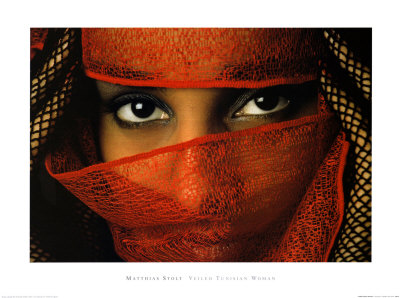
But I wonder now, if I haven’t raised a different kind of veil. Much like the Middle Eastern hijab or burqah, am I still hiding behind a veil of the heart? Am I concealing myself from people around me? When I consider the glory within and how I have shuttered it, isn’t that just another description of the veil?

For glory to pass through, the veil must be down. For love to pass back and forth, the veil must be down. This is about transparency and authenticity. This is about trust.

Over the years, I have struggled again and again with disappointment. It’s been a powerful clip-on for the veils in my life. To keep out disappointment, I push away dreams and hopes. To keep out fallible people, I raise standards. To shield myself from the judgment of others, I send out my own arrows of judgment (the best defense being a strong offense).

It is not the way.

Give me courage this day to drop the veil and to reveal myself and with me, the glory that is Christ Jesus. I believe Jesus was comfortable in every setting and with every kind of person because he was open, he was veil-less, he was accessible.

This is my passion for today.

Read Full Post »

Can’t do it. I can’t be silent. I won’t. And that doesn’t make me less fond of my beloved Savior nor He of me. Nor does it mean the Bible is so full of holes that it’s unreliable or useless. In fact, I’m not even arguing with the truth of it. I’m just not going to do it.

I Corinthians 14:33b-34
As in all the congregations of the saints, women should remain silent in the churches. They are not allowed to speak, but must be in submission, as the Law says.

There are certainly cultural and historical bases for this verse (and others) about the roles of women in the church. I understand that.

And yet, on one hand, New Testament women were free to worship and participate equally in the promises of Christ and even perform as leaders (e.g. Lydia & Priscilla) and yet, on the other hand, great limitations were placed on their authority within the church.

Some liberal-leaning Bible historians have explained away this verse by saying it refers to the disorder of the Corinthian church and that women were calling out across the room asking for explanations and the like. Good luck with that one. Maybe so.

And yet, I tend to agree with the more conservative approachs: Paul meant what he said. So be it.

But I cannot keep silent. I don’t cover my head in church and I still wear jewelry and I don’t always “submit” to my husband’s point of view. These things are also part of who I am and I come to Christ honestly.

I have been gifted to speak and even, on occasion, to write well. There have been anointings. The Holy Spirit has flowed through me and I have spoken out of that secret place. I have experienced the pleasure of my God in His creation–me. And although I love the scriptures and all that those words have given to me and revealed to me, I will not allow this verse to condemn me.

So, I’ll wait. And on that great day when we no longer “see through a glass darkly” [I Corinthians 13:12] but understand the greater meanings of our three-dimensional life on this earth, it will all make sense.

I trust God and lean on His grace and that grace is sufficient, even for this intentional rebellion.

Read Full Post »

Whether it’s speaking, writing, or teaching a class, it’s critical to do so authentically and to check in with the listeners, the readers, the students. Are they getting it? Are we having a conversation? It’s one reason I’ve grown tired of traditional church services: too lopsided. I need dialogue.

I Corinthians 14:11
If then I do not grasp the meaning of what someone is saying, I am a foreigner to the speaker, and he is a foreigner to me.

I think it’s one of the reasons blogs, social networks like Facebook, Twitter, etc. are so popular. People write/talk and someone responds or leaves a comment. It’s like saying, “I hear you. I’m listening.” In some churches, this is accomplished by listener responses: “Amen” and the like, but it’s a primitive exchange. People write books and yes, we assume they love the process, but the real joy is in knowing the books are being read.

Another element is intent. Why does anyone write about God or Christ or faith (or anything else for that matter)? Why do we speak or teach? I’ve always struggled a bit with this question? I mean, there has to be a certain confidence that I have something to say. What is the balance between humility and spunk?

Teaching requires a class. Performing requires an audience. Writing requires readers. We’re back to the old Zen question, “Does a tree make a sound when it falls in the woods if no one hears it?”

Paul writes in verse 6b, “. . . what good will I be to you, unless I bring you some revelation or knowledge or prophecy or word of instruction?” What we say, what we teach, what we write, are the answers, hopefully, to the burning questions in the hearts of the people with whom we want to connect.

Mike and I encountered our favorite pastor some twenty years ago. His sermons were generally compelling but the times we liked best were Sunday nights and Wednesday nights when we could ask our questions, lots and lots of questions. We challenged him and he challenged us. The dialogue was alive and vibrant and unassuming. This was our time of greatest growth and learning.

Was it only because we were younger in our faith or was it the conversation?

Read Full Post »

If you’re wondering, there are lots and lots of blog posts about the “seal of apostleship.” Go figure. What’s the appeal of the seal? Authority and proof.

I Corinthians 9:2
Even though I may not be an apostle to others, surely I am to you! For you are the seal of my apostleship in the Lord.

Ever since we were little kids and got sticky stars pasted onto our attendance sheets or report cards, we have understood the power of the “seal.” This was the symbol of a job well done, of success, of completion. It didn’t stop with childhood, we are still getting seals. Look at any diploma or plaque. Don’t they carry the same power and authority? I always check the doctor’s office walls for his/her credentials. (Of course, I’m not sure what I would do if I couldn’t find the requisite diploma or it was from the Internet School of Medicine.)

When my husband and I were in the adoption process, we had to jump through a zillion hoops to get the right seals on the right pieces of paper for our home study: a seal from the county to verify that our notary was legitimate and then another seal from the state to verify that the county verified the notary (and so on) . . . for every piece of paper (at a cost of $5 per page – those gold sticky stars must get more expensive as they get bigger).

Paul’s seal is not a star or a “good job” sticker. Paul’s seal is the people whose lives were touched in a meaningful way. Paul worked among the people in Corinth, told his story, shared his faith, and people’s lives were changed. His seal was the fruit of his labor. That’s all. So simple.

Can I be content with that seal as well?

Several years ago, out of the blue, I got an email from a young woman who had been one of my students in a series of acting classes I taught in Indianapolis back in the 80’s (age hint). She was contacting me to let me know that she had become a theater professor and that it was my influence, my time with her, my teaching, that made her decide on this profession. She wanted to thank me. That was lovely. That was a seal.

When we truly touch a life and that touch makes a difference, what else is really needed?

Read Full Post »

« Newer Posts - Older Posts »