Feeds:
Posts
Comments

Posts Tagged ‘love’

NaziriteI ever realized that women could become Nazirites until this reading of Numbers. All this time, I had assumed that this vow was made only by men. And clearly, the rules for the Nazirite have the feel of being for men what with the growing of hair and abstinence from drink. Nonetheless, women could do take such a vow as well.

The Lord said to Moses, “Speak to the Israelites and say to them: ‘If a man or woman wants to make a special vow, a vow of dedication to the Lord as a Nazirite, they must abstain from . . .'” [Numbers 6:1-3a, NIV]

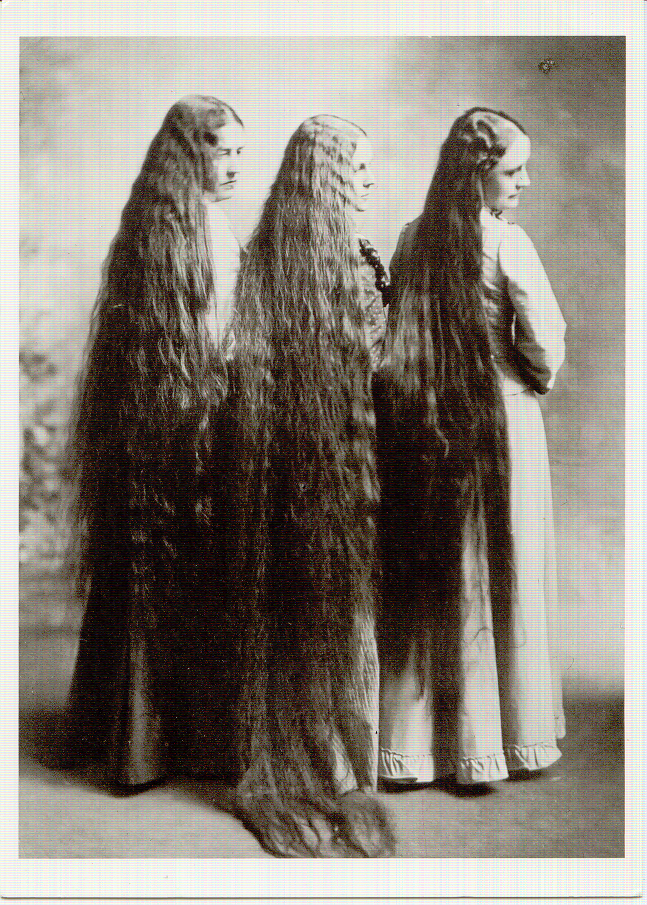
In a nutshell, the Nazirite abstained abstained from alcohol, fermented drinks of any kind, grapes, or raisins; refrain from cutting one’s hair; and finally, avoid defilement by a dead body (or place that a dead body has been).

When I looked up additional information about the Nazirite vow, I was surprised to find that it evolved over time into three types of vows, depending on their length. In general, such a vow was made for a minimum of 30 days and for the common person, my guess is that this was the norm. However, there was a permanent vow (in which the Nazirite would cut his/her hair once a year for convenience) and there was a “Samson” Nazirite who was permanent, but did not have to abide by the dead body rule.

I believe, over time, these permanent Nazirites became known as monks. But isn’t it interesting that the Christian monks (and nuns) in later centuries were known for shorn hair and not long hair at all. Another reason why the Nazirite tradition ended was the loss of the Temple where the many sacrifices had to be made at the end of the vow. No temple : no end.

It’s a fascinating topic really and even includes some references to Jesus entering into a type of Nazirite vow at the Last Supper. But, of course, that is speculation as are many ideas about this tradition.

In any event, this ritual had to do with setting apart and holiness (see Holy Objects & Holiness post). The person perceived a need to separate himself or herself from the norm, even to the point of stepping away from family obligations (as might be the case in the event of a relative passing away). These vows were quite serious and if one was broken, the person had to “start over” again.

Jesus made some references to vows or promises in Matthew 5:37 in which he told the people to allow their “yes” to be yes and their “no” to be no. I believe he was alluding to people who made promises they did not mean or were unwilling to keep.

wedding ringsBut I would add, if we do make a vow, then we should treat them with more respect. Marriage vows have become the most abused of all. It is not enough to say, “well, I meant it at the time,” for that changes nothing except to imply that one did not know one’s own mind at the time or the implication of the promise. I would recommend people stop using the marriage vow at all if the intent is not binding. Or, perhaps like the Nazirites, the couple, if the vow is broken, starts over again.

Of all the many things that women were excluded from in Old Testament times, this is not one of them. Both men and women can experience holiness and set themselves apart for God. And secondly, their vows are still binding.

 

Read Full Post »

freedomInteresting. In today’s world, how often does a person use as their defense, “I didn’t know” or “Nobody told me.” And as a result, they believe this lack of knowledge absolves them of the crime. You’d think we’d get over it. After all, the “I didn’t see the stop sign” defense does not work in court, nor does “I didn’t know the speed limit” prevent an officer from giving us a ticket. And yet, we still say it and claim it and believe it.

 If anyone commits a sin by violating the directives I have given you—even if he was unaware of it—once he realizes it, he bears the guilt and must still accept the consequences. [Leviticus 5:17, The Voice]

The law works differently than grace. The law is immutable and enduring. The law has not gone away because of grace, it still exists; it is only our relationship to the breaking of law that has changed through Christ. For this reason, “. . . all have sinned and fall short of the glory of God.” [Romans 3:23] Sin still exists. Intentional or unintentional, blatant or secret, repeated or isolated, sin happens. Mistakes happen.

mercy on meInitially, I wasn’t fond of the centuries old Jesus prayer: “Lord Jesus Christ, Son of God, have mercy on me, a sinner” because I didn’t see myself as a sinner. I saw myself as foolish perhaps or selfish, but honestly, it wasn’t like I had killed anyone. (Why killing seems to be norm for being a sinner, I don’t know, but most people who say this phrase, use that act as the litmus test.)

During Jesus’s ministry, he called his disciples to the highest plateau of faith by telling us to walk the paradox line: love enemies, go the second mile, enter through the narrow gate, turn the other cheek, and so forth. And then, he tops these off with the ultimate impossibility: “Be perfect as your Father in heaven is perfect!” [Matthew 5:48] What? Absurd. That’s inaccessible. No one can do that. No one can be even close to the perfection of God. And I can just imagine Jesus smiling: “Yep. That’s the point.” And apparently, anything less than perfect is sin.

Sin is part of life. But how do we respond to it? Do we yield to sin and its backlash (as they say, “Karma is a bitch”) or do we call on the power of the Cross of Christ to stand between? It is the point.

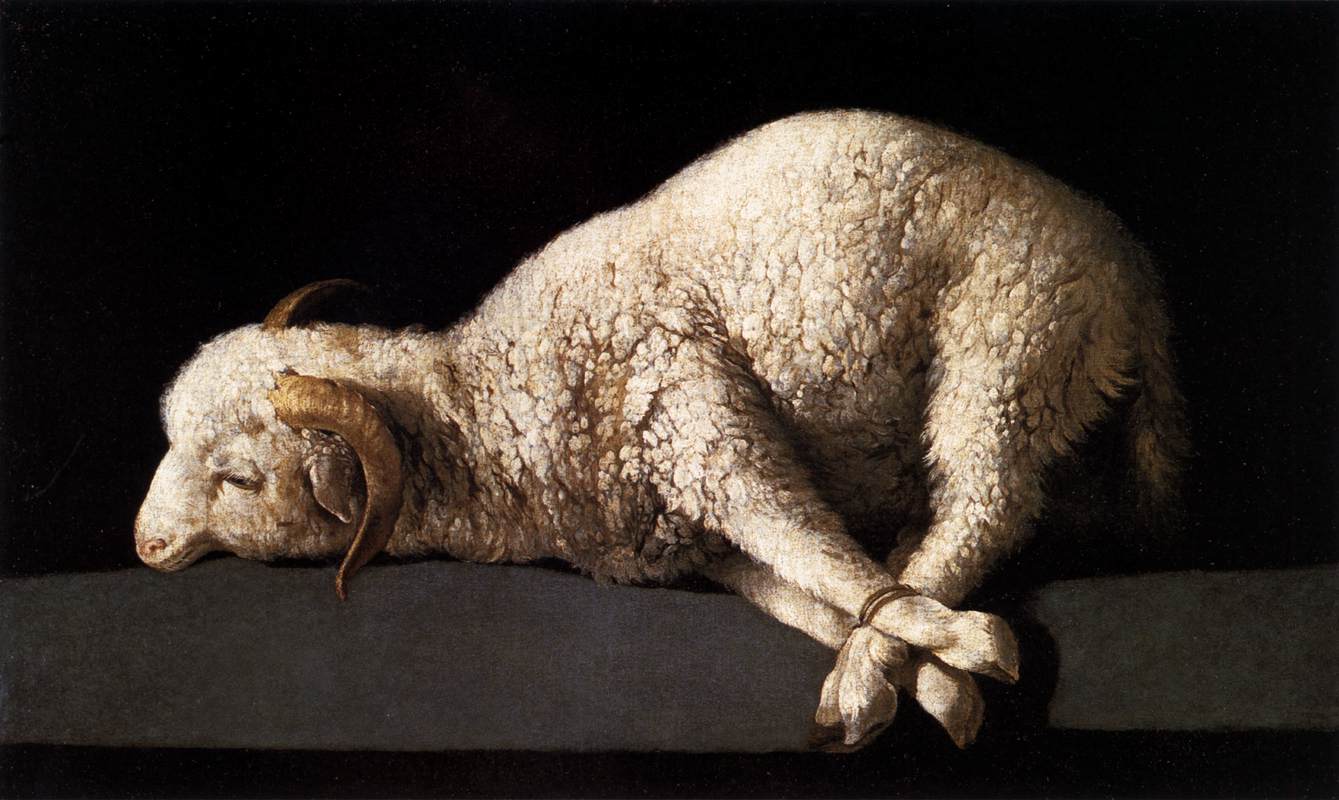
sacrificePeter writes, “Above all, love each other deeply, because love covers over a multitude of sins.” [I Peter 4:8] But Christ’s love covers ALL sins. We are encouraged to model our behaviors after Christ and practice love so that we can learn to be more generous of heart to one another. But there is only One who covers them all, from small to large.

Own up to the sin. But even better, own up to the sacrifice of blood that protects us all from the kismet of life’s choices.

Read Full Post »

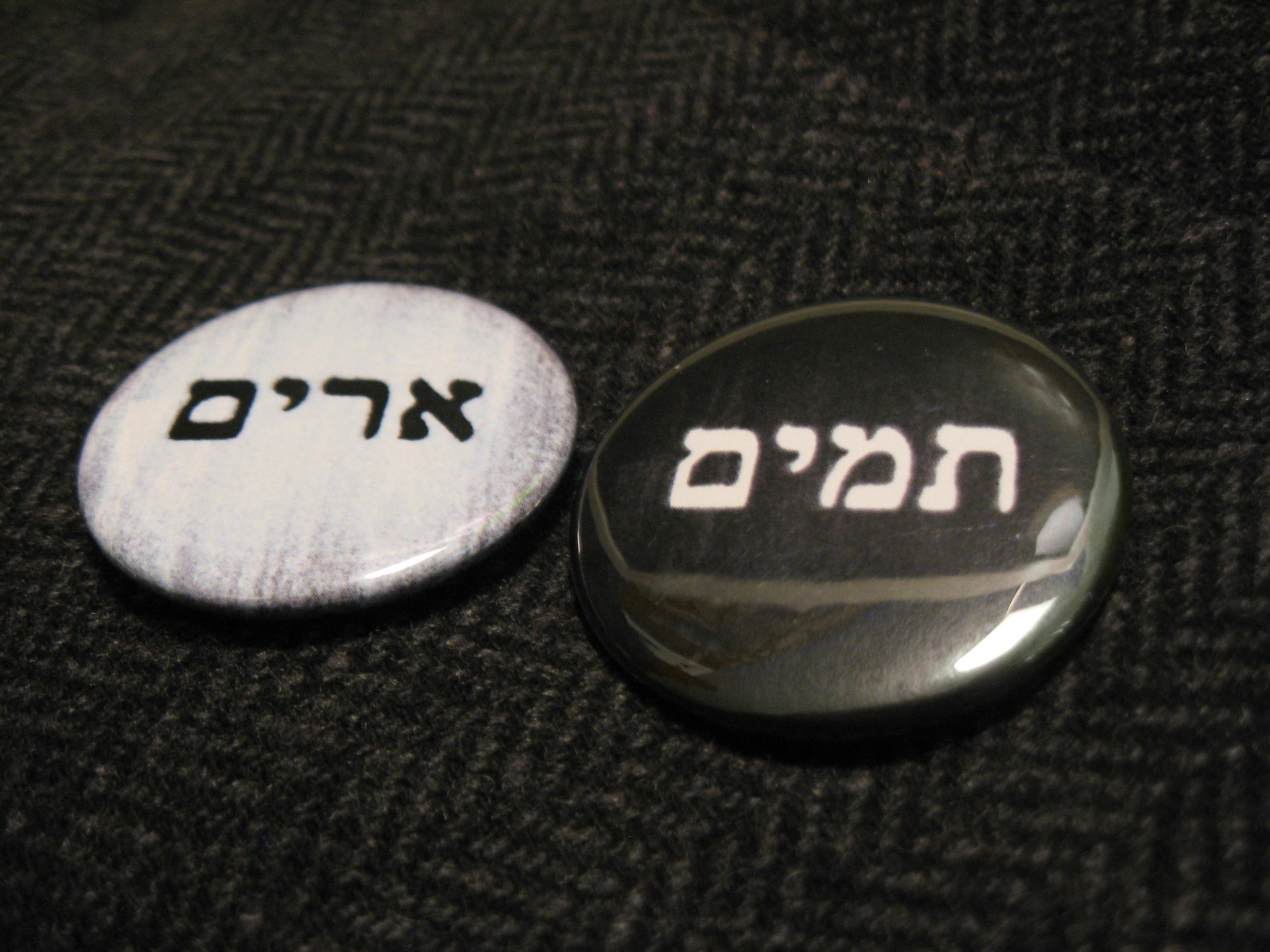
urim_thummimIt’s a fascinating idea really, the Urim and Thummim. Apparently, the priests used special stones to cast for a decision or divination. Some scholars translate the words as “revelation” and “truth” but I’m not sure that helps understand how they were actually used. Another interpretation is that the words essentially mean “innocent” or “guilty.” And in this way, groups of people or ideas where honed down by castings, Urim or Thummim, divided and divided until only one remained.

Also put the Urim and the Thummim in the breastpiece, so they may be over Aaron’s heart whenever he enters the presence of the Lord. Thus Aaron will always bear the means of making decisions for the Israelites over his heart before the Lord. [Exodus 28:30]

flip-coin_5Ultimately, it sounds a lot like flipping a quarter. The result is random except for one difference, the people who threw the stones as well as the people who asked the questions, wholeheartedly believed that God alone drove the results.

Would that make our lives easier today? Like the picking of daisy petals, “he loves me, he loves me not,” could we abide by the final outcome? Or would we hedge it? Wouldn’t we really just look for confirmation and not decision?

In some cases, the coin toss works very well, when nothing too particular is at risk. I mean, whether Harry or Sally go first in a game or the Ravens kick-off instead of the Colts, these are not a deal-breakers.

But what if it was life or death? What if it was getting married or not? What if it was to move our of state or not move? In today’s culture, could anyone give those decisions completely to God in such a manner?

Bottom line: do I believe in luck or destiny? Does God need the Urim & Thummim to drive my life?

If I gamble or play the lottery, I must still believe in luck. Or do I?

lottery ticketThere’s a joke about a man who prayed every day for months that God would allow him to win the lottery but he never did. Finally, he complained to God, “Why haven’t I won?” and God answered, “You should have bought a ticket.” Does God need the efforts of human?

It’s a complicated question and one I cannot fully unwrap.

So, truthfully, I can’t really say I don’t believe in luck at all, I’m sure God supersedes luck, but perhaps God allows luck too. So, I occasionally buy a lottery ticket, wondering if God would like to bless me this week, you know, when the prize is really, really, really big. But, in my gut, do I believe God would pick me for an undeserved splash of wealth at that magnitude? These purchases are really “just in case.” I’m hinting. I’m directing God: “Hey God, this would be a great way to bless me, if You have a mind do it. What do you say?” (And secretly, I even promise to tithe on it. Oh brother, what a conniver.)

Silliness.

love the lord your godLet me step back still further. God has been pretty clear about the best life for Human and summarized it in two sentences: “Love the Lord your God with all your heart and with all your soul and with all your strength and with all your mind; and, Love your neighbor as yourself.” [Luke 10:27] And every action we take, every decision we make, could be in answer to these directives.

Too many of my decisions are about me. Not God and not others. Lottery tickets included. Time to re-focus the heart.

Read Full Post »

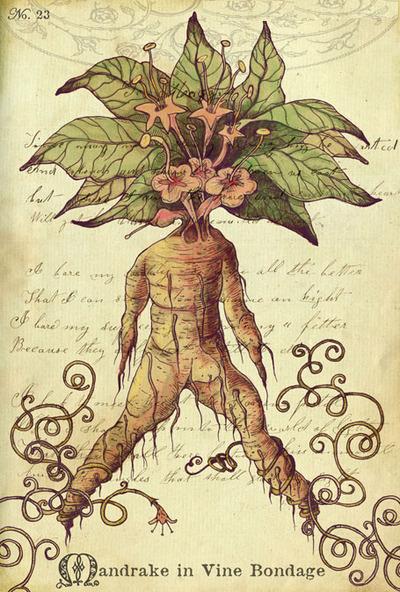
mandrakeIn case you don’t know the story, mandrakes supposedly have fertility enhancing properties (along with possible euphoria and hallucinations). All the same, Reuben, oldest son of Leah (the wife Jacob didn’t want), finds some in a field and he gives them to Mama Leah to use on Jacob (knowing of her longing to be loved by the man who wouldn’t or couldn’t care less). Rachel (the sister that Jacob did love but who was barren) makes a deal with sister Leah: give me the mandrakes and I’ll “let” you have another go at the man. Great story for “sister-wives;” they should be on TV.

So when Jacob came in from the fields that evening, Leah went out to meet him. “You must sleep with me,” she said. “I have hired you with my son’s mandrakes.” So he slept with her that night.God listened to Leah, and she became pregnant and bore Jacob a fifth son.Leah conceived again and bore Jacob a sixth son. Then Leah said, “God has presented me with a precious gift. This time my husband will treat me with honor, because I have borne him six sons.” [Genesis 30:16-20, NIV]

Of course, it didn’t work. Despite Leah having her own babies again, those two more sons (and a daughter – Dinah – barely worth mentioning), only later that did Rachel have a child and apparently, not from the power of the mandrake root.

These women were operating in a world of baby competition. Children were essential to the future of the family, and in particular, to the woman in a household. And, with the promises of God doled out to the line of Jacob, these women were the brokers of their husband’s descendants. In the end, Rachel only produced two of the patriarchs of the twelve tribes, her maidservant Bilhah birthed two sons, Leah birthed six sons, and Leah’s maidservant Zilpah also birthed two sons. And yet, despite the numbers being on Leah’s side, Jacob never did come around, and loved Rachel’s boys (Joseph – famed for the multi-colored dreamcoat and Benjamin) the most, playing favorites throughout their lives.

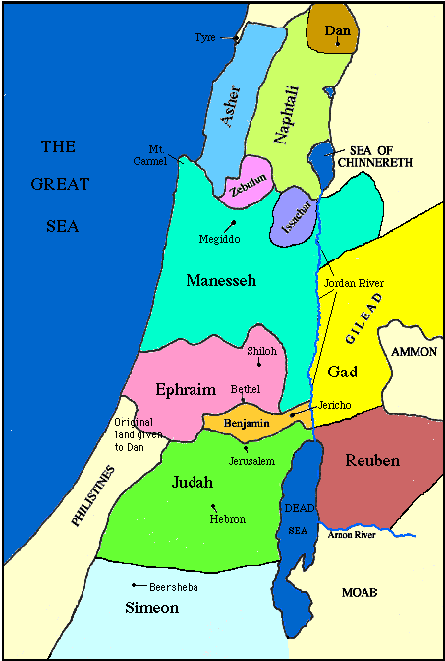
tribemapIt’s not like Leah’s boys weren’t important in their own right: Judah’s birthright, for instance, was foundational to the Jewish nation or Levi, whose descendants ruled the Temple and interceded with God as priests. They were all on the map.

Each son had his own future and each child born had a destiny.

The mandrakes were a tool that two women tried to use to manipulate their futures, their love lives, and their progeny. It didn’t work; it doesn’t work today either.

As the mother of three adopted children and no biological children, I know the mandrake game. I tried the same thing. I could not fathom that God would actually put two Christian people together and not create offspring from them. I became a sort of Rachel, trying all kinds of tests and suggestions to make babies happen. But God doesn’t act from my mandrakes or my plans. God is sovereign.

in this houseEven when our story changed and we adopted children, I tried to control their outcomes. Oh, I know, it was all in the name of giving them the best, giving them opportunities I never had, building arenas of success, layering on the expectations. I am ashamed to confess these things for my plans created many disappointments. But, my disappointments were self-inflicted. My plans were not God’s plans [Isaiah 55:8].

My children are still God’s masterpieces [Ephesians 2:10, NLT]. And my job should have been to plow the ground and provide nutrients, but allow them to grow into themselves, into the people God intended.

Forgive me for the mandrakes in my life, Lord. And do what you will with our children, now young adults, looking for a way. Perhaps the road could have been easier if I hadn’t littered it with so many calculations.

But, just like Rachel & Leah, the one thing I gave without mitigation was my love. And I am thankful that love covers a multitude of sins [I Peter 4:8].

Read Full Post »

YouAreHereInTheGalaxyAccording to scripture, Lot was Abraham’s nephew and although he traveled with his Uncle Abraham from Haran to Egypt and then on to the Negev. At some point, both men grew in wealth and decided to part ways. Abraham gave Lot the choice of land, and Lot choice the plain of Jordan to the East, well-watered, and dotted with large cities (among them Sodom and Gomorrah).

With the coming of dawn, the angels urged Lot, saying, “Hurry! Take your wife and your two daughters who are here, or you will be swept away when the city is punished.” . . . He [the angel] said to him [Lot], “Very well, I will grant this request too; I will not overthrow the town [Zoar] you speak of. But flee there quickly, . . .  Lot and his two daughters left Zoar and settled in the mountains, for he was afraid to stay in Zoar. He and his two daughters lived in a cave.  [Genesis 19:15, 21-22, 30]

Freed by the angels of God, generally negotiated by Uncle Abraham, Lot and his family are given the opportunity to start over. But Lot was a bit of a selfish man and appears to look for the easier way. He chooses the better land when he and his uncle part ways, he chooses to live in the city, he chooses to flee to a closer place than the mountains, and in the end, he even looks the other way when his daughters are impregnated by his drunken self. Moab and Bel-Ammi, are the children born by this incest and they become the ancestors of the Moabites and the Ammonites whose story is intertwined with Abraham’s line through Israel and Judah, but generally it’s a bitter relationship dotted with bloodshed.

This, because of Lot’s choices or passivity. This, because Lot took the way that seemed right to him alone.

From one story after another, whether fairy tale or movie or book, we are reminded that any one of our choices can set huge events in motion. In chaos theory, it is called the Butterfly Effect. But it’s not that hard to look at our own individual lives, so many left and right turns, families made and lost, love seeded and buried, by a single choice, a single conversation, a single word (yes or no).

I wonder if this hasn’t bred the meteoric rise of interest in genealogy. Why, we even have reality television traveling back into the lives of celebrities, church denominations building ancient libraries of such histories, and websites dedicated to helping people go back in time.

How did I get here? We want to know.

I supposed that’s all find and good. But I can’t help but wonder if we shouldn’t be putting more energy into the now. For whatever happened before we are living it. We cannot go back, only forward.

It is for us to respond, to act, to embrace. Whether it was our choices or the choices of our parents or grandparents or great-greats, this is where we have landed. This is where I am, with this family, with these gifts, with this personality, with this day.

And God is here with me. And anything can happen next.

Read Full Post »

the tenWhat is your take-away in the negotiation between Abraham and the 3 “angels” about the fate of Sodom and Gomorrah?

Abraham: Please don’t be angry, Lord, at my boldness. Let me ask this just once more: suppose only ten [righteous people] are found?
Eternal One: For the sake of only ten [righteous people], I still will not destroy it [the city]. [Genesis 18:32, The Voice]

And there it is, the ultimate question and answer, “Will God sweet away the righteous with the wicked?” Those who study the end times have all kinds of scenarios about the final destruction, the great apocalypse. But in the end, don’t we really wonder, would God cast all away in one full sweep? Abraham wondered the same thing.

The answer was that God would save the city for the sake of the ten . . . but ten could not be found.

Ten could not be found.

How many are enough to save the Earth? or our nation? or continent? Will God stay the hand of destruction for the sake of the beloved? Am I one? Am I enough to make a difference in my world’s fate?

followershipToday, at our church’s “Code Red Revival,” the last of our guest speakers [Daniel McNaughton, from his book, Learning to Follow Jesus] laid out a clear context in which any believer must be operating in the world:

  • Learn to be with Jesus (like any mentor and mentee relationship, you must hang out together).
  • Learn to listen (it takes practice to hear God and there are many places where that can happen: in a large group like a church setting; in a small group like a bible study or micro-church; in a one-on-one relationship with another person; or simply alone with God).
  • Learn to heal (for this is modeled by the Christ and healing is promised, whether physical-mental-relational).
  • Learn to influence (being the salt of the earth or light in a dark place).
  • Learn to love (for God is love and until we step toward people in love, even those we “hate,” nothing changes).
  • Learn to pray (it is a dialogue built on respect and trust in which we can intersect with the divine).
  • Learn to manage God’s resources (work with the gifts we are given, now and along the way).

This is how we can  be one of the ten or twenty or 10,000. Thanks be to God.

Read Full Post »

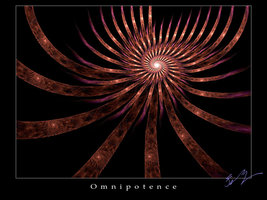
omnipotence

Art by Neon Rauschen

Conceptually, I can’t really wrap my head around omnipotence, infinity, or the universe. And not just because of the vastness, although that plays a part, but mostly because the idea is so very non-human. We are bound by many sets of limitations whether self-imposed or a product of our very nature. We are encased in skin and held up by a skeleton of bones and we are locked in time. Both of these parameters keep us out of the God realms.

 Job answered the Eternal One.
 Job: I know You can do everything;
        nothing You do can be foiled or frustrated.
You asked,
        “Who is this that conceals counsel with empty words void of knowledge?”
    And now I see that I spoke of—but did not comprehend—
        great wonders that are beyond me. I didn’t know. [Job 42:1-3, The Voice]

I didn’t know, Job says. And I say, he couldn’t know. We’ll never know, not while we’re walking the earth.

Oh, we’ll get glimpses of truth, snippets of the secret knowledge, flashes of insight even. But the “why” is not for us to understand. I am reminded of a Corrie Ten Boom story when she was a little girl on a trip with her father and she wanted to carry one of the pieces of luggage and her father denied her. It would be too heavy for her.

And so it is with omnipotence: the ability to see through time and space and change, the beginnings and the ends.

For this reason, we are asked to trust in God, the Eternal One, the Omniscient. It’s the old iced tea commercial, where we are asked to fall backward into the water, without looking. It’s the more recent cliche of choosing to be “all in.”

I am still not there. I don’t understand my own reticence. Somewhere along the way of my life, I have learned skepticism and fear of being fooled or deluded. I continue to test the waters first, walking in slowly, just in case there are surprises underneath, ready to nibble my toes and ankles. I do not plunge.

But I will. I know that too. I’m not sure what that will look like yet, but I am certain that I will have my Job revelation too. And in that day, in the same way that “The Lord blessed the latter part of Job’s life more than the former part” [Job 42:12a], so I will experience saturation in omnipotence.

Read Full Post »

« Newer Posts - Older Posts »