Feeds:
Posts
Comments

Posts Tagged ‘open heart’

With each day that the veil of my heart is down, the more accessible and available I am for transformation and change. Isn’t that why I keep pulling the veil back up? Transformation is not easy. Old things must pass away and the new is unpredictable.

II Corinthians 3:18
And we, who with unveiled faces all reflect the Lord’s glory, are being transformed into his likeness with ever-increasing glory, which comes from the Lord, who is the Spirit.

I have always considered myself as some kind of agent for change. It’s even part of my personal mission statement, “to inspire meaningful change . . . ” But when it’s my own change, my own transformation, I am a little more reluctant. Oh, I can change my hair, my weight, my clothes, and all the other external trappings. I can change my job and change my tasks. I can change the way I work. But in all of those things, I am in charge. I control the change.

The next step in my Journey requires a submission to the work of Holy Spirit. It’s moving into something more unfamiliar. It’s giving permission to the relationship I have with God to manifest differently.

What does it really mean to be a believer, to love God with my whole heart, soul and mind? What does it really mean to love others, to love my neighbor as myself, to love unconditionally, to the love the unlovely (an not just on a mission trip, but every day).

My theme song for many years has been, “Refiner’s Fire.” But the dross is so familiar, so comfortable, and yet so meaningless in the bigger picture.

I’m still afraid.
Read Full Post »

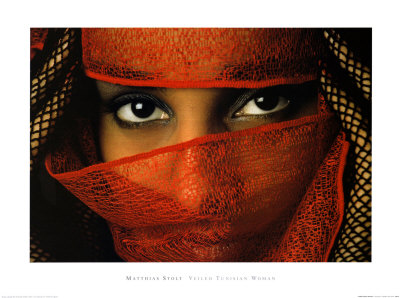
A veil can work two ways. It can protect what is within from outside eyes, but it can also hinder seeing clearly. Which veil do I still wear?

II Corinthians 3:15-16
Even to this day when Moses is read, a veil covers their hearts. But whenever anyone turns to the Lord, the veil is taken away.

I can attest that I experienced a literal dropping of a mental veil when I read the New Testament through for the first time back in 1979 and as a result, acknowledged that Christ was real and had accomplished that mysterious feat of covering my sins with His blood sacrifice and reestablishing a way between me and God. One day the whole thing was gobbledy-gook and the next day, I saw truth in the words. The dropping of that veil was an enlightenment.

But I wonder now, if I haven’t raised a different kind of veil. Much like the Middle Eastern hijab or burqah, am I still hiding behind a veil of the heart? Am I concealing myself from people around me? When I consider the glory within and how I have shuttered it, isn’t that just another description of the veil?

For glory to pass through, the veil must be down. For love to pass back and forth, the veil must be down. This is about transparency and authenticity. This is about trust.

Over the years, I have struggled again and again with disappointment. It’s been a powerful clip-on for the veils in my life. To keep out disappointment, I push away dreams and hopes. To keep out fallible people, I raise standards. To shield myself from the judgment of others, I send out my own arrows of judgment (the best defense being a strong offense).

It is not the way.

Give me courage this day to drop the veil and to reveal myself and with me, the glory that is Christ Jesus. I believe Jesus was comfortable in every setting and with every kind of person because he was open, he was veil-less, he was accessible.

This is my passion for today.

Read Full Post »

Opposites. Either I judge others quickly, forgetting I am equally fallen; or, I wash over reality because I want everything to be smooth sailing. (Don’t rock the boat.) Both ways are problematic and reflect denial.

Romans 15:7
Accept one another, then, just as Christ accepted you, in order to bring praise to God.

Paul writes that we must accept one another but the acceptance must be based on truth. It’s not about accepting someone as we “wish” he or she might be (eventually) but accepting what is really there. That’s not particularly easy if the person is difficult.

I confess, I withhold a lot of my acceptance of others based on their behaviors. I accept them “up to a point,” but not really. And yet, Christ accepted me right where I was 30 years ago: alcoholic, drug-dependent, crass, slovenly, and immoral. Jesus did not wait until I got my act together or became approachable. I was book smart but Bible naive. I didn’t know I needed a savior. I didn’t believe I needed anyone.

The stories of Jesus show his ability to accept others over and over again. It’s one of the reasons the Pharisees and “teachers of the law” chastised him: eating and drinking with sinners. Jesus allowed himself to touch, listen, and understand others who were immersed in sin but was confident in the Spirit of the Father within to keep him centered and whole. Jesus knew Himself.

Historically, I have been a bit of a chameleon and unconscious mimic. When I lived in the South for a few years, I developed a pretty strong southern accent, just by sheer exposure. When my kids bring home slang from school, I find myself incorporating it into my daily language without effort. I am too much like a sponge.

One of my favorite illustrations of this phenomenon was years ago when I had my first real “day job” in an advertising agency accounting pool back in Chicago. Thirty women sat in rows of desks with calculators and piles of paper. Initially, I was the oddball, the hippie in my colorful clothes and wire-rimmed glasses who mocked those girls for talking every day about their dinners the night before and what they watched on television. A year later, I had become one with them. I was talking recipes, husbands, television soaps, and vacations. I had acclimated and conformed to the daily norm. It was a type of acceptance, but not the one that Jesus proposes.

It’s not about fitting in. It’s about being strong in heart.

Accepting others comes from within. Accepting others, based on truth, requires an honest assessment of oneself first, then others. Accepting others is a kindness, a type of love. Accepting others is inclusive. Accepting others gives permission for that person to simply “be.” Accepting others allows for differences.

Today, I know, I will be challenged to accept others. Keep me centered in order to be fully present in the reality of others. Keep my heart open and yet fully infused with the presence and power of the Holy Spirit. Thanks be to God.

Read Full Post »

Interesting concept really, to be mutually dependent. Think about it: we assume a dependent person needs or relies on someone else for protection or caregiving, or knowledge even. But mutual vulnerability implies that each person has his/her own set of weaknesses and strengths, both needed and provided by one another.

Romans 12:4-5
For as in one physical body we have many parts (organs, members) and all of these parts do not have the same function or use, so we, numerous as we are, are one body in Christ (the Messiah) and individually we are parts one of another [mutually dependent on one another].
[Amplified]

This basic idea is the foundation of teams in the workplace. The combination of skills and strengths leads to higher levels of understanding and success. God is asking no less of the body of Christ. Unfortunately, many of us tend to sit back and allow others to do their thing while we absorb all their good stuff, giving little of what we are good at doing back.

Churches are filled with folks who show up regularly on Sunday mornings but rarely extend themselves beyond the pew. So many of us make excuses as we watch talented folks sing, preach, play instruments, run committees, and lead classes. We tell ourselves we have no abilities in those areas and therefore, nothing more can be demanded. But what are we good at doing?

I know there is an entire teaching on those verses about being strong in weakness [II Corinthians 12:10] and how God will give us what we need if we step up to the plate. And I don’t really disagree. However, I also think we may be missing something valuable in the church: taking advantage of the gifts people do have, gifts that may not seem useful at first blush but could be used creatively for the body of Christ.

Church life is so locked up in tradition; sometimes there’s little room for innovation and creativity. More than likely, where I am weak, there is someone else who is strong. And where I am strong, it is up to me to offer those strengths for the edifying of those who are weak.

People think of me as strong, but truthfully, I am not “all that.” There are many places and times where I am foolish and insecure, just like anyone else. I am lonely and do not have many close friends. I am a spendthrift and spend money on the wrong things. I make quick judgments. I fill my schedule to overflowing, doing too many things acceptably well, but not really well. I am performance-oriented and put high expectations on those around me. But I am also funny and energetic. I like to draw people together. I like to be the hostess. I like to plan events and watch others enjoy the fruits of those labors. I am smart enough to enjoy reading, studying, and observing others. I love change and new things. I enjoy being with people. I enjoy teaching what I know and writing. I enjoy discovery. But I am not particularly spontaneous because I am also fearful of making mistakes. I can be a control freak. But I can also create something out of nothing.

These are my “I am’s” today.

But, there are people around me who are strong in my weak areas. I want to reach out to them and allow myself to be weak with them. I want to be part of the balance in the body of Christ.

I surrender that part of myself today that has been hiding. It’s time.

Read Full Post »

It’s ironic, when Paul the Apostle declared Christ as the Way, it was a testament of freedom to anyone who chose to believe, whether Jew or Gentile, slave or foreigner. Anyone could enter this new relationship with God. But today, the Christ message is treated as limiting, exclusive, or prescribed.

Romans 10:4
Christ is the end of the law so that there may be righteousness [right relationship with God] for everyone who believes.

Several chapters of Romans are dedicated to the logic Paul lays out for the Jews of that time, the reasons and proof texts to support the reasons a Messiah came. He wants to convince them that the way was now open to God for anyone to believe. The season of the heart had come. “For with the heart a person believes (adheres to, trusts in, and relies on Christ) and so is justified (declared righteous, acceptable to God), . . . ” [Amplified, Romans 10:10a].

Many are guilty of limiting the Christ message, perhaps Christians most of all. We have codified the process and made rules of engagement. We have created denominations that have additional requirements such as specific types of baptism, communion practices, sins by degree, and methods of confession.

Today, we would need another Paul to set the Christians from their own chains of law.

The Christ message is one of freedom. That freedom invites us to participate in an intimate relationship with God that has never been possible before. For Christians, we must return to the simplicity of belief and confession. For non-believers, we must focus on the open door of Christ. All are welcome.

Read Full Post »

The voice of condemnation is one of the most debilitating inner monologues a person might endure. From accusation to disapproval to contempt and reproach, the effect of this voice is like a nail head pounded by a persistent hammer. This isn’t how God speaks.

Romans 8:1a
Therefore, there is now no condemnation for those who are in Christ Jesus…

I used to think this voice was my conscience speaking. Not so. Condemnation is straight from the pit of hell and I learned it the hard way.

Condemnation speaks through some of the most unsuspecting ways like perfectionism and accidental human error and lack of knowledge.

Where grace would abound, condemnation vied for greater attention.

Every mistake I made would get exaggerated in the retelling within. Every thoughtless word I said or was said to me was repeated a million times in my head. Every criticism (kind or otherwise) was blown out of proportion.

I became bound by this persistent voice.

How did I get set free? Confession. Truth telling in prayer. An open heart. Grace. Forgiveness. Faith.

All of these intertwined and became my safety net, my inner audio filter. This the Spirit did for me . . . does for me still. Thanks be to God.

Read Full Post »

The Roman commander may have saved Paul from the savage crowd but he still mistook him for an Egyptian terrorist! How could that be? Is it possible the commander saw what he wanted to see and not what was actually there?

Acts 21:38
“Aren’t you the Egyptian who started a revolt and led four thousand terrorists out into the desert some time ago?”
[Commander arresting Paul]

Expectations are powerful and can lead us astray easily.

There was little to no evidence for the commander to suspect Paul to be a terrorist. I doubt Paul looked like an Egyptian, nor was he fighting off the crowd, nor did he have followers who were armed and dangerous. The only evidence was the crowd’s reaction to Paul. The commander may have assumed the situation was political. He could not imagine the riot was about differences in religious views. Or, that it was about who could be “in” and who was “out?” Or, who could be a follower and who could not? Or, who should be circumcised and who should not?

To the traditional Jews, it was bad enough that Paul was preaching/teaching about this Jesus as the Messiah, but now word had spread that Paul had embraced the gentiles and was opening the faith to them. He had crossed a line they could tolerate.

One of my favorite musicals is Fiddler on the Roof. Tevye, the father, is faced with constant change as his daughters come of age to marry. The first one challenges the tradition that marriages are arranged and she marries out of love. Tevya begrudgingly complies. His second daughter falls in love with a zealot who is ultimately arrested and sent to Siberia. She decides to follow her love and Tevye, again, allows her to go, but with deep misgivings. But, when the the youngest daughter falls in love with a gentile, it is a line that Tevye cannot and will not cross. She is cast out and “dead to him.” In the end, the Russian pogrom disrupts their entire village. As Tevye’s family members are dispersed and may never see each other again, Tevye relents and speaks a small “God be with you” to his beloved daughter and her gentile husband.

Tevye had expectations. We all do… for our lives and for our children. Sometimes we expect the best and sometimes we expect the worst. Instead, I believe we must be willing to lay aside our expectations. Everyone’s journey is different. We can hope for the best, but we must accept the truth of what is happening in the present as well.

Another set of expectations rise up when we meet people who are different from ourselves. They may be from another country, speak a different language, or just live in a different neighborhood. Their skin may be of a different color. They may practice a different set of religious values or family structure. If we lay down our expectations, we may be surprised by what we discover: a beating heart, a yearning soul, a bright mind.

Keep my heart open today Lord. Help me to seek the heart of others and to see past our differences. Check my spirit when I start thinking that someone might be an “Egyptian terrorist” based on superficial circumstances or appearances.

Read Full Post »

« Newer Posts - Older Posts »