Feeds:
Posts
Comments

Posts Tagged ‘transformation’

I should write a book: “My Favorite Bible Metaphors.” There are a zillion ways that Jesus used to communicate with the people about faith and the Kingdom of God from seeds to light to fish to sheep to salt to cooking. These word pictures were then passed down through stories. They still work today.

Galatians 5:7, 9
You were running a good race. Who cut in on you and kept you from obeying the truth? . . . “A little yeast works through the whole batch of dough.”

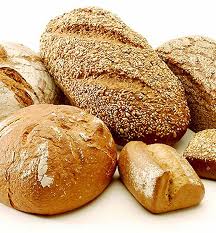
One of my good friends bakes bread several times a week to provide this staple for her family. Her father baked it for their family when she was growing up and it’s a tradition she has continued. Whenever I think of yeast-rising bread, I think of her.

I did my own stint at bread making some years ago. At first, the hand method (which is preferable) and eventually to a bread machine. The smell would envelop our house. I actually gave up the practice because my husband and I were devouring a loaf a day and our waists followed suit. But it might be time, with teens in the house, to return to this simple practice of adding yeast, working dough, watching it rise, and then shaping into a tasty loaf. There’s something a little “zen” about it.

Bread of all kinds is staple for all cultures. Everyone understands the yeast/dough image. It only takes a small amount of yeast to transform bread from flour, salt and water. Yeast affects all the dough. It too transforms itself to have the effect.

As a metaphor, it is a simple message. In Galatians, Paul refers to the “yeast” of a misleading but charismatic preacher who was drawing the original Christ believers back toward Jewish law, particularly circumcision.

It only takes one person to change a group. It only takes one to deadlock a jury. It only takes one to break consensus. It only takes one to undermine a team. It only takes one to start a war. But it also works the other way, it can be the one who motivates a group to higher challenges, or one to bring a family back together, or one to inspire a nation, or one to raise the flag of peace, or one to be the watchman crying out a warning.

Many years ago, I was on a women’s retreat and we were all assigned to a certain discussion group that would meet and discuss the teaching sessions. (For those in the know, this format is used in a variety of parachurch organizations like Cursillo, Walk to Emmaus, Tres Dias, and so forth.) The first day I was sure I was assigned to the wrong group. Each woman came with so much baggage, even the assigned facilitators were a mess. The first couple of discussion sessions were painfully dull or fraught with misunderstandings and confusion. I cried. Can’t anyone see I’m miserable? Can’t I change to that happy group over there? Can’t I be with the fun group on the far side of the room, or the clever group behind us? Finally, God “smacked me up side the head!” And I literally heard a voice from within say, “It’s you! You! You are not being the yeast or the salt.” I had come to that retreat experience with some expectations, not realizing that I wasn’t entering the story. I was sitting back and waiting for story to come to me. When I finally engaged fully and lovingly, everything changed. By the end of that weekend, our group became the most impacted, the most cohesive, warm, and authentic. There was much healing.

Lord, give me courage to be yeast in the right circumstances. And when it’s yeast coming against me, help me jump out of the bowl. 🙂

Read Full Post »

What criteria do I use when I look at other people? I’m sure it’s still that “worldly view.” I’m assessing weight, demeanor, stride, clothing, work, and even neighborhood. Am I looking for the “new creation?” I don’t think so.

II Corinthians 5:16a, 17
So from now on we regard no one from a worldly point of view. . . Therefore, if anyone is in Christ, he is a new creation; the old has gone, the new has come!

For years, this “new creation” verse has been used to give hope to the believer that he/she has been changed by faith in Christ. We are no longer bound to our old ways, we are transformed. That is true.

But here’s what I never understood before. As the observer, I am supposed to look with new eyes on others. I am charged to look for their new creation. I am to let go of my old way, my “worldly way” of scrutinizing people around me, and affirm their metamorphosis.

So often as people work on themselves, work to change old habits, it’s often the friends and acquaintances around them who sabotage their efforts. Someone goes on a diet and we bring in donuts for the break room. Someone stops drinking alcohol and we offer “just one.” Even in our households, a family member looks to begin a new routine of prayer or walking or study, but there are constant interruptions, the process discounted as authentic or necessary.

Have I sabotaged those around me trying to change? Have I kept looking for grey when they started wearing red?

God forgive me. I am so focused on my own issues, I forget to endorse the efforts of others. I say I am an agent for change but I am insensitive to the small adjustments, the baby steps that others are taking first.

Heighten my mindfulness this day.

Read Full Post »

There are times in a person’s life that he/she feels compelled, for the sake of faith, to act. I don’t think we can know when that moment will come, but we cannot help but recognize it in hindsight.


II Corinthians 5:14
For Christ’s love compels us, because we are convinced that one died for all, and therefore all died.

The first compelling moment of this kind comes at the Christ recognition moment: to accept or not to accept the truth of Him. At least for me, it wasn’t a casual decision. I simply had to choose, as though Jesus was sitting beside me saying, “But what about you?” . . . “Who do you say I am?” [Mark 8:29a] The question had been lingering at the back of my mind as I read through the New Testament. There was so much in that read-through I found unbelievable, frustrating, and even misogynist, but the identity of Jesus, that was becoming more and more plausible, not less. I could not deny Him.

After that day, there were more times I had to “fess up” to believing in that Jesus of Nazareth as the long-awaited Messiah. “For it is with your heart that you believe and are justified, and it is with your mouth that you confess and are saved.” [Romans 10:10] Some of my friends were shocked, some were belligerent, some were curious, but few were compelled to do what I did, to make that leap of faith. I didn’t understand.

My immediate family saw my new found Christ-consciousness as a passing fad. Unlike legwarmers over jeans, rat tail hair, and the “Where’s the Beef?’ commercial, my faith did not go away. I am still compelled to follow after thirty years.

It’s taken me a long time to realize I cannot compel another person to believe in the Messiah. There are no rules, no “four spiritual laws,” no “evangelism explosion,” no memorized verses, no descriptions of hell and damnation that will “do the trick.” I can only share my story.

Along the way, my faith has taken me down a number of unexpected paths: I married a man after a three-day whirlwind; I created two scripture-based performance pieces I toured over many years, I adopted three children with my husband of twenty-five years, I traveled to Africa in mission, I have taught and spoken to both small groups and crowds on the ways of God, I have led in a variety of para-church organizations, I continue to read extensively, I have been a mentor, a bible teacher, and a Sunday School teacher, I have been a worship leader, a counselor, and a prayer partner, I have fasted, been on silent retreats, and clowned for Christ in white face. I have danced, cried, laughed, and fallen over in the spirit. I have spoken in tongues, sung in the spirit, and prayed for healings.

I am compelled to seek the deeper way. I am compelled to know the Christ within. And my life continues to evolve. My journey is far from over. There will be more. I give thanks.

Read Full Post »

With each day that the veil of my heart is down, the more accessible and available I am for transformation and change. Isn’t that why I keep pulling the veil back up? Transformation is not easy. Old things must pass away and the new is unpredictable.

II Corinthians 3:18
And we, who with unveiled faces all reflect the Lord’s glory, are being transformed into his likeness with ever-increasing glory, which comes from the Lord, who is the Spirit.

I have always considered myself as some kind of agent for change. It’s even part of my personal mission statement, “to inspire meaningful change . . . ” But when it’s my own change, my own transformation, I am a little more reluctant. Oh, I can change my hair, my weight, my clothes, and all the other external trappings. I can change my job and change my tasks. I can change the way I work. But in all of those things, I am in charge. I control the change.

The next step in my Journey requires a submission to the work of Holy Spirit. It’s moving into something more unfamiliar. It’s giving permission to the relationship I have with God to manifest differently.

What does it really mean to be a believer, to love God with my whole heart, soul and mind? What does it really mean to love others, to love my neighbor as myself, to love unconditionally, to the love the unlovely (an not just on a mission trip, but every day).

My theme song for many years has been, “Refiner’s Fire.” But the dross is so familiar, so comfortable, and yet so meaningless in the bigger picture.

I’m still afraid.

Read Full Post »

Tree outlined by the sunSt. Augustine wrote, “The New Testament lies hidden in the Old Testament and the Old Testament is revealed in the New Testament.” There are so many symbols, motifs and archetypes that were intended to prepare the people for the coming Messiah. I wonder if this isn’t true for every life?

I Corinthians 10:1b, 3-4
. . . our forefathers were all under the cloud and that they all passed through the sea. . . . They all ate the same spiritual food and drank the same spiritual drink; for they drank from the spiritual rock that accompanied them, and that rock was Christ.

I am not a theologian or an academic and I haven’t actually studied all the correlations between the Old Testament and the New. But Paul alludes to these relationships directly in this passage from I Corinthians 10 with his clouds and water and food and rocks. These words are powerful representations of presence, power, eternity, strength, and much more.

But what is the application of this passage for me? Were there clouds and water in my own short history before I came to the revelation knowledge of the Christ in my life? Did I eat God-food before I recognized it for what it was? Did I lean on a rock that was higher [Psalm 61:2]?

There are so many people and experiences that pass through a life outside of our control. Oh sure, I chose to go to New York to acting school, but I had no control over the makeup of the student body. Tom, who introduced me to the Bible as a living, breathing document, was part of that group. And maybe New Age stuff or fantasy reading may not be the best influence on an impressionable young woman, but it did set my mind on the “other world,” the world of Spirit where truer battles are waged, won and lost. In high school, I chose my friends, but how could I have known that it would be some of their parents who would impact my beliefs for a lifetime. I attended a predominately black public high school during some of the most tumultuous years of black history, led by Martin Luther King, Jr. As a result, I became much more sensitized and aware of cruelties and disparities between people, race to race, poor to rich, old to young. Later, in New York, I would go to school with his daughter, Yolanda, and my circle of understanding grew richer.

Symbols of meaning for me today that grew out of my past: small white lights on a Christmas tree, flowing waters of a stream, winter trees outlined by a setting sun, the purring of a cat, the smell of pine, unending circles like wreaths of fresh flowers or dancers or people holding hands, candles lighting a dark place, rain, stuffed bears, smooth stones, . . .

All of these have come to have much greater meaning to me as an adult. They can take me quickly into the secret place where I can commune. If I feel or hear or touch any of these things, I am with God. And I can only believe, back then, somewhere, somehow, God was with me before I even knew there was a God.

Read Full Post »

Other translations of this phrase are “this present distress” or “this present trouble.” The entire discussion on not marrying or marrying is about that moment in time. Paul believed the time was short. But we’re still here. And what is the application for us?

I Corinthians 7:26, 29a, 30b
Because of the present crisis, I think that it is good for you to remain as you are. . . .What I mean, brothers, is that the time is short. . . . For this world in its present form is passing away.

The commentaries are numerous on these passages and the emphasis is almost entirely on the attachments to worldly comforts and the responsibilities of a mate and/or children (I presume). And certainly, much can be said for being unattached to any of these things. But alas, I am neither. I am a wife, a mother, and culturally, I confess, I’m tethered to the conveniences of my world.

But for me, it’s the phrase about timing that intrigues me the most. Paul was pretty sure that Christ would return within his generation, if not within his lifetime. This, in itself, does reflect on the human-ness of Paul. He was wrong on this point, and in a big way. For him, the times were bad. Later, they got worse for that part of the world when the Romans besieged Jerusalem and destroyed it. That was certainly the end of the “their world in its present form.”

And what about our own crisis? What about our culture’s troubles? What would help? Only one thing, single or married, could make a difference. The practice of the presence of Christ. Nothing else. It is this presence within that has the power to change our responses to the world. It is the Christ spirit that is perceived as light. It is the love of God that transforms situations. When that is present, then the attachment to the world becomes less by default. Marriages remain whole. Singles remain trusting.

We cannot take on the outer trappings of Paul’s recommendations and expect change. For me, it must begin within.

Read Full Post »

A popular phrase among the younger generation of believers is that they are following the “way of Jesus.” In essence, Paul asks for the same thing, but simply calls it a way of life . . . “the life.” On that way, we are transformed.

I Corinthians 4:16-17a
Therefore I urge you to imitate me. For this reason I am sending to you Timothy, my son whom I love, who is faithful in the Lord. He will remind you of my way of life in Christ Jesus, . . .

This way is all about our responses: how we react to challenges along that path.

I’d like to say I do well in this regard, but that would really cause my Pinocchio nose to grow. It’s not that I don’t want to be on the way. I do. I can even say with confidence that I am on this way. I just don’t seem to be going in a straight line.

The way includes a lot of the “turn the other cheek” stuff. It includes accepting my current situation and making the best of it. In means “When we are cursed, we bless; when we are persecuted, we endure it; when we are slandered, we answer kindly.” [I Cor 4:12b-13a] We love.

There must be a moment of transcendence when things like persecution or even success no longer matter, when Spirit trumps 3-D.

But right now, all my cares and troubles and disappointments are causing tremendous stress. A woman friend I have know since I was three years old called me the other day. She told me she has stage 3 breast cancer. She’s fighting hard. The thing that makes her most angry, she said, was that she was so damn “healthy” up until then. She didn’t smoke or drink. She worked out regularly. She was happily married. She had a good job and a successful son. She had wealth and security. And yet, her life was filled with stress: staying on top of it all, doing the right thing at the right moment, working 7 days a week and long hours, juggling family and work, and racing from one thing to another. She believes the stress made her sick.

This is not the life. This is not the way.

Practicing the presence of God is an exchange: replacing the normal brain hi-jinks with Spirit.

Read Full Post »

« Newer Posts - Older Posts »