Feeds:
Posts
Comments

Archive for the ‘Ordinary Time’ Category

Everyone Forever, painting by Minako Abe

Everyone Forever, painting by Minako Abe

I am reading through the Bible in a year. I’ve done it before. Sometimes, it feels a bit of a drudgery, particularly I Chronicles. But in this chronological plan, I get to mix up some of those dry passages with the Psalms, thoughts that always move me, either to my knees or to gratitude. Today, these words resounded deeply:

But the Lord’s faithful love is from forever ago to forever from nowfor those who honor him. . . . [Psalm 103, 17a, CEB]

Forever — endless — infinite — eternal. These are God words. In fact, it is only God who can calmly say, “always,” and mean it. And because I am devoted to this forever God, I can surrender my irregularities and my sometimes and my good intentions. I can trip and fall and rise again. I can start over again–and again–if I have to. I can claim a grace that only an infinite God can give freely. I can fail and I can succeed.. I can weep or laugh. I have been loved since the beginning and I will be loved until the end. I am a child of God and beloved.

Both Psalm 103 and 104 begin this way: “Let my whole being [soul] bless the Lord! . . . ” [CEB] That is my prayer today.

Read Full Post »

right handThe most common reference to “right hand” placement is the right hand of God and the One on this side, that is the Son of Man, the Messiah, Christ Jesus. This is a place of shared power and signifies authority. This norm has carried down through the ages to the point that most “guests of honor” at a dinner table are seated to the right of the host. It is a place of And yet, in Psalm 16, there is a new take on this idea:

I keep my eyes always on the Lord.
    With him at my right hand, I will not be shaken. [Psalm 16:8, NIV]

I am moved by this proclamation and realize it should be mine each day. With it, I could give authority to God to move on my behalf and with it I could count on God’s presence to protect me, to guide me, and to support me. In addition to giving God authority, if I could practice keeping my eyes on God, symbolically speaking of course, I could focus my energy and direction, cast off distractions and, potentially, move forward without fear. Oh, what prevents me?

I remember back in acting school when we were introduced to a variety of circus skills, my favorite was tightrope walking because of the visual concentration required, to keep the eyes looking ahead at a single destination point.

But I also remember the story of Peter who walked on water, albeit briefly, as long as he kept his eyes on Jesus. Did he try it again? I always wondered. Did he remember the experience as a success or a failure? He defied, for just a few steps, the laws of gravity and science. He stepped outside the known dimensions of reality. But was it enough to believe?

spiralBut here’s a conundrum:
“You will show me the path of life; in Your presence is fullness of joy, at Your right hand there are pleasures forevermore. [Psalm 16:11, Amplified]

And here, in the same psalm, I am now at God’s right hand, receiving the benefits thereof. An interesting circle: God at my right hand and me at God’s right hand: Oneness. That is the point. Fueling and being fueled, loving and being loved, giving and receiving, all at the same time. Strength to strength [Psalm 84:7].


Read Full Post »

HonorI don’t pretend to understand the honor codes of Old Testament times. The stories that surround the lives of Saul and David are most complicated of all. Saul wants to kill David and chases him all of the country and despite opportunity, David refuses to kill “God’s anointed.” And even later, after Saul’s death, an Amalekite takes responsibility for a mercy killing of Saul but dies for it:

David asked him, “Why weren’t you afraid to lift your hand to destroy the Lord’s anointed?”Then David called one of his men and said, “Go, strike him down!” So he struck him down, and he died. For David had said to him, “Your blood be on your own head. Your own mouth testified against you when you said, ‘I killed the Lord’s anointed.'” [2 Samuel 1:14-16, NIV]

The first four chapters of 2nd Samuel are filled with revenge and death and killings in the name of honor. It is outside the norms of our culture in general, although certain societies and gangs still practice the eye for an eye practice. But, in no way do I see the anointing of God prevent or protect a leader. We have cast aside any idea that a leader, whether in that position by force or vote, could be a designee of God.

There are some basic honor codes that humans seem to try to abide by: the fair treatment of prisoners of war, the military “code of conduct,” dealings with the Red Cross and other first responders, and perhaps some locally created codes within companies or organizations, often watered down into “value statements.”

In the end, people codify behaviors based on what often appears to be a moving target: what is right, what is good, what is fair? Eventually, these determinations may become laws but often, they are simply, agreed upon or understood. Unless a person is a sociopath or in some other way, without conscience. For it is, in the end, the inner voice that agrees and supports the code. Or not.

anointedAnd yet, in David’s time, this code could be trumped by God or in the name of God’s anointed.

The one thing that came out of this reading and meandering thoughts was that our modern society puts little respect into the roles of our leaders. Perhaps it’s the democratic process that seems to somehow cheapen their position. After all, the voters could have been deluded or simply wrong and therefore, we do not need to honor this man or woman. And besides, we can count the days, eventually, they’ll be voted out (or in again) soon.

I’m just wondering if things would go differently if we all rallied behind our leaders. If we simply accepted that this person, in this now, as God’s anointed, would things go better? Oh, pie in the sky, I know. But so much energy is spent derailing leaders, from presidents to local mayors, it’s a wonder anything gets done at all.


Read Full Post »

regretWhat a pathetic phrase, “if only.” It’s all about yesterday, the milk is spilled and the people whine. Oh, if only I hadn’t said that or done that or gone there or looked there. So sorry. If only I could change it back to the way it was.

All the Israelites grumbled against Moses and Aaron, and the whole assembly said to them, “If only we had died in Egypt! Or in this wilderness! Why is the Lord bringing us to this land only to let us fall by the sword? Our wives and children will be taken as plunder. Wouldn’t it be better for us to go back to Egypt?” [Numbers 14:2-3, NIV]

If I hear myself actually use this phrase in regular speech, I’m going to excise it as fast as I can.

This was the Israelites lament in the desert after Moses had sent a representative from each clan to scope out the promised land. Out of all those emissaries, only two came back with courage, trusting God to fulfill the promises. After all, this was the same God who had poured out lamentations about the Egyptians and who rested on the Tabernacle in a cloud by day and a pillar by fire at night. This was the God who had orchestrated the great escape from the Egyptians through the Sea (one way or another). This God had shown God as miraculous and specifically in their cause. Why was this day different? What made the giants and foreigners of the land of Canaan so frightening, so indomitable?

Did the Israelites forget what God could do? Why? The only thing I can imagine is that their eyes became stronger than their faith. What they saw overwhelmed what they could not see. And lastly, the messengers themselves were suspect.

Had the spies who went into Canaan come back with confidence, the people would have followed. Instead, those men sowed fear and discord, questions and distrust. It was those few who did not believe who led the majority astray. And that’s a lesson as well.

Who do we believe? Who do I believe? The Press? The politicians? The blogs?

In some ways, I think it’s my own fault when I am so easily swayed. I am turned when I don’t have enough reliable information. I am unsure when I have not invested in discovery and latched on to the easy answer. And then, what about those trustworthy characters? What exactly draws me to trust in a leader?

I remember how appalled I was the other day when a person I have always admired in politics, suddenly took a turn in a direction I could never have foreseen. Has the person’s character changed or merely his/her point of view. Do I move my point of view along with the person? Or was the person’s change merely politically advantageous or necessary for success or advancement?

The Israelites chose to believe their representatives and in the end, as a result, they lost the promise altogether and were “banished” to the desert for forty years, two full generations. They paid a steep price for their herd mentality.

They were afraid of the unknown future so much that the past, as wicked as it was seemed more appealing. They remembered the foods and some of the minor comforts, but forgot the violence and the slavery. The future is always a surprise. That’s true. But, if we have just enough confidence in God, to believe that our lives are ultimately fashioned by the Spirit, then we should never go back. It’s unproductive to even contemplate it. In fact, it’s Lot’s wife, looking back toward Sodom & Gomorrah.

If only. . . no more. Instead, I will say when.


Read Full Post »

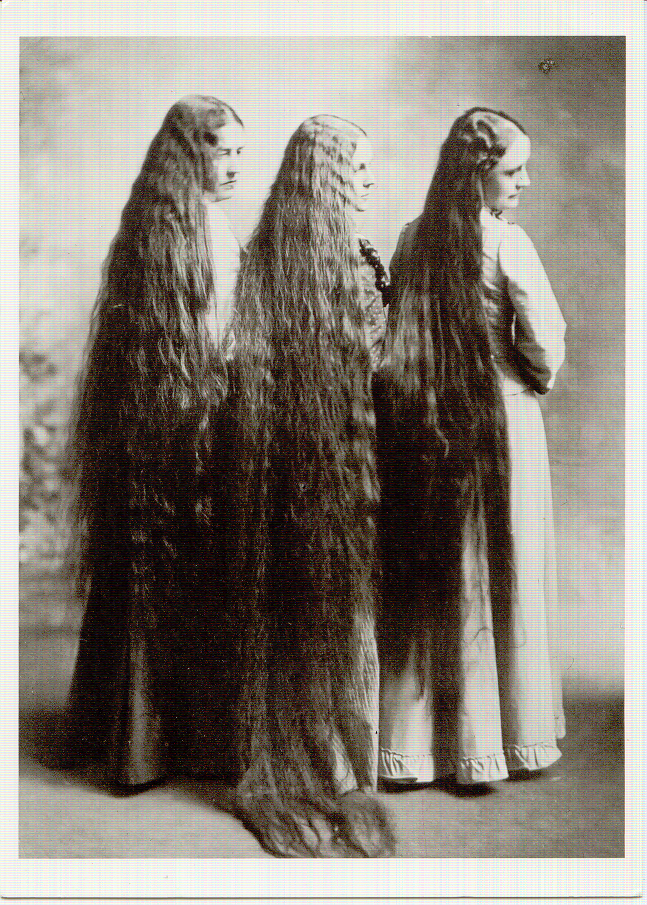
NaziriteI ever realized that women could become Nazirites until this reading of Numbers. All this time, I had assumed that this vow was made only by men. And clearly, the rules for the Nazirite have the feel of being for men what with the growing of hair and abstinence from drink. Nonetheless, women could do take such a vow as well.

The Lord said to Moses, “Speak to the Israelites and say to them: ‘If a man or woman wants to make a special vow, a vow of dedication to the Lord as a Nazirite, they must abstain from . . .'” [Numbers 6:1-3a, NIV]

In a nutshell, the Nazirite abstained abstained from alcohol, fermented drinks of any kind, grapes, or raisins; refrain from cutting one’s hair; and finally, avoid defilement by a dead body (or place that a dead body has been).

When I looked up additional information about the Nazirite vow, I was surprised to find that it evolved over time into three types of vows, depending on their length. In general, such a vow was made for a minimum of 30 days and for the common person, my guess is that this was the norm. However, there was a permanent vow (in which the Nazirite would cut his/her hair once a year for convenience) and there was a “Samson” Nazirite who was permanent, but did not have to abide by the dead body rule.

I believe, over time, these permanent Nazirites became known as monks. But isn’t it interesting that the Christian monks (and nuns) in later centuries were known for shorn hair and not long hair at all. Another reason why the Nazirite tradition ended was the loss of the Temple where the many sacrifices had to be made at the end of the vow. No temple : no end.

It’s a fascinating topic really and even includes some references to Jesus entering into a type of Nazirite vow at the Last Supper. But, of course, that is speculation as are many ideas about this tradition.

In any event, this ritual had to do with setting apart and holiness (see Holy Objects & Holiness post). The person perceived a need to separate himself or herself from the norm, even to the point of stepping away from family obligations (as might be the case in the event of a relative passing away). These vows were quite serious and if one was broken, the person had to “start over” again.

Jesus made some references to vows or promises in Matthew 5:37 in which he told the people to allow their “yes” to be yes and their “no” to be no. I believe he was alluding to people who made promises they did not mean or were unwilling to keep.

wedding ringsBut I would add, if we do make a vow, then we should treat them with more respect. Marriage vows have become the most abused of all. It is not enough to say, “well, I meant it at the time,” for that changes nothing except to imply that one did not know one’s own mind at the time or the implication of the promise. I would recommend people stop using the marriage vow at all if the intent is not binding. Or, perhaps like the Nazirites, the couple, if the vow is broken, starts over again.

Of all the many things that women were excluded from in Old Testament times, this is not one of them. Both men and women can experience holiness and set themselves apart for God. And secondly, their vows are still binding.


Read Full Post »

holy objects TabernacleBack in the day, they had some seriously sacred and holy objects. Everything in the Tabernacle (tent of meeting) was holy and could only be handled, touched, or carried by certain people and in a certain way. Any deviation could mean death. Does anything in our contemporary world compare?

They [Kohathites clan] are the ones who shall deal with the most sacred objects associated with the congregation tent. . . . When Aaron and his sons are done covering all the holy objects and furnishings, then and only then (so that they don’t touch the sacred things and die), the Kohathites can approach. They are the ones who shall transport these items of the congregation tent. [Numbers 4:4, 15]

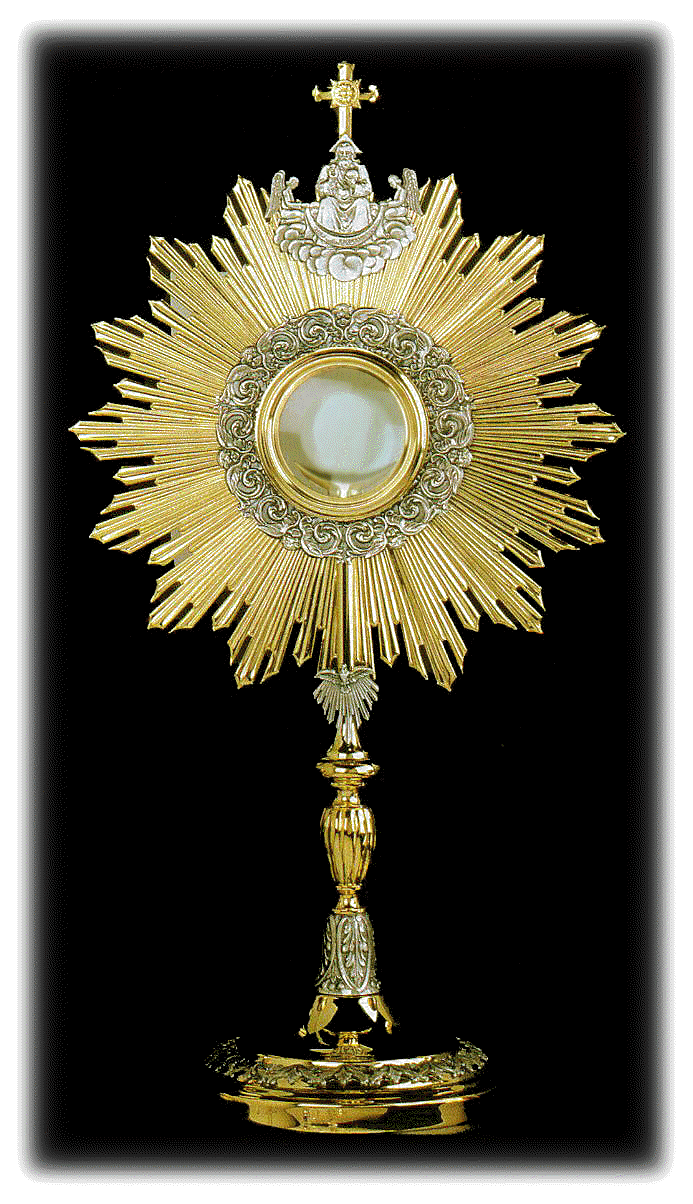
There are religions around the world that do have sacred objects and although none have the death penalty, they do carry severe holy eucharistpenalties. In Western culture, mostly it’s the high church denominations such as Catholicism and Orthodox who revere things, be it the Eucharist (sacramental bread), icons, relics, or specific objects that have been blessed or designated for holy use. In Muslim culture, it’s my understanding that the Quran (book itself) should never touch the floor or have anything laid on top of it and believers should not touch its pages without formal ablutions.

But the idea of holiness in our midst, whether in objects or places, has been lost, in large degree, by the vast numbers of believers who have embraced a friendlier God whose grace extends to jeans, casual environments, electronic texts, and handy communion elements. I am not condemning the practice per se; after all, I attend such a church myself. It’s modern and relevant and loud; it appeals to a broad range of people and is designed to be accessible to both believers and non-believers alike.

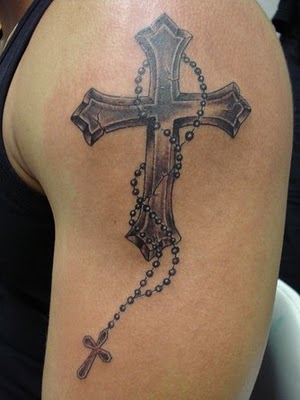
cross and rosaryIn Christianity, the cross, the instrument of torture used by the Romans to execute criminals has become so ubiquitous that both believers and non-believers can be seen wearing t-shirts, earrings, and tattoos with the cross prominently displayed. Go figure.

What is holy in my own life? I find myself hungering sometimes for the holy or sacred experience. In new cities, I love finding older church buildings and sitting in the quiet spaciousness of the place. I love to listen to sacred music alone or practice the praying of the hours. There is a respect for the time and the place that feels different, that engages me spiritually in a way that other things do not. Don’t get me wrong, I love contemporary worship with its upbeat sound, waving hands, and corporate experience. But it does not speak of holiness. It’s praise and adoration of a type, but I would never assign the word holiness to it.

There are times in nature when I have felt a holy presence, but it cannot be re-created at home. And I have had remarkable revelations while reading my Bible and yet, I know I treat the book itself somewhat cavalierly (besides, I must have about twenty different versions all over my house). If I can’t find one, there’s always a back up. It’s not holy or sacred in that other way at all.

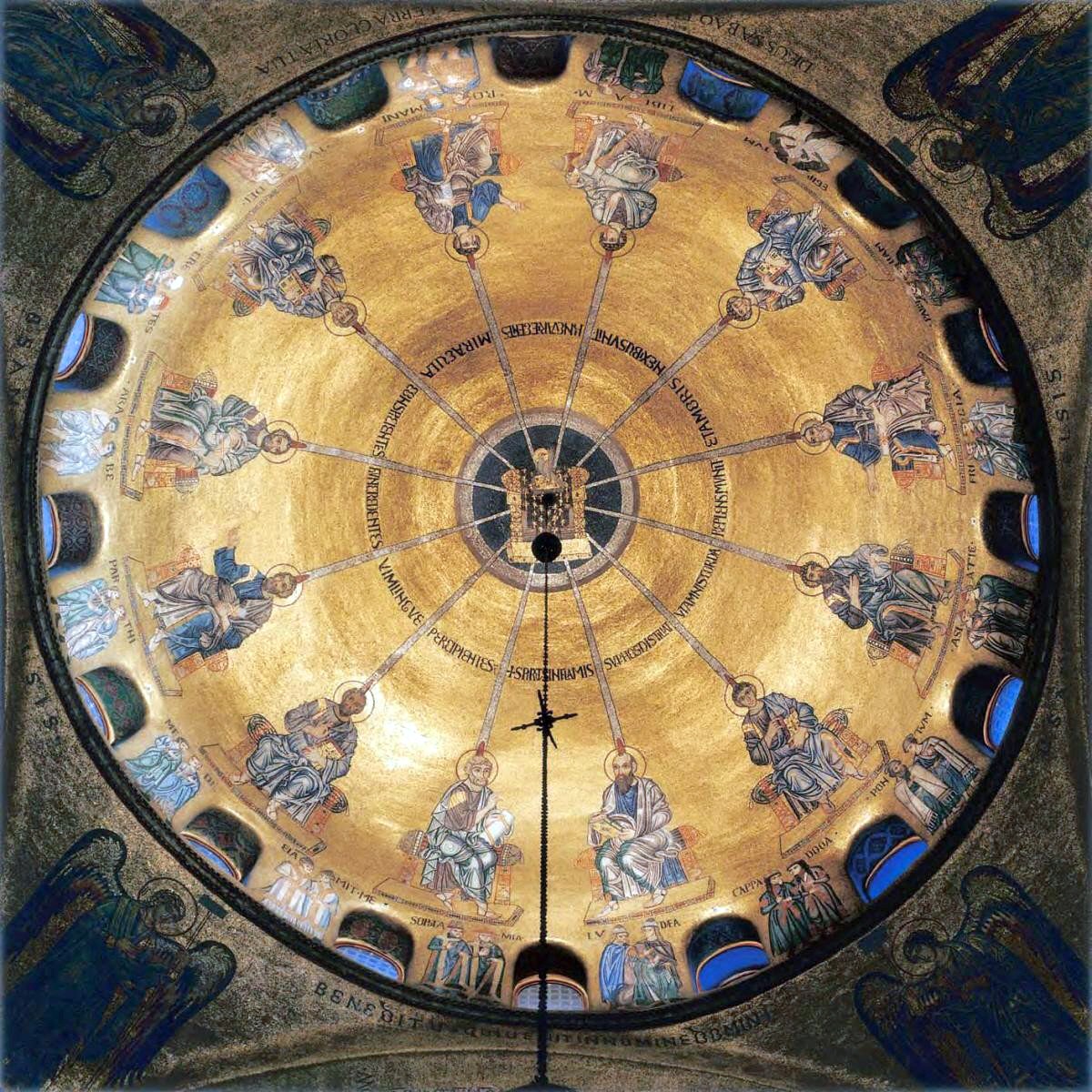
Of course, one cbasilicaan ask if holiness or sacred objects are needful in today’s culture? Perhaps not. But I wonder, are we missing something?

My husband’s conversion story includes a moment when he heard the voice of God ask what he would do if Christ appeared to him in the flesh? And Mike’s internal response would be that he would bow down and worship him. For him, a holy moment, no doubt. But we have so few of those moments today. Bowing down as a symbolic gesture of surrender or subservience is foreign to most of us. In the face of foreign “royalty,” Americans tend to bristle a little at the idea of bowing to them. Even the idea of a “king of kings” is honestly unfamiliar. These are merely words, not actual feelings of reverence or awe.

As I think about Lent, I want to search out the holy in my heart as well as my environment. It will be the focal point, I think, to my 40 day journey.

Read Full Post »

Counting

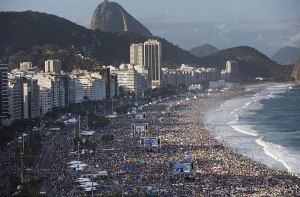
3 Million people to see/hear Pope Francis

3 Million people to see/hear Pope Francis

This is the first census of the Israelites and based on the line, “who were able to serve in Israel’s army,” this was a census to determine their military strength. The Levites, however, since they would be responsible for the Tabernacle, were not counted; they would not participate in war. And of course, no women were counted and no children or teens under twenty.

. . . and they called the whole community together on the first day of the second month. The people registered their ancestry by their clans and families, and the men twenty years old or more were listed by name, one by one . . . All the Israelites twenty years old or more who were able to serve in Israel’s army were counted according to their families. The total number was 603,550. The ancestral tribe of the Levites, however, was not counted along with the others. [Numbers 1:18, 45-47, NIV]

So how many people were really out there in the desert? Most scholars say upwards to 3 million. That’s a lot of people in one place. That would less people than in Los Angeles proper but more people than Chicago. That would be more than Lisbon, Spain but less than Warsaw, Poland. That’s more people that live on Jamaica but less than live on Puerto Rico.

It’s a big number.

But let’s go back to the men. They listed each one by name on what? I don’t really know. Papyrus maybe, animal skins? But let’s imagine that they had 8 1/2 by 11 inch pieces of paper. That’s 4,020 sheets of paper, assuming 150 names per sheet. That’s 8 reams of paper (almost a case). I’m just saying, if they really “wrote down” all the names, 600,000 is a lot of names and a lot of ink and a lot of surfaces to write them.

The business of “census” was huge. The time to do it was huge as well. In ancient times, let’s assume it took 30 secopapyrusnds to write one person’s name (ink, dip, dip, dip), that would be about 208 days if they worked non-stop, 416 days if they worked 12 hour days which is also unlikely, but if they only worked 6 hours a day, it would have taken more than two years just to write down everyone’s name at 30 seconds per name if only one person was doing the work. Okay, that’s unlikely, so let’s assume that 12 people were doing the writing (one per clan), then maybe only half a year or so.

In any case, that’s a long time.

Just this reason alone would have made it unreasonable to count the girls, I guess. But we all know about that part, that women were property and so, they would get counted until they decided to count the sheep and the goats. And then, it would be a one potato, two potato kind of thing, not by name. Hate that, but it was the way of their world.

Why do we count? In the U.S., we count for political and social reasons, not unlike David who got into all kinds of trouble for calling an unauthorized census [2 Samuel 24]. It’s as though the numbers are the proof. How many people came to the program? How many people came to church? How many people got saved? How many people are a particular race or size or whatever. How many dollars were accumulated? We are obsessed with counting. And in the end, it’s just arithmetic. There are so many reasons, so many exclusions, so many circumstances. What do the numbers mean? They are a photograph of a moment and nothing more.

I think we need to find other ways of measuring success, other ways of measuring life.

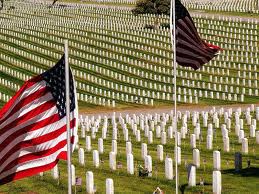
cemeteryAnd interestingly enough, while we are preoccupied in the numbers when it comes to collecting or promoting or showing off, we seem to slide over the numbers of tragedy: 230,000 in the 2004 Japanese tsunami; 159,000 in the 2010 Haiti earthquake; over 3 million in the Chinese floods of 1931; 60 – 80 million in World War II, 16 – 30 million in World War I; up to 4 million in the Vietnam Wars and 1.2 million in the Korean War (and these are just in the 20th century). These are numbers we toss out like so much salt on a winter road.

What are you counting today?

Read Full Post »

« Newer Posts - Older Posts »