Feeds:
Posts
Comments

Transformation

With each day that the veil of my heart is down, the more accessible and available I am for transformation and change. Isn’t that why I keep pulling the veil back up? Transformation is not easy. Old things must pass away and the new is unpredictable.

II Corinthians 3:18
And we, who with unveiled faces all reflect the Lord’s glory, are being transformed into his likeness with ever-increasing glory, which comes from the Lord, who is the Spirit.

I have always considered myself as some kind of agent for change. It’s even part of my personal mission statement, “to inspire meaningful change . . . ” But when it’s my own change, my own transformation, I am a little more reluctant. Oh, I can change my hair, my weight, my clothes, and all the other external trappings. I can change my job and change my tasks. I can change the way I work. But in all of those things, I am in charge. I control the change.

The next step in my Journey requires a submission to the work of Holy Spirit. It’s moving into something more unfamiliar. It’s giving permission to the relationship I have with God to manifest differently.

What does it really mean to be a believer, to love God with my whole heart, soul and mind? What does it really mean to love others, to love my neighbor as myself, to love unconditionally, to the love the unlovely (an not just on a mission trip, but every day).

My theme song for many years has been, “Refiner’s Fire.” But the dross is so familiar, so comfortable, and yet so meaningless in the bigger picture.

I’m still afraid.
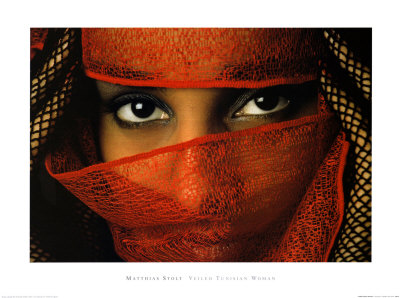
Lifting the Veil

A veil can work two ways. It can protect what is within from outside eyes, but it can also hinder seeing clearly. Which veil do I still wear?

II Corinthians 3:15-16
Even to this day when Moses is read, a veil covers their hearts. But whenever anyone turns to the Lord, the veil is taken away.

I can attest that I experienced a literal dropping of a mental veil when I read the New Testament through for the first time back in 1979 and as a result, acknowledged that Christ was real and had accomplished that mysterious feat of covering my sins with His blood sacrifice and reestablishing a way between me and God. One day the whole thing was gobbledy-gook and the next day, I saw truth in the words. The dropping of that veil was an enlightenment.

But I wonder now, if I haven’t raised a different kind of veil. Much like the Middle Eastern hijab or burqah, am I still hiding behind a veil of the heart? Am I concealing myself from people around me? When I consider the glory within and how I have shuttered it, isn’t that just another description of the veil?

For glory to pass through, the veil must be down. For love to pass back and forth, the veil must be down. This is about transparency and authenticity. This is about trust.

Over the years, I have struggled again and again with disappointment. It’s been a powerful clip-on for the veils in my life. To keep out disappointment, I push away dreams and hopes. To keep out fallible people, I raise standards. To shield myself from the judgment of others, I send out my own arrows of judgment (the best defense being a strong offense).

It is not the way.

Give me courage this day to drop the veil and to reveal myself and with me, the glory that is Christ Jesus. I believe Jesus was comfortable in every setting and with every kind of person because he was open, he was veil-less, he was accessible.

This is my passion for today.

Where is this glory of the New Covenant? Some would say it is totally manifested in the Christ through the Holy Spirit. That’s fine to say, but where is it today? I have heard others say, the glory is the character of Christ. Is that all there is to it? Really? Just a concept?

II Corinthians 3:7-8
Now if the ministry that brought death, which was engraved in letters on stone, came with glory, so that the Israelites could not look steadily at the face of Moses because of its glory, fading though it was, will not the ministry of the Spirit be even more glorious?

This scripture references the specific glory that was reflected in the face of Moses as a result of his time with God and the creation of the ten commandments. It wasn’t just his demeanor and it wasn’t the Holy Spirit shining out from within. But it was Light and it was Power and it was evident. And according to Paul, the glory of the New Covenant, the power and light of the law of Spirit written on the hearts of believers, that message is brighter and stronger.

I think the Light has been shuttered by unbelief.

There’s so much talk about “scriptura sola” (by scripture alone) and the inerrant Word of God and yet, some of the most potent statements are tamed: “I tell you the truth, anyone who has faith in me will do what I have been doing. He will do even greater things than these, because I am going to the Father.” [John 14″12] or “. . . I tell you the truth, if you have faith as small as a mustard seed, you can say to this mountain, ‘Move from here to there’ and it will move. Nothing will be impossible for you.” [Matthew 17:20b]

Until we are operating in these arenas, we have not experienced the fullness of the New Covenant.

Until we are loving God and loving others fully, we are not functioning according to the truth of Christ.

The ministry of the Holy Spirit is Light and power and strength. But the Holy Spirit will not do battle with us either. We must work together.

I’m still going “my own way.” I confess. I make a plan and constantly ask God to bless it (or fix it when things go badly). And, in His grace and patience, God waits for me to get it, to really let go.

Dying to self [John 12:23-25] is not be just some nice poetry. It is the true “way” to the out-flowing of power, the unshuttered Light, the glory.

But to die to myself is change like no other change I have ever known or seen. It’s a total unknown. What does that dying look like? What does that feel like? What do I say or do? Or not do or say?

Some people have sought out this place of Spirit flow . . . they’ve laughed themselves silly, they’ve twitched, they’ve dropped gold dust from their fingertips, and they’ve spoken in tongues for hours and hours. But until the Glory manifests through the presence and release of the Holy Spirit, these are interpretive manifestations.

I don’t have any answers at all, but I do sense a missing piece.

Like the Kingdom that is within so is the Glory. It’s there. It’s here. Holy, holy, holy.

What do my heart letters say? So many people have written onto my heart: some with joy and some with pain; many with indelible ink. But what has God written on my heart? Can people even read it or is that letter being crowded out?

II Corinthians 3:3
You show that you are a letter from Christ, the result of our ministry, written not with ink but with the Spirit of the living God, not on tablets of stone but on tablets of human hearts.

I know there’s a lot of junk mail in my heart. Like my email inbox, I hang on to things too long, thinking I might need that information someday. In my basement, I still have boxes of letters from old friends. There was a time I kept every letter ever written to me. I’m talking about way back, like the seventies and eighties! I keep thinking I’ll go back and re-read them. I’ll glean some truth from them, some insight. Or, I’ll develop a story based on the content. But each box is taking up room in my storage area and I haven’t opened them once since we moved into this house twelve years ago.

I have given too much space to the junk in my heart as well. Unlike the unopened boxes in my basement, I replay these letters over and over again. I read the painful ones in particular, again and again, allowing more blood to flow. I replay the sentences. I reconstruct the circumstances. I play the “if only” game (if only I had said such and such . . . if only I had walked away sooner, etc.)

The Holy Spirit has written more then one letter on my heart. I know this. When I am quiet, some of those words will float up and I can hear and read of the love of the Father/Mother for me. I experience a contentment of soul.

I don’t think it’s just about the busy-ness of my life, although I do fill my calendar too readily. It’s about the junk mail. Today, I’m going to start tossing this stuff out. I’m going to hit the “delete” key. I’m going to give more room to the words of God on my heart.

Paul must not have been an very easy man to get along with. Probably stemming from his Pharisaic background, he appears to be quite the taskmaster. I imagine him as abrupt, determined, and overly confident. He lived by high standards and expected the same of others. Hmmm, that sounds uncomfortably familiar.

II Corinthians 2:1-2
BUT I definitely made up my mind not to grieve you with another painful and distressing visit. For if I cause you pain [with merited rebuke], who is there to provide me enjoyment but the [very] one whom I have grieved and made sad?
[Amplified]

So much was expected of me as I was growing up in my family but I never seemed to make the mark. My brother was the successful one in school and my mother was always comparing me to him. I was the “last of the best” and somehow, that was worse than anything else. Smart, but never quite smart enough.

I lived such a roller coaster life: jumping in and out of people’s lives or making friends and losing friends or trying things and giving up on things or looking for fame and fortune but finding disappointment and loneliness.

When I finally accepted Christ at age 29 and stepped onto the “way,” for a long season, I actually became even more obnoxious. The very person I didn’t want to become, I became anyway: narrow, prideful, judgmental, assumptive. I used my faith like a club. What was I thinking? I thought I had all the answers. It took me thirty years to figure out I was just starting to understand the questions.

Am I saying that St. Paul smacks of that? Not necessarily, but I do think he stuck his foot in his mouth alot. He loved people but he wasn’t good with people. And I do that too.

He meant well too. And yet, his “chastisements” were a deep blow to those folks who were trying their best to understand it all, to “get” the new message, to accept the Messiah who had really come. . . and gone. I think they felt like they had actually missed the most important moment of their lives. All they had were their traditions and the stories of others like Paul. If we think our churches are crazy, I bet it was insane back then. Everything and I mean everything they had believed up until then was tossed out the window. It was a new day, a new kind of faith.

Paul was one of those “all or nothing” kind of guys. Stay or go. Believe or don’t believe, but “don’t waste my time or yours.” In some ways, that kind of dynamism is contagious and it’s easy to “follow” such a strong leader. But it can also be off putting.

I can be a bull in a china shop too. I tell you, when I’m right, I’m really right, but when I’m “wrong,” I’m really really wrong. Foot in mouth up to thigh. I say things I’m just thinking and others here me speaking with conviction and authority. Heck, I’m just thinking out loud.

Lord, forgive me for casting others aside with the sound of my voice. Forgive me for not remembering that lots of people are different from me, that they may need more time with information, that they may need to take a breath, that they may need space, that they may simply disagree with me.

Show me how to love unconditionally, to accept people right where they are. And to let you do the rest.

Some people just call it “branding.” If we look around, most of our young people are branded by Hollister, American Eagle or Abercrombie. Or seemingly more permanent, are the ubiquitous tattoos. But these are just external trappings. They are ephemeral.

II Corinthians 1:22
[He has also appropriated and acknowledged us as His by] putting His seal upon us and giving us His [Holy] Spirit in our hearts as the security deposit and guarantee [of the fulfillment of His promise].
[Amplified]

The more durable seals are of the heart. We can either be branded by the searing pain of past losses and disappointments or we can be branded by the blood of Christ. One seal separates, the other brings wholeness. One builds anxiety, the other freedom and promise.

Some seals come by default, the Other by choice.

Relying on God

Why should I rely on God? Hmmm, that should be a no-brainer. You know, God, the who who raises people from the dead? God, the Spirit. God within. God of the kingdom: all there and available to me. And yet, I still try to to work it out alone, to go my own way.

II Corinthians 1:9b-11
But this happened that we might not rely on ourselves but on God, who raises the dead. He has delivered us from such a deadly peril, and he will deliver us. On him we have set our hope that he will continue to deliver us, as you help us by your prayers.

The faith walk includes a submission to the Spirit within.

The story of Eve, whether viewed as an actual event or an allegory, is about the decision a person must make, either to broker all knowledge alone and to “be like God” [Genesis 3:5] or to trust God and not necessarily understand everything that happens but follow all the same.

I believe there is world space different than the 3-D world we can see, touch, and smell. That world is Spirit.

But how do I connect to this “other” world? That is the whole point, isn’t it? That is the reason believers have been meeting together over the millenniums. That is the reason for the “spiritual disciplines.” That is the reason for prayer (inner talking and dialogue with Spirit). That is the reason for a Christ, the way.

What’s also interesting in this brief passage is the allusion to the prayers of others has having direct impact on the process. When I pray for another person on his/her journey, circumstances, and perils, I am actually helping that person stay on the path and recognize the way.

Sometimes it’s easier to rely on God to work and do for someone else than for oneself. It’s a good enough place to start. In either case, I must acknowledge God to be God and I may not understand all of that. In fact, I know I don’t. But revelation does not come without commitment and trust.

One cannot believe without a willingness to believe.