Feeds:
Posts
Comments

In Defense of Esau

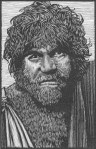
EsauLook, Esau was a simple man. He enjoyed simple pleasures and an outdoor life. Although he becomes bitter when his twin brother Jacob betrays him later, there is no real animosity at this point in the story. Esau, like most young men and teenagers, was not forward thinking. He was living a good life and no reason to believe anything would change. What would his birthright change for him?

Genesis:25:29-32
Once when Jacob was cooking some stew, Esau came in from the open country, famished.He said to Jacob, “Quick, let me have some of that red stew! I’m famished!” (That is why he was also called Edom. Jacob replied, “First sell me your birthright.”“Look, I am about to die,” Esau said. “What good is the birthright to me?”

I looked it up, the implications of losing one’s birthright as first born son. Financially, it would be substantial, since the birthright actually takes the value of another son. Therefore, if Esau and Jacob were the only sons, the inheritance would be divided three ways: one for Jacob and two for Esau because of his birthright. But it’s possible, in Esau’s eyes, he didn’t need it or want it. Abraham was a truly wealthy man, like the Bill Gates of our world, sometimes the difference between inheriting 14 million or 7 million is almost moot. It’s a lot of money either way.

But we are a nation of money counting. Why, even people who share lottery tickets figure out their share before a single number has been drawn. We cannot imagine anyone not wanting their “fair share.”

Of course, this is all speculation. Perhaps it is like the commentators say, Esau was such a buffoon, he gave up his birthright share for a cup of soup. Maybe he didn’t really consider it binding. Who knows? But clearly, it was Jacob who was intent on the omen of God’s words to his mother, that he, the younger, would rule the older. Perhaps Jacob was the studious one and knew that the family laws of first born would prevent the predicted outcome. He just had to be sure. And like his grandparents Abraham and Sarah, he believed he had to step in and help things along. Jacob, taking matters into his own hands (along with Mom), in an effort to hurry things along, changed the course of everything.

How often do I do the same thing? How often do I push matters along because God seems to be acting (or reacting) too slowly?

God forgive me for taking advantage of the Esau’s in my life who don’t see situations the way I see them. Forgive me for leapfrogging over those people and their way of life. Forgive me for not trusting your way, your timing, your promises.
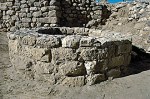

Photo by Erich Lessing

Used by permission
© Erich Lessing

I keep trying to understand the movements of these ancient peoples. I guess I’d have to go back to school in Old Testament studies to really comprehend the places and names and how they correlate to today’s maps.  And yet, even with my limited knowledge, I enjoy making the small discoveries, like the meaning the place Isaac lived after Abraham’s death and its relationship to Hagar [Genesis 16:7].

Genesis 25:8-9a; 10b-11
Then Abraham breathed his last and died at a good old age, an old man and full of years; and he was gathered to his people. His sons Isaac and Ishmael buried him in the cave of Machpelah near Mamre . . . There Abraham was buried with his wife Sarah. After Abraham’s death, God blessed his son Isaac, who then lived near Beer Lahai Roi [Well of the Living One Seeing Me].

I’m assuming the name of this well was carried down by word of mouth because of Hagar. She saw God through the Angel who told her to return to Sarai, her mistress, and to believe in the future of her son, Ishmael.

Now, after all that Isaac had been through, both he and his half-brother, Ishmael, bury their father near the great trees of Mamre, and Isaac moves his household to this undoubtedly plush area near the river and the primary trade route between Egypt and the north. Isaac, too, wanted to be seen by God. I want to be seen by God too. Don’t we all?

Don’t we all want the intimacy of being seen, being known, being embraced by a loving God? This is, after all, the promise of Christ all along: despite it all, God sees you and accepts you . . . accepts me. Just so.

Come to the well and drink. Be seen. And, of course, once that “door” is open, I can see too. (Like the old refrain when having one’s picture taken in a crowd: if you can see the camera, the camera can see you.)

God is not looking through dense shrubs or hiding behind the clouds. God is within through the Holy Spirit. That is Well of the Living One Seeing Me. Right here.

Marrying Rebekah

RebekahAbraham is old, really old, and decides to once again, take matters into his hands to find a wife for Isaac, who must be around forty by then. Abraham sends his highest ranking servant (unnamed throughout the story) to the land of his ancestors to find a wife. The servant puts out a kind of “fleece” to determine which maiden is the one. Rebekah, daughter of Bethuel, passes the test. And off she rides, maids & nurse in tow.

Genesis 24:67
Isaac brought her into the tent of his mother Sarah, and he married Rebekah. So she became his wife, and he loved her; and Isaac was comforted after his mother’s death.

I’m sure there are a number of wedding rituals that were still in place even in those times but unfortunately, these are not shared through this story. Rebekah agrees to travel right away (which smacks of “get me out of this family,” an escape route that many young women take) and takes on the adventure of a lifetime.

Rebekah is going to an unknown land just like Abraham did those many years earlier. She only has the promise from a servant, an array of fine gifts and gold, and the hope of a future. She had tremendous courage, I think, as well as curiosity. Rebekah embraced change.

I wish I knew more of what must have happened within the summary text, “Isaac brought her into the tent of his mother.” Was there a ceremony? Or was it merely a matter of having relations with the woman to secure their marriage bond? Is there significance to it being his mother’s tent, or did that simply signify the tent for women? Was it a harem like situation where all the women of the household lived together?

And more interesting still is that Rebekah became the woman who brought comfort to Isaac at the loss of his mother. I cannot help but think that Isaac was estranged from his father Abraham after the great testing on the mountain. At least, I don’t believe they were close. Instead, Isaac gave his heart to his mother. And when she passed, he felt alone and engaged in the building of his own herds and belongings. And although he did not take a wife, I’m pretty sure he was no “40 year old virgin.” There were slaves and concubines undoubtedly and maybe even children, but these would not inherit the promises of God. They were of such insignificance, they are not named or identified. Even Rebekah came from some wealth, since she traveled with her own entourage of nurse and maids.

And so it is, that the progression of God’s plan for building a nation is finally moving again. The entire process had stopped at Isaac’s apparent reluctance to take a wife.

But once Rebekah arrives, he accepts her, he marries her, and more importantly, he loves her. This love statement could have been excluded but it is here for a reason. At this point in the story, Isaac loves, that is, he cares about his new wife more than himself. He is sensitized to her needs and her desires. He wants to please her. He wants to nurture her. He wants her to thrive and be happy. He loves her.

How often does the story begin this way? My story did too. What happens? How do we lose that adventure and love? Did God change his mind? It was a match made in heaven. So was mine. How do we lose sight of God’s gift to one another? Why do so many life events cool our ardor, our belief, our joy?

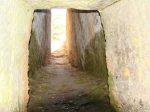
nose ringThey’re coming back into fashion, nose rings, but not with the same significance they had in ancient Israel. In fact, most circular jewelry spoke of a kind of protection and when Abraham’s servant (never named) gives Rebekah the nose ring and bracelets, she knows this is the beginning of a bridal negotiation.
Genesis 24:21-22
Without saying a word, the man watched her closely to learn whether or not the Lord had made his journey successful.When the camels had finished drinking, the man took out a gold nose ring weighing a beka [5.5 grams] and two gold bracelets weighing ten shekels [110 grams].

I tried to find some additional information about the significance of the nose ring in that era, but did not have much luck in a cursory search. However, I was surprised to find a bridal engagement ring offered on Ebay. Go figure, what goes around comes around.

In general, jewelry had a different significance in that time. It was easily transportable wealth and much like some contemporary tribes of today, women would wear their wealth both symbolically and intentionally. Jewelry is a sign of success.

But then, that still holds true today except that most of us don’t have the kind of wealth that allows us to wear authentic carat-laden diamonds or other precious stones. Instead, we have created imitations. We want the “look” without the reality.

Am I turning this tendency toward my spiritual life as well? Do I want merely the appearance of relationship with God, with Spirit within? Or do I want the more costly genuine version? Am I willing to make the necessary sacrifices to get it?

Unfortunately, I know my answer is still a wimpy “no.” I’d like to believe I am going in the right direction but I also feel myself holding back. God is offering me solid gold nose rings and I’m balking at how I might look. Plus, if I take the ring, doesn’t that indicate I am accepting the terms?

I am the bride of Christ, as a believer, it’s a unique description. But how often do I really walk that out and wear the complete garment, nose ring and all?

Burial Ground

ancient tomb    The whole point of buying the field and the cave from Ephron was to avoid burying Sarah on or in foreign soil. Once purchased, the land became an oasis of Abrahamic land, a place and purchase that took him and his household out of “stranger” status (vs. 4). And although he might continue to lead a somewhat nomadic life, this place would root him to that area by the very same laws of the Canaanites. It was a serious transaction.

Genesis 23:12-13Again Abraham bowed down before the people of the landand he said to Ephron in their hearing, “Listen to me, if you will. I will pay the price of the field. Accept it from me so I can bury my dead there.”

Austrian Cemetery

Austrian Cemetery

I am sure other people in Abraham’s household had died in the thirty-plus years that had lived, worked, and traveled the Negev desert. But, when his own Sarah died, she was almost royalty to those who lived in that time period. Abraham was considered a “prince” because of his great wealth and tribe and herds. To stop and lay down his wife in that place was huge to his household as well as the Canaanites. What Abraham created here was the family burial ground. This would be sacred ground from that time forward and their direct descendants would be expected to be buried there.

german-cemetary

German Cemetary

In modern times, we have lost some of this respect for the burial ground. In Ancient Israel, burning of the body was forbidden (this form of burial was considered to be a punishment for idols and enemies. I am not saying we should not do this in our world, but I do think it’s interesting, this difference in cultural norms.

But in the United States, even those who are buried are not respected. While in many German and Eastern European cemeteries, it is the family joy and obligation to care for the family burial plot, to beautify it, to make it a place one would desire to go and spend time. They are like a series of mini-parks, each plotted area touched by the uniqueness of the family. The burial ground is part of the cycle of life and death. But not here.

New York cemetery

New York Cemetery

In our world, we have relegated the dead to sweeping greens where  paid workers run lawn mowers and weed whackers. In some cases, we we might see  long-lasting plastic flowers jammed into the ground or perhaps an artificial wreath. What is the point? Who is blessed by these? Neither the dead or the living.

Polish cemetery

Polish Cemetary

In my life, I have no burial grounds anywhere. My mother cremated my father and requested the same for herself. They now share an urn which I have in my possession and although it has a small shelf with pictures, I do not think about them much anymore. There are stories that erupt every now and again, but there is no sense of place for them. My husband has asked to be donated to science and then, as far as he is concerned, the body can be cremated and disposed of, like a family pet whose ashes were not saved. For him, it is the soul that continues and has no need for the corporeal flesh. He is probably right.

But I keep thinking about this idea of a selected place, different from today’s norEarthm, but more like ancient times, a place for family to extend itself in memory. Sometimes I think the Japanese and other orientals have it right, their nurture of the ancestors.

And yet, I know, Jesus left the tomb. He was not buried with his family. There was not talk of transferring the body after the Sabbath. Joseph of Arimathea embraced Jesus as family by giving him space in that tomb. Jesus left it and in essence, his departure also said that no single place could embody him. He was of the entire Earth.

Where’s the Lamb?

passover-lambIt’s easier to read the story about God “testing” Abraham when you know how it turns out. As I contemplated this tale, I wondered if Jesus remembered this story as He was being dragged to the cross, knowing full well that He the was Lamb. But that’s another story. In this one, who knew?
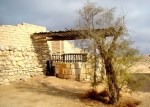
Genesis 21:7
Isaac spoke up and said to his father Abraham, “Father?”
“Yes, my son?” Abraham replied.
The fire and wood are here,” Isaac said, “but where is the lamb for the burnt offering?”

As a mother, I cannot do anything but head right for the emotions of the moment. How did it feel to be Abraham preparing the sacrifice of his son at the command of God, who had been all about the promises of descendants as numerous as the stars? Despite departing right away the next day, it was still a three day journey to the mountain where the sacrifice was to take place. Three days of contemplating the loss of his beloved son. Three days of wondering how God would work things out. Three days of surrendering. It could not have been an easy journey.

And how did Isaac feel, once they arrived, tied up and placed on the prepared altar, wood loaded and knife in his own Father’s hand? Did he go calmly? Did he really think, “Wow, my Dad is truly faithful. He’s amazing!” I don’t think so.

In fact, we don’t really hear about the relationship between Isaac and Abraham after this experience at all until Abraham is “very old” and acquires a wife for Isaac who is now forty years old. What was Isaac up to all those years? No telling. We will never know.

But it doesn’t change the story, does it? Whether they feared or not feared, whether they cried or screamed or complained, it didn’t matter. Abraham acted. Abraham took his “here I am” seriously, because “here I am” also means I am willing to do whatever you ask me. No one says, “Here I am” to God and then follow up with, “I’ll think about it.” And because Abraham had already agreed to do whatever God asked him to do, he followed through.

And really, here’s the truth of it for me. When I became a follower of Christ more than thirty years ago, I also said, “Here I Am.” I think I’ve been forgetting what it meant. And, quite honestly, I’ve put my head in the sand about the lamb, figuring Jesus did all that hard work. And that’s basically true, but there are the daily sacrifices and the long-term ones. There are still challenges and obedience.

The lamb is here.

Binding Oaths

Photo of Beersheba by Leon Mauldin

Photo of Beersheba by Leon Mauldin

The making of oaths and treaties in ancient times was far more serious than it is today. When anyone swore an oath and broke it, the penalty was severe, even death. I cannot help but wonder how different our world would be if promises and vows had more significance. Not unlike Bonhoeffer’s “cheap grace,” we now have vows made with fingers crossed behind our backs.

Genesis 21:30-31
He replied, “Accept these seven lambs from my hand as a witness that I dug this well.” So that place was called Beersheba,because the two men swore an oath there.

Lack of trust is at pandemic proportions, the real core to our inability to make a vow or promise and keep it. We have all been betrayed so many times, we do not believe the word of others. Either we need lots of evidence or the cost for breaking trust must be so high that everyone is put in a fear position to uphold the agreement (hence, the Cold War).

Of course, those fear-based promises usually have loopholes and everyone is busy trying to find them.

Marriages have become the thing of mistrust and loopholes as well. I find it amusing, the angst over same-sex unions, while cheating, divorce, and secret lusts rage in society. How often are the ones who rail against the sins of others, forget their own?

A covenant is a binding oath, a promise that cannot be broken. An agreement with God, the acceptance of Christ as the Messiah, is on that level.

I forget this sometimes. I dishonor the agreement. I don’t hold up my end of the bargain, the treaty, the contract. In a secular world, if I broke a contract the number of times I have broken covenant with the Christ, I would be sued or forced to pay large sums of money or put in jail. But my contract, thanks be to God, is with Grace. And I get more chances to make it right.

I give “lip service” to my trust in God, but I’m afraid I don’t build my foundation on it. I am swayed and battered by the storms of life and I lose sight of trust I promised to have in God. I know intellectually that God is faithful and trustworthy, but still I stumble.

Sensitize me to Your Presence today Lord and give me courage to speak trust in the face of all circumstances. Help me build a Beersheba today, to remember my promise.