Feeds:
Posts
Comments

If salvation is believing and loving the Christ without direct contact but still appropriating the benefits (covering of sin that separates us from God), that is Grace. And apparently, the old guys knew about it and were waiting for the manifestation of Him. We’ve lost the wonder that comes with waiting.

I Peter 1:10-11
Concerning this salvation, the prophets, who spoke of the grace that was to come to you, searched intently and with the greatest care, trying to find out the time and circumstances to which the Spirit of Christ in them was pointing when he predicted the sufferings of Christ and the glories that would follow.

Am I alone in taking for granted the marvel and mystery of God’s appearance in Christ to reunite human with Spirit, to recreate relationship, to begin a new age of life through the inner presence of the Holy Spirit, to inspire and encourage the walking out of paradoxes like loving enemies, giving to receive, and dying to live?

The prophets were all waiting in expectation of a “new earth” through the appearance of the Messiah/Christ. The prophets tried to prepare the way, but many of their prophecies were misinterpreted over the years. As a result, later generations began looking for a military leader, a benevolent dictator, a king of kings. The people lost discernment of the spiritual revolution that was foretold. Even Jesus’s disciples could not get a handle on the mission until after Christ’s resurrection, the greatest mystery of all, despite the predictions.

Supposedly, believers of today are waiting for a second return of Christ. But I think most of this is lip service: we may even “talk this talk” but few tangibly believe it. Besides, when someone does get the notion of an imminent second coming, he (or she) is considered a kook (and, by the way, rightly so — for now).

We’ve lost the ability to wait with anticipation. With true waiting for something huge like the second coming of Christ, there should be truth searching, longing, intense investigation, escalating hope, growing expectation, and discovery all along the way. It’s been too drawn out. We have become almost cavalier. Or, at the least, in our current time.

Don’t get me wrong. I’m lumping myself in this same group and mindset. The last time I felt true expectation in my heart and soul was on our trip to Europe to adopt our children; or perhaps, when I was a child myself. Children know about eager waiting.

Our kids give us a peek at that kind of excitement regularly. Just look at young people before the holidays or at teens before a prom. They know the basics of these events, but the particulars cannot be known until the actual day. And so, they wait and wonder and enjoy. Unfortunately, for adults, keen anticipation rolls into a disappointment at the event itself.

For the last two thousand years, we have been living the event. We are part of the promise. We have been given the keys to the mystery of the ages, the Grace of God in Christ. But time has eroded our wonder. Interpretations and habits and silos of belief (e.g. denominations) have worn away the impact of the reunion between God and Human. We’ve grown bland and insipid, much like the church of Laodicea [Revelation 3:14-21].

“Yet I hold this against you: You have forsaken the love you had at first. Consider how far you have fallen! [Revelation 2:4-5a]

Inexpressible Joy

Sculpture by Karl Jensen

I can’t say I usually walk around feeling joyful. But today, amazingly enough, the combination of post-vacation, a good work-out, a leisurely start to the day/week, and a favorite verse, and I am in it, I mean really in joy and contentment right now.

I Peter 1:8-9
Though you have not seen him, you love him; and even though you do not see him now, you believe in him and are filled with an inexpressible and glorious joy, for you are receiving the end result of your faith, the salvation of your souls.

I had the sense today that “salvation” is thoroughly wrapped up in the believing in Him (that would be the Christ) without seeing a physical entity but then, not only believing in His existence, presence, power & identity, but also loving this commander of my soul. It is another way of saying worship. It is another way of walking this world.

Some years ago, I was deeply involved in a para-church movement called the Walk to Emmaus (similar to Cursillo, Tres Dias retreat organizations around the world). Through this engagement, I met some wonderful people throughout the state of Maryland, for at that time, it was a statewide group, drawing participants from all counties. Among those friends was a dynamic man, Steve, whose love for people and God was apparent. When he died of lung cancer, it was a blow to everyone in that faith community and hundreds attended his funeral service, the most loving and authentically glorious service I have ever attended. Through our sorrow and loss, there was also joy, an unexplainable kind of joy that was God in our midst while Steve was there too.

A musically talented couple, Paul & Mary Lou Day, had just completed a song based on I Peter 1:8-9 called Inexpressible Joy and they dedicated that song to Steve during the service. For several years after that, the song was an important part of the worship experience whenever we gathered as a community. It captured our love and hope in the Christ and the love we carried for one of our own.

I cannot find a recorded version of this song online, it’s been a long time, I still remember the words:

Even though, you don’t see Him,
You still love Him,
You still love Him.
And even though you don’t see Him,
You believe Him
You believe in Him.

And He will fill you up with His glorious joy
His exalted inexpressible joy. (repeat)

And you shall receive for your faith this goal
And you shall receive for your faith this goal,
The salvation of your soul.
–Paul & Mary Lou Day

Precious Faith

We have three foundations to belief in God: faith, hope and love. And although love is the greatest of these (I Corinthians 13), Peter exalts faith. Much like the challenge of loving an enemy, faith too must do battle, but with doubt.

I Peter 1:7a
So that [the genuineness] of your faith may be tested, [your faith] which is infinitely more precious than the perishable gold which is tested and purified by fire. [This proving of your faith is intended] . . .
[Amplified]

No one wants to go through trials and grief, but there is no question that difficulties make human stronger. Whether those situations give more experience or wisdom, they also build faith. This is nothing new.

Today, however, I pondered the idea of faith being precious though challenged. What would make faith so dear, so prized, so valuable that it must also “suffer slings and arrows?” At its root then, faith must be protected, or at the least, treated with great care.

I think about the absurdity of the treatments often used to fight cancer, chemicals that kill all fast growing cells and ultimately, a few others along the way. The body is threatened with death with each and every treatment. And yet, if the body can survive, can withstand the treatments, there is a chance for remission. Core cells are needed to sustain life: they are precious.

There are core cells to faith as well. It is the pulsing center of faith, the heart. Where is this heart? I don’t know. I think it’s different for each person, but I believe it’s the “Keep” of faith and must be revered.

I believe each person has a faith-planting moment. Perhaps it’s the point of accepting the Christ leadership or the indwelling of the Holy Spirit or perhaps it was a miracle like healing or escape from danger. For me, it was the day I stepped into my apartment in New York and I had a “whoosh” feeling, dropped everything from my arms onto the floor and wandered around my apartment singing the only Christian song I knew: “Jesus Loves me, this I know” for about forty minutes, over and over again. I knew that I knew that God was real and I would follow and believe. My precious faith was born that day.

Why are we (including me) still writing and reading about prayer? How much more can be said? What other discoveries do I expect? Christian book stores are full of essays, real life stories, and teachings. Blogs and websites even more so. What does it take to “get it?”

James 5:13-14a, 16b
Is anyone among you in trouble? Let them pray. Is anyone happy? Let them sing songs of praise. Is anyone among you sick? Let them call the elders of the church to pray over them . . . The prayer of a righteous person is powerful and effective.

In one of my devotions while praying the hours, I encountered a writing that identified prayer as the most difficult task of a believer. Why is that true? What is it about our understanding of prayer over the ages that makes us disinclined to practice it without a lot of help. Help might come in the form of a prayer book, a rosary, a special “place” (a pew, a designated chair at home, or a particular position); help in prayer may seem to require other people or musical accompaniment.

I think the problem rests with physicalizing a spiritual or non-corporeal process.

I try to master my outer world in order to “make time” and space for prayer when in reality, the mastery is within. The real reason we may be encouraged to speak and sing prayers out loud us that it helps tame the incessant wandering of our minds. We practice corporate prayers in order to focus on a particular set of words and hopefully, join the inner self with the spoken word.

But truthfully, I can read a prayer and plan dinner at the same time. I can sing or pray out loud and review my most recent argument with my husband or children that morning. I can speak the Lord’s prayer and get lost in it much the same as famous singers lose their places singing the National Anthem at football stadiums. I’m not paying attention. My mind is elsewhere. I am not praying. I am going through the motions.

Prayer is about communing with the Holy Spirit. And although it may be easier to communicate within when it’s quiet or when I set aside my regular schedule to meditate or repeat prayers/mantras or execute a plan, the real “work” is in the heart and mind.

In the King James translations of verse 16 in James 5, it is the “fervent” prayer that is effective and powerful. Some people believe fervent to mean emotional or ongoing, long-winded or passionate; some even think of fervent prayer as fiery, vehement, or zealous. I used to think the same way.

Instead, I’m thinking no outward expression of a fervent prayer is going to have any more power or effectiveness than another kind without the interior self in full participation. It is not what I say or how I say it. Just now, I actually found a website blog that states, “Every time we pray, if we do so correctly, God’s mighty power is released . . . ” Is this what it’s come down to? We’re all trying to figure out how to “pray correctly?” That cannot be the solution.

The Holy Spirit is with me whether I am standing, sitting or walking. The Holy Spirit is present in the shower and at the computer. The Holy Spirit hears, sees, comprehends me in a way like no other. Unfortunately, my praxis is shutting out the Spirit from my conscious mind. I tend to relegate the Holy Spirit to role of observer only. That is not how prayer works.

“So too the [Holy] Spirit comes to our aid and bears us up in our weakness; for we do not know what prayer to offer nor how to offer it worthily as we ought, but the Spirit Himself goes to meet our supplication and pleads in our behalf with unspeakable yearnings and groanings too deep for utterance.” [Romans 8:26, Amplified]

It’s a hard reminder that our lives are not our own, no matter how much we believe they are. Oh sure, there are responsibilities and choices that only I can make for myself, and yet, in the end, it is God and all that is infinite that chooses to give or take away, to end or begin.


James 4: 13-14
Come now, you who say, Today or tomorrow we will go into such and such a city and spend a year there and carry on our business and make money. Yet you do not know [the least thing] about what may happen tomorrow. What is the nature of your life? You are [really] but a wisp of vapor (a puff of smoke, a mist) that is visible for a little while and then disappears [into thin air].
[Amplified]

Conceptually, it should be a joy: after all, isn’t God sovereign? Doesn’t God promise to do what is good for me, even better than the birds of the air [Matthew 6:26]? But I don’t walk each day in this confidence. I am still wary of the next moment. I still want to “control” it: after all, what is familiar, even painful seems better than the unknown.

But the future is the great unknown. We can create probabilities, but we cannot create absolutes.

And so, I ask, what will I experience for the rest of this day? Can I keep my hands open? Can I say “yes” to this day before it unfolds? Can I trust god with my time, my experiences, my journey?

When/what is the next moment anyway? Is it now? no now, no this other now. I can watch the clock or I can turn that invisible countdown outward.

When my elderly mother lived with us, up until her 91st year, she would get so frustrated because she felt so unproductive in those last years. In fact, one of her biggest concerns, “What should I do for the rest of my life?” She never considered the number of those days, just the fullness of them. She wanted to see her minutes and hours as valuable to others, useful.

Can I be more mindful of my day time? Can I hear the stray comment, the smallest encounter, the big mistakes as well as the great successes as opportunities to embrace the “rest of my day” in God, through Christ and the Holy Spirit?

Mutual Nearness

Chicken or the egg: I come near to God first or God comes near to me? It’s a circle for a reason, there is no beginning or end to God-nearness.

James 4:8
Come near to God and he will come near to you. Wash your hands, you sinners, and purify your hearts, you double-minded.

Brian McLaren, in his latest book, Naked Spirituality: a life with God in 12 simple words, uses the word “here” to begin his journey with God: “I am here, God is here, I am here with God.” This is how I imagine mutual nearness, like a dance or a mirror exercise in which no one can tell who is leading, who is following. It’s a unity.

And when I have awareness of God-nearness, I am also quickened. I see myself more clearly, I see places within me that are not connecting, like sunspots, they are of a different heat but the wrong kind of intense activity. They are my inner Adam and Eve hiding in the garden [Genesis 3:8-10].

It is only when I am near that I can understand and see what needs to be purified, what needs to be cleansed. There is cleansing by water, this removes the surface problems, the obvious issues, this is relatively easy and although it may take time, it is not particularly painful.

But the second, the purification of the heart, this is the inner cleansing and there is no quick fix to sins of the heart. The deeper they are stored, the more intense the process.

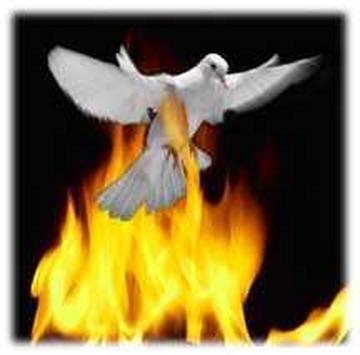
As I prayed over this passage, the old song came immediately to mind, Refiner’s Fire, my heart’s one desire is to be holy. Like purifying gold, there must be fire. This is not some fiery hell at all, it’s white fire, it’s holy, it’s laser specific, it’s the power of God released into the heart of the matter.

They say mothers no longer remember the pain of childbirth once the child is born: the wonder of the living outshines the suffering. So it is with the cleansing fire of God.

If I want to be close, then I have to be willing to be transparent and clear.

I have studied wisdom in the scriptures off and on for some years. Wisdom, as she is personified female in Proverbs, intrigues me. I had forgotten, until now, that wisdom reappears here in James. And she is freely available to me, if only . . .

James 3:17
But the wisdom that comes from heaven is first of all pure; then peace-loving, considerate, submissive, full of mercy and good fruit, impartial and sincere.

First of all, I think it’s important, in this case, to remind myself (and you, dear reader) that the kingdom of God is within me by the indwelling of the Holy Spirit. And yet, as big as God is, obviously, not all of God is within me either, just my share. But, as surely as that portion is within me, then my portion of wisdom is there as well. Both wisdom and the Holy Spirit are part of me, working in me to bring about my sanctification, my fullness in Christ, the light, released in totality, my actions a mirror of what is good and right, living through generosity, sacrificial letting go, and holiness.

These are the kernels which I have not yet appropriated from wisdom: purity (of thought, actions, motives); loving peace more than being right; being considerate of others without judgment or obligation; submitting my way to the Holy Way; offering mercy first; manifesting the good fruit of love in action; impartiality toward those who are rich or poor, sick or well, strong or weak; and above all sincerity and authenticity, plainly in view.

Wisdom is my fraternal twin who I have ignored most of my life.

What prevents our closeness, our unity? Envy and selfish ambition. These are my step-sisters. They are the ones I brought into my Christ relationship years and years ago. I hid them in the closet, believing they might still be needed one day, their personalities tempered by the Presence. Instead, when they came out, they were the same. And like Cinderella’s step-sisters, they were still cruel taskmasters, who take advantage of my every situation, point out what I am lacking, what I should have, who I could be, where I could live, if only . . .

They are the drum beat that never stops. They are the ones who taught me that what I have is never enough. They are the ones who encourage perfectionism. They are the ones who surround me like 360 degree mirror to show me all of my flaws and weaknesses and drive me to run faster, harder, longer.

Envy, Selfish Ambition, I want you to meet my other sister, Wisdom. She is going to live here now too. She is strong and knowledgeable. She is my advocate.

And she wants me to try on the glass slipper.