Feeds:
Posts
Comments

Posts Tagged ‘forgiveness’

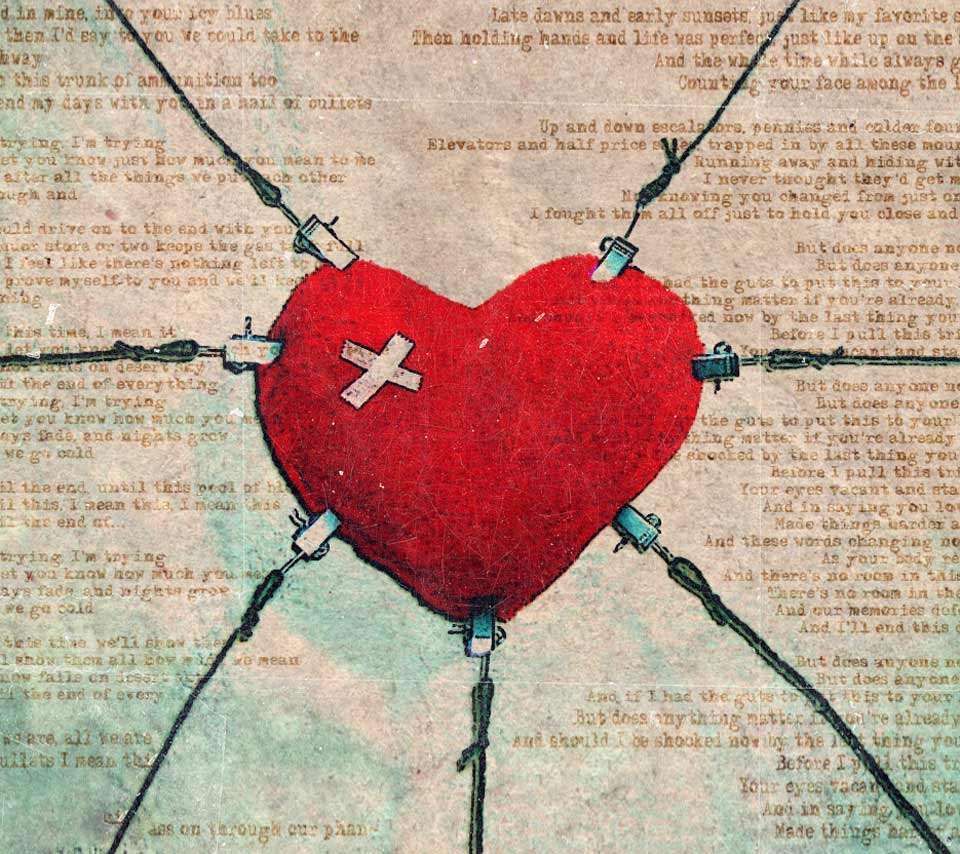
moving onThe reunion story between Jacob and Esau is the Old Testament way of foreshadowing grace to come. Esau had every right to resent Jacob and even hate him for Jacob’s deceptions. Instead, he extended unmerited grace. Time did the first part of the healing (over twenty years) and the two brothers did the rest. They chose to let go of the past.

Genesis 33:1a, 3-4
Jacob looked up and there was Esau, coming with his four hundred men . . . He himself went on ahead and bowed down to the ground seven times as he approached his brother. But Esau ran to meet Jacob and embraced him; he threw his arms around his neck and kissed him. And they wept.

They didn’t talk about the past, but they both knew what had happened between them. Jacob poured out his plea through the giving of very generous gifts (220 goats, 230 sheep, 30 camels plus their young, 50 cows and bulls, and 30 donkeys). Then, when he himself came forward, he bowed down seven times (and his children likewise). This gesture in this time and culture indicated that the other person was superior. By bowing seven times, Jacob was accepting the position of vassal to Esau. (See discussion by Dr. Claude Mariottini)

Instead, like the story of the prodigal son, Esau greets his brother warmly with an embrace. We do not know if this change of heart was from the beginning when he first heard of Jacob’s coming or if Esau’s heart was touched by the gifts and Jacob’s obeisance. Nonetheless, their embrace was a willingness on Esau’s part to start over. To let go of the vows for revenge and deceptions.

But Jacob does an interesting thing. Despite Esau’s offer to accompany Jacob or leave additional men, Jacob demurs. I see this as wisdom. Their unspoken agreement is tenuous at best. It’s one thing to initiate peace but another to live it. By keeping their households apart (Jacob buys land near Shechem), they can have their understanding without putting themselves at close proximity where old habits and memories could peck away at their resolve to live amiably.

In the same way should we remember this wisdom. When we forgive, especially in those most difficult cases (abuse, brokenness, and a bevy of other human sorrows), we should not expect the heart to follow quickly. Instead, we must give space and time and new patterns to develop.

I can choose to relinquish my losses from the past, but I must still be wise in building my future.


Read Full Post »

Art by Jonas Gerard

God blessed Ishmael because he was the son of Abraham. And although it may not seem like a blessing at first blush, those many tribes that descended from Ishmael only to become enemies to the progeny of Isaac: but there was still fruitfulness. And God is honored in fruitfulness.

Genesis 17:18, 20; 21:11-12a,  And Abraham said to God, “If only Ishmael might live under your blessing!” . . .  “And as for Ishmael, I [God] have heard you: I will surely bless him; I will make him fruitful and will greatly increase his numbers. He will be the father of twelve rulers, and I will make him into a great nation. . . . But God said to him [Abraham], “Do not be so distressed about the boy and your slave woman. . . .  I will make the son of the slave into a nation also, because he is your offspring.”

But the blessing of Ishmael is not simply about childbearing and big families, it is about enlarging the place of one’s tent (e.g. one’s influence).

Enlarge the place of your tent,
stretch your tent curtains wide,
do not hold back;
lengthen your cords,
strengthen your stakes.
For you will spread out to the right and to the left;
your descendants will dispossess nations
and settle in their desolate cities.  [Isaiah 54:2-3]

Children are the hope of the future, whether we have them in our immediate family or we serve them through school, church, neighborhood, or work. It is the children who carry the message of our lives into their own. If our lives are loving and giving and caring, then they will respond to the model we provide them. But the opposite is true as well.

They say, if you want to know where a person’s priorities are, look at the list of things in which they invest their money. I say, the same is true for the way money, time, knowledge, and energy are invested in children. They cannot love if they have not been loved. They cannot give grace if they never received it. They will not show compassion if they have not seen compassionate behaviors around them. What we pass to children of all ages is only limited by our own misplaced preferences and choices.

I wish I could say that my children are bearing the fruit of the blessings of God. In some ways, they are: instead of an orphanage, they live in a family and a country of great opportunity. Instead of a proscribed future dealt to them through poor diet, alcoholism, and abandonment, they do know they are loved unconditionally. But in my enthusiasm for having children, I spoiled them too. I wanted them to have some of the things I missed and I created a distorted view of value, of appreciation for the little things, of comfort. Like most Americans, they reflect a world where “need” means another car, not another meal.

So now, I am sorry dear children, what I failed to pass along, you will have to discover on your own. Life will teach you and in that life, God will teach  you. For the blessings of God are still there, the promise of good things still available, but the road may be a little longer.

Read Full Post »

Photo by Guy Tal

Blah, blah, blah: Cain settles down and makes babies (including Lamech); his kids go polygamous and they make more babies and I guess, the implication is that they are creating a “civilization” of sorts. And then, back home near Eden, original Human (Adam & Eve) have Seth. And what is the wrap up of of this quick summary?

Genesis 4:26b
At that time people began to call on [proclaim]  the name of the Lord.

They finally remember God in the midst of them.

How often do I get so busy in the making and building and creating that I forget the God part of it? How often do I get caught in a momentum that seems to whoosh me along before I realize that I have lost my center, lost my anchor, lost my conscious connection to the Holy Spirit?

I am an enthusiastic person by nature and when I get hold of an idea or a project that intrigues me or challenges me and pushes me beyond my day-to-day life, I am “all in.” Unfortunately, that kind of all-in leaves out the Christ. I’m on my own fuel and because I am who I am, I can go like that for quite awhile, months even.

And then it stops. I stop. Either my body betrays me and I’m in the bed for several days with a nasty virus or I simply make a huge mistake and look to my God for a little help.

The human part of me fears that God will say, “It’s about time. I’ve been trying to get your attention!”

Instead, I am wrapped in the warmth of grace. I am reminded of a better way. I am seduced by the wonder of God’s presence. And I get it.

Unfortunately, I’m not sure that Lamech and his crowd ever got it. After all, we all know the story, Noah was next in birth order, maybe even the baby of the families. Perhaps he had a mother who proclaimed God. Perhaps, instead of being known for the poem, Song of the Sword (which typified Lamech’s strength and bravery and personal power), she was teaching her young son about God. But clearly, we learn later, he heard God.

We’ll never know for sure. Everyone has crossroads in their lives. They can choose to follow any number of roads. I am grateful to a God who transverses them all, at one point or another, and is able to woo us back toward the original design, human empowered and led by the Holy Spirit.

Read Full Post »

Here’s a picture for you, hate as a knife; hate as a gun; hate as a club; hate as a poison dart. They are all tools that a person can use to unleash a violence on someone else and it does damage, sometimes permanent. Hate is potent. Who am I kidding? It’s always within my grasp.

I John 3:15
Anyone who hates a brother or sister is a murderer, and you know that no murderer has eternal life residing in him.

Over the years, I have engaged many people about my faith. And, in particular, my desperate need for forgiveness, for my own sins as well as a willingness to forgive others. So often, their comeback to me is that they haven’t done anything so bad: they haven’t murdered anyone or stolen anything or taken lethal drugs. They speak as though there is such a thing as an “ordinary” life of niceness, their “good person” syndrome, a whitewash.

But I say they have murdered, at one time or another, with hate. And, unfortunately, in the paradoxical world of God, that hate might have appeared justified, the object being a mean, cruel, even evil-seeming person, or an adulterer, a child abuser, a wife beater, a liar, a betrayer. Do any of these descriptions make your blood boil?

That’s different, you say. They deserve to be hated; they broke the laws of humankind. They are “Cain: who slew Abel” [Genesis 4]. Instead of casting them out of the garden, you cast them out of your life. It’s a way to soften the feelings, to put blanks in the pistol, to dull the edge of hate.

There were years I hated my own mother for the emotional damages she brought into my life. There were times I hated my brother out of sheer jealousy for his abilities, for his “position” in our family, for his successes that perpetually outshone my own. There were intervals I hated my husbands (in certain seasons of our shared lives), for their disdain of me as a woman, for their disregard, for their isolations. There were girls I hated who were prettier than me, smarter than me, “in” while I was “out,” or acknowledged while I was invisible. There were lovers who bruised my heart and cast me aside. There were neighbors who crossed the line of decency. There were . . . there are . . . enemies of the state, terrorists, and many, many, unnamed villains.

Oh yes, plenty of people to hate. And yet, none of my hate effective in relieving my own soul, heart or mind of injury. What has been done to me, I cannot re-write, I cannot change my past with the weapons of hate, nor can I pay them forward. Hate perpetuates hate. It feeds upon itself.

Back to the paradox: there is a reason that Jesus taught us to love our enemies [Matthew 12:44]. I think we have mistakenly relegated this command to an ideal, something nice to work toward. But I have come to believe it’s a weapon in its own right, not just as powerful as hate, but more powerful. It’s a neutralizer, a transformer. If hate is a weapon, love is a bomb that changes the landscape completely.

It’s not a suggestion: it’s a guarantee.

Read Full Post »

In Him, that would be Christ, no sin abides. So what does that mean? I love asking such questions, particularly with familiar verses. And what is “sin” really? The Amplified translation gives some extra hints:

I John 3:5b-6
And in him is no sin. No one who lives in him keeps on sinning. No one who abides in Him [who lives and remains in communion with and in obedience to Him–deliberately, knowingly, and habitually] commits (practices) sin. No one who [habitually] sins has either seen or known Him [recognized, perceived, or understood Him, or has had an experiential acquaintance with Him].
[Amplified]

To be “in Christ,” then is to be in relationship or communion with Christ–it means, having such an intimate knowledge of Christ that I would know what would displease Christ’s Spirit within me. I would recognize what is often called “a check in the Spirit,” that still small voice that says, “not that way, this way,” or “eat this, not that,” or even more simply, “let go of that thought.”

This relationship is nurtured in personal prayer, devotion, worship, and ideally, fellowship with like-minded people who are also “in Christ.”

It’s like being in a swimming pool together: everyone is wet, sharing the water, but we’re all doing different activities, we’re all in various depths. The more experienced ones know how to swim while others merely wade or stand around. Some love it so much, they can swim underwater the whole distance of the pool.

Sin is a buzz word that has gotten a bad rap. I have actually seen people roll their eyes when the word, sin, comes into the conversation. I’m not sure how this has happened. Perhaps it’s the growing relativity of our actions. It’s become more and more difficult to identify sinful behavior. Truly. And I’m not saying I can be the one who draws that particular line in the sand either. Most will say the Bible itself identifies sin, but in a post-modern world, that may not be so black and white. Oh, there are entire groups of people, denominations or sects, or whatever, who believe they have it down, but I’m not so sure anymore. After all, whether we like it or not, there are many modern behaviors and practices that were clearly sin in the past but which society, in general, has embraced (divorce being the most prevalent).

Don’t get me wrong, I love the Bible and all that it has to teach me. And there are some clear parameters that humans have accepted over the test of time: murder, for instance. But few people would acknowledge that coveting (a popular American sport), is truly a sin anymore.

All right, sin is a huge topic and cannot have a full discussion here. But I did want to make one point that I learned from Joyce Meyer, that sin is birthed in the mind (see her series on Battlefield of the Mind). And this is the key to the whole thing.

If I am in deep relationship with the Christ spirit within (in Christ, Christ in me), then the inklings of sin, the desires, the intentions, the motives, the impetuses, will not germinate. That is part of the role of the Holy Spirit, to mirror my thoughts, to cleanse, to reveal the implications, to heal, to winnow the seeds of actions that will harm me and others. Sin usually dies on the vine if it is never watered or fertilized in the mind and heart. Selah.

Read Full Post »

Of course, not all brothers love each other (or sisters either for that matter), but there is something indelible there. The Amplified translates this phrase: “loving [each other] as brethren [of one household].” The root of believers — operating as a family.

I Peter 3:8
Finally, all of you, live in harmony with one another; be sympathetic, love as brothers, be compassionate and humble.

For some people, the idea of family is riddled with issues, either because of brutal or emotionally handicapped parents or destructive behaviors by individual siblings. These are not people who will gravitate readily to the idea of a “church family.”

Others have close family relationships and they have a different problem: they know the wonder of strong familial ties and often find a group of believers can rarely engender that kind of closeness or trust.

I guess I’m somewhere in the middle, but probably leaning to the first example. My mother was mentally unstable and I never knew from one day to the next what I would awake to. My father died when I was child and I only had one sibling, five years my senior who left the family home for college and never returned in any kind of meaningful way. It was not until we were adults that we developed a truly mutual relationship. So, I confess, I’m not quick to embrace people with whom I am thrown together because we are affiliated with the same church body. It’s a trust issue, I know. I know.

Here’s what should happen anyway (in theory . . . in my mind): believers are bound to one another by their faith in God. This is actually a blood bond because of the nature of the Christ. It does not flow through our veins, but through our Spirit selves.

According to Peter, spiritually-based relationships should have harmony, sympathy (empathy), compassion, and humility. In general, this means deference to the other, concern for the other, sensitivity to the other, and willingness to compromise.

Wait a minute. We could be doing this all the time, church or no church; family or no family; believer or no believer.

These are the basics of “human.” These are the essential ingredients to relationships of all types: with strangers, lovers, or even casual acquaintances. Basics. Love of the first order. Love without strings. Love without labels.

Read Full Post »

For mercy to have its full power, it must be a two-way street: that is the God road. Same as forgiveness, whose power can cast a wide swath when it flows freely. I forgive, God forgives me. I show mercy, God shows mercy to me.


James 2:13
. . . because judgment without mercy will be shown to anyone who has not been merciful. Mercy triumphs over judgment!

The truth is that mercy and forgiveness are a type of twins really, aren’t they? In both cases, the person who needs forgiveness (or mercy) doesn’t deserve it. They are guilty. And yet, if I, whether it’s deserved or not, extend mercy and/or forgiveness to this rascal/deadbeat/handicapped heart, God will say, “Well done, good and faithful servant, where you have been faithful in a few things, I will put you in charge of great things.” [my paraphrase of Matthew 25:23]

Those are the significant few things: forgiveness and mercy. And once again, as in so many of my posts, it’s paradox that rears its goofy head again. We are encouraged to do the very last thing we want to do.

There is no guarantee, in fact, less than a guarantee, not even a promise or law or a mandate that my stepping out to forgive the other will mean he/she will forgive me (either for the same situation or another one). The process doesn’t work that way. The exchange is between me and Holy Spirit, not me and thee.

So, when I play “rock, paper, mercy,” it’s always got to be mercy. And it may look from the outside as though I’m losing every contest, God says I’m winning where it counts.

My daughter once asked me how my husband and I have managed to stay together for all these years; we are after all, quite different. And all I can say is that we have practiced two key concepts: acceptance of what is and mercy/forgiveness for what is not.

Read Full Post »

« Newer Posts - Older Posts »