Feeds:
Posts
Comments

Posts Tagged ‘Genesis’

The very thing the people didn’t want (to be scattered) was exactly what happened anyway. They thought by building a city with a great tower, it would protect their place, their homes, their city; instead, disunity broke their dreams. Miscommunication is the root of most discord, whether it’s in a marriage, a family, a neighborhood, church, a business, an organization, a government, a city, or a nation. If we do not understand one another, we cannot build or grow because our foundation is sand.

Genesis 11:4-5; 6-8
Then they said, “Come, let us build ourselves a city, with a tower that reaches to the heavens, so that we may make a name for ourselves; otherwise we will be scattered over the face of the whole earth.” . . . The Lord said, “If as one people speaking the same language they have begun to do this, then nothing they plan to do will be impossible for them. Come, let us go down and confuse their language so they will not understand each other.”  So the Lord scattered them from there over all the earth, and they stopped building the city.

People often get an idea of how to build something and more often than not, don’t play well with others in the sandbox.

At my work, we have a training class that I help lead, and at one point in the workshop, a table group is asked to build the tallest structure possible with marshmallows and raw spaghetti. It usually ends in disaster or a a very puny, unstable construction. In some cases, the tower is tall and even solid, but often, this comes at the cost of unity, a dictator emerges from the group who forces cooperation. That kind of accord is fleeting.

It’s always been a curiosity to me as to why God would not allow the group to build that tower in the plains of Shinar when they still had the same language. Most commentators talk about the issue of pride. The idea that they wanted to build the tallest tower, as though that, in itself, would seal their safety and confirm their power and authority. And I see that. But I cannot help but wonder if there was more to the story. That they spoke the same outward language but did not really communicate.

Were they really all in agreement about the nature of the tower? Or did they argue and argue and argue about it? Were there power plays and the formation of spheres of influence? Did leaders emerge who were then challenged by other leaders? It’s usually a matter of perspective, of vision poorly expressed that causes misunderstandings. Often, over time, one group develops their own secret vocabulary. Have you ever tried to sit in on a conversation of techies or researchers? They’re speaking English, but I have no idea what they’re talking about.

Of course, it’s in all arenas. Even librarians have lingo like standing order, YALSA, professional collection, MARC record, catalog, folksonomy, bibliographic instruction, boolean searching, call number, controlled vocabulary, ALA, and format, just to name a few.

But Christians are no better: saved, born again, walked the aisle, rapture, name it and claim it, holy laughter, received the baptism of the Holy Spirit, tongues, testimony, and so on.

Groups develop their own language within a language. And we often take those secret languages to build, not a tower, but a wall around ourselves.

So, what happens? Either you have to learn the language of the group or you might as well go elsewhere. Just something to think about today.
Read Full Post »

This is one of those chapters that lists a bunch of names. In Matthew, it used to be known as the “begats” a King James word for breed, multiply, or father (as a verb). It was a list of descendants, who were in the line of Noah. Whereas Matthew’s genealogy [1:1-16] recites the names from Abraham to Jesus (through Mary), Luke’s genealogy [3:23-38] goes through Joseph.

Genesis 10:32
These are the clans of Noah’s sons, according to their lines of descent, within their nations. From these the nations spread out over the earth after the flood.

It is Matthew’s genealogy that lists not only the men, but five unique and controversial women: Tamar, Rahab, Ruth, Bathsheba, and Mary. They are suspect either by birth or by circumstances, Rahab who seduced her father-in-law; Rahab, a traitor, who helped the Israelites; Ruth, a Moabitess (a heathen religion that practiced human sacrifice); Bathsheba, an adulteress; and finally Mary, though holy to us, from the perspective of those around her, was pregnant out of wedlock. I discovered the richness of these stories many years ago and had a one-woman performance piece called Pente that I toured in Georgia and Mid-Atlantic for many years.

It is often difficult to discover something worthwhile in the seemingly didactic lists.

But in these I found some information through a commentary that I did not know before. Specifically, I didn’t know that the word “sons” as in the “sons of Shem, Ham & Japheth” could also be translated as “nations.” Therefore, the individual names listed could represent people groups. It’s a much bigger story then. This was the distribution of a civilization, a second time around, a re-do. And yet, this version was equally fraught with error through human foibles (the story of Noah being sexually exposed and mocked by his son, Ham). Eventually, it is the descendants of Ham who begat the notorious cities of Sodom and Gomorrah.

One of Newton’s laws of physics was that “every action has an equal and opposite reaction.” Like sowing and reaping, our actions produce reactions. The Bible takes it one step further to state that an action may have more than an equal reaction, but a 30, 60, or even a 100 times the initial action: not equal but multiplied.

My actions create a ripple effect in my children and undoubtedly in my children’s children.

I am living in many ways in response to my parents’ choices, attitudes, and influence. Some good and valuable: some not. I am still eating their fruit on one level or another. I am growing and producing fruit as well. A cycle. A genealogy. A table of nations, just as surely as Noah.

Read Full Post »

Here’s another misconception that has bit the dust today out of the Genesis story. All this time, I have been getting all mooney-eyed over rainbows, thanking God for his covenant and seeing them as a “sign” of God’s protection and promise. In fact, my husband and I can name off all the times rainbows have appeared at significant moments: getting married, adoption, buying our house, and so on. We saw them as a blessing.

Genesis 9:9-10a; 13; 16
I now establish my covenant with you and with your descendants after you and with every living creature that was with you . . . I have set my rainbow in the clouds, and it will be the sign of the covenant between me and the earth. . . Whenever the rainbow appears in the clouds, I will see it and remember the everlasting covenant between God and all living creatures of every kind on the earth.

Oh, I’m sure God doesn’t really mind that rainbows are important to us as a family and as a couple. But really, despite what I have been taught, and sure, it’s a fine sign for the covenant/contract that God made with Noah, but we’d better be clear here. I’m thinking now that God selected that sign as reminder for himself. God will see it. God will remember. God will not destroy the earth by flood (maybe by something else, but not by water).

Rainbows appear at the confluence of light and precipitation. It’s the turning point. It’s the moment when things can go toward sunshine and clear skies to an overcast and dreary day.

It’s as though God is saying, “Oh, the temptation: I could just let it rain and rain and rain.” But God doesn’t because God remembers that there is always hope in Human transformation.

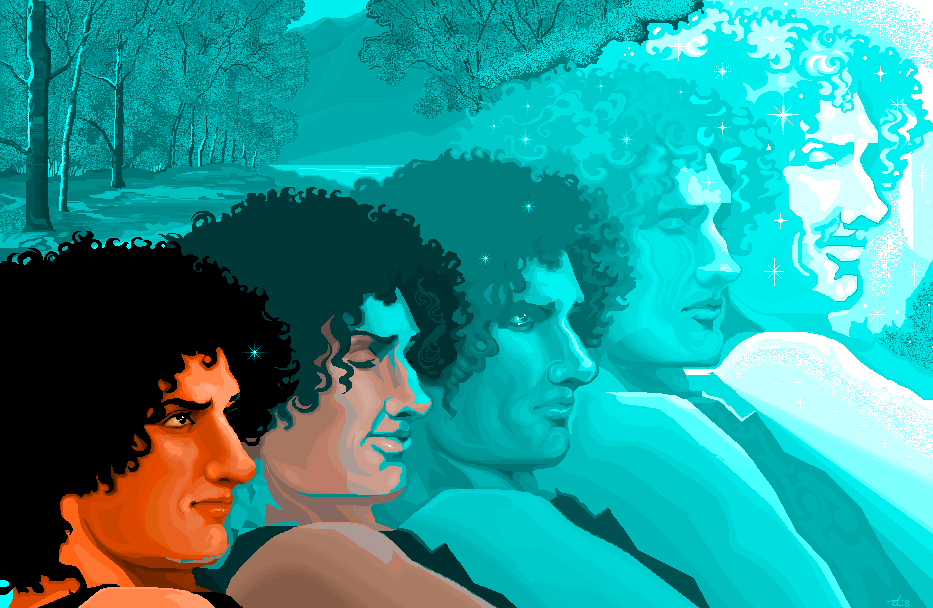
Today, I saw a photographer’s work. Roman Sakovich, who artificially created the juxtaposition of what someone healthy (one side) looks like next to the side that has succumbed to drug abuse. It’s the same scenario in my mind, the same warning of what could be, what I choose, where I  draw the line, what will I believe? The rainbow is the dividing line.

We can see it, the sign, but I think it’s more of a warning than a promise. It’s a “don’t forget” what I [God] can do.

This is a hard thing to consider in the aftermath of the many devastating rain-based storms we have had in the last couple of years. People’s lives have been washed away. Their futures abruptly halted. Their hope crushed by the hand of nature’s unexpected brutality.

It could happen to me. It could happen to you. “We know that the whole creation has been groaning as in the pains of childbirth right up to the present time.” [Romans 8:22]

A covenant, or contract, is binding and is between two sides. In this case, the covenant was made with Noah, as a representative for Human, and God. The covenant, by its nature, has an “if” clause. It is conditional. We have a role in this first covenant as much as we have in the covenants that followed. This one was easiest in many ways: remember and acknowledge. That’s it.

Remember Who made the covenant with Human. Acknowledge the promise not to destroy, despite God’s ability to do so.

The sign is not merely a “blessing,” it’s the stamp on the promise to NOT do something. Not destroy. The next time I see a rainbow, I think I’ll lift up thanks. Thanks God for giving us yet another day to live in harmony with one another and with nature and the creatures who populate our earth. Thanks God for saving Earth, one more time.

Read Full Post »

Painting by Frank Wesley

It was not a quick departure from the ark at all. Depending on the counting system one uses and the assumptions about the calendar, it was a good year that everyone was on the ark. A full year in a small space. A full year in which a whole set of norms were created. When the door opened, everything changed, again.

Genesis 8:15-16a; 9:6
Then God said to Noah,“Come out of the ark. . . . And for your lifeblood I will surely demand an accounting. I will demand an accounting from every animal. And from each human being, too, I will demand an accounting for the life of another human being.

The implication of a couple of verses seems to be that there was not a lot of animal eating on the ark. That makes sense since the there were a limited number of animals that could be there. Was the situation more like the exodus when shoes did not wear out and people survived on manna? Who knows. But one thing is clear, once they left the ark, Human was given, once again, full authority over all living creatures and could eat of them (as long as the lifeblood was not in them – a somewhat anti-vampire mandate).

But even more important, along with the promise (and subsequent covenant God makes with and to Human), God also announces a required  accounting from each and every living creature, including Human, on earth. In essence, if “you” (living thing) are going to live on this earth, if I (God) am going to give you a fresh start, then you have to report out on how you used this gift of life.

I wonder if I had a stronger sense of this in my own life if I would make different choices?

Instead of worrying about “not” sinning or avoiding “bad things,” wouldn’t it be better to be more conscious of the good use of time, the strong ROI of my investment of time, money, and energy.

They say that many people who have a near-death experience often view life differently from then on. And depending on their foundation, they either become lackadaisical (what’s the point) or they become keenly focused on making each day count. It is a question one hears, “What if you had x amount of days to live, how would you live differently? . . . or would you?

Becoming a follower Christ, is a little like coming out an ark. It, too, is a fresh start. As a new believer, it is so much easier to see and feel the renewal. But, as we grow older in the faith, I think we lose touch with the wonder and worse, we lose touch with our accounting.

I think it’s daily actually. It should be part of our prayer life. I would like to bring it into my own prayers, my evening prayers, my review of the day. Oh Lord, this is what I did with this day, your gift to me. Forgive the missteps; rejoice with me in your moments; and thanks for the grace when I was afraid.

Read Full Post »

No one knows for sure how long it took Noah to build the ark although time is very much a part of the story, whether it’s the 40 days and nights of rain and bubbling springs or the month, day, and year the deluge started, scripture emphasizes a specific timetable and the significance of the flood and the ark in human history.

Genesis 7:11; 13; 16b
In the six hundredth year of Noah’s life, on the seventeenth day of the second month—on that day all the springs of the great deep burst forth, and the floodgates of the heavens were opened. . . . On that very day Noah and his sons, Shem, Ham and Japheth, together with his wife and the wives of his three sons, entered the ark. . . . Then the Lord shut him in.

I am not going to put forth the logic or lack thereof for the flood as literal truth or symbolism. In either case, the story has been passed down to us for a reason, and I believe it is predominately to remind us that God will always protect at least a remnant of Human even in the face of complete destruction. For me, this is part of my faith walk, to believe in the faithfulness of God toward humanity and all living creatures on Earth as a whole.

Noah was not necessarily required to proclaim or warn the rest of the people on earth like Jonah was, to warn Nineveh (book of Jonah) of upcoming destruction. And yet, Noah was considered a righteous man who walked with God. He was known by the people, he had a reputation. And, undoubtedly, people noticed him building a very large structure. But, unlike the bible stories from Sunday School, there is no record that Noah and his family were mocked during this construction. More than likely, they were somewhat ignored or viewed as a curiosity. There is also no record of people pounding on the ark trying to get in, a scenario that gives everyone pause in the face of recent floods, hurricanes, and earthquakes.

This thread makes me think again about our disasters of the last ten years. It’s making people jumpy and anxious. As a result, many people all over the country (maybe the world) have become quite extreme about preparing for the end times or preparing for global war or preparing for natural disasters. They are building “fallout shelters” and laying up provisions. They are arming themselves. Are they privy to something we aren’t? Are they wise to prepare? Are they building an ark? And will we be the ones pounding on the doors? I don’t know.

It goes back to relationship with God. If there is to be a remnant, then God will will provide. Otherwise, I can only live in fear and angst. The story of Noah and the ark is about the preservation of life as much as it is the destruction of unrighteousness.

God shut the remnant in.

No matter how big the ark was or how many were inside, in the end, unless God shut the door, they would have perished as well.

Matthew 5:45b states, “He [God] causes his sun to rise on the evil and the good, and sends rain on the righteous and the unrighteous.” All are exposed to suffering and pain as well as joy and happiness. No one is exempt from the flood, not really. In the greater scheme of things, we cannot choose for ourselves who will escape cataclysm.

Unless the Lord builds the house,
the builders labor in vain.
Unless the Lord watches over the city,
the guards stand watch in vain. [Psalm 127:1]

Read Full Post »

Somehow I have had it my mind that God interrupted Noah while he was about his daily business and said, “I’ve got a job for you, go build an ark.” But now, I am caught up in this idea of people “walking with God” and what that means. I have assumed this walking with God business was a metaphor for closeness. Is that the only choice?

Genesis 9b; 13-14a
Noah was a righteous man, blameless among the people of his time, and he walked faithfully with God. . . So God said to Noah, “I am going to put an end to all people, for the earth is filled with violence because of them. I am surely going to destroy both them and the earth. So make yourself an ark. . . “

The only reason I’m playing around with this idea is that pre-flood, life was different. All the patriarchs were still around, their generations overlapping by hundreds of years. Even Adam was around for at least half of this time. The Garden experience was still part of their vernacular. And one of the most memorable things was Adam, Eve, and later, Enoch (my interpretation), walking with God in the Garden.

And here’s another one, Noah, specifically noted as walking with God.

In an article by Bob Sorge in Christianity Today, he writes, “God created man for the enjoyment of a walking relationship that involved companionship, dialogue, intimacy, joint decision-making, mutual delight, and shared dominion.”

I think that’s true, but I think we will never have the same opportunities as Human had before the flood. Despite being cast out of the Garden, God allowed for intimate relationships with others. God seems to always leave a loophole for Human, that’s how much God wants to ultimately preserve Human.

But it is a narrow way (Matthew 7:13). It is narrow because intimacy itself requires it. Even today, we cannot be intimate with everyone. Most people can only manage a few close friends, a few friends we trust totally, a few friends in whom we have invested our time, energy and even money. And sometimes, if we are lucky, we are married to one of these friends as well.

Noah built the ark because he was familiar with the God who told him to do it. He was not merely being “obedient,” they had probably talked about it already. Maybe there was an Abrahamic negotiation even (Genesis 18:16-33). We’ll never know.

All this makes more sense to me, that God doesn’t drop down edicts or demands or mandates on an unsuspecting follower. These requests come out of relationship, out of familiarity, and trust.

I remember, as a young Christian, I was so afraid that God would “call” me to some egregiously difficult post like the bush of Africa or the ice floes of Siberia or the rice paddies of China. But now I see, these directives come from internal agreement and possibly even a nurtured longing.

Come, Jesus says, walk with me.

Read Full Post »

Enoch was the baby of the Adam line. Unlike his forebears or those who lived after him up into their 800’s and 900’s, Enoch died at 365. Outrageous numbers, all of them. Nobody can live that long. But who can really say? Clearly, Human (Adam/Eve) was different than we are today. So, let’s assume it’s true, just for the heck of it. What is there to learn?

Genesis 5:23-24
Altogether, Enoch lived a total of 365 years. Enoch walked faithfully with God; then he was no more, because God took him away.

Enoch walked with God. Now, since God usually walked in the Garden of Eden and not out with the non-Garden folks, something tremendous had changed here. The story says Enoch walked with God 300 years, presumably all the years after the birth of his son, Mathusaleh (the grandfather of Noah, who, by tradition is said to have died 7 days prior to the flood, which allowed for the proper days of grieving — that piece of trivia comes from the studious rabbis back in the day).

Enoch is the only one of the line who did not die in the natural way. Each patriarch is written as having a specific time of death, along with the presumable birth year of his first-born son and the total number of years he lived after the birth; but then he died. Except Enoch.

Enoch disappeared. God took him away.

Now, if I had to imagine how life looked back then, I would presume that Adam and Eve set up house as close to the Garden borders as possible. Maybe they couldn’t even see the Garden, maybe it had a mysterious “fantasy-like” secret entrance (there is mention of flashing swords and cherubim) or maybe it was a daily reminder. In any case, I can’t imagine them going far. So they set up a community for several hundred years and and with several thousand people, assuming they all had similar fertility and longevity.

But everyone knew and heard about Enoch. After all those silent years without God, about 600 years, Enoch had a special relationship with God, with the Creator, with the Master of the Garden.

People knew about the Garden. Certainly, Adam must have talked about the garden and what it was like, the same way people talk about heaven, or the good old days, or the best vacation ever. When people struggle, they build hope from their memories of better times in the past. If it was good once, it could be good again.

But Enoch was doing it. He was hanging out with God. Either he managed to get into the Garden for his strolls, or he had a pure heart, was recognized by God and rewarded with access. We’ll never know.

But in some way, what Enoch shared with God, he passed to Methusaleh, even if by story alone. And Methusaleh passed to Lamech, who fathered Noah and blessed him proclaiming, “He [Noah] will comfort us in the labor and painful toil of our hands caused by the ground the Lord has cursed.” They believed there was a reason for Enoch’s relationship. They believed in a better tomorrow.

There was an anointing on Noah from the beginning, then. He wasn’t some Steve Carell (an unbelieving Evan Almighty called by God to build a modern-day ark). Noah had the benefit of Enoch’s faith and stories passed down through the generations. It made a difference. We should be telling our faith stories to our children. We should be remembering and keeping track of the blessings of God. They are milestones of faith for those to come.

I believe Enoch is still in the Garden, untouched by the temptation of the other tree, relishing in the Tree of Life.

Read Full Post »

« Newer Posts - Older Posts »