Feeds:
Posts
Comments

Posts Tagged ‘God’

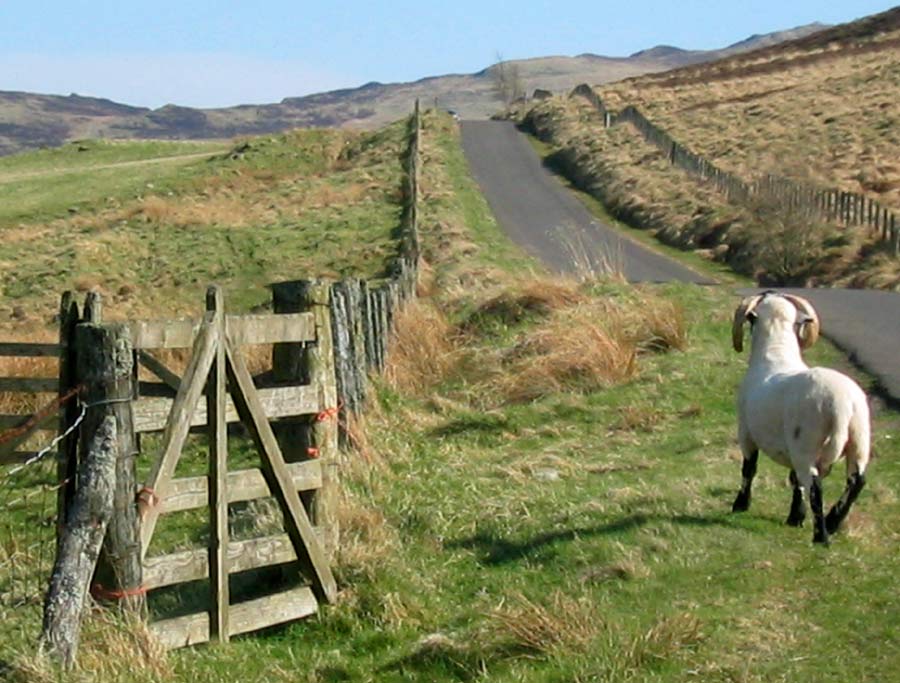
gateA quick search on the phrase, “gate of heaven” caught me off guard as it appears to have become a popular name for cemeteries. I think that’s a shame as it puts so much emphasis on heaven being available only after we enter the “big sleep” if you will. But heaven is also within and available to us now, if we open the gate.

When Jacob awoke from his sleep, he thought, “Surely the Lord is in this place, and I was not aware of it.”He was afraid and said, “How awesome is this place! This is none other than the house of God; this is the gate of heaven.” [Genesis 18:16-17]

We are the church, we are the house of God. The body is a sanctuary and temple to the Holy Spirit [I Cor 6:19]; isn’t heaven there too?

In heaven, we are promised continual access to God where there are no more tears and no more pain. This timeless place is so not limited to our three-dimensional understanding of existence. It is spirit. It is God.

For me, the gate is Christ.

sheep gateI tell you the truth: I am the gate of the sheep. All who approached the sheep before Me came as thieves and robbers, and the sheep did not listen to their voices.I am the gate; whoever enters through Me will be liberated, will go in and go out, and will find pastures. The thief approaches with malicious intent, looking to steal, slaughter, and destroy; I came to give life with joy and abundance. [John 10:8-10, The Voice]

GatesNarrow gate allow us in but gates also protect, whether in reality or symbolically.

In Old Testament times, the gates of the city were a public forum where transactions were witnessed.

A gate is a choice, whether to enter or depart.

Read Full Post »

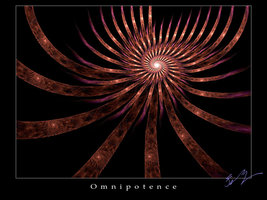
omnipotence

Art by Neon Rauschen

Conceptually, I can’t really wrap my head around omnipotence, infinity, or the universe. And not just because of the vastness, although that plays a part, but mostly because the idea is so very non-human. We are bound by many sets of limitations whether self-imposed or a product of our very nature. We are encased in skin and held up by a skeleton of bones and we are locked in time. Both of these parameters keep us out of the God realms.

 Job answered the Eternal One.
 Job: I know You can do everything;
        nothing You do can be foiled or frustrated.
You asked,
        “Who is this that conceals counsel with empty words void of knowledge?”
    And now I see that I spoke of—but did not comprehend—
        great wonders that are beyond me. I didn’t know. [Job 42:1-3, The Voice]

I didn’t know, Job says. And I say, he couldn’t know. We’ll never know, not while we’re walking the earth.

Oh, we’ll get glimpses of truth, snippets of the secret knowledge, flashes of insight even. But the “why” is not for us to understand. I am reminded of a Corrie Ten Boom story when she was a little girl on a trip with her father and she wanted to carry one of the pieces of luggage and her father denied her. It would be too heavy for her.

And so it is with omnipotence: the ability to see through time and space and change, the beginnings and the ends.

For this reason, we are asked to trust in God, the Eternal One, the Omniscient. It’s the old iced tea commercial, where we are asked to fall backward into the water, without looking. It’s the more recent cliche of choosing to be “all in.”

I am still not there. I don’t understand my own reticence. Somewhere along the way of my life, I have learned skepticism and fear of being fooled or deluded. I continue to test the waters first, walking in slowly, just in case there are surprises underneath, ready to nibble my toes and ankles. I do not plunge.

But I will. I know that too. I’m not sure what that will look like yet, but I am certain that I will have my Job revelation too. And in that day, in the same way that “The Lord blessed the latter part of Job’s life more than the former part” [Job 42:12a], so I will experience saturation in omnipotence.

Read Full Post »

Artwork by Nathan Johnson

Artwork by Nathan Johnson

This question, “where were you?” changes its meaning by the emphasis put on each word. “WHERE were you?” versus “where WERE you?” versus “where were YOU?” And what emphasis did God use when he first spoke to Job?

“Where were you when I laid the earth’s foundation?Tell me, if you understand. . . . “ [Job 38:4, NIV]

Is it about place or time or person?

I’m pretty sure it’s about person, that neither Job or you or I were present in the time of creation energy. We can describe and count and observe and hypothesize, but we’ll never really “know” or understand Godwork.

Partially, the problem is that we continue to anthropomorphize God. We keep making very big and very wrong assumptions about God as though a jealous God is like a jealous man or woman. Or that fearing God is like fearing cockroaches or stink bugs. Or that listening to God is like listening to U2 or Taylor Swift. These words are human words used to describe human feelings and activities. It’s simply not the same with God.

I used to believe that Abraham had the God thing down. After all, didn’t he negotiate the salvation of his cousin Lot from the clutches of Sodom (or was it Gomorrah)? Really? Did Abraham actually bring up something that God had not considered? Was Abraham bargaining with God or was he really bargaining with himself, the value of human life against virtue and right living.

And so, here we come to Job who finally hears God, a God who asks Job question after question after question in order to lock in a simple truth: God is God and human is not God. Creator envisions creation; human lives in it, molding what is given. We do the same with our lives. We have much freedom in the managing of our persons. But the spark of life came from God alone.

For my scant few years, maybe they will be as many as 100 or maybe only 85 or even less, I cannot know. But for this time, I am given the opportunity to partner with God in gratitude, sharing in the work of creativity and love and joy and relationships. Or not.

“Today I have given you the choice between life and death, between blessings and curses. Now I call on heaven and earth to witness the choice you make. Oh, that you would choose life, so that you and your descendants might live!” [Deuteronomy 30:19, NLT]

Read Full Post »

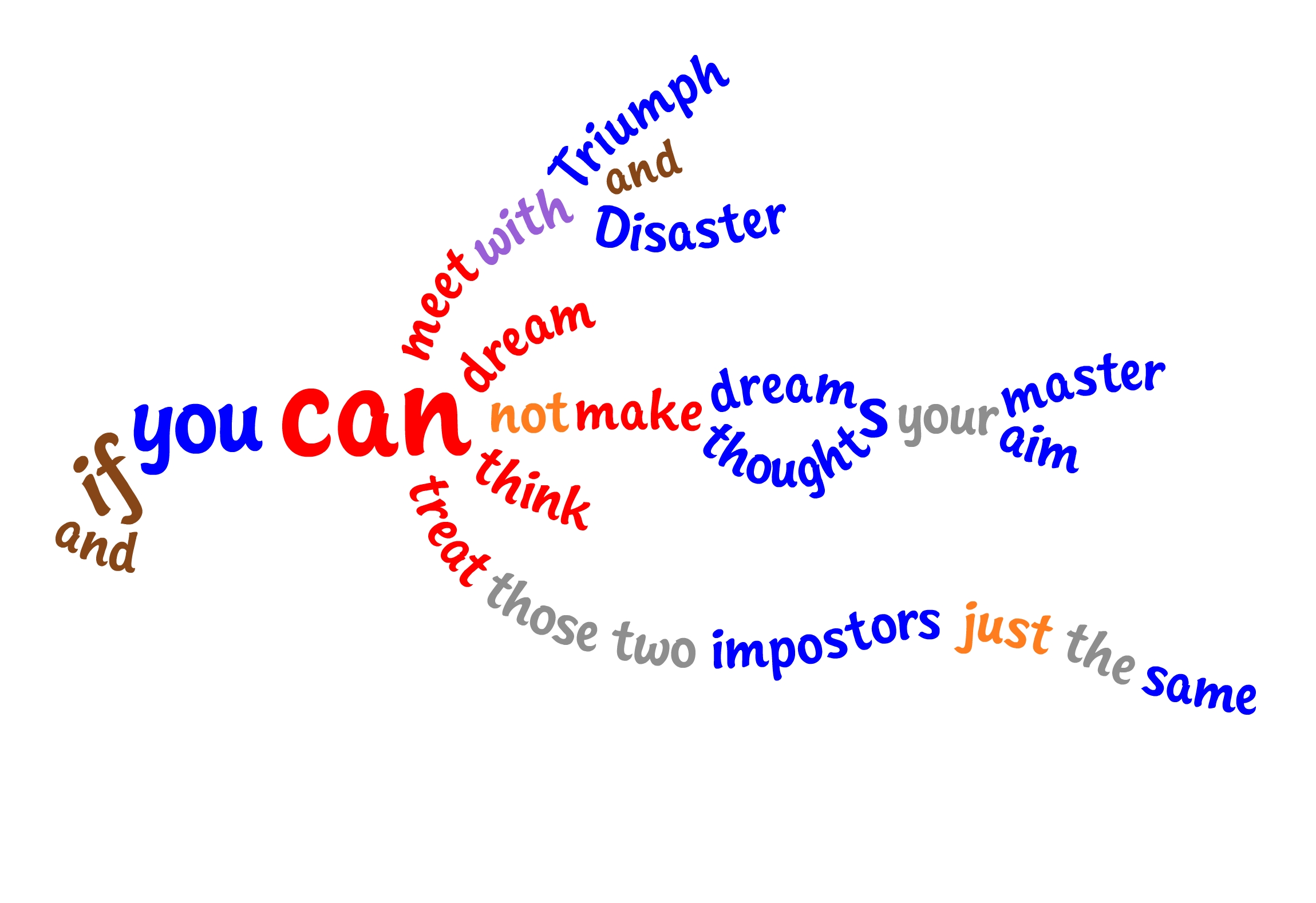
ifJob finally stops his long recitation of sorrow and lays out a series of If/Then statements. In chapter 31, he makes at least sixteen if statements, all articulating what he has been accused of by his friends and family (as a reason for his current sufferings) and Job basically says, if it’s true that he did any of these things, then may others benefit from his mistakes, may people change their paths, may more harm come to him, and so on. It’s a fascinating end to his arguments, and the chapter concludes with “The words of Job are ended.”

Scripture example:
If ever people in such conditions did not physically bless and thank me
        for warming them up with the fleeces of my own sheep,
If I ever used my civic strength to condemn the fatherless
        simply because I knew I had allies in the courts;
Then let my arm be pulled from its socket!
        Let my forearm be snapped off at the elbow for raising it against the orphan! [Job 31:20-22, The Voice]

It’s a strong presentation. But it’s also a bit of a prideful one. He’s so sure. Job is just so sure that nothing in his life would warrant his current circumstances.

And of course, for those of us reading, we already know how the story began and ends. Ultimately, he was right. Job had not sinned or lied or cheated. He had feared the Lord and acted accordingly.

But the one thing he did not consider was that God is sovereign and ultimately, can choose or not choose, do or not do as God wills. God cannot be held to logic or democracy. It is not for us, human, to necessarily figure it out. Most people don’t particularly like that concept, but I think it’s quite true.

There is, of course, if/then in our own lives as well as sowing and reaping. We don’t have God’s latitude, except for the divine intervention of the Christ, the Messiah, whose mission was to break the ongoing if/then of our cultures and our races.

ifthenThere is good power too in if/then. We don’t have to throw out the baby with the proverbial bath water. It’s a core theme to a type of goal planning and success. It’s a way of talking to oneself or scheduling one’s day and the reason it has power, the “if” statement presents an accomplishment or finished task that then frees the mind to move on to the next thing, the “then.” For instance, “If I have finished writing this blog post, then I can read those articles on Journaling” or “If it is 7:30 pm, then I can spend an hour on Facebook.” (For more on this concept, How To Use If-Then Planning To Achieve Any Goal.)

Interestingly enough, there is currently a Broadway Musical about to be launched in March 2014 called, of all things, If/Then. The story seems to revolve around different paths in a life. Most of us have played that game in our heads, what if I hadn’t married this particular person and gone to college out of state instead. Then, who would I have become?

I really didn’t get any deep insights here, but I am aware of the power of “If.” It carries with it an assumption or set of conditions and I think, perhaps, I have been building the wrong if statements in my life. I just want to think about it. You?

Read Full Post »

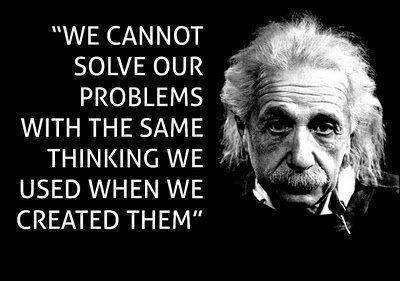
Albert Einstein

Albert Einstein

It’s a mysterious statement and how interesting, that it comes from the mouth of Zophar, the least likely of the three “friends” of Job. After all, his next breath his full of chastisement and nastiness toward Job. And yet, he does have this one right.

Oh, how I wish that God would speak,
    that he would open his lips against you
and disclose to you the secrets of wisdom,

    for true wisdom has two sides. . . . [Job 11:5-6a, NIV]

In a wonderful online homily, this topic is explored more fully, but it fits in with my own view of the many paradoxes that exist in scripture and faith. An old friend used to call it the both/and of truth. In God, two seemingly opposed truths can actually co-exist. How is that possible? I don’t begin to understand it. But I believe it because it allows for the conundrums that an “all-knowing God” and the “free-will of Human” can be true as well. It is wisdom to accept the possibility of their concurrence.

Another view of the two sides of wisdom might be the simple explanation that everything is not revealed to us, like the iceberg that only shows a tip of itself while the greater story is beneath the water.

both-andAs I see it, God himself declared that Job was a righteous man whose love for God was pure and above all other living men. Job committed no sin that we could see to warrant his suffering. God allowed it to happen at the hand of the enemy. Somehow, God knew it would take Job to the “next level” of understanding and wisdom and faith. At great cost.

A deeper truth had to be examined, a more difficult investigation into human.

I must remember this basic truth as well: all stories have two sides, all of suffering is an iceberg, all sin has a path leading up to it. So often, I hear people condemn those who adhere to looking at the world as black or white, good or bad, etc. But I think it may be a mistake to assume that the only alternative is to say that the world is grey, as though the contrary forces would meld into something new. Instead, it may just be possible, from a God view, that both black and white can live together and still retain their identities.

Read Full Post »

Drawing by Oldřich Kulhánek

Drawing by Oldřich Kulhánek

Job did. At least, that’s what is written about him in Job 7:16 and then again in chapter 10, verse one.

I despise [loathe, hate] my life; I would not live forever.
    Let me alone; my days have no meaning. [Job 7:16, NIV]
and . . .
I loathe [hate] my very life;
    therefore I will give free rein to my complaint
    and speak out in the bitterness of my soul. [Job 10:1, NIV]

The dictionary defines “despise” as loathing and “loathing” as a feeling of disgust or intense aversion for something. If we switch over to the word “hate,” it is defined as an intense or passionate dislike, an extreme hostility toward something.

In the early weeks or months of Job’s suffering (no one knows for sure how long he suffered, but most scholars count his time in months and weeks and not years), he hated his life. His suffering was so intense, his dismay at the losses, his “why me” lament, caused him such intense feelings, that he abhorred his very existence.

And yet, he did not kill himself. He was, despite it all, somehow surrendered to God’s will.

There is so much I do not understand about Job, but I do see this: he was in terrible pain. He was distraught and hated his circumstances. He wanted it all to end. He wanted to forget, to stop feeling, to stop experiencing all that was horrible in his life. He was attacked by his own friends and he was misunderstood. Nothing new there. Job was fully human. He was no angel in his torture and so he cried out with intensity and even venom. But he remained.

Even his wife said he should “curse god and die!” She too suffered, but ultimately placed the blame fully on Job’s own shoulders. As did his friends.

Apparently, someone has to be to blame. We do it in our modern times too, don’t we? It’s the boss or the President or the Congress or the neighbor. It’s the parents or the children or the Pastor or the car in front of us. It’s the farmer or the industrialist or the millionaires on Wall Street. It’s the Muslims or the Gays or the Polygamists. It’s the Jews or the Christians or the liberals or the conservatives. They did something! Things are bad. Someone did or said something to bring this on. Right?

Or, maybe, just maybe, it’s up to us to simply stand in the midst of the storm.

Therefore put on the full armor of God, so that when the day of evil comes, you may be able to stand your ground, and after you have done everything, to stand.” [Ephesians 6:13, NIV]

When my friend, Mary, died on Mother’s Day, 2013, she endured several months of the ravages of pancreatic cancer. Her disease was inoperable and therefore, nothing could be done but to ride it out. When I visited her early in her death pilgrimmage, I will never forget her words: “I did nothing to cause this. I have been healthy all of my life; I ate well, I exercised, I took care of my body and my spirit. This is simply part of my journey and I will to experience it fully, without blame toward anyone, including Spirit.” And so she touched hundreds of lives in her final months and died with no miraculous healing or recuperation.

She did not despise her life or her God.

Hate and disdain, name-calling and blame-shifting, take up a lot of energy. They suck up valuable human resources.

No more. No more.

Read Full Post »

Art by Gil Bruvel

Art by Gil Bruvel

I tried to do a cursory read of some of the commentaries on the three sons of Noah (Shem, Ham, & Japheth) and immediately realized I could never cover all of this controversy in a single post. It’s a big deal, the descendants of these three and the curse that Noah placed on Ham’s son Canaan (specifically) due to some kind of drunken episode (verses 20-27). The theories are many, the results undeniable, if genealogy is indeed the culprit, that, and a popular term of today: “generational sin.”

The sons of Noah who came out of the ark were Shem, Ham and Japheth. (Ham was the father of Canaan.) These were the three sons of Noah, and from them came the people who were scattered over the whole earth. (Genesis 9:18-19, NIV)

The oldest is actually Japheth and his name means opened. And a quick look in chapter ten shows that his descendents appear to be the great travelers who spread humanity the furthest. And then, the middle son, is Shem and to him is attributed the line of Abraham, David, and the Christ through Mary (Luke 3). And so, they were known as Semites, which became another way to refer to the Israelites and Jews of later days. And lastly, there is Ham, whose son was Canaan (among others) and who received the curse which many attribute to the seemingly endless animosities between those generations and all other peoples. Is it so? I really don’t know. There are even scholars who have credited the various races and skin color to those three family lines (which seems a little ridiculous to me).

But then, is it really necessary to “explain away” our current world tensions by marching back in time through scripture to put the whole thing down to a younger brother seeing or possibly engaging his naked father in some way? Really? I think generations of transgressions and the human tendency toward self-preservation and righteous indignation have done enough damage along the way, with or without the curse.

Genealogies are good for hindsight I suppose. It’s fun to go back, using a 20-20 lens to see what happened and how each person/choice turned the wheel of time. And one day, I suppose, our own descendants will look back on our now as well. “What were they thinking?” They’ll never understand our choices anymore than we understand the choices of our own ancestors. Lessons could be learned, since it is said, again and again, (thank you George Santayana), “Those who cannot remember the past are condemned to repeat it.” But do we?

In reality, we change history all the time. In fact, our individual histories are more fiction than truth. We remember what we want to remember and fill in the rest. “Memory is fiction. We select the brightest and the darkest, ignoring what we are ashamed of, and so embroider the broad tapestry of our lives.” (Isable Allende.) [For more on this topic, read Luc Sante in the New York Times Sunday Book Review, March 12, 2010.]

So many people are on the genealogical bandwagon. Even celebrities have joined in the foray, looking for lines of descent as though this might explain who they have become outside of mere circumstances or serendipity, or simply God’s will and hand moving through Spirit.

We can study and we can ponder what has been or could have been, but the moment of greatest concern should be now, for it is our response to the events and knowledge of today that will turn the world (both the microcosm and the macrocosm).

Read Full Post »

« Newer Posts - Older Posts »