Feeds:
Posts
Comments

Posts Tagged ‘sacrifice’

Here was the plan: Jesus would come to Earth and do his best to explain/demonstrate the whole Spirit thing and then sacrifice himself to wrap up and seal the covenant. Promised result: the eyes of our hearts would be opened wide and we could live likewise. Actual result: we’re still discussing it.

Ephesians 5:25b, 27
. . . Christ loved the church and gave himself up for her to make her holy. . . and to present her to himself as a radiant church, without stain or wrinkle or any other blemish, but holy and blameless.
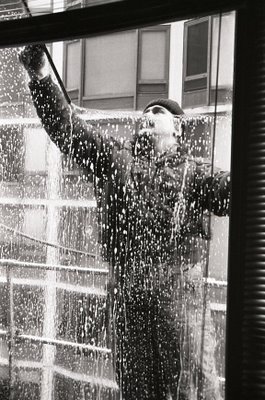
Here’s another word picture for all of this: the high rise window washer who puts himself in great danger to clean the windows so that light can be seen both in and out. But then we shut the drapes.

I have everything I need to enter the story life that God intends. I have the body, the circumstances, the family, the nation, the neighborhood, the friends, the talents, the washed windows . . . (all the layers of my drapes are on the inside of the windows).

The light is there. I made covenant with Christ thirty years ago. I am in the Body. I am loved by God.

During this time of fasting, I am slowly opening my drapes, one by one.

While the light of God might be more like the sun, shining brightly with heat and energy everywhere, the Holy Spirit is radiant and glows, permeating the dark spaces with steady but gentle light.

There is radiance and there is holiness within me. Like the last day of school before summer vacation, I want to open the doors and allow it all to pour out.

(FD 10)

Read Full Post »

Now that would be true freedom: to partake so fully of the work of the cross and thereby be dead to the wiles of the world, as in the profane and avaricious, covetous and greedy. But I get sucked in all the time. Why else would I continue to live beyond my means?

Galatians 6:14
May I never boast except in the cross of our Lord Jesus Christ, through which the world has been crucified to me, and I to the world.

We have three dogs in our household and our oldest (and smallest) dog has suffered the most from the acquisition of the other two, both in the same year, both only a year old and full of energy. He knows he is supposed to be the alpha dog, but he hasn’t figured out how to make it so. Mostly, he tries to prevent the other dogs from eating at mealtimes. His other tactic is to hoard the chewies and toys. It’s not that he necessarily wants them to eat or for play, but he believes it’s his right to have them all.

Am I any different? So often, I simply want what others have. It looks so appealing on them: the nice car, the designer clothes, the perfect hair, the manicures and pedicures, the successful honor students, the cohorts of friends, the dinners, the barbecues, the season tickets, and so on.

I mean, I can appreciate the amazing things that people like Mother Teresa have accomplished, but come on, own nothing? Eat the same as the poor (which means not eating regularly)? Wear the same “drapey” thing every day? What about having my teeth cleaned twice a year? And my eye doctor visit or my gyno exam? What about learning how to cook a gourmet meal? And how would I get my skin tags and moles removed?

It’s an amazing thing, the cross. That work, the ultimate sacrifice, made it possible for me to have relationship with God, creator of the universe. It also avails me to be set free from the web of “gotta have it.” But I haven’t appropriated that aspect of the cross at all. I have accepted the primary benefit but shrug off the other half of the equation. It’s when I step into this realm that I’m pretty sure, I can serve others freely.

I don’t serve others because it’s still, despite everything, it’s all about me. God forgive me. Give me courage to let go of the threads that I am holding (and not that hold me) in this worldly web. Christ died for me so that I could die to the “world” as we have come to know it. There is another world outside this one, that kingdom world, that is calling me.

Read Full Post »

One thing that Jesus had going that Paul did not: lack of expectations. In these verses, I hear Paul’s own disappointment and frustration. “What more can I do for you?” He’s human. . . just like me.

II Corinthians 6:11-13
We have spoken freely to you, Corinthians, and opened wide our hearts to you. We are not withholding our affection from you, but you are withholding yours from us. As a fair exchange—I speak as to my children—open wide your hearts also.

How many women get frustrated at their children and mates for a lack of appreciation of the sacrifices? Periodically there are rather humorous stories of women going on strike to “wake up” their families. “Look what I’m doing here!!!!” Sometimes it works and sometimes it doesn’t. Relationships often suffer from these inequalities.

Unfortunately, love has no such guarantees. We can do and love and serve but we cannot limit our doing and loving and serving to the degree of reciprocity. We’ll always be disappointed.

Oh, if I could really get this truth into my heart. If I could stop looking out for evidence of their love for me. It’s not my job to measure. Help me this day to love without fear.

Read Full Post »

It’s the “hippy” chapter: love, love, love. And yet, with all this talk of love being the most excellent way, greater than anything else, greater than faith or knowledge, it’s still missing in most of our lives.

I Corinthians 12:31b, 13:2b
And now I will show you the most excellent way . . . if I have a faith that can move mountains, but have not love, I am nothing.

A friend gave me Mother Teresa’s book, “In My Own Words,” which has a heavy emphasis on the love theme. Mother Teresa got it. She lived it. She taught it. And most people admired her for it but couldn’t live like her; they were amazed by her selflessness and her ability to reach out to the poorest of the poor, to actually love the unlovable. But isn’t that what Christ asks from each of us?

What would it take to become a person of love. . . to be known primarily for love?

I am still a product of my culture and my generation. We started the “me” generation and we’ve passed it to our kids. We don’t love because that exercise requires greater concern for the “other” than for self. That’s really the only hindrance.

I’d like to make this more complicated than it is and come up with all kinds of valid justifications for not loving, but there aren’t any, not really.

I get in the way. I am my own stumbling block.

My proposal for myself today: Just ask, “Is this loving? Am I speaking out of love? Am I responding to the “sacred center” of the other? Can I be generous in love?”

I want to be more conscious today. I want to be mindful. My habits, those automatic reactions, are not loving. To change, I must wake up. Look. Really look and sense. Ah! It’s prayer.

Read Full Post »

Let us give meaning to the Bread and WineJesus loved to speak in stories, symbols and metaphors. The supernatural world is indescribable otherwise. Our language is unable to represent something we do not know or understand. The meaning is revealed over time.

I Corinthians 11:26
What you must solemnly realize is that every time you eat this bread and every time you drink this cup, you reenact in your words and actions the death of the Master. You will be drawn back to this meal again and again until the Master returns. You must never let familiarity breed contempt. [The Message Bible]

Bread and wine were used throughout Jewish history, from manna to unleavened bread to the Temple showbread. But, at the last supper, Jesus takes bread and intentionally breaks it and shares it with the disciples (and probably everyone else who was in the room, since I believe there were women and servers there as well, and it was not a “private” event as is so often depicted). He is setting up a symbol to be repeated and to have meaning throughout history.

So often, we think of the “bread” (what we now call communion bread) as something he is doing for us. We are consuming it, we are gaining. But today, I am thinking about the implications for him. He is symbolically cutting up his body for the sake of others. His death and sacrifice begins that night.

And all that He asks is that we remember and keep remembering. “Touch me, smell me, eat me, drink me, and be whole,” He says through the sacrifice. The Jewish rituals of old had prepared people for the New Covenant. It was still the same: sacrifice for sin, offerings for forgiveness, awareness for new beginnings.

Contemporary Christians have lost the deep significance in the consuming of Christ’s symbols of body and blood. Plastic drink cups and dry crackers are poor substitutes. In this regard, it’s very possible that “high church” folks have it right.

On Memorial Days, we consider the sacrifices of the men and women who gave their lives. It’s holy and solemn and thoughtful. Should Christ’s memorial be any less from week to week or month to month?

The body and blood, the bread and wine, has the power to transform us. I want to remember. I want to really remember today.

Read Full Post »

Do I do this? Do I participate, even unknowingly, in the rituals of the demonic? In the same way that idols are temptations, then couldn’t the foods that fuel evil be equally prevalent. It’s a type of consumerism and an attitude of entitlement.

I Corinthians 10:20-21a
. . . the sacrifices of pagans are offered to demons, not to God, and I do not want you to be participants with demons. You cannot drink the cup of the Lord and the cup of demons too . . .

I am not alone. We live in a culture of wanting it all.

The other day, I heard a talk show on WYPR Baltimore about the world’s dependence on oil (these conversations abound in the shadow of the BP gulf oil disaster). In this interview with Robert Bryce, author of Power Hungry, they talked about the unwillingness of the world’s consumers to stop using oil, which is comparatively cheap, relatively plentiful, and has the best energy density.

There are alternative energy sources, but none of them are as easy to glean from the earth. There would be a huge sacrifice to make this change and basically, the world’s population is unwilling to do it. Even with the new “green” initiatives, the transition will always be a painful one and most will not make the change willingly.

This is a drink we take every day. We drive fuel-hungry cars, we use plastics without a thought, we consume oil like candy. This drink has crept steadily into our lives and many can’t even see it.

Over the years, many people have pointed out how missionaries of the past have ruined cultures by imposing their belief systems on various native people around the world. And I cannot disagree. But I say, culturally, we are doing the same thing. We are introducing consumerism and dependence on oil. We are teaching them to “be like us.”

Oh yes, there is a price to pay when drinking with the demons of today.

Read Full Post »

There is a bottom line truth here: if a person sacrifices his/her time, dedication, and/or expertise for the sake of others, he/she deserves to be compensated or, at the very least, receive some benefit for that service. They shouldn’t have to ask.

I Corinthians 9:10b
. . . the plowman ought to plow in hope, and the thresher ought to thresh in expectation of partaking of the harvest.
[Amplified]

In the 9th chapter of Corinthians, Paul is really letting them have it for not supporting materially, the very people who brought light into their dark place. I’m not even sure he’s talking just about himself, although he does sound pretty feisty in these passages. I think he’s addressing a situation that, quite honestly, hasn’t changed much over the centuries. He’s writing about all of those who are sacrificing for the sake of others.

The modern trap is to assume every compensation is financial. I’m not saying that isn’t important. Obviously, in our society, money is essential to accomplishing almost anything. Money pays the bills. Money opens doors. But there are other compensations that have to do with sharing the harvest, the fruit of the venture. Poor people and third world cultures seem to get this while westerners are blinded.

Whatever the task at hand, those who serve and participate in the process should receive a portion of the fruit. It helps connect people, to create unity, and buy-in.

As Jesus and his disciples walked their world, healing and teaching, people opened their homes and shared what they had. It was enough.

If someone works at your restaurant, let them eat. If someone works at your bookstore, let them read or get books cheap. If someone works in your office, let them make copies. If someone takes care of your yard, let them have flowers, seed, or seedlings. If someone cares for your children, let them participate in celebrations. As soon as we work in community, we become part of that community. Each person deserves full respect for the part he/she plays or contributes to the greater effort.

Freely give it so it’s not taken on the sly.

Usually, most people use these passages to rally the believers into sending more and more funds to support missionaries. And I understand that is important. But I tell you, I believe the full participation in that ministry is even more important. The fruit of participation is greater with the gift of time and energy, prayer and communication, advocacy and visits.

It’s a different kind of bartering that we need to re-energize.

God is giving to me all the time. And what do I have that God might want in return? Access to my heart. Participation in my life.

Read Full Post »

« Newer Posts - Older Posts »