“But I say to you, love your enemies, and pray for those who persecute you, that you may be children of your heavenly Father, for he makes his sun rise on the bad and the good, and causes rain to fall on the just and the unjust. For if you love those who love you, what recompense will you have? Do not the tax collectors do the same? And if you greet your brothers only, what is unusual about that?” [Matthew 5:44-48a, NAB]
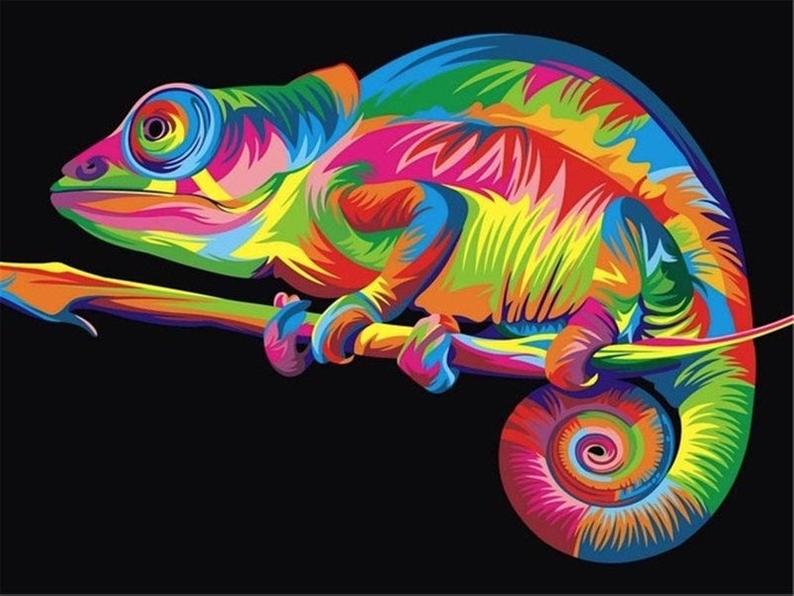
For years, what I wanted more than anything else was to be normal. I wanted to fit in. As a family of immigrants, our family was odd. We didn’t have a car, my mother was the breadwinner, my father looked like my grandfather (28 years older than my mother), and we lived in the inner city with boarders upstairs. As a child and teen, none of these realities helped me fit in. I began a systematic cover up.
By adulthood, I had created a coat of many colors. And I appeared to have buried most of those old concerns as a good adult should, but they lurked close to the surface all the same. Don’t be weird. Don’t rock the boat. Pick up the correct fork. Watch carefully, mimic as needed. And then I surprised myself in my late twenties and made an uncharacteristic leap into Christ. I dumped myself into another world, a Christian world, with its own set of rules and expectations. I spent years figuring out what this identity needed to look like and sound like. I became more adept than ever: a chameleon. Not that I was a fake. I loved Christ and my initial conversion was true: “Dear Jesus, I believe you are who you say your are and I want to follow you.” But I got caught up in a lot of different flavors (denominations) along the way.
Forty years later, I have finally begun to shed my acrobatic machinations with a greater desire to simply expose my authentic self. Lo and behold, who is evolving there? Someone unusual. That’s funny and ironic. But isn’t that the point? Because it is the unusual person who can “love an enemy,” or “pray for the mean girls,” or “love the unlovable,” or, in general, work outside one’s comfort zone. It is the unusual person who can live inside a paradox, a both/and world. It is an unusual person that can accept who a person actually is instead of who I have wanted that person to be.
 Many people left the church quickly while some drifted away as the days turned to weeks and the weeks to months. Some stayed, stalwart and determined, to show that this church was not about a single leader. The body of believers is the church etc. And although campuses shriveled and closed, a faithful core remained and now, more or less, the church is revived under new leadership and denominational oversight.
 I was one of those who drifted away with no place to go. I have been a church attender for nearly forty years. Sunday morning without obligations was a surprise to me, a kind of unhurried and lazy rising. In many ways, it was a truer sabbath than rushing out the door by seven a.m. to help set up this or that, attend stand up meetings, fill in for missing teachers, or run AV equipment; in general, work two back to back services wherever help was needed (the dream team).
 I thought visiting a variety of churches each Sunday would be fun. It’s not. I found myself with a secret checklist: how many people greeted me? Were there any children? How old was everyone? How was the sermon? How many attended? How did they celebrate communion and how often? What buzz words did they use? What clues were in the bulletin? How was the music? Was there anyone there “like” me? Was there diversity? Was the interior attractive? What kind of outreach do they do? Was there an unspoken political agenda? Was there an awareness of current events and acknowledgment of human suffering?
 In the end, I set most of this checklist aside and stuck to these elements of discernment: Can I be myself in this place without self-editing what I say? Do I experience God’s Presence in this place and within myself while I am there? Can I grow in spiritual formation and discover more about the mystery of the Holy Trinity in this place?
 Each place has a story and now a memory. But it’s time to take a breath. A real breath. It’s time to examine “here.”
 Meditations from Zion