Feeds:
Posts
Comments

Posts Tagged ‘transformation’

Sarai would have been the loser in either one of the Abram/Pharoah scenarios. Either she is pulled into Pharaoh’s household as the widow of Abram (if they confess she is his wife) or she lies and says she is Abram’s sister and goes into Pharaoh’s palace with no loss of life. Undoubtedly, as the sister of a wealthy herdsman/patriarch (Abram), she would be included with some respect.

Genesis 12:12-13
 When the Egyptians see you, they will say, ‘This is his wife.’ Then they will kill me [Abram] but will let you [Sarai] live. Say you are my sister, so that I will be treated well for your sake and my life will be spared because of you.”

And yet, the woman in me recoils at either plan.

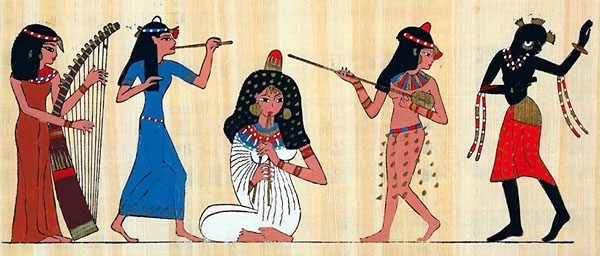
I know, I know. Like Esther, she was highly regarded for her beauty. She was given servants and she was dressed in elegant clothing (or lack thereof, as I’m pretty sure the Egyptian dress of that period for the wealthy was exotic and revealing). She was introduced to and encouraged to participate in their customs. In essence, she became part of the Pharaoh’s harem.

Now, living in a harem was not a bad life in many ways. A harem is really the place where women lived within the palace that was off limits to men (except eunuchs). These women were really the earliest “sister-wives” (to use a term from popular television about a man with multiple wives who live in separate houses). In my experience, any time you have more than ten women in a single space (like my work), there will be the potential for deep friendships as well as deep resentments. I am sure there were ranks among these women, seniority, let’s say. This is often illustrated in the story of Esther (in the book of Esther).

How long did Abram plan to stay in Egypt? Just through the time of the famine? But how, then, would he extricate Sarai from the harem? By then, she would have become a fixture, a working part of the life there. Undoubtedly, she would have had sexual relations with the Pharaoh as well.

We are not told how Pharaoh found out that Sarai was actually Abram’s wife and not his sister, but I would guess, “someone told.” Maybe it was one of the other women. Maybe, as in the time of Moses, it was the plight of the children that brought out the truth. In any case, Sarai was actually released (tossed) from the household.

But what application is there for me in this story? Only one really.

If I believe that God’s hand is on the big picture of my life, even my mistakes are covered and will be transformed into another path that leads to the end God has for me (my true destiny). But I have to submit to the sovereignty of God for this to work out. Abram and Sarai had a habit of trying to help God along in bringing their destinies closer and faster. They trusted God. They loved God. They worshiped God. And yet, God didn’t seem to be working out those promises the way they expected.

We’ll never know, but perhaps God’s original plan had been for Abram’s household to stay in Canaan during the famine and to trust God to feed them. I don’t really know. But going to Egypt during the famine was clearly a “human” solution to their problem. And, as a result, a number of unintended consequences resulted. And yet, God worked WITH their bad choices in conjunction with His will.

There is still hope for me.

And so I say, dear God of my life, take my bad choices and my mistakes and put them back on the potter’s wheel. Reinvent them. As You will.

Read Full Post »

What is the take away for doing something 40 days? Whether it’s in fasting or in temptation, there’s something here about forty days that should be considered, should be pursued. It’s a whole lot of waiting: more than five weeks of consideration. I wonder what would happen if I waited (prayed, contemplated, meditated) forty days before I initiated a plan or a major decision?

Matthew 4:1; Mark 1:12-13a; Luke 4:1-2a
Then Jesus was led by the Spirit into the wilderness to be tempted by the devil.
At once the Spirit sent him out into the wilderness, and he was in the wilderness forty days, being tempted by Satan.
Jesus, full of the Holy Spirit, left the Jordan and was led by the Spirit into the wilderness, where for forty days he was tempted by the devil.

There are other scriptural examples of 40 days: the flood (Genesis 7:17); Moses on Mt. Sinai (Exodus 24:18; 34:28; Deuteronomy 9:9); Spies in the Promised Land (Numbers 13:25); Goliath’s challenges (I Samuel 17:16); Elijah’s flight and fast (I Kings 19:18); Jonah warns Nineveh (Jona 3:4); Jesus appeared to the disciples after his resurrection (Acts 1:3).

All of these 40 day increments are wrapped up with important events, usually before something major would happen.

So, let me put this in perspective (for myself, if nothing else). If I claimed this 40 day waiting period starting today, that would mean on Friday, September 14th, I could begin: I would know whether to go forward or not. If I seriously pursued my quest for those 40 days, I would know. It’s like a promise, I think.

Don’t misunderstand me. I get it that this period should be led of the Spirit and yet, I have a feeling. If I laid out my heart’s desire, my plan before God and then repeated my request each day, I believe I would have an answer. I would also have a bit of a struggle along the way. Based on the stories, a truly authentic 40 days is laden with challenges. Satan (or however you want to call that negative voice/power in our lives) tempted Jesus the whole time just like Goliath tempted the Israelites. Goliath mocked them and taunted them: Dare you! Double dare you to come out here and fight me (on his terms of course). Satan does the same thing. The forty day challenge puts the entire experience on God’s terms.

Apparently, 40 days are just long enough. They take the person just beyond that point we can do it on our own. Forty days include the extra mile.

What do I really want to know? What game-changing decision do I want to contemplate? What would be the best news ever?

Read Full Post »

Icon: John the Baptist

To wash ceremonially in ancient Jewish times was to participate in a mikveh (or mikvah). For rituals, particularly washing from impurity, required “living” or flowing water such as a river or mikvot (the mikveh place) fed by a natural spring. It constituted the washing away of the old impurities and to mark the beginning of the new.

Matthew 3:1-2,
In those days John the Baptist came, preaching in the wilderness of Judea and saying, “Repent, for the kingdom of heaven has come near.” . . .  “I baptize you with [or in] water for repentance. But after me comes one who is more powerful than I, whose sandals I am not worthy to carry. He will baptize you with [or in] the Holy Spirit and fire.

John the Baptist treated sin as the greatest impurity of all and called everyone who wanted a new start to celebrate a mikveh with him, right there in the desert, in the river Jordan. While priests, via the regulations in the Torah and other rabbinical writings, performed the mikveh for a variety of circumstances (after sexual relations for men, a menstrual cycle for women, after the birth of a child, upon declaring someone healed of a skin disease or leprosy, prior to Yom Kippur, and so forth), this may have been the first time that a mikveh was performed without a traditional priest.

John’s message was clear: prepare the way (prepare yourselves) for the coming Messiah. Release the old and make room for the new.

The water submersion was a ritual meant to mark a moment in time. And yet, John promised another moment, a time that would be marked by something more permanent than water: the Holy Spirit and Fire.

The baptism of the Holy Spirit came after Jesus’s resurrection, the gift was given (and promised) to all believers — the in-dwelling of God [Acts 2]. This in-dwelling changed everything and everyone. We tend to minimize this deeply motivating presence today.

There is so much “Jesus Junk” (Tchotchkes) and pat phrases like “Jesus loves you brother.” But it’s more than that. It’s not just that Jesus loves you; it’s that Jesus is you [Philippians 1:21]. Jesus and the Holy Spirit are one. And once Jesus has been invited to occupy us, then the process of true sanctification begins, fusing me and the Christ. And with sanctification, unnecessary elements must, like chaff, be cast away and in some cases, burned away through experience, pain, persistence of motion, and repetition. We are all intended to “get it.”

The occupy movement from Wall Street to Washington, D.C., has nothing on the potential power and change that comes from the occupation of a human being by the Holy Spirit. This is the most authentic change of all.

Read Full Post »

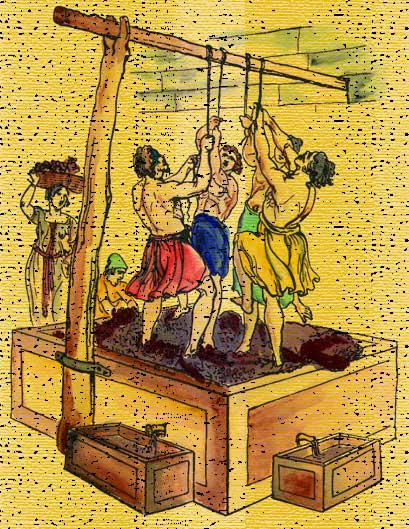
Throughout the Bible, the imagery of wine is used in a positive light, like Jesus turning water into wine or the Passover cup where it symbolizes the shedding of his own blood. But the winepress itself, the process, that pressure and transformation holds other implications.

Revelation 14:19
So the angel swung his scythe on the earth and stripped the grapes and gathered the vintage from the vines of the earth and cast it into the huge winepress of God’s indignation and wrath.
[Amplified]

It’s not a gentle business, the pressing of grapes, or for that matter, gathering them either. In the case of true wine making, there is a particular pressure applied to avoid smashing the seeds which give a more bitter flavor. Were they as concerned in ancient times? I don’t know since it was done with feet. In any case, once the grapes are smashed, they are no longer good as grapes. They must become something else.

Generally, I have only known the kinder forms of metamorphosis. The Holy Spirit is a gentle craftsman of my heart and soul. I am forgiven daily and given many, many opportunities to try again, to learn, to grow, to change and ultimately, to become a sweet aroma to both humankind and God. I want to translate myself into a creature of love and daring.

But I also understand that kicking against the goads of God’s will for me, fighting the process, forcing my way on the path, only makes it more difficult. And so, challenges and difficulties can arise to bring me back around.

It’s hard to see and understand the God way because it’s a way of mystery and paradox. It’s the path that Indiana Jones couldn’t see over the abyss. It cannot be seen or felt until one takes that step of faith. It’s not the golden chalice but the well-worn, humble one that is the Holy Grail.

Eventually, though, a day does come in the stretch of humankind when God allows the worst to happen. Like the pain of Job who lost everything to find everything, so it will be with Earth: a great shattering.

I don’t like the idea of contemplating such a turn of events nor do I want to be there. I don’t want to be there because of my own stubborn nature. I don’t want to know the winepress of wrath.

Read Full Post »

We tend to forget that our behaviors are being scrutinized. Not so much by casual acquaintances and co-workers (although somewhat), but mostly by the children and teenagers in our lives. They don’t look like they are even paying attention. Don’t be fooled.

II Chronicles 34:3
In the eighth year of his reign, while he [Josiah] was still young [16 years old], he began to seek the God of his father David. In his twelfth year he began to purge Judah and Jerusalem of high places, Asherah poles and idols.

Josiah was the grandson of Manasseh, one of the most notorious kings to rule Judah. Manasseh ruled for 55 years and up until his last years, played havoc with the country doing everything he could to destroy the foundations of faith through mockery, idol worship, and decadent priests and priestesses who proselytized for other gods. He even sacrificed his own children to these gods. But in his last years, Manasseh was overthrown and taken to Babylon with a ring in his nose. He was humbled. In that place, he sought out his one true God who heard him and restored his to throne. This was an abrupt about face, a transformation.

Who was watching? A little boy named Josiah who was just old enough to understand, just old enough to absorb the impact, just old enough to remember.

There was another who saw the change, Manasseh’s son Amon who became king after him. But Amon did not believe in the change in his father and he pushed Judah back toward the pagan gods for two years before he was assassinated. Apparently, there were others who had watched Manasseh’s metamorphosis and believed.

When young kings come to power (Josiah was only eight when he was crowned), there is usually a regent who handles the daily affairs and instruction of the boy-king. This person is not named but we can extrapolate his presence. Whoever he was, he set a standard that set Josiah on a different path, that gave him a thirst for knowing the God of his forefathers.

My children never knew me before I walked with God. They never saw those years of transition from living a degenerate life to living in God through the Holy Spirit. But I know many people whose children and grandchildren have seen the adults in their lives take a shift for good.

It is never too late to change. The children are watching.

Read Full Post »

Despite the fact that “eyewitnesses” usually screw up the details of what they witness, they do get the big picture: they know it was a bank robbery, a car accident, a outpouring of power. And then, too, repetition tends to solidify an account, like one miracle after another.

II Peter 1:15-16
And I will make every effort to see that after my departure you will always be able to remember these things. For we did not follow cleverly devised stories when we told you about the coming of our Lord Jesus Christ in power, but we were eyewitnesses of his majesty.

Peter was “all in” (the new phrase moving through contemporary churches). While accompanying Jesus he was a doubter, a slacker, and a chameleon even, but once the Christ was revealed fully through his death and resurrection, he got it. It was just at the point when his world fell apart that his world fell together. And there was no turning back. There was only forward and the story, that one story that everyone had to hear.

In the same way that people recount eye-witnessed tragedies over and over again(the falling of the twin towers, the floods, the tsunamis, etc.), so also would transformative experiences be on the tip of the tongue. We remember because we tell the tale. Families reminisce at the dinner table and stories live on, memories are stirred, feelings are reborn. Where there was joy, joy is recreated (and the same for sorrow, but somehow, the sorrow is more tempered by time).

What is my story? Isn’t my writing part of this process? Remembering, reviewing, reliving. Re-re-re… again and again.

Thirty plus years ago, I encountered Peter’s same Christ, and it was real and true and life changing. That’s my story and I’m sticking to it.

Read Full Post »

It’s hard to change and then return to one’s old environment. So often, acquaintances and even family can’t see the metamorphosis, or they resist the transformation, or worse, they treat the person as though nothing has happened. It’s obvious, if Onesimus changes, then so must they.

Philemon 10-12
I appeal to you for my son Onesimus, who became my son while I was in chains. Formerly he was useless to you, but now he has become useful both to you and to me. I am sending him—who is my very heart—back to you.

When I first accepted Christ, back in the day, I woke up the next morning (Christmas morning, actually), and felt compelled to tell my family that I had made a huge decision in my life, a new commitment to Christ. My mother stared at me momentarily and then said, “Don’t worry, this too shall pass,” and went back to drinking her morning coffee. In essence, don’t be ridiculous.

Men and women who are released from prison often find themselves thrown back into the same crowd and ultimately the same behaviors that got them into trouble in the first place. Generally, a former prisoner is better off starting over in a new setting, a new town, a fresh beginning. But the loneliness and lack of support is overwhelming. Everyone wants to be loved and acknowledged for the “new” self. The decision to change is hard work.

Alcoholics and addicts are constantly undermined by friends and family, with phrases like, “oh, just once won’t hurt you,” or “it’s a special occasion, come on!” Even dieters are sabotaged with offers of cookies and treats over and over again. What is the message? Don’t change. Don’t make me adapt this new self. Don’t make me look at myself in a new way by your decision to take a different path.

Onesimus escaped the household of Philemon as one person and under the loving care of Paul, became a believer and follower of Christ. He was not longer the same man. In order to successfully return to Philemon, he would need the support and acceptance of that family. They would have to look with new eyes, hear with new ears, and willingly, break old habits and build new ones.

Twitter was ablaze yesterday about men and women who made decisions to follow the Christ. But what happens next? They must still walk back through the same front door, sit at the same kitchen table, and wake to the same alarm this morning. They must go to work and wonder, can anyone tell? Should I say something? What do I say? And if I do say something, will I be under the microscope?

What is my role in such a scenario? I remember an old friend who hated being called “Tammy.” I asked what she really wanted and she said she wanted to be called “Tamera,” her given name. And so we agreed, she would commit to telling people of the change and I would commit to the new name. It took about six months but it worked; she grew into her beautiful name and so did others. Change is a team effort.

Lord, today, give me sensitivity to the personal revolutions of others around me. Show me how to be a safe haven for new things, new birth, new hope, new directions.

Read Full Post »

« Newer Posts - Older Posts »