Feeds:
Posts
Comments

Archive for the ‘Ordinary Time’ Category

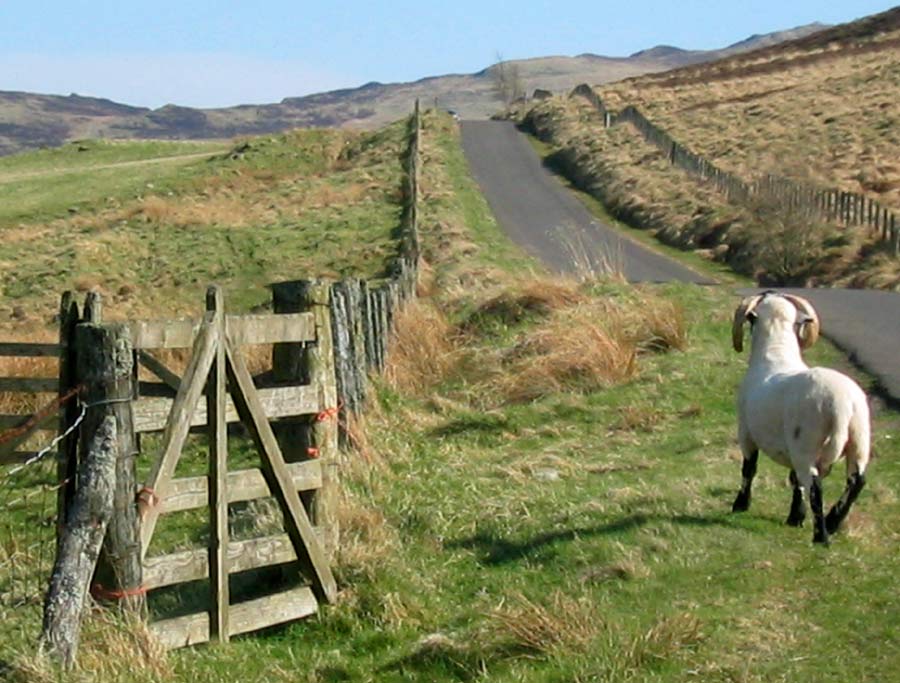
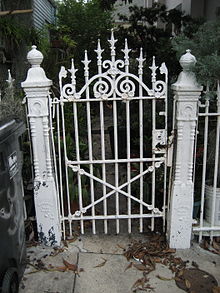
gateA quick search on the phrase, “gate of heaven” caught me off guard as it appears to have become a popular name for cemeteries. I think that’s a shame as it puts so much emphasis on heaven being available only after we enter the “big sleep” if you will. But heaven is also within and available to us now, if we open the gate.

When Jacob awoke from his sleep, he thought, “Surely the Lord is in this place, and I was not aware of it.”He was afraid and said, “How awesome is this place! This is none other than the house of God; this is the gate of heaven.” [Genesis 18:16-17]

We are the church, we are the house of God. The body is a sanctuary and temple to the Holy Spirit [I Cor 6:19]; isn’t heaven there too?

In heaven, we are promised continual access to God where there are no more tears and no more pain. This timeless place is so not limited to our three-dimensional understanding of existence. It is spirit. It is God.

For me, the gate is Christ.

sheep gateI tell you the truth: I am the gate of the sheep. All who approached the sheep before Me came as thieves and robbers, and the sheep did not listen to their voices.I am the gate; whoever enters through Me will be liberated, will go in and go out, and will find pastures. The thief approaches with malicious intent, looking to steal, slaughter, and destroy; I came to give life with joy and abundance. [John 10:8-10, The Voice]

GatesNarrow gate allow us in but gates also protect, whether in reality or symbolically.

In Old Testament times, the gates of the city were a public forum where transactions were witnessed.

A gate is a choice, whether to enter or depart.

Read Full Post »

women and storyAbraham protected himself by claiming that Sarah was his sister in the land of Abimelek (Abimilech) and here, Isaac does the same thing, in the same geographical area, with another king (perhaps a son?), also called Abimelek (Abimilech). Scholars are not in agreement about these accounts since they are mirror of one another in so many ways. But for my purposes, they cause a completely different resonance: one that makes my blood boil if you want to know the truth.

When the men of that place asked him about his wife, he said, “She is my sister,” because he was afraid to say, “She is my wife.” He thought, “The men of this place might kill me on account of Rebekah, because she is beautiful.” [Genesis 26:7, NIV, emphasis mine] (See Genesis 20 for Abraham’s version.)

In some quarters, commentators have said that these parallel stories show God’s protection over the patriarchs and the beauty of their women. How swell. But in neither story, as told by the Old Testament historians, is there much information about the women and the circumstances in which they found themselves as a result of their husbands clever misinformation (lies). The reason for their deception, in both cases, was to protect their own lives because the ruler might kill the husband to acquire the wife. But a sister? Piece of cake, just hand her over (with gifts from the household of the King to the patriarch, I’m sure).

And so the women, beautiful they may have been, were thrust into the households of foreigners. Nice. Convenient and cunning.

I am more than aware that culturally, in those days, women were a type of property or chattel. They were owned by their husbands and subservient to the lord of the house. Despite these restraints, many women of that period still accomplished great things and often, with courage, they turned their world, the Esthers and Abigails and for all we know, many who went unnamed. But these accounts are few and far between.

Women are a often strong and flexible and most tenacious. They can take a bad situation and make it better. They can tolerate much. They are survivors. But not all women. Too many other women fall in the face of men who strike with force to gain their will. Other women self-medicate to beat back emotional pain. And still others eat until their bodies betray them altogether and beauty is no longer apparent.

I suppose Abraham and Isaac could be commended for their clever little deception. They both gained immeasurably by it and found much favor from the Abimileks in their sojourns. But for the women, it was a sacrifice. And I want to remember that.

As a contemporary reader of scripture, I often remind myself that it’s critical to look between the lines, to pray and contemplate the untold story. So often, scripture time is compressed into a single phrase but it’s really months or years. And in those time frames, there are women living, crying, hoping, and maintaining their faith, often in the face of trial. whats_your_story

For my sisters in faith today, I challenge you, don’t read like a man. Read from your unique femaleness. For it may only be us who hear and see and can recognize those underlying truths. In the centuries since those days, many women’s stories have been lost. We need to remember and we need to repeat our own narratives, to our daughters, to our nieces, to our girlfriends.

Tell your story. No one else is more qualified than you.

Read Full Post »
quiet placeIn Genesis 23, almost the entire chapter is dedicated to the negotiations between Abraham and the local Hittites about a parcel of land and a cave in which to bury Sarah. And although my Bible [NIV] has labeled this chapter “the death of Sarah,” I think it should have been called Abraham’s necropolis.

Again Abraham bowed down before the people of the land and he said to Ephron in their hearing, “Listen to me, if you will. I will pay the price of the field. Accept it from me so I can bury my dead there.”Ephron answered Abraham, “Listen to me, my lord; the land is worth four hundred shekelsof silver, but what is that between you and me? Bury your dead.” [Genesis 23:12-15]

This negotiation, I understand, was rather standard for the day with the exception that it was between a foreigner (Abraham) and a local (Ephron) Hittite. No one believes that Ephron would have given the land to Abraham, that wasn’t how things were done. Instead, there was a lot of “saving face” and gestures of respect and false civilities.

In any case, Abraham would never allow himself to “owe” Ephron for the gift of land. After all, gifts of this kind usually carry strings attached. And perhaps Ephron thought Abraham’s sojourn in the land of Canaan was relatively temporary. We’ll never know. But for Abraham, this was the promised land of God and it was his belief that one day his descendants would indeed conquer the land. This parcel became the first parcel in that conquest. And in later years, not just Sarah, but Abraham himself along with Isaac, Rebekah, Leah, and even Jacob’s bones were carried there by his son, Joseph, many generations later. Only Rachel was buried elsewhere, not far, but immediately after dying of childbirth.

So, why devote an entire chapter to this negotiation? I think the land was important as “Abraham’s little green acre.” I think it symbolized Abraham’s faith in God’s promise, which drove Abraham all of his life. I believe he expected this land and cave to be come the great tomb of the patriarchs. This little piece of land was Abraham’s personal investment in the promise.

He wasn’t trying to “make” things happen (unlike Sarah who had tried to hurry things along by giving Hagar to Abraham to prime the pump for descendants). Abraham was simply putting a standard in the ground, and saying, “we begin here.” In the end, Abraham was still considered a nomad until the day of his death and he never saw the true occupation of the land by God’s people, but he is buried there. He took a foreign piece of land and transformed it.

Then there is a lesson for me. How often have I been overwhelmed by circumstances and unable to see how situations could change or be different? But I think I see a way here. I only have to claim one small piece of the situation. As my pastor suggested, I only have to do the one possible thing, that choice that is within my power or ability to do, and then God can do the rest. I lay down an anchor but God calms the sea.

Read Full Post »

YouAreHereInTheGalaxyAccording to scripture, Lot was Abraham’s nephew and although he traveled with his Uncle Abraham from Haran to Egypt and then on to the Negev. At some point, both men grew in wealth and decided to part ways. Abraham gave Lot the choice of land, and Lot choice the plain of Jordan to the East, well-watered, and dotted with large cities (among them Sodom and Gomorrah).

With the coming of dawn, the angels urged Lot, saying, “Hurry! Take your wife and your two daughters who are here, or you will be swept away when the city is punished.” . . . He [the angel] said to him [Lot], “Very well, I will grant this request too; I will not overthrow the town [Zoar] you speak of. But flee there quickly, . . .  Lot and his two daughters left Zoar and settled in the mountains, for he was afraid to stay in Zoar. He and his two daughters lived in a cave.  [Genesis 19:15, 21-22, 30]

Freed by the angels of God, generally negotiated by Uncle Abraham, Lot and his family are given the opportunity to start over. But Lot was a bit of a selfish man and appears to look for the easier way. He chooses the better land when he and his uncle part ways, he chooses to live in the city, he chooses to flee to a closer place than the mountains, and in the end, he even looks the other way when his daughters are impregnated by his drunken self. Moab and Bel-Ammi, are the children born by this incest and they become the ancestors of the Moabites and the Ammonites whose story is intertwined with Abraham’s line through Israel and Judah, but generally it’s a bitter relationship dotted with bloodshed.

This, because of Lot’s choices or passivity. This, because Lot took the way that seemed right to him alone.

From one story after another, whether fairy tale or movie or book, we are reminded that any one of our choices can set huge events in motion. In chaos theory, it is called the Butterfly Effect. But it’s not that hard to look at our own individual lives, so many left and right turns, families made and lost, love seeded and buried, by a single choice, a single conversation, a single word (yes or no).

I wonder if this hasn’t bred the meteoric rise of interest in genealogy. Why, we even have reality television traveling back into the lives of celebrities, church denominations building ancient libraries of such histories, and websites dedicated to helping people go back in time.

How did I get here? We want to know.

I supposed that’s all find and good. But I can’t help but wonder if we shouldn’t be putting more energy into the now. For whatever happened before we are living it. We cannot go back, only forward.

It is for us to respond, to act, to embrace. Whether it was our choices or the choices of our parents or grandparents or great-greats, this is where we have landed. This is where I am, with this family, with these gifts, with this personality, with this day.

And God is here with me. And anything can happen next.

Read Full Post »

the tenWhat is your take-away in the negotiation between Abraham and the 3 “angels” about the fate of Sodom and Gomorrah?

Abraham: Please don’t be angry, Lord, at my boldness. Let me ask this just once more: suppose only ten [righteous people] are found?
Eternal One: For the sake of only ten [righteous people], I still will not destroy it [the city]. [Genesis 18:32, The Voice]

And there it is, the ultimate question and answer, “Will God sweet away the righteous with the wicked?” Those who study the end times have all kinds of scenarios about the final destruction, the great apocalypse. But in the end, don’t we really wonder, would God cast all away in one full sweep? Abraham wondered the same thing.

The answer was that God would save the city for the sake of the ten . . . but ten could not be found.

Ten could not be found.

How many are enough to save the Earth? or our nation? or continent? Will God stay the hand of destruction for the sake of the beloved? Am I one? Am I enough to make a difference in my world’s fate?

followershipToday, at our church’s “Code Red Revival,” the last of our guest speakers [Daniel McNaughton, from his book, Learning to Follow Jesus] laid out a clear context in which any believer must be operating in the world:

  • Learn to be with Jesus (like any mentor and mentee relationship, you must hang out together).
  • Learn to listen (it takes practice to hear God and there are many places where that can happen: in a large group like a church setting; in a small group like a bible study or micro-church; in a one-on-one relationship with another person; or simply alone with God).
  • Learn to heal (for this is modeled by the Christ and healing is promised, whether physical-mental-relational).
  • Learn to influence (being the salt of the earth or light in a dark place).
  • Learn to love (for God is love and until we step toward people in love, even those we “hate,” nothing changes).
  • Learn to pray (it is a dialogue built on respect and trust in which we can intersect with the divine).
  • Learn to manage God’s resources (work with the gifts we are given, now and along the way).

This is how we can  be one of the ten or twenty or 10,000. Thanks be to God.

Read Full Post »

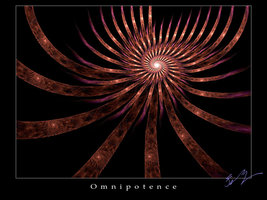
omnipotence

Art by Neon Rauschen

Conceptually, I can’t really wrap my head around omnipotence, infinity, or the universe. And not just because of the vastness, although that plays a part, but mostly because the idea is so very non-human. We are bound by many sets of limitations whether self-imposed or a product of our very nature. We are encased in skin and held up by a skeleton of bones and we are locked in time. Both of these parameters keep us out of the God realms.

 Job answered the Eternal One.
 Job: I know You can do everything;
        nothing You do can be foiled or frustrated.
You asked,
        “Who is this that conceals counsel with empty words void of knowledge?”
    And now I see that I spoke of—but did not comprehend—
        great wonders that are beyond me. I didn’t know. [Job 42:1-3, The Voice]

I didn’t know, Job says. And I say, he couldn’t know. We’ll never know, not while we’re walking the earth.

Oh, we’ll get glimpses of truth, snippets of the secret knowledge, flashes of insight even. But the “why” is not for us to understand. I am reminded of a Corrie Ten Boom story when she was a little girl on a trip with her father and she wanted to carry one of the pieces of luggage and her father denied her. It would be too heavy for her.

And so it is with omnipotence: the ability to see through time and space and change, the beginnings and the ends.

For this reason, we are asked to trust in God, the Eternal One, the Omniscient. It’s the old iced tea commercial, where we are asked to fall backward into the water, without looking. It’s the more recent cliche of choosing to be “all in.”

I am still not there. I don’t understand my own reticence. Somewhere along the way of my life, I have learned skepticism and fear of being fooled or deluded. I continue to test the waters first, walking in slowly, just in case there are surprises underneath, ready to nibble my toes and ankles. I do not plunge.

But I will. I know that too. I’m not sure what that will look like yet, but I am certain that I will have my Job revelation too. And in that day, in the same way that “The Lord blessed the latter part of Job’s life more than the former part” [Job 42:12a], so I will experience saturation in omnipotence.

Read Full Post »

Artwork by Nathan Johnson

Artwork by Nathan Johnson

This question, “where were you?” changes its meaning by the emphasis put on each word. “WHERE were you?” versus “where WERE you?” versus “where were YOU?” And what emphasis did God use when he first spoke to Job?

“Where were you when I laid the earth’s foundation?Tell me, if you understand. . . . “ [Job 38:4, NIV]

Is it about place or time or person?

I’m pretty sure it’s about person, that neither Job or you or I were present in the time of creation energy. We can describe and count and observe and hypothesize, but we’ll never really “know” or understand Godwork.

Partially, the problem is that we continue to anthropomorphize God. We keep making very big and very wrong assumptions about God as though a jealous God is like a jealous man or woman. Or that fearing God is like fearing cockroaches or stink bugs. Or that listening to God is like listening to U2 or Taylor Swift. These words are human words used to describe human feelings and activities. It’s simply not the same with God.

I used to believe that Abraham had the God thing down. After all, didn’t he negotiate the salvation of his cousin Lot from the clutches of Sodom (or was it Gomorrah)? Really? Did Abraham actually bring up something that God had not considered? Was Abraham bargaining with God or was he really bargaining with himself, the value of human life against virtue and right living.

And so, here we come to Job who finally hears God, a God who asks Job question after question after question in order to lock in a simple truth: God is God and human is not God. Creator envisions creation; human lives in it, molding what is given. We do the same with our lives. We have much freedom in the managing of our persons. But the spark of life came from God alone.

For my scant few years, maybe they will be as many as 100 or maybe only 85 or even less, I cannot know. But for this time, I am given the opportunity to partner with God in gratitude, sharing in the work of creativity and love and joy and relationships. Or not.

“Today I have given you the choice between life and death, between blessings and curses. Now I call on heaven and earth to witness the choice you make. Oh, that you would choose life, so that you and your descendants might live!” [Deuteronomy 30:19, NLT]

Read Full Post »

« Newer Posts - Older Posts »