Feeds:
Posts
Comments

Sorting Hat

The Hogwarts Sorting Hat was used to determine which “house” a new student would have allegiance to during his/her years in school. I have seen Christians do much the same thing by taking tests and classes and workshops to “determine” their “gifts.” Not Hogwarts but hogwash!

I Corinthians 12:29-31a
Are all apostles? Are all prophets? Are all teachers? Do all work miracles? Do all have gifts of healing? Do all speak in tongues? Do all interpret? But eagerly desire the greater gifts.

I can call this search process hogwash because I’ve done it. I’ve done it more times than I’d like to confess. And like the MBTI, the results come out pretty much the same every time. Why do I keep putting on this sorting hat? Obviously, I’m hoping there is a paper test that will anoint me as an apostle or faith healer (those have drama) instead of an administrator! For heaven’s sake, all that energy on the giftings and I’ve been missing the whole point: “. . . earnestly desire and zealously cultivate the greatest and best gifts and graces . . .” [vs 31a, Amplified].

Roles in a church or in any organization appear as the need arises. The question is not how each person is anointed for all time, but are we willing to step up when we are needed? Are some people better at some things than others? Of course. But, I don’t believe we are limited to that one role, ever! The problem I’ve seen is that we limit ourselves to what we “think” that role will look like. God is creative.

Right now, too many in the church are operating purely out of tradition and habit. Church is a building. Church has a “pastor” who speaks from 15-40 minutes from the front of the church. There are songs that are sung – the number or time is set. It goes on and on.

What is the best gift and what are the greater graces that we are called to cultivate? Is the church of today partnering with us in this journey. Or, are we all sitting under the sorting hat first? Are we sorted into roles and denominations? Are we sorted into leaders and followers? Are we sorted into pre-millennial and post-millennial? Are we sorted by country and color? Are we sorted by political party? And worse still. . . are we acting like the sorting hat itself? Are we sorting others?

I’m taking off my sorting hat today. I will not sort people around me. Nor will I be sorted.
Every time I hurt someone within the Body of Christ, even inadvertently, I am actually hurting myself. If I gossip against someone, I am dishonoring myself. If I ignore someone intentionally, I am cutting myself off. I am committing a slow suicide by poison.

I Corinthians 12:21, 26
The eye cannot say to the hand, “I don’t need you!” And the head cannot say to the feet, “I don’t need you!” . . . If one part suffers, every part suffers with it; if one part is honored, every part rejoices with it.

I used to think of these verses as sharing in the sufferings of the saints. In other words, as others experience pain or sorrow, I share in that pain and thereby help the one who is hurting. But today, I see that I am part of the problem. And, more than likely, this truth applies to more than just the body of believers.

Psychologists say that the very things we complain about in others or “see” in the behaviors of others, these are our own bad habits as well. If we observe selfishness in others, we are probably acting selfishly ourselves. When we blanch at someone’s rudeness, chances are we are equally rude.

So, what do I do more than anything else? Judge others. And sure enough, I am also being judged. [Matthew 7:1] When am I going to get this?

I have never understood people, particularly teens, who cut themselves. They say it’s to “feel something” because they have become so numbed by emotional pain and depression. Am I hurting others with my judgments and “tongue” for the same reason? Do I think I will feel better by continuing in this habit?

Don’t I want love as much as the next person? Of course. Then, it’s time to radically change my weapons. It’s time to heal, to love, to mediate, to listen, to accept, to trust. It’s time to really love unconditionally the unlovely, the seemingly dishonorable, the broken.

Some people move from one church to another. Other people stay in the same church all of their lives. Sometimes people leave in a huff because the piano is moved from one side of the sanctuary to another. Sometimes, it’s just time for change. But aren’t we still in the same Body?

I Corinthians 12:14-15
For the body does not consist of one limb or organ but of many. If the foot should say, Because I am not the hand, I do not belong to the body, would it be therefore not [a part] of the body?
[Amplified]

I have experienced splits in churches where one half of the congregation follows one leader and the other half follows another leader. I have seen denominational leaders “invite” the parishioners to leave a church because of worship practices and disagreements. I have seen ministers brought down, music directors and youth leaders cast out for mistakes. I have seen gossiping, backbiting, and lies told in the name of “being right.”

And yet, aren’t we all needed in the Body of Christ? Isn’t a good portion of this type of in-fighting happen when the “eyes” of the Body are trying to get the feet to act like them?

Once a person enters the Body of Christ through an expression of faith and testimony, then that person is part of the Body . . . period. Our job is not to “mold” the body parts to become like us. Our job is to work together and to celebrate individual giftings, to find “place” for each person.

This all goes back to the recognition of the “sacred other.” If we look for the heart, then all are the same.

Look inside and out before eating the holy meal. Communion is a combination of a corporate act [with other believers] and a personal examination. The encounter doesn’t work very well if we don’t really believe or accept that the bread & wine [or juice] have power.

I Corinthians 11:28-29
Let a {woman or} man [thoroughly] examine himself, and [only when he has done] so should he eat of the bread and drink of the cup. For anyone who eats and drinks without discriminating and recognizing with due appreciation that [it is Christ’s] body, eats and drinks a sentence (a verdict of judgment) upon himself.
[Amplified]

I encountered the word “examen” for the first time while reading Richard Foster’s book, Prayer: Finding the Heart’s True Home some years ago. It’s no “navel gazing,” far from it. Foster says, “In the examen of consciousness we prayerfully reflect on the thoughts, feelings, and actions of our days to see how God has been at work among us and how we responded. . . . God goes with us in the examen of conscience. It is a joint search. . . . if left to our own devices . . . our tendency is for self-flagellation.”

Examen is not about tying ourselves to the whipping post, it’s about seeing ourselves in truth, with love. It’s the time when we can begin to lay down our burdens and failures at the feet of the Christ.

In recent times, I have taken to the practice of examen at the start of my devotions each day. I ask forgiveness for my mistakes [sins] and give thanks for the successes, those times I responded to situations and people in loving way. Only then, can I really begin to pray forward.

Communion should be the same, but perhaps a little deeper, a broader swipe over the time since the last opportunity to eat and drink of Christ.

What has gone before is the foundation of who I am today. And my future is built on both, the past and present. If I ignore the past, then I may be setting myself up for repeating it, doing the same things again and again? It was Albert Einstein who said, “Insanity is doing the same thing over and over again and expecting different results.”

I cannot change unless I know what part needs changing. I cannot go on a diet and lose weight if I don’t know my starting weight, otherwise, how will I know the difference? I must be willing to face and accept my authentic self. Like the recovering alcoholic, we too must “Make a searching and fearless moral inventory of ourselves.” [step 4 of the 12 steps]

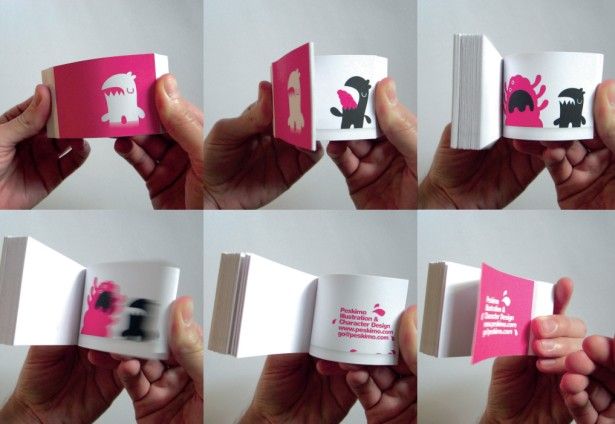
The prayer of examen, particularly at the time of communion, is a photograph. I must let God see the true picture, not one that’s been airbrushed or “photoshopped.” And like a flipbook, only God gets to see the flapping of pages and photos that represent my progress over the years. God knows my whole story.

Let us give meaning to the Bread and WineJesus loved to speak in stories, symbols and metaphors. The supernatural world is indescribable otherwise. Our language is unable to represent something we do not know or understand. The meaning is revealed over time.

I Corinthians 11:26
What you must solemnly realize is that every time you eat this bread and every time you drink this cup, you reenact in your words and actions the death of the Master. You will be drawn back to this meal again and again until the Master returns. You must never let familiarity breed contempt. [The Message Bible]

Bread and wine were used throughout Jewish history, from manna to unleavened bread to the Temple showbread. But, at the last supper, Jesus takes bread and intentionally breaks it and shares it with the disciples (and probably everyone else who was in the room, since I believe there were women and servers there as well, and it was not a “private” event as is so often depicted). He is setting up a symbol to be repeated and to have meaning throughout history.

So often, we think of the “bread” (what we now call communion bread) as something he is doing for us. We are consuming it, we are gaining. But today, I am thinking about the implications for him. He is symbolically cutting up his body for the sake of others. His death and sacrifice begins that night.

And all that He asks is that we remember and keep remembering. “Touch me, smell me, eat me, drink me, and be whole,” He says through the sacrifice. The Jewish rituals of old had prepared people for the New Covenant. It was still the same: sacrifice for sin, offerings for forgiveness, awareness for new beginnings.

Contemporary Christians have lost the deep significance in the consuming of Christ’s symbols of body and blood. Plastic drink cups and dry crackers are poor substitutes. In this regard, it’s very possible that “high church” folks have it right.

On Memorial Days, we consider the sacrifices of the men and women who gave their lives. It’s holy and solemn and thoughtful. Should Christ’s memorial be any less from week to week or month to month?

The body and blood, the bread and wine, has the power to transform us. I want to remember. I want to really remember today.

I was going to review some of the current exegesis on hair & head coverings for women and/or men and how it’s applicable today. Forget that. It’s massive and contradictory. So what is my “take away” today? Where is the nugget that will have meaning and application for me?

I Corinthians 11:2, 7
Now I want you to realize that the head of every man is Christ, and the head of the woman is man, and the head of Christ is God . . . A man ought not to cover his head, since he is the image and glory of God; but the woman is the glory of man.

With just a little reading about these passages, it’s clear to me that a great number of the verses are grounded in the culture of the day. There are modern day examples of coverings like the burqas of the Middle East, the “caps” worn by Mennonite and Amish women, or the veils worn by women in various high church services and masses. Some of these traditions have morphed into the custom of wearing hats in church, a practice still prevalent among many African American churches or seasonally in a variety of churches, like Easter Sunday.

But here’s the truth of it: I don’t wear head coverings. I don’t wear them to church (unless I am visiting a church where this is expected) and I don’t wear them to pray, sing, or worship. About the only time I wear a hat is to shield my face from the sun at the beach.

If I weigh the controversy over head coverings with the Jesus Creed, to love the Lord my God with all my heart, soul & strength and to love my neighbor as myself, could it possibly matter? Does God love me less? Do I cut myself off from the blessings of God?

Now, what about the sister verses that are slipped in between the head covering ones? That “man” is the image & glory of God while woman is the glory of man or that Christ is the head of man while man is the head of woman. Hiccup. Hiccup. I need to take a breath here.

All right, I can work through the headship scenario: since Christ is the head of man, well, then Christ is ultimately the head of woman too (If A=B and B=C, then A=C). That was easy.

But what about the glory piece? Am I the light of “man?” Do I, woman, reflect the character of “man” by who I am, what I do, and what I say? Do the men I know reflect the character of God in Christ?

If my previous post about the default of glory being both male and female believers reflecting the glory of God, then, wouldn’t we be the glory for one another, whether male or female. It’s about relationships, to God and to each other. If I am not in community with men and women, there is no reflecting going on anyway. I cannot be the glory for any person without being in relationship with him or her. I cannot sustain the light of Christ if I am not in relationship there either.

I’m sure there is plenty of room for debate about these verses and the “roles” of men and women, but I’m not going to spend more time trying to justify my stance. If I can be the light and glory of Christ in the world, then the rest will work out the way it is supposed to work out. If I love as Christ loved, then glory abounds. If I learn and practice authentic humility, then both man and woman are lifted up. This I believe.

Sometimes I hear people say they are doing this or that “for the glory of God” and I wonder, exactly, what does that mean? How can my puny acts glorify the King of the universe? Do I really have anything to offer?

I Corinthians 10:31
So whether you eat or drink or whatever you do, do it all for the glory of God.

As I considered this idea today, I decided it’s not so much that I’m doing one thing or another, but it’s all of me.

Some years ago, I got very interested in deaf ministry. I wanted learn American Sign Language and I wanted to learn how to sign worship songs. I studied for about two years and although I was never very good in basic conversations, I did learn a large body of songs. One of my favorite signs is “glory.” The arm is carried up and across the body and the fingers flutter like twinkling. And so, I think of the Glory of God, light that washes across the world.

As a believer, I have asked for the presence of Christ within me. This supernatural, mystical experience manifests in light–God’s Light. My transparency adds light to the glory. When I am in God’s will, when I am loving, when I am manifesting any and all of the fruits of the spirit, I am light as well. I am adding light to the glory light of God. I can be bright or I can be dim.

I dim the light when I go my own way, when I choose to act selfishly.

Let me say it again, more simply still. I am part of the light, by default, as a believer. Instead of thinking that I must do something for the glory of God this day, I need to realize that I am part of the glory of God. That is, until I choose unwisely or willfully sin or hurt another person. Then my light is shuttered like a theater lamp, the beam is narrowed.

For years, I have felt guilty that I wasn’t consciously saying, “This is for the glory of God” each time I started a project or left the house or taught a class or wrote an essay. It’s all for the glory.

And instead, I ask God to forgive me for the shallow times, for the shuttered times, for the sins.