Feeds:
Posts
Comments

prisonThe story of Joseph and how he was sold into slavery by his brothers is a popular Sunday School tale. This, along with his “technicolor dreamcoat,” have been repeated over and over again. Joseph was wonderful; his brother were not so wonderful, but God blessed Joseph and the paybacks were sweet. But is that all of the story?

But when all goes well with you, remember me and show me kindness; mention me to Pharaoh and get me out of this prison. [Genesis 40:14, NIV]

Despite Joseph’s favor with God and being the favorite of his own birth father, he was sold, enslaved, raised up, imprisoned, and raised up with the prison walls, and forgotten (again and again). Yes, Joseph received favor in his circumstances and yes, apparently Joseph had a great work ethic, but Joseph also knew he was captive to the whims and control of others.

He was not his own man. He was dependent and I believe this is the lesson he needed to learn.

Joseph may have been a man of integrity and all of that, but until he walked the challenges of being in the lowest place could he be elevated to the highest.

Jesus tells a parable with a similar message in Luke 14:7-11.
“When someone invites you to a wedding feast, do not take the place of honor, for a person more distinguished than you may have been invited. If so, the host who invited both of you will come and say to you, ‘Give this person your seat.’ Then, humiliated, you will have to take the least important place. But when you are invited, take the lowest place, so that when your host comes, he will say to you, ‘Friend, move up to a better place.’ Then you will be honored in the presence of all the other guests. For all those who exalt themselves will be humbled, and those who humble themselves will be exalted.”Minolta DSC

This is the message of the old Joseph story for me today. Joseph was proud of his many dreams that showed his family bowing down to him. He inadvertently, through a bit of gloating, set a major set of circumstances into motion.

Beware, I say to myself, beware of pride and judgment. God will teach in a variety of ways. In God’s time, there is no time, only the lesson that must be learned.

Unlikely Hero

Art by Little-LadyBee

Art by Little-LadyBee

Reuben, eldest son of Jacob and Leah, has quite a sin in his past. There may be scholarly argument about it, but the NIV clearly states that Reuben slept with Bilhah, who was Rachel’s handmaid and concubine to Jacob and who bore two of the twelve tribal leaders of Israel (Jacob). What Reuben did was a slap in the face to his own father, and somehow, I think he intended it. For it was Reuben who also found the mandrakes for his mother (Leah) in hopes of helping her carve a more loving relationship with Jacob. It never happened. Reuben had some issues with his father.

And yet, it was also Reuben who tried to save his brother Joseph and his many-colored coat, despite his father’s favoritism.

When Reuben heard the plan, he tried to help Joseph.
Reuben: Let’s not kill him. We don’t need to shed any blood to be free of him. Let’s just toss him into some pit here in the wilderness. We don’t need to lay a hand on him.
Reuben thought perhaps he could secretly come back later and get Joseph out of the pit and take him home to their father before any more harm came to him.  The brothers agreed. [Genesis 32:21-22, The Voice]

Reuben had a bit of righteous indignation, whether toward his father, for the way he treated Leah or, in this case, about the impulsive decision of his brothers to kill Joseph. And yet, whether for good or for ill, Reuben was blinded by his own point of view.

This is a good warning for me. It’s a good warning for us all.

hero or villainWe have all sinned or made bad judgments/decisions along the way. That doesn’t mean we can’t choose rightly today or do a courageous and honorable thing. That thing in our past does work to keep us humble. And that’s not a bad thing really.

The hero act does not erase the past but it does give hope that we can change. All have a potential for good. But we must also take care how we view others: villain or hero?

Struggles With God

Painting by Chris Easley

Painting by Chris Easley

Although I know this story well of Jacob wrestling with an unknown man (an angel? who knows?), I had not paid attention to the meaning of the name, Israel (“struggles with God”). And for me, a new scenario emerges of Jacob actually struggling with himself, that part of himself who was named usurper or supplanter. His history was full of deception and trickery and this night, I believe he struggled with that self in order to emerge new.

So Jacob was left alone, and a man wrestled with him till daybreak. . . . Then the man said, “Let me go, for it is daybreak.” But Jacob replied, “I will not let you go unless you bless me.”The man asked him, “What is your name?” “Jacob,” he answered.Then the man said, “Your name will no longer be Jacob, but Israel,because you have struggled with God and with humans and have overcome.” [Genesis 32:24, 26-28, NIV]

I am a bit of a Doctor Who fan (not a serious fan, but I do enjoy watching the show on occasion). It just so happens I watched an episode reminiscent of this Jacob story in which the Doctor and his companions are challenged by a foe called the Dream Doctor who tells them they must choose between two dreams, which is real and which is a true dream? If they choose the correct plot, they will all live, but if they choose incorrectly, they will all die. It’s a mystery of course. But in the end, the Doctor figures it out and realizes that both scenarios are dreams and he destroys them both in order to live in reality (a paradox, of course). But the key to the story is the identity of the Dream Doctor who the companions don’t recognize, but who the Doctor says he knows very well, his very own dark side.

We all have this dark side and it is through our journey in faith, in Christ, that we are gradually able to bring that side forward in order to wrestle with it. Most of us tend to hide the dark side as long as possible, but truthfully, only when the dark side is brought to the light, can we be healed. As long as the dark side stays in the dark, it is safe to live on. (Oh, how Star Wars that all sounds. Sorry.)

These are my late night ramblings as I consider the meaning of Israel as a word. And if I was a true historian, there is probably more depth in it when it’s applied to the nation Israel. But I won’t go there in print. 🙂

I give thanks, instead, to the Christ who does battle for me and with me in the name of God, the Light of the World.


Mandrakes and Babies

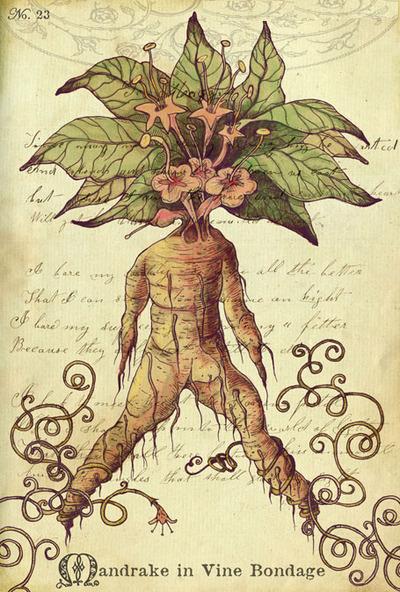
mandrakeIn case you don’t know the story, mandrakes supposedly have fertility enhancing properties (along with possible euphoria and hallucinations). All the same, Reuben, oldest son of Leah (the wife Jacob didn’t want), finds some in a field and he gives them to Mama Leah to use on Jacob (knowing of her longing to be loved by the man who wouldn’t or couldn’t care less). Rachel (the sister that Jacob did love but who was barren) makes a deal with sister Leah: give me the mandrakes and I’ll “let” you have another go at the man. Great story for “sister-wives;” they should be on TV.

So when Jacob came in from the fields that evening, Leah went out to meet him. “You must sleep with me,” she said. “I have hired you with my son’s mandrakes.” So he slept with her that night.God listened to Leah, and she became pregnant and bore Jacob a fifth son.Leah conceived again and bore Jacob a sixth son. Then Leah said, “God has presented me with a precious gift. This time my husband will treat me with honor, because I have borne him six sons.” [Genesis 30:16-20, NIV]

Of course, it didn’t work. Despite Leah having her own babies again, those two more sons (and a daughter – Dinah – barely worth mentioning), only later that did Rachel have a child and apparently, not from the power of the mandrake root.

These women were operating in a world of baby competition. Children were essential to the future of the family, and in particular, to the woman in a household. And, with the promises of God doled out to the line of Jacob, these women were the brokers of their husband’s descendants. In the end, Rachel only produced two of the patriarchs of the twelve tribes, her maidservant Bilhah birthed two sons, Leah birthed six sons, and Leah’s maidservant Zilpah also birthed two sons. And yet, despite the numbers being on Leah’s side, Jacob never did come around, and loved Rachel’s boys (Joseph – famed for the multi-colored dreamcoat and Benjamin) the most, playing favorites throughout their lives.

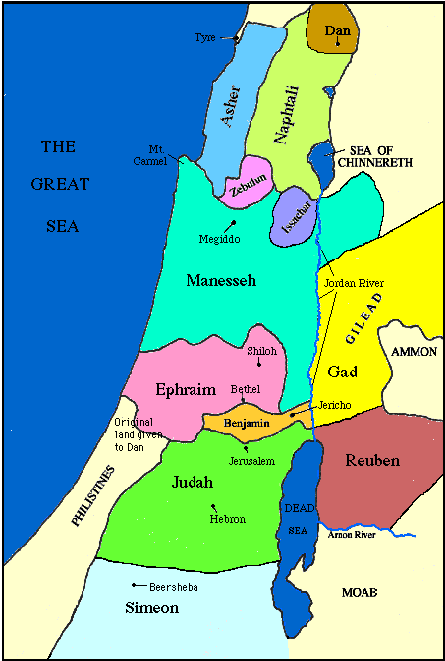
tribemapIt’s not like Leah’s boys weren’t important in their own right: Judah’s birthright, for instance, was foundational to the Jewish nation or Levi, whose descendants ruled the Temple and interceded with God as priests. They were all on the map.

Each son had his own future and each child born had a destiny.

The mandrakes were a tool that two women tried to use to manipulate their futures, their love lives, and their progeny. It didn’t work; it doesn’t work today either.

As the mother of three adopted children and no biological children, I know the mandrake game. I tried the same thing. I could not fathom that God would actually put two Christian people together and not create offspring from them. I became a sort of Rachel, trying all kinds of tests and suggestions to make babies happen. But God doesn’t act from my mandrakes or my plans. God is sovereign.

in this houseEven when our story changed and we adopted children, I tried to control their outcomes. Oh, I know, it was all in the name of giving them the best, giving them opportunities I never had, building arenas of success, layering on the expectations. I am ashamed to confess these things for my plans created many disappointments. But, my disappointments were self-inflicted. My plans were not God’s plans [Isaiah 55:8].

My children are still God’s masterpieces [Ephesians 2:10, NLT]. And my job should have been to plow the ground and provide nutrients, but allow them to grow into themselves, into the people God intended.

Forgive me for the mandrakes in my life, Lord. And do what you will with our children, now young adults, looking for a way. Perhaps the road could have been easier if I hadn’t littered it with so many calculations.

But, just like Rachel & Leah, the one thing I gave without mitigation was my love. And I am thankful that love covers a multitude of sins [I Peter 4:8].

Gate of Heaven

gateA quick search on the phrase, “gate of heaven” caught me off guard as it appears to have become a popular name for cemeteries. I think that’s a shame as it puts so much emphasis on heaven being available only after we enter the “big sleep” if you will. But heaven is also within and available to us now, if we open the gate.

When Jacob awoke from his sleep, he thought, “Surely the Lord is in this place, and I was not aware of it.”He was afraid and said, “How awesome is this place! This is none other than the house of God; this is the gate of heaven.” [Genesis 18:16-17]

We are the church, we are the house of God. The body is a sanctuary and temple to the Holy Spirit [I Cor 6:19]; isn’t heaven there too?

In heaven, we are promised continual access to God where there are no more tears and no more pain. This timeless place is so not limited to our three-dimensional understanding of existence. It is spirit. It is God.

For me, the gate is Christ.

sheep gateI tell you the truth: I am the gate of the sheep. All who approached the sheep before Me came as thieves and robbers, and the sheep did not listen to their voices.I am the gate; whoever enters through Me will be liberated, will go in and go out, and will find pastures. The thief approaches with malicious intent, looking to steal, slaughter, and destroy; I came to give life with joy and abundance. [John 10:8-10, The Voice]

GatesNarrow gate allow us in but gates also protect, whether in reality or symbolically.

In Old Testament times, the gates of the city were a public forum where transactions were witnessed.

A gate is a choice, whether to enter or depart.

women and storyAbraham protected himself by claiming that Sarah was his sister in the land of Abimelek (Abimilech) and here, Isaac does the same thing, in the same geographical area, with another king (perhaps a son?), also called Abimelek (Abimilech). Scholars are not in agreement about these accounts since they are mirror of one another in so many ways. But for my purposes, they cause a completely different resonance: one that makes my blood boil if you want to know the truth.

When the men of that place asked him about his wife, he said, “She is my sister,” because he was afraid to say, “She is my wife.” He thought, “The men of this place might kill me on account of Rebekah, because she is beautiful.” [Genesis 26:7, NIV, emphasis mine] (See Genesis 20 for Abraham’s version.)

In some quarters, commentators have said that these parallel stories show God’s protection over the patriarchs and the beauty of their women. How swell. But in neither story, as told by the Old Testament historians, is there much information about the women and the circumstances in which they found themselves as a result of their husbands clever misinformation (lies). The reason for their deception, in both cases, was to protect their own lives because the ruler might kill the husband to acquire the wife. But a sister? Piece of cake, just hand her over (with gifts from the household of the King to the patriarch, I’m sure).

And so the women, beautiful they may have been, were thrust into the households of foreigners. Nice. Convenient and cunning.

I am more than aware that culturally, in those days, women were a type of property or chattel. They were owned by their husbands and subservient to the lord of the house. Despite these restraints, many women of that period still accomplished great things and often, with courage, they turned their world, the Esthers and Abigails and for all we know, many who went unnamed. But these accounts are few and far between.

Women are a often strong and flexible and most tenacious. They can take a bad situation and make it better. They can tolerate much. They are survivors. But not all women. Too many other women fall in the face of men who strike with force to gain their will. Other women self-medicate to beat back emotional pain. And still others eat until their bodies betray them altogether and beauty is no longer apparent.

I suppose Abraham and Isaac could be commended for their clever little deception. They both gained immeasurably by it and found much favor from the Abimileks in their sojourns. But for the women, it was a sacrifice. And I want to remember that.

As a contemporary reader of scripture, I often remind myself that it’s critical to look between the lines, to pray and contemplate the untold story. So often, scripture time is compressed into a single phrase but it’s really months or years. And in those time frames, there are women living, crying, hoping, and maintaining their faith, often in the face of trial. whats_your_story

For my sisters in faith today, I challenge you, don’t read like a man. Read from your unique femaleness. For it may only be us who hear and see and can recognize those underlying truths. In the centuries since those days, many women’s stories have been lost. We need to remember and we need to repeat our own narratives, to our daughters, to our nieces, to our girlfriends.

Tell your story. No one else is more qualified than you.

quiet placeIn Genesis 23, almost the entire chapter is dedicated to the negotiations between Abraham and the local Hittites about a parcel of land and a cave in which to bury Sarah. And although my Bible [NIV] has labeled this chapter “the death of Sarah,” I think it should have been called Abraham’s necropolis.

Again Abraham bowed down before the people of the land and he said to Ephron in their hearing, “Listen to me, if you will. I will pay the price of the field. Accept it from me so I can bury my dead there.”Ephron answered Abraham, “Listen to me, my lord; the land is worth four hundred shekelsof silver, but what is that between you and me? Bury your dead.” [Genesis 23:12-15]

This negotiation, I understand, was rather standard for the day with the exception that it was between a foreigner (Abraham) and a local (Ephron) Hittite. No one believes that Ephron would have given the land to Abraham, that wasn’t how things were done. Instead, there was a lot of “saving face” and gestures of respect and false civilities.

In any case, Abraham would never allow himself to “owe” Ephron for the gift of land. After all, gifts of this kind usually carry strings attached. And perhaps Ephron thought Abraham’s sojourn in the land of Canaan was relatively temporary. We’ll never know. But for Abraham, this was the promised land of God and it was his belief that one day his descendants would indeed conquer the land. This parcel became the first parcel in that conquest. And in later years, not just Sarah, but Abraham himself along with Isaac, Rebekah, Leah, and even Jacob’s bones were carried there by his son, Joseph, many generations later. Only Rachel was buried elsewhere, not far, but immediately after dying of childbirth.

So, why devote an entire chapter to this negotiation? I think the land was important as “Abraham’s little green acre.” I think it symbolized Abraham’s faith in God’s promise, which drove Abraham all of his life. I believe he expected this land and cave to be come the great tomb of the patriarchs. This little piece of land was Abraham’s personal investment in the promise.

He wasn’t trying to “make” things happen (unlike Sarah who had tried to hurry things along by giving Hagar to Abraham to prime the pump for descendants). Abraham was simply putting a standard in the ground, and saying, “we begin here.” In the end, Abraham was still considered a nomad until the day of his death and he never saw the true occupation of the land by God’s people, but he is buried there. He took a foreign piece of land and transformed it.

Then there is a lesson for me. How often have I been overwhelmed by circumstances and unable to see how situations could change or be different? But I think I see a way here. I only have to claim one small piece of the situation. As my pastor suggested, I only have to do the one possible thing, that choice that is within my power or ability to do, and then God can do the rest. I lay down an anchor but God calms the sea.