Feeds:
Posts
Comments

Art by Desexign

What is a dream? Night time dreams and daydreams are what I think of first, but other symbolic uses come up as well. I suppose the most prevalent one is the speech by Martin Luther King, Jr., who said “He had a dream . . . ” as he looked to a brighter future. He was a visionary. And I think of Don Quixote who “Dreamed the Impossible Dream.” Quotes aplenty sprinkle the web. Check them out for encouragement.

But after he [Joseph] had considered this [divorcing Mary quietly], an angel of the Lord appeared to him in a dream and said, ‘Joseph son of David, do not be afraid to take Mary home as your wife’ . . .  When Joseph woke up, he did what the angel of the Lord had commanded him . . . ” [Matthew 1:20a; 24a, NIV]

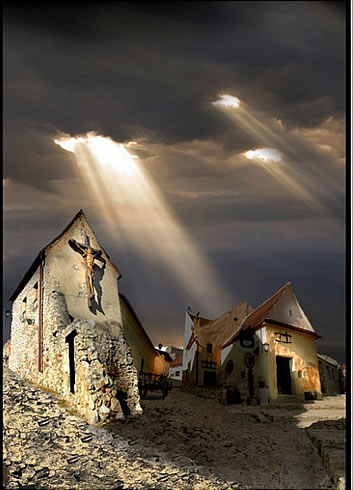
But I am looking at a specific kind of night dream that a humble carpenter had when his fiancee became pregnant. Being a nice guy of sorts, he decided to divorce her quietly, although I find that amusing since her pregnancy, without his protection, would have ended her stoning. I think he was rather more interested in a) not participating in the punishment, and/or b) disassociating with her and her family. Also, he was a fearful man who could not imagine dealing with the fall-out.

And yet, he had a dream.

How do we know when a dream is from God? I’d say, in general, that the dream contradicts our normal thinking about an event. A dream brings in new information that we would normally suppress. And I believe it’s straightforward.

When I was still struggling with my decision about accepting the Christ, I had a vivid dream of standing on rope bridge. Below me, what initially looked like roiling water and waves, was human bodies. At one end of the bridge was a woman who was interested in enticing me into her lifestyle, both decadent and exciting. At the other end, was a man who had introduced to the stories of Jesus and prophecy in the Old Testament, a “holy” life I could not fathom for myself at the time. I was torn between the two but knew I had to choose one way or another or I would be pulled into the maelstrom below, lost to both. This was a dream from God, still distinct in my mind after more than thirty years.

I am without doubt that Joseph’s dream stayed with him until he died. We don’t have a record of Joseph’s later life, how he died or when. He and Mary bore other children after Jesus, so we know he didn’t disappear and he was still on the scene when Jesus was twelve. But after that? We’ll never know. But we have a dream and savior because one man submitted to a dream.

To accomplish great things, we must not only act, but also dream; not only plan, but also believe. Anatole France.
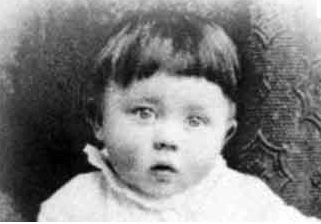
It’s a baby, a little, little baby. How sweet. How cute. What potential!

This will be a sign to you: You will find a baby wrapped in cloths and lying in a manger. [Luke 2:12, NIV]

babyIn Greek, the word is brephos, which can either mean an unborn child or a newborn child, but interestingly enough, this word is gender neutral. As a result, this is the same word that is used for the baby that Elizabeth carries in her womb and “leaps for joy” when Mary came to visit [Luke 1:41], along with six other references. And my favorite reference is in I Peter 2:2, where brethos is used to describe young believers who should crave “spiritual milk,” and cast off the food of the world.

But I’m getting off track. I wanted instead to talk about a baby’s potential. You see, from the outside in, we do not know what is in store for every baby we see. Facebook is filled with pictures of babies, taken by proud parents, who are full of hope and expectations for their baby. They want to give this baby the best of everything, the opportunities, the nourishment, the foundation. They love this baby so much.

And yet, how many mothers collapse in grief when their child becomes a murderer or a drug addict or an abuser? How did this happen? What happened to all that potential?

We know that prophecies abounded about the Christ child who would come into the world innocently enough, but who knew his life would only last 33 years? Who knew he would be mostly rejected? Who knew, really, that it would all happen to this particular baby? Not even the mother knew for sure, despite the miraculous circumstances of his birth. She continued to ponder all those things in her heart [Luke 2:19]

A baby depends on the “village” around him/her to grow and become. If we succeed, if God’s intent is encouraged and prevails, we have a saint. But if we fail that child, what then?

Hitler’s First Photograph
——-Wislawa Szymborska

And who’s this little fellow in his itty-bitty robe?
That’s tiny baby Adolf, the Hitlers little boy!
Will he grow up to be an LL.D.?
Or a tenor in Vienna’s Opera House?
Whose teensy hand is this, whose little ear and eye and nose?
Whose tummy full of milk, we just don’t know:
printer’s, doctor’s, merchant’s, priest’s?
Where will those tootsy-wootsies finally wander?
To garden, to school, to an office, to a bride,
maybe to the Burgermeister’s daughter?

Precious little angel, mommy’s sunshine, honeybun,
while he was being born a year ago,
there was no dearth of signs on the earth and in the sky:
spring sun, geraniums in windows,
the organ-grinder’s music in the yard,
a lucky fortune wrapped in rosy paper,
then just before the labor his mother’s fateful dream:
a dove seen in dream means joyful news,
if it is caught, a long-awaited guest will come.
Knock knock, who’s there, it’s Adolf’s heartchen knocking.

A little pacifier, diaper, rattle, bib,
our bouncing boy, thank God and knock on wood, is well,
looks just like his folks, like a kitten in a basket,
like the tots in every other family album.
Shush, let’s not start crying, sugar,
the camera will click from under that black hood.

The Klinger Atelier, Grabenstrasse, Braunau,
and Braunau is small but worthy town,
honest businesses, obliging neighbors,
smell of yeast dough, of gray soap.
No one hears howling dogs, or fate’s footsteps.
A history teacher loosens his collar
and yawns over homework.

— Stanislaw Baranczak and Clare Cavenagh, translators
from The People on the Bridge


There’s a word that conjures an immediate response I’m sure. From billboards, “Virgin : Teach Your Kid it’s Not a Dirty Word,” to Virgin America Airlines to put-down, “You’re still a virgin?” What does this hot word mean in your world? Or mine?

Our Lady of Guadalupe by Pristine Cartera-Turkus

Then Isaiah said, “Hear now, you house of David! Is it not enough to try the patience of humans? Will you try the patience of my God also? Therefore the Lord himself will give youa sign: The virgin will conceive and give birth to a son, andwill call him Immanuel. [Isaiah 7:13-14, NIV]

Of course,  theologians have since uncovered a less than miraculous explanation of Isaiah’s prophecy since Jewish culture assumed that all young women were virgins. They had a good reason for this assertion since sex outside of wedlock was punishable by death. The Hebrew word for virgin as it is used in Isaiah is Alma, or young woman. When the these verses were translated into the Greek, the word Parthenos was selected which had only one meaning, virgin. (By the way, small piece of trivia, the Parthenon’s name came from this same word and one of the reasons was that this temple was filled with temple prostitutes that were virgins – and apparently disposable after a single use.)

The point in the nativity story, I suppose, is not that Mary was a virgin, since that was the norm, the point was that she was impregnated supernaturally. In fact, scripture articulates that Joseph, her fiancee did not have sex with her until after the birth of Jesus [Matthew 1:25]. And for many people, this miracle stops them in their tracks. And some denominations take Mary’s virginity to the next level, saying she was made sinless as well, creating an immaculate conception. [For more on this topic, see Let Us Reason Ministries online.]

We’re living in a time of science and reason and miracles of any kind are always suspect. In my mind, the entire concept of God providing a propitiation or atonement for the choices that created a state of human separation from God is a gigantic miracle in and of itself. The methodology would have to be out of our ken in order to make it work.

Ancient humans seemed to naturally understand the idea of atonement, sacrificing all kinds of animals and daughters to appease the gods, the sun, the weather, or whatever else they could not understand. They seemed quite clear about the basic idea of sowing and reaping. Even Karma, an Eastern idea of cycles, supports the supposition that there are repercussions to our choices (both good and bad).

The virgin birth is actually somewhat inconsequential to me. The idea that God became fully human is much more intriguing. The idea that fully human God (as Jesus), came as an atonement is even more absorbing.

I just want to think about that today.

Hope Floats by Lori McNee

Hope Floats by Lori McNee

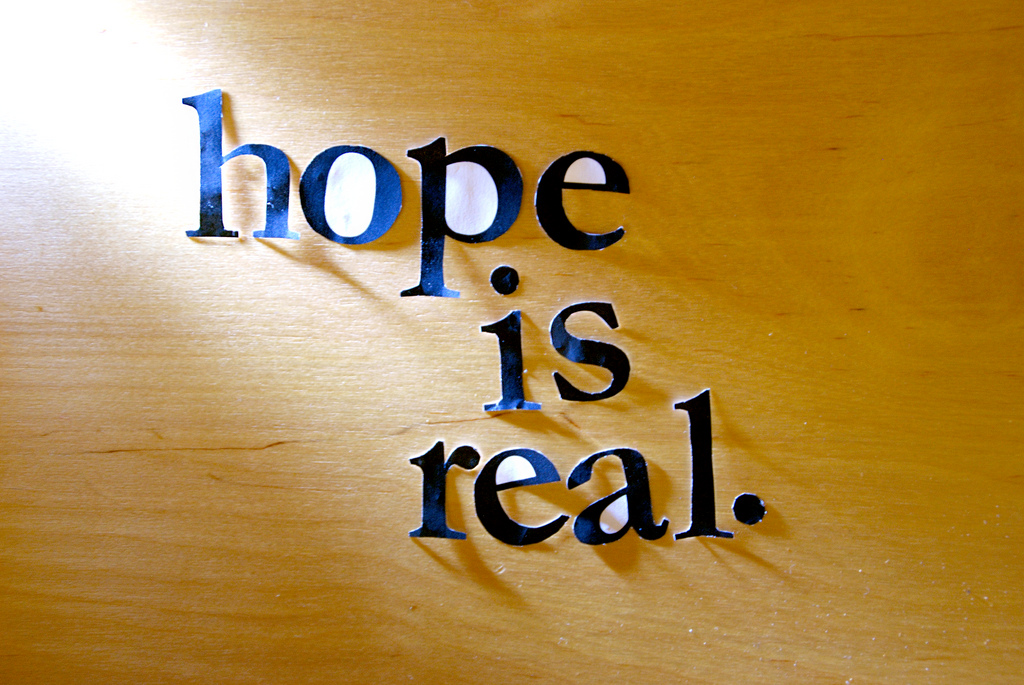
For the first Sunday of Advent, churches all over the world are lighting a single candle and speaking of HOPE: essentially the hope is of Christ whose coming has been promised and whose coming, we know, did happen. But then, if that Christ came, what is our hope today? Merely for His coming again or something else?

For in this hope we were saved. But hope that is seen is no hope at all. Who hopes for what they already have? Romans 8:24 [NIV]

“The virgin will conceive and give birth to a son, and they will call him Immanuel” (which means “God with us”– Isaiah 7:14). Matthew 1:23

Today and tonight, our church also began this Advent season with a cry for hope but with much more power. Jess Bousa announced “It is time for us to stop thinking of the Christmas story as a baby shower.” Yes, it’s sweet that Jesus is depicted as coming among the poor, entertained by mild cows and sheep, and witnessed by the outcast shepherds of the day. But what of the other point? That God sent Spirit into a human woman to create a Savior, someone who could both live and die for us, fully human and fully God, sacrificing all, in order to deposit the Holy Spirit into each one of us : Emmanuel, God with us (in us).

So, if we have Emmanuel. Tonight, one of our worship leaders, Dale Woodring, shared: “If we have Christmas inside us every day and every month, then there is no need to fear holiday commercialism or misplaced focus, God is bigger than all that. God is not worried about the point of Christmas being missed because we have Emmanuel inside of us.”

We don’t have to hope for Emmanuel, if we have accepted the truth of the work of Christ to re-establish our relationship with God, then the Spirit is within us.

So, what dHopeo we hope for? Manifestation of Emmanuel in us. We hope for an explosion of a unified Spirit in humans, the ultimate human who lives and breathes and walks in the power of grace and mercy and love, fully trusting the Presence within, accepting the ongoing paradox of a life in Christ, for to live, truly live, is Christ [Philippians 1:21].

Hope is a word of confidence, an expectation of a good result, with or without evidence, hope remains. Hope is active, not passive. Hope can be regenerated. Hope loves. Hope sees. Hope is born in Emmanuel.

Reprieve

I was thinking today about the feelings and thoughts of someone on death row. And I wondered how I missed the similarities between myself, while I was still isolated away from God/Spirit/Yahweh, while swimming in a sea of self-manufactured detritus. The sentence is the same. The mega-tube slide relentlessly taking me downhill.

break freeI sought the Lord, and he answered me;
    he delivered me from all my fears.
Those who look to him are radiant;
    their faces are never covered with shame.
This poor man called, and the Lord heard him;
    he saved him out of all his troubles.
The angel of the Lord encamps around those who fear him,
    and he delivers them.  [Psalm 34-4-7, NIV]

Once an inmate is on death row, there is no action that can be done on one’s own to stay the sentence. The “help” must come from the outside, others who plead one’s case, a judge who might rule in the inmate’s case, a government official who might vacate the sentence. Salvation is offered. The inmate must choose to accept.

I just say “choose” because it’s not always the case that a person wants to live and it could be that the restraints on that “life” may not be acceptable. You see, despite the reprieve, a convicted criminal who somehow receives clemency will still be bound by a system of checks and balances. Each day and each morning, calls for a choice, to live.

There is a good reason that Moses writes, “This day I call the heavens and the earth as witnesses against you that I have set before you life and death, blessings and curses. Now choose life, so that you and your children may live and that you may love the Lord your God, listen to his voice, and hold fast to him.” [Deuteronomy 30:19-20a]

This morning, I attended a prayer breakfast sponsored by our city’s Chamber of Commerce. I find this event so very puzzling as many people attend out of some kind of civic obligation or opportunity for networking and not necessarily for prayer or religious instruction. And yet, the speaker is always clear on the message: God in Christ, the Way, the answer, the hope. It is not watered down. The speaker today was no different from years past. In fact, he called his chance to speak for what it was, “crossover evangelism.” I had never heard the term, but it reminded me of Christian artists who had crossed over into the secular market or country singers who achieved crossover into rock ‘n roll. He was reaching a group that may not have heard a message of reprieve from a life in emotional, relational, or financial chains in such a way.

The speaker, Robert Kossack, is the founder of an organization called Project Crossroad, an organization whose sole mission is to aid youth as they come to one of those many crossroads in life. (Of course, these crossroads happen all along our lives and not just in our teens or twenties.) Kossack spoke passionately and from the heart about his own crossroads and how his choices put him in prison. He, too, was on one of those rapid rides downhill. But through circumstances and epiphany, he chose life in the Spirit of Christ Jesus. And in this place, stopped the spiral downward. My favorite part of his story was when he told of the “walk” he took with a guard in the last minutes of incarceration, a long walk designed for him to remember that place and all that it held (chains and cells and barbed wire and strip searches). The guard insured that Kossack saw these things one more time and told him to “never forget.” And finally, when he had reached the area called R&D (Receiving and Discharge), his family waited for him on the other side. He could see them through the doors. Kossack wanted the guard to remove his chains before he stepped through the door, but the guard commanded him to step aside. And the revelation occurred to him, that the door to the outside would not open until the door to the inside was closed. The only thing that stood in the way was he, himself.

This is so for all of us. Reprieve is offered and we tend to stand in the way of it. We say we want help but then stand in the way of its offer. I am guilty of the same.

The promise is that God will deliver us from our fears and from our prisons. That promise is faithful and true but it is we ourselves who may be missing it. Stand aside for the power of God. Accept reprieve, immunity, and forgiveness.

Choose life.

But it’s not very effective, this promise about the desire of the heart if you don’t know what it is. So many people suffer from this basic malaise. What do I want? What does God want me to want? What should I want? And on and on and on.

desire of the heartTake delight in the Lord,
    and he will give you the desires of your heart. [Psalm 37:4; NIV]

The desire of the heart is serious business. This is core belief and core longing. This is essential to the day and the tomorrow. This desire keeps us going. No cliches will do. We can’t say, “oh, I desire Jesus” and all that. In this context, that is a given. With the Christ IN our hearts, what do we desire?

I have been writing a lot lately and I was sliced at the knees at one of the comments I received from a knowledgeable critic: what does your character really want (whether she knows it or not, you, the author, must know). And there it was, back again. For this issue has been tiptoeing around my soul for years.

The first time I took the enneagram, I was shocked at my results for my “number” indicated I was a bit shallow. How could that be? I always believed myself a thinker, a smart cookie who sought out the deeper things of God, living, and loving. But I had to face some difficult truth, I am really a scattered soul. I have dabbled in so many arenas from acting to photography to writing to library maven to arts management to exercise queen to organizational specialist to prophetess to prayer warrior to church matriarch . . . well, the list goes on. But where is the real desire?

When I did identify a strong desire, one that has done a lot of the driving, it made my blood run cold. It’s a self-serving desire, one that is not compatible with a life in Christ, yet rooted deeply.

My current manuscript, The Saving of Phoebe Clay, will test the depth of this desire and what it can do or not do. It’s time to unmask. For it is only in the unmasking that change can begin.

And in the meantime, as I pull the anchor from this old desire, I may flounder but I will keep this thought as near as I can:

God is our [my] refuge and strength,
    an ever-present help in trouble.
Therefore we [I] will not fear, though the earth give way
    and the mountains fall into the heart of the sea,
though its waters roar and foam

    and the mountains quake with their surging. [Psalm 47:1-3, NIV]


Praise the Lord

How often have you  heard it? Sometimes in church as masses of people clamor after a song or rousing message, crying out, with hands raised, “Praise the Lord.” Or perhaps, you are telling a story to someone and throughout the telling, the listener interposes several “praise the Lords.” It’s as though the phrase has become a kind of “gesundheit” or “bless you.” But have we lost some of its deeper meaning? Light of God

The word praise can be translated into a number of different iterations, but in the Hebrew, most often when it is associated with hal-lu [as in hallelujah] it means  “shine.” The first image that comes to my mind then is “Shine, O God, on this situation” or “shine on me.” It is a plea, a request, a desire. The old song, “Shine, Jesus, Shine” then is really like saying Hallelu Jesus Hallelu.

Praise the Lord.
How good it is to sing praises to our God,

    how pleasant and fitting to praise him!
[Psalm 147:1, NIV]

I have gotten into the habit of thinking of of the phrase, “Praise the Lord” as “good job.” And I suppose, that’s not entirely wrong, but I want  to elaborate on the concept now and think about the Light of God illuminating the moment.

What we are telling you now is the very message we heard from Him: God is pure light, undimmed by darkness of any kind.” [I John 1:5, The Voice]

This is the Hallelujah! This is the praise.