Feeds:
Posts
Comments

Posts Tagged ‘Christ’

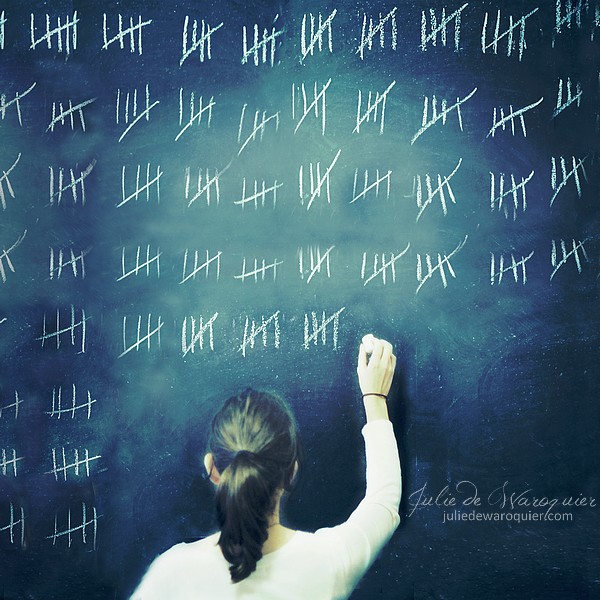
numbersWhat is it with human beings and counting? How many kids do you have? How many dogs and cats? How many people came to church on Sunday? How many books were checked out of the library? I mean, what does it really mean anyway, these sum totals?

 In those days Caesar Augustus issued a decree that a census should be taken of the entire Roman world. [Luke 2:1, NIV]

Apparently, the main reason that censuses were taken in the past was for tax purposes. According to the article in Wikipedia, the census around the time of Jesus birth was actually the Census of Quirinius, based on the history written by Josephus (however, there are historical problems with this date and the generally accepted date of Jesus’s birth–a challenge for the scholars I suppose, but that relevant to me. However, for more about this conflict, read the article). And apparently, the Jews resented the taking of the census anyway because of its implications for the domination of Rome over their country and their livelihoods. The prevailing opinion was that the taxation would be too high (sound familiar?). The zealots began their rebellion during these times.

In modern times, the census (supposedly) ensures that all people will be adequately represented in our government through representatives and senators and the like. However, that system is currently very broken and no census will fix it.

So, let’s go back to the more general idea of counting. Why do we count the number of people or things in a place at a certain time? Why do we believe that the higher the number, the more successful we are or the more plenteous our booty? When it comes to money, the rich get richer and the poor wish harder.

By the way, there’s no census in heaven.

In fact, all of this counting and measuring is human in origin. As is time. How much and how little? How many and how few? How long and how short? We compare to one another and we compare to history (as though the circumstances in the past could actually compare to whatever is now). Sort of silly really.

There is another biblical story about the census that has completely different aspect [I Chronicles 21], in which David declares thatcounting days a census would be taken, without the blessing and/or direction of God. According to one scholar, “. . . God was angry at David, in those times, [because] a man only had the right to count or number what belonged to him.” And I find that concept fascinating. Perhaps we need to consider if we are counting too many things that are not ours to count?
This then begs for the challenge, does God own everything? Have I given over that “ownership” or not?

Read Psalm 50:10-12: ” . . . for every animal of the forest is mine,
    and the cattle on a thousand hills.
I know every bird in the mountains,
    and the insects in the fields are mine.
If I were hungry I would not tell you,

    for the world is mine, and all that is in it.

For if everything I own is God’s, then I don’t need to really count or worry about that number being large or small. If I could just stay focused on the quality of my relationships, the quality of my service, the quality of my work and lifestyle, then the numbers game could fall away and into the very hands of the Christ who lives within me: teacher, guide, savior, CEO.

Read Full Post »

Once Johnson & Johnson took over the word Pledge, it’s lost some of its power. Despite the fact that children and adults “pledge” allegiance to our flag, sometimes as often as daily, its meaning has been lost. The word is actually in the “vow” family, but that too has lost much of its significance, in an age of quick no-contest divorces. Most folks think of a pledge (perhaps it’s all those non-profits and churches) as a good-natured “I will if I can” kind of thing. But honestly, the definition is much more binding, a legal relationship, a solemn promise. I’m thinking that when we break a pledge, it sets all kinds of sowing/reaping and karma into motion.

This is how the birth of Jesus the Messiah came about: His mother Mary was pledged to be married to Joseph, but before they came together, she was found to be pregnant through the Holy Spirit. [Matthew 1:18, NIV]

pledged to marryThe word pledged in this passage is the NIV version of course, most standard translations render mnēsteuō  as “betrothed” and more reader friendly versions translate the Greek word to “engaged.” In our day and age, we treat this relationship equally lightly. Give back the ring, shed many tears, post it on Facebook, remove one’s relationship status, and we’re done.

But in the day of Mary and Joseph, the betrothal was virtually equal to the marriage vow itself. To break a pledge of this type required a formal divorce. And the only way a man could divorce a woman in those times was for the cause of infidelity (a one-sided benefit by the way, since a woman could not divorce a man). Joseph was within his rights to have Mary stoned.

It has been said that the church is the bride of Christ (see Revelation 19-7-9) and upon Christ’s return (whatever that might really mean), a great wedding will take place. So, if the wedding is yet to come, we, who have accepted Christ are actually betrothed or pledged to Christ. Will we take this role lightly then or consider it in its most serious form: a vow, a sacred promise to be faithful?

Read Full Post »

Art by Desexign

What is a dream? Night time dreams and daydreams are what I think of first, but other symbolic uses come up as well. I suppose the most prevalent one is the speech by Martin Luther King, Jr., who said “He had a dream . . . ” as he looked to a brighter future. He was a visionary. And I think of Don Quixote who “Dreamed the Impossible Dream.” Quotes aplenty sprinkle the web. Check them out for encouragement.

But after he [Joseph] had considered this [divorcing Mary quietly], an angel of the Lord appeared to him in a dream and said, ‘Joseph son of David, do not be afraid to take Mary home as your wife’ . . .  When Joseph woke up, he did what the angel of the Lord had commanded him . . . ” [Matthew 1:20a; 24a, NIV]

But I am looking at a specific kind of night dream that a humble carpenter had when his fiancee became pregnant. Being a nice guy of sorts, he decided to divorce her quietly, although I find that amusing since her pregnancy, without his protection, would have ended her stoning. I think he was rather more interested in a) not participating in the punishment, and/or b) disassociating with her and her family. Also, he was a fearful man who could not imagine dealing with the fall-out.

And yet, he had a dream.

How do we know when a dream is from God? I’d say, in general, that the dream contradicts our normal thinking about an event. A dream brings in new information that we would normally suppress. And I believe it’s straightforward.

When I was still struggling with my decision about accepting the Christ, I had a vivid dream of standing on rope bridge. Below me, what initially looked like roiling water and waves, was human bodies. At one end of the bridge was a woman who was interested in enticing me into her lifestyle, both decadent and exciting. At the other end, was a man who had introduced to the stories of Jesus and prophecy in the Old Testament, a “holy” life I could not fathom for myself at the time. I was torn between the two but knew I had to choose one way or another or I would be pulled into the maelstrom below, lost to both. This was a dream from God, still distinct in my mind after more than thirty years.

I am without doubt that Joseph’s dream stayed with him until he died. We don’t have a record of Joseph’s later life, how he died or when. He and Mary bore other children after Jesus, so we know he didn’t disappear and he was still on the scene when Jesus was twelve. But after that? We’ll never know. But we have a dream and savior because one man submitted to a dream.

To accomplish great things, we must not only act, but also dream; not only plan, but also believe. Anatole France.

Read Full Post »

Hope Floats by Lori McNee

Hope Floats by Lori McNee

For the first Sunday of Advent, churches all over the world are lighting a single candle and speaking of HOPE: essentially the hope is of Christ whose coming has been promised and whose coming, we know, did happen. But then, if that Christ came, what is our hope today? Merely for His coming again or something else?

For in this hope we were saved. But hope that is seen is no hope at all. Who hopes for what they already have? Romans 8:24 [NIV]

“The virgin will conceive and give birth to a son, and they will call him Immanuel” (which means “God with us”– Isaiah 7:14). Matthew 1:23

Today and tonight, our church also began this Advent season with a cry for hope but with much more power. Jess Bousa announced “It is time for us to stop thinking of the Christmas story as a baby shower.” Yes, it’s sweet that Jesus is depicted as coming among the poor, entertained by mild cows and sheep, and witnessed by the outcast shepherds of the day. But what of the other point? That God sent Spirit into a human woman to create a Savior, someone who could both live and die for us, fully human and fully God, sacrificing all, in order to deposit the Holy Spirit into each one of us : Emmanuel, God with us (in us).

So, if we have Emmanuel. Tonight, one of our worship leaders, Dale Woodring, shared: “If we have Christmas inside us every day and every month, then there is no need to fear holiday commercialism or misplaced focus, God is bigger than all that. God is not worried about the point of Christmas being missed because we have Emmanuel inside of us.”

We don’t have to hope for Emmanuel, if we have accepted the truth of the work of Christ to re-establish our relationship with God, then the Spirit is within us.

So, what dHopeo we hope for? Manifestation of Emmanuel in us. We hope for an explosion of a unified Spirit in humans, the ultimate human who lives and breathes and walks in the power of grace and mercy and love, fully trusting the Presence within, accepting the ongoing paradox of a life in Christ, for to live, truly live, is Christ [Philippians 1:21].

Hope is a word of confidence, an expectation of a good result, with or without evidence, hope remains. Hope is active, not passive. Hope can be regenerated. Hope loves. Hope sees. Hope is born in Emmanuel.

Read Full Post »

But it’s not very effective, this promise about the desire of the heart if you don’t know what it is. So many people suffer from this basic malaise. What do I want? What does God want me to want? What should I want? And on and on and on.

desire of the heartTake delight in the Lord,
    and he will give you the desires of your heart. [Psalm 37:4; NIV]

The desire of the heart is serious business. This is core belief and core longing. This is essential to the day and the tomorrow. This desire keeps us going. No cliches will do. We can’t say, “oh, I desire Jesus” and all that. In this context, that is a given. With the Christ IN our hearts, what do we desire?

I have been writing a lot lately and I was sliced at the knees at one of the comments I received from a knowledgeable critic: what does your character really want (whether she knows it or not, you, the author, must know). And there it was, back again. For this issue has been tiptoeing around my soul for years.

The first time I took the enneagram, I was shocked at my results for my “number” indicated I was a bit shallow. How could that be? I always believed myself a thinker, a smart cookie who sought out the deeper things of God, living, and loving. But I had to face some difficult truth, I am really a scattered soul. I have dabbled in so many arenas from acting to photography to writing to library maven to arts management to exercise queen to organizational specialist to prophetess to prayer warrior to church matriarch . . . well, the list goes on. But where is the real desire?

When I did identify a strong desire, one that has done a lot of the driving, it made my blood run cold. It’s a self-serving desire, one that is not compatible with a life in Christ, yet rooted deeply.

My current manuscript, The Saving of Phoebe Clay, will test the depth of this desire and what it can do or not do. It’s time to unmask. For it is only in the unmasking that change can begin.

And in the meantime, as I pull the anchor from this old desire, I may flounder but I will keep this thought as near as I can:

God is our [my] refuge and strength,
    an ever-present help in trouble.
Therefore we [I] will not fear, though the earth give way
    and the mountains fall into the heart of the sea,
though its waters roar and foam

    and the mountains quake with their surging. [Psalm 47:1-3, NIV]


Read Full Post »

How often have you  heard it? Sometimes in church as masses of people clamor after a song or rousing message, crying out, with hands raised, “Praise the Lord.” Or perhaps, you are telling a story to someone and throughout the telling, the listener interposes several “praise the Lords.” It’s as though the phrase has become a kind of “gesundheit” or “bless you.” But have we lost some of its deeper meaning? Light of God

The word praise can be translated into a number of different iterations, but in the Hebrew, most often when it is associated with hal-lu [as in hallelujah] it means  “shine.” The first image that comes to my mind then is “Shine, O God, on this situation” or “shine on me.” It is a plea, a request, a desire. The old song, “Shine, Jesus, Shine” then is really like saying Hallelu Jesus Hallelu.

Praise the Lord.
How good it is to sing praises to our God,

    how pleasant and fitting to praise him!
[Psalm 147:1, NIV]

I have gotten into the habit of thinking of of the phrase, “Praise the Lord” as “good job.” And I suppose, that’s not entirely wrong, but I want  to elaborate on the concept now and think about the Light of God illuminating the moment.

What we are telling you now is the very message we heard from Him: God is pure light, undimmed by darkness of any kind.” [I John 1:5, The Voice]

This is the Hallelujah! This is the praise.

Read Full Post »

The phrase, “for your name’s sake,” almost sounds like a last ditch argument. Almost, the psalmist seems to be saying, well, if you won’t help me for any other reason, at least do it for the sake of your own reputation.

From the Blog, Dark Side of the Moon.

From the Blog, Dark Side of the Moon.

For your name’s sake, Lord, preserve my life;
    in your righteousness, bring me out of trouble.
In your unfailing love, silence my enemies;

    destroy all my foes,
    for I am your servant. [Psalm 143:11-12, NIV]

It’s not a concept we use as much in our contemporary culture. Oh, perhaps on occasion, a parent may go ballistic because his/her child has been maligned at school and a number of conferences ensue to protect the family name. And, we saw a little more patriotism after the terrible events of 9/11, when unexpectedly, everyone seemed to raise the American flag in a furor of national allegiance. For that season, we were all proud to be Americans (but, in my mind, the cost for such public spirit was too high).

However, back in biblical times or even later periods of history, it was much more common practice to defend the family name, or the tribe, or the “House.” It was as though the tribe itself had its own honor, its own personality, its own history to which all were responsible for upholding its good name. They were bound together by their faith in their King, a sovereign whose people were being harmed or killed or scorned. Rise up! They called. Raise the banner. Fight the good fight. Defend! And in those efforts, they would inevitably come to their altars and to their gods and ask for favor, in defense of the “King’s” offspring or servants or knights or countrymen. The people were the King’s representatives, for good for for ill.

But there’s another way to look at this verse which becomes more relevant for me today by examining alternate translations. My favorite is actually the NASB (emphasis mine):

For the sake of Your name, O Lord, revive me.
In Your righteousness bring my soul out of trouble.
And in Your lovingkindness, cut off my enemies
And destroy all those who afflict my soul,
For I am Your servant. [Psalm 143:11-12, NASB]

This identifies the enemy: the enemy within. The struggles that happen within the heart and soul. Here is where I can understand fully the cry out to God to save me, to heal me, to protect me by casting out the voices of my past, the ingrained habits that threaten to dissolve my peace and hope, the ancient “enemy.” And for only one reason: because I am a Child of God; I have confessed and committed to the Christ Spirit within me; I yield to the One God and serve God wholly. For these reasons, I ask for help in casting off the “old man.” — “We know this: whatever we used to be with our old sinful ways has been nailed to His cross. So our entire record of sin has been canceled, and we no longer have to bow down to sin’s power.” [Romans 6:6, The Voice]


Read Full Post »

« Newer Posts - Older Posts »