Feeds:
Posts
Comments

Posts Tagged ‘evil’

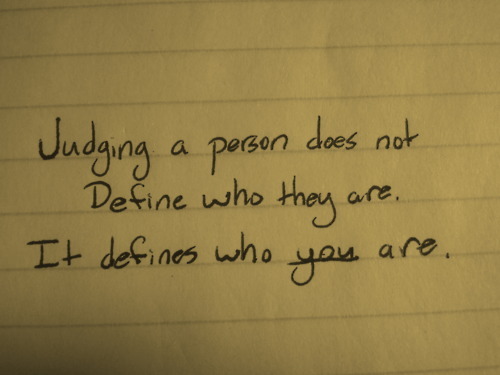
Favoritism with ice cream is a lot different than favoritism with people. Oh I might try not to judge people on first impressions but I find it inescapable. Can I overcome these moments with intentional action?

James 2:1, 4
My brothers [and sisters], as believers in our glorious Lord Jesus Christ, don’t show favoritism. . . . have you not discriminated among yourselves and become judges with evil thoughts?

Some years ago when we still lived in Atlanta, we attended a small church composed mostly of fellow believers who had been asked to split away from a larger denominational church because of our bent toward the charismatic. One of our leaders, Jim, was a wonderful man, kind and dignified, smart and loving. I will never forget the day he taught about enthusiasm: “If you want to be enthusiastic, sometimes you just have to act enthusiastic to feel it.” And then he proceeded to stomp and cheer and pump his arms around like a lunatic. It was hysterical but his message stayed with me.

Personally, enthusiasm comes easily to me. In fact, when I’m excited about a project, I’m quite the cheerleader, almost nauseatingly so, I’m sure. But how can I take that passionate commitment to action and use it to break down my internal tendencies toward judging others through intentional choices to change?

Some people call it a “besetting sin.” When I looked that up, it can also mean a type of harassment, or being surrounded, or an obsession. I can certainly relate to my judging of others in that way. My time in confessional prayers is dominated by asking forgiveness for my judgments. And in my way of thinking, judgment and favoritism go hand in hand. I cannot “favor” one person above the other without having made a negative of judgment of the other.

What to do? I know I can’t just tell myself to stop. If that worked, I’d be golden by now. Should I treat it as a bad habit and follow these 29 Tips for Changing a behavior?

Here are some suggestions from Oprah.com (go figure) written by Tim Jarvis. At first I was going to make a joke about it, but perhaps I need to take a few of these ideas to heart:

  • Like the Tipping Point by Malcolm Gladwell, it may take a number of efforts to get to the “boiling point” or threshold when things happen. So, in my case, the more I tackle this issue, the more aware I am and the more opportunities to get over the hump.
  • I need to think more about the other side, what it would look like and feel like to “not” be a judge so much. Instead of looking back at my failures, look ahead.
  • One of the approaches for change is to engage in community. This is why groups like Weight Watchers and Alcoholics Anonymous are so important: support and encouragement. Hmmm. Not sure how to translate my habit of the heart into a club of regenerated judges.

A friend of mine who struggles with food addiction says that this is one of the most difficult addictions to tackle. After all, unlike alcohol and drugs which can, to some degree be avoided, food is always with us. I think judging and dis-favoring others is similar. People are everywhere. I say that I love to “people watch,” but I wonder if that’s not just a buzz word for judging, mocking, and categorizing. Not a good thing.

What do you do? Honestly. Am I really alone out here?

Lord, forgive me again. Today. And right now, I’d appreciate it.

Read Full Post »

When Paul describes “these people” with a long list of attributes, I think we forget that the list needs to hold together in its totality, not pointing fingers at folks who may demonstrate one or two or even a few similarities. This full list is someone wholly trapped. And apparently, the worst version of this kind of person is one who “teaches” this way to others.

II Timothy 3:6a, 8
They are the kind who worm their way into homes and gain control over gullible women [or men] . . . Just as Jannes and Jambres [traditionally believed to be Egyptian magicians] opposed Moses, so also these teachers oppose the truth. They are men [or women] of depraved minds, who, as far as the faith is concerned, are rejected.

Let’s review the list of behaviors or attributes:

  • lovers of themselves
  • lovers of money
  • boastful
  • proud
  • abusive
  • disobedient to their parents
  • ungrateful
  • unholy
  • without love
  • unforgiving
  • slanderous
  • without self-control
  • brutal
  • not lovers of the good
  • treacherous
  • rash
  • conceited
  • lovers of pleasure rather than lovers of God
  • having a form of godliness but denying its power
  • [II Tim 3:1-4]

This is a comprehensive list and not one to treat lightly. I don’t know anyone like this in my world. I just don’t . . . or do I? Of course, I know people who are rash sometimes or conceited, I even know people who act with no self-control and they can boast or be unforgiving, and certainly I know tons of young people who are disobedient to their parents. But none of my acquaintances fall into the morass of the list as a whole. Do they?

But we are warned here that there are people like this. And because there are, we need to be wary because this description is not necessarily of the terrorist or the killer or the drug lord. This array is about secret sins. This catalog describes someone whose internal life has been ground up and rearranged. This person is living a lie.

It’s one of the reasons why Paul specifically says, “They are the kind who worm their way into homes. . . ” [vs 5]. This person is a chameleon who adapts to the environment, cunning and crafty.

I’m not even sure, such a person is conscious of it, but instead, justifies all choices with a sense of self-righteousness and entitlement.

And yet, my greatest defense remains the same: right living, faith in God, love of others, and the making of peace.

Lord, give me wisdom and discernment. Protect me, my family, my community, my nation, my world.

Read Full Post »

Most of my understanding of the nature of God is downright murky; how much less my understanding of that opposite force/entity: the Devil? And yet, I see the consequences of evil everywhere, even prevalent. How do I still get trapped?

II Timothy 2:25-26
You never know how or when God might sober them up with a change of heart and a turning to the truth, enabling them to escape the Devil’s trap, where they are caught and held captive, forced to run his errands.
[The Message]

What is the trap of the devil anyway? I’d say it has more to do with a state of the mind than anything else. After all, it’s in the mind that I make decisions, that I initiate my actions. I choose inside the mind. So, I confess, some “traps” I choose. I choose to judge others; I choose to gossip; I choose to sin. Like any woman on a perpetual diet, I still eat the wrong foods and exercise little. I perpetuate my condition.

Now, that’s not to say that some traps don’t catch me off guard too. Like a mousetrap, that is laden with scrumptious cheese. It looks so good. It looks so harmless. I am presented with such snares in the media and while shopping: buy, buy, buy. I am offered credit cards with “cheap” interest. I am told I can afford a much bigger house than I thought. I am encouraged to upgrade everything and anything. Super size it!

And what about the gambit that slowly bewitches me if I am not watchful, like the little frog in the pot of water, getting hotter and hotter? Will I jump out in time? Not always. I become desensitized. I no longer notice the brutal lyrics, the foul language, the abusive behaviors. I am able to watch tsunami scenes and it’s like watching a Hollywood movie, all unreal. “How sad,” I say, “how tragic,” and then I blend up my smoothie or pour a glass of Pinot Noir and watch a DVD to get away from the news.

They say that people who are abducted actually begin to attach to their abductors. Their limited lives develop a pattern, a norm, and slowly, the whole idea of escape is numbed out of them. Isn’t this the most insidious trap of all?

And if I get trapped, so can anyone else. When I’m caught up in a web, it means so much when someone reaches out to me, tells me to “watch out” before I step on the trigger, helps me climb out of the pot of water, gives me clarity where I can no longer see, and draws me into truth with love.

No one likes being slapped across the head like an idiot and told to “wake up! You’re deluded.” No one likes to discover they’ve been fooled or tricked.

The people who have made a difference in my life are the ones who were consistent and patient; those who were authentic in their faith and transparent in their sharing of self.

This is my goal as a follower of the Christ today. This is the role that makes it possible to change a path, to walk beside, to love, to stay out of traps by walking the road corporately.

Read Full Post »

I struggled today with the “lawless one,” false signs and miracles and, to cap it off, God willing to send a delusion to those who are determined to believe a lie. No way out for them? No hope? No mercy? Then I saw the truth of it: a tipping point exists for everyone.

II Thessalonians 2:11-12
For this reason God sends them a powerful delusion so that they will believe the lie and so that all will be condemned who have not believed the truth but have delighted in wickedness.

Malcolm Gladwell’s Tipping Point is one of my favorite books, along with a number of subsequent titles he wrote since 2000. What or who causes a tipping point? In Gladwell’s frame of reference, it has to do with “social epidemics” or how an idea or trend gains and ultimately crosses over into popularity.

I can imagine the “lawless one” being good at any one or all of Gladwell’s people types: connectors, mavens, and salesmen. Charismatic people, in the classic sense, make things happen as they scatter what they “know” and what they’ve “heard” and what is “cool.” And eventually, many are on the same bandwagon and believe.

What is truth and what is the lie? It is a critical question to put before the Holy Spirit daily.

Once that tipping point is reached and the lies are accepted for truth and doubt is cast aside as irrelevant and perhaps irreverent, then it’s possible that a way back is lost.

I don’t want to believe this is possible. I don’t want to believe or imagine the existence of an irredeemable soul.

According to Paul’s letter to the Thessalonians, it is possible to reach that moment, that decisive juncture. I envisage someone backing up and with each step, getting closer and closer to a precipice. If any one of us can see the chasm, then we should be holding on, calling out, wooing him/her back to safety. Right?

Does such a calamitous journey only happen with individuals or does it also happen with people groups? I don’t know. I’m just asking. But it does seem plausible.

I cry out for truth, that none would be deceived, that none would be lost. This is another reason to prayerfully “hold back evil” so that each and every person has a real chance to experience God’s mercy, God’s provision in the Anointed One, and God’s Spirit of renewal from within.

Read Full Post »

All things foretold will happen in good time. And yet, we still have a role: we cannot stop events from happening that are inevitable, but we can slow down the process. As believers, we are the remnant who stand fast in faith, working paradoxically much like sheep in a wolves’ world.

II Thessalonians 2:6
And now you know what is holding him [“man of lawlessness”] back, so that he may be revealed at the proper time.

The other day, I received an email from a friend who was passing along a David Wilkerson prophecy about great cataclysm and catastrophe coming soon. After a little investigation, I discovered this message was delivered back in 2009 and has been discussed ad nauseum on the Internet (both for and against) as to its validity, etc. My friend asked me “what do you make of this?” And I wondered what kind of reaction he expected.

The people of Earth live in perilous times. Some of the peril comes from our abuse of its natural resources and breaking the balance of nature with greedy commercialism and disregard for the poor. We have had a rash of natural disasters that have swathed countries in destruction and sorrow. We have whole peoples and nations bent on killing one another in the name of their gods, their histories, and their traditions. Some actually believe their perceived evil can be held back with weapons and violence.

When Abraham pleaded on behalf of Sodom (where his nephew Lot lived), he really had nothing with which to negotiate except for the existence of “righteous people.”

“Abraham confronted him [God], “Are you serious? Are you planning on getting rid of the good people right along with the bad? What if there are fifty decent people left in the city; will you lump the good with the bad and get rid of the lot? Wouldn’t you spare the city for the sake of those fifty innocents? I can’t believe you’d do that, kill off the good and the bad alike as if there were no difference between them. Doesn’t the Judge of all the Earth judge with justice?” [Genesis 18:23-25]

This was a prayer. This was a plea for justice. Abraham spoke on behalf of those who could not, who didn’t even know their lives were in danger.

Can I do any less? My response (as well as the response of all who call on the name of Christ) is to pray the mercy. Like the child in the story of the boy who held back the waters by putting his thumb in the dike, we too must be willing to stand, to pray, to cry out to God for the sake of those who cannot. Evil is present, but so is righteousness.

Read Full Post »

Somehow it’s easier to hang on to the idea that God is love moreso than God is just. Every day I read a newspaper and my mind reels with the breadth of injustice. Narcissism is the norm and earth-bound justice lines up with the powerful.

II Thessalonians 1:6-7
God is just: He will pay back trouble to those who trouble you and give relief to you who are troubled, and to us as well. This will happen when the Lord Jesus is revealed from heaven in blazing fire with his powerful angels.

To hold tight to my belief that God is just all the time, no matter what I see, hear, feel, taste, I must be very conscious and very intentional. I must accept what I don’t understand. I must suspend my personal sense of “justice” and trust in the bigger picture.

When I was a younger Christian (both in years as well as experience), I was often stymied by those well-worn attacks on my God. If God is just, why do babies die? If God is just, why is their disease and suffering. If God is just, why are their orphans, widows, and abuse? If God is just, why are their wars and bigotry and extremism?

Gotta stand. That’s all I can do. Stand.

I have no answer except that God is just. God is merciful. God is love.

If God was none of these things, then there would be no justice anywhere, no love, no families, no births, no hope. There would be no joy, no laughter, no beauty and no faith. And yet, these all exist along side the pain.

I cannot know about the macrocosm of justice.

In daily life, there isn’t a parent who hasn’t heard the same attack: “That’s not fair!” My parent view of fairness and righteousness and justice will always be different from the child. We live the microcosm of justice vs. injustice in families. It’s not an easy road and rarely straight. There are too many obstacles in the road, too many unknowns. If I, in my little world, cannot mete out justice in such a way to please those nearest and dearest to my heart, what of those who work in ever-widening circles of responsibility.

Read Full Post »

In today’s world, unless one participates in a charismatic denomination, the idea of the prophetic smacks of the National Enquirer. So, if most people don’t believe in prophecy, isn’t that already contempt? How does a prophet gain credibility?

I Thessalonians 5:20-22
. . . do not treat prophecies with contempt. Test everything. Hold on to the good. Avoid every kind of evil.

Actually, the scriptures speak of the importance of testing what is said by a prophet. All the way back in the Old Testament, it was written, “If what a prophet proclaims in the name of the LORD does not take place or come true, that is a message the LORD has not spoken.” [Deut 18:22a] This appears to be a straightforward test of a prophecy, if it comes to pass, it’s a true prophecy. Of course, that doesn’t help much in the moment, when a prophecy is uttered.

It’s hard to know, actually. I have experienced a kind of fluttering within my personal spirit upon occasion, a sense of truth being spoken, a type of corroboration or affirmation. But, that’s certainly less than definitive. And so, if the prophecy is important, it’s reasonable to consider putting the words to the test.

But I will say right here, testing a prophecy is about as effective as trusting internal flutterings alone. Oh, I suppose one could compare the prophecy to what is already known and determine if it’s sound and grounded in truth. However, it’s in my mind that a genuine prophecy is outside the normal range of reason. Otherwise, it would just be something the smart folks around us could figure out, they’d be able to predict. You know, those people who love statistics and computers, our weathermen and futurists.

Perhaps the key word here is not the test but the attitude? A prophetic utterance viewed with contempt will rarely find root.

I did check the Greek, as best I am able, and there is a some confusion as to whether the “testing” phrase is about the prophecies or about everything else, that is determining what is good and right vs. what is not. So, perhaps we aren’t supposed to test prophecies alone, but test the world around us.

Others will say that prophecies are not merely predictive, but rather some type of “edification or encouragement.” I think that’s pretty lame. There’s not much danger in doing that, is there? What is there to disregard or disdain?

No, I think it’s all the phrases [20-22] together that have meaning: I cannot hear truth of any kind if I have closed myself off through contempt, either for the speaker or the message. If I have made a decision before the time, then there is no possibility I will hear anything new. In other words, “we hear what we want to hear.”

Also, once we have heard something (anything), we shouldn’t act or react immediately, but let it settle inside. Some testing can be done by comparing the message with what is known, but for what is unknown, it takes a united exploration of those words and ideas with the Holy Spirit. And finally, out of everything spoken, we must hold fast to “good” and truth: once we accept the truth of a prophecy, then we must not let it go. From there comes strength to “avoid evil.”

Read Full Post »

« Newer Posts - Older Posts »