Feeds:
Posts
Comments

Posts Tagged ‘Genesis’

stone altarThe erecting of pillars and altars and memorials was prevalent throughout the journeys of the ancients. Their milestones marked an event in their journeys that was valued, a testimony to the moment. And today, although we have statues and tributes of buildings, walls, and waterfalls to the wars and losses to be revered, there are no remembrances anymore for a life-changing experience with God.

Genesis 35:14-15
Jacob set up a stone pillar at the place where God had talked with him, and he poured out a drink offering on it; he also poured oil on it. Jacob called the place where God had talked with him Bethel [House of God].

In fact, if anything, most of us forget that moment when we cried out to God, “See me, hear me, oh Lord, help me!” And the cry was heard and our circumstances changed.

I am probably being harsh here. I suppose, if I had to recount some key moments when I was touched by God, I could recount them. But I built no memorial, nothing permanent.

Except the words.

I understood today, that these are where I have built my milestones. These are a memorial to my growth as a believer, a follower of Christ. These are the memories collected in digital ink, to help me remember.

It may be time to take this all a little more seriously. For this season, for this time in my life, this milestone, feels important. Perhaps it’s all the talk of apocalypse (even though we joked through the end of the Mayan calendar), there is a sense within me that challenges will come. This is a time of gathering: my thoughts, my devotion, my surrender, my commitment, my disciplines.

Today, God spoke: Remember who I am and where I dwell. Remember who fights the battles. Remember your promise.

Read Full Post »

The Enliven Project (on sexual violence)

The Enliven Project (on sexual violence)

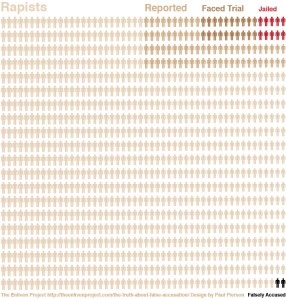
There’s a part of me that appreciates the anger and determination to make things right after the rape of Dinah. In today’s news, there was a report on the percentage of rapes reported out of a 1000 (5-25%), prosecuted (9 – not percent, but a number), and of the 9, only 5 become felony convictions. (See Enliven Project) And yet. . .

Genesis 34: 13a, 15, 25

Because their sister Dinah had been defiled, Jacob’s sons replied deceitfully . . . We will enter into an agreement with you on one condition only: that you become like us by circumcising all your males. . . .  Three days later, while all of them were still in pain, two of Jacob’s sons, Simeon and Levi, Dinah’s brothers, took their swords and attacked the unsuspecting city, killing every male.

And this is always the challenge when confronting our personal sense of betrayal with God’s. It’s not that God cannot work decisively in the face of evil (note Sodom and Gomorrah), but the point here is that God prefers having the vindication God’s way.

“But, but, but” I say, “Your way is so slow. I want to see the revenge. I want to feel it. I want to bathe in it. It’s my right. Isn’t it? Isn’t it? Is it?”

When humans take on the role of avenger, we tend to overdo it. After 9/11, we raped a country in the name of weapons of mass destruction. And in the end, more were lost, including our own. Evil is portrayed throughout history and every push back takes us one more step closer to annihilation. Soon, I’m sure, the next payback will be nuclear. And what then?

Whether it’s on a world scale or a personal exoneration, we will not handle it well. Even our court system has gotten all muddled up and in the name of fairness, the guilty go free because one lawyer was craftier than the other.

We are all still living Romeo and Juliet or the Hatfields and McCoys.

Yesterday, my pastor at Restore Church, talked about people being the “Sin Police.” We judge and demand, we compare and we condemn. All in the name of righteousness. It’s not a good plan.

Will God avenge the good? Is God sovereign? Can God operate even in this mucked up generation? I believe. But I have to make room for the ways of God.

“There is a way that seems right to a man [human], but in the end it leads to death.” [Proverbs 14:12]

Read Full Post »

moving onThe reunion story between Jacob and Esau is the Old Testament way of foreshadowing grace to come. Esau had every right to resent Jacob and even hate him for Jacob’s deceptions. Instead, he extended unmerited grace. Time did the first part of the healing (over twenty years) and the two brothers did the rest. They chose to let go of the past.

Genesis 33:1a, 3-4
Jacob looked up and there was Esau, coming with his four hundred men . . . He himself went on ahead and bowed down to the ground seven times as he approached his brother. But Esau ran to meet Jacob and embraced him; he threw his arms around his neck and kissed him. And they wept.

They didn’t talk about the past, but they both knew what had happened between them. Jacob poured out his plea through the giving of very generous gifts (220 goats, 230 sheep, 30 camels plus their young, 50 cows and bulls, and 30 donkeys). Then, when he himself came forward, he bowed down seven times (and his children likewise). This gesture in this time and culture indicated that the other person was superior. By bowing seven times, Jacob was accepting the position of vassal to Esau. (See discussion by Dr. Claude Mariottini)

Instead, like the story of the prodigal son, Esau greets his brother warmly with an embrace. We do not know if this change of heart was from the beginning when he first heard of Jacob’s coming or if Esau’s heart was touched by the gifts and Jacob’s obeisance. Nonetheless, their embrace was a willingness on Esau’s part to start over. To let go of the vows for revenge and deceptions.

But Jacob does an interesting thing. Despite Esau’s offer to accompany Jacob or leave additional men, Jacob demurs. I see this as wisdom. Their unspoken agreement is tenuous at best. It’s one thing to initiate peace but another to live it. By keeping their households apart (Jacob buys land near Shechem), they can have their understanding without putting themselves at close proximity where old habits and memories could peck away at their resolve to live amiably.

In the same way should we remember this wisdom. When we forgive, especially in those most difficult cases (abuse, brokenness, and a bevy of other human sorrows), we should not expect the heart to follow quickly. Instead, we must give space and time and new patterns to develop.

I can choose to relinquish my losses from the past, but I must still be wise in building my future.

Read Full Post »

mistakesIt’s not really a question, though, is it? It is an accusation. The person asking has already made a judgment about the event or act and it’s a matter of drawing attention to it. Even God used this phrase against Adam and Eve? Instead of “What?” I think “Look” would be a better addition: “Look what you have done.” Wake up!

Genesis 31:25-26a
Jacob had pitched his tent in the hill country of Gilead when Laban overtook him, and Laban and his relatives camped there too. Then Laban said to Jacob, “What have you done? . . . “

Of course, in Laban’s world, everything was about him. His accusation was based on his perceived loss, not of loved ones (despite his saying so), but of his household gods and the good fortune he had had while Jacob was working for him. Laban knew that God was with Jacob and in those twenty years, he had benefited from it. With Jacob’s departure, he feared his losses. And so the phrase gets longer: Look what you have done to me?

When God said, “what have you done?” he was bringing awareness. He alone can do this. When people say it to each other, take care. It’s generally self-motivated.

Perhaps there’s a small hope in the speaker’s mind, that circumstances are not what they seem, a small hope that the beloved one did not really cheat on his/her spouse or get caught with drugs or drunk while driving. Maybe it’s a prayer: please God don’t let it be true.

But, in the end, the answer is already out there. It’s a rhetorical question really. And for that reason, don’t bother. It’s all for effect!

Here’s the really sad part. I hear this question all the time. At least, in my mind. It’s the accuser of course, not God at all. But that’s what I hear when I err. This is a question I must cast aside today. It has no healing and no awareness for me.

Instead, I choose to hear, “What will you do next?”

Read Full Post »

Photo by Ed Rybczynski

Photo by Ed Rybczynski

Leaving is not easy. Starting over is never easy either. But sometimes, that’s all we can do. Circumstances and time and emotions come to a head, and it’s clear, something must change. At this time of year, we mockingly call them resolutions (and I say mocking, because we laugh at our poor resolve over the years). But true change is no joke. True beginnings are powerful and even painful.

Genesis 31:3; 17-18
Then the Lord said to Jacob, “Go back to the land of your fathers and to your relatives, and I will be with you.” . . . Then Jacob put his children and his wives on camels,and he drove all his livestock ahead of him, along with all the goods he had accumulated in Paddan Aram,to go to his father Isaac in the land of Canaan.

Meaningful change is rarely made overnight with a glass of champagne in one hand and horn in the other. It’s rarely a wish list; it’s a must list. That kind of break with the past comes after a build up, a collection of situations, a norm that is no longer acceptable.

Often it takes an epiphany or insight, a new view of an old way, that becomes the impetus for change or builds a desire or appetite for metamorphosis. We see with new eyes. We see reality. We see truth. And it is longer acceptable.

In Jacob’s world, it took more than fourteen years to realize that something had to change. He had achieved the short-term goal of acquiring wives and even children, but he was still dependent on Laban. It was time to grow up.

I remember making a very small discovery, probably in my late twenties, that there was no one who would be picking up after me. If I chose to leave dirty dishes, they would be there the next day. If I put my clothes on the floor, they would remain. If I forgot to water the plants, they would die. If I wanted my immediate environment to be pleasant and acceptable, I would have to do it.

But sometimes, the changes are more challenging, like women who have entered abusive relationships or tied themselves to addictive personalities or other enslavements (drugs, alcohol, food, sex, television, and other mind-numbing substitutions for living). To see these situations in their true form is beyond difficult and may require divine intervention.

For myself, I pray for open eyes this day, to see clearly. I pray for God’s revelation and direction. I pray for loved ones whose eyes are still closed. I pray for my role in their lives. I pray for grace and mercy and courage. I ask for epiphanies to abound.

Today. Not resolutions but meaningful change.

Read Full Post »

Art by Luba Lukova

Art by Luba Lukova

Rachel and Leah, coming from a culture in which the role of women was clearly defined, needed children to show their worth. It was their children that gave them place in their small world. And yet, Leah wanted that one other thing, that intangible thing called love.

Genesis 30:19-20
Leah conceived again and bore Jacob a sixth son. Then Leah said, “God has presented me with a precious gift. This time my husband will treat me with honor, because I have borne him six sons.”

Leah’s resources were few: she was not the beauty like her sister, she was the oldest and she was married by her father’s trickery. She was, if anything, an embarrassment. She had already born four sons and still, her husband favored Rachel. How could that be? Rachel was barren and yet Jacob loved her.

When Leah’s womb stopped bearing children, she must have been devastated. More than likely, Jacob limited his time wither her sexually as well. She had been more of a production machine. He appreciated the growth in his family and community, no doubt, but not for love. Even when the sisters gave him their maidservants, these arrangements were all about fruitfulness, not love. Jacob had been entranced by Rachel from the beginning. He was fixed on her and nothing Leah could do to change that. And yet she kept trying.

Leah is like so many young women today who mold themselves by the reflection they see in the eyes of men. Women often go to great extremes to create a picture of beauty they imagine men want to see. They craft their public personas to be appealing. They read magazines and books, take surveys and spend great amounts of money on surface improvements, to attract the male. Women do all they can to appear younger as long as possible since society has nurtured the idea that older women are no longer sexy or appealing. In the eyes of many men, women have two stages: young and seductive or motherly and caregiving.

How often are marriages destroyed by a man’s lust for someone younger, suppler, and carefree?

But I say only this. We cannot make any of them love us.

God commands us to love unconditionally. There is no promise of reciprocity. There is no promise of reward.

Some claim that it is most difficult to love our enemies. But I say, it is most difficult to love someone who has stopped loving us.

In this place, resentments are always at the edges of every conversation; disappointment waves like a flag for attention; togetherness feels like aloneness.

Love is patient, love is kind. It does not envy, it does not boast, it is not proud.It does not dishonor others, it is not self-seeking, it is not easily angered, it keeps no record of wrongs. Love does not delight in evil but rejoices with the truth. It always protects, always trusts, always hopes, always perseveres.Love never fails. [I Corinthians 13:4-8a]

God loved me in this way. God loved me before I loved back. God would not “make me” love. God loved. And over time, consistency and faithfulness won. Only, through the indwelling power of the Holy Spirit, can I love in this way. Only the Christ within can love like that.

Read Full Post »

orphan babyI can certainly relate to little Prissy in Gone with the Wind who says, “”I don’t know nothin’ ’bout birthin’ babies!” I don’t either, not really. Having built our family through adoption, this aspect of womanhood has eluded me. And yet I know, there is potential for great mystery and anguish; joy and sorrow.

Genesis 29:31, 33a, 34a, 35a
When the Lord saw that Leah was not loved, he enabled her to conceive, but Rachel remained childless. . . . She [Leah] conceived again . . . Again she conceived . . . She conceived again . . .

In the example of Rachel and Leah, it is the unlovely and cast-off sister whose womb is opened from the beginning and she bears four boys in a row while her sister remains barren. Each child’s name is a message to Jacob (who isn’t listening):

  • Reuben could be translated to mean, “see my misery” or “see, a son!” (as in look, pay attention)
  • Simeon means “one who hears” referring to God who heard her prayers, perhaps Jacob would too?
  • Levi could be translated to mean “attached,” in a way that Leah had hoped Jacob would finally attach to her as the mother of his sons.
  • Judah could be translated as “praise” which appears to be her final understanding, that children are about God, not man.

I discovered, after many years of tears, that my inability to bear children had to be accepted as a reality before reality could change. Once I could thank God for who I was and our circumstances, we could move on to adoption and discover the family God intended.

You would think, after the debacle of Sarah and Hagar (surely that story was told through the generations), the women would know that God’s timing was God’s alone and could not niggled with. But they did not. One sister thought the births would change Jacob’s heart and he would finally “love” her while the other wife resented her sister’s fruitfulness. But nothing good comes from resentment or jealousy or envy. . . ever.

Women have not learned much through the ages, I’m afraid. There are still women who intentionally invite pregnancy as a solution to  their problems (perhaps that boyfriend will marry her or that husband will stay closer to home). There are women who see pregnancy as a curse and continually interrupt that cycle through abortion and morning after pills. There are women who have babies without thought to the impact of that child on their finances and futures; there are women who bring children into the world in hopes the grown child will for the mother in her old age. And now, there are even surrogate mothers, who carry a child for someone else or women who defy nature somewhat by artificially inseminating a child or taking hormones to increase their chances of birth and unwittingly produce litters of babies.

I am not casting judgment, not really, but it’s all a bit out of hand. Just as there are pets languishing in shelters, there are unwanted children in foster care and orphanages all over the world.

They are the responsibility of us all.

Yesterday, the Russian government, once again (for this is not the first time) has placed into law a ban on Americans adopting Russian children. This was a strictly political move and shows little concern for the children themselves. When we adopted our daughter from St. Petersburg in 2006, her orphanage alone had over 150 children and it is only one of thousands of orphanages in the country. In the United States, in 2011, there were over 401,000 children in foster care, many of whom could be adopted.

Babies are amazing, no doubt. Making babies can be an act of true love. But we must remember, there is a future to every child born that must be embraced by all of society, no matter their color or race, their health or disability. A child born is part of the family of God.

Read Full Post »

« Newer Posts - Older Posts »