Feeds:
Posts
Comments

Posts Tagged ‘Jesus’

Painting by Prof. M. M. Ninan

Painting by Prof. M. M. Ninan

Healing remains a mystery for most of us. Of course, the science of it all has been investigated and documented by very smart people, but ultimately, the why of healing and who is healed and why one tactic or procedure works with one and not another, it’s simply unknown. It is the realm of God.

Immediately her bleeding stopped and she felt in her body that she was freed from her suffering. At once Jesus realized that power had gone out from him. He turned around in the crowd and asked, “Who touched my clothes?” [Mark 5:29-30, NIV]  But they [the bystanders] laughed at him. After he [Jesus] put them all out, he took the child’s father and mother and the disciples who were with him, and went in where the child was. He took her by the hand and said to her, “Talitha koum!” (which means “Little girl, I say to you, get up!”). [Mark 5:29:40-41, NIV]

The power to heal. What is that? Is this power simply the spirit and therefore, endless, or must it be re-charged like a battery? Is it like manna, merely enough for one day? Do some have more than others? Is this “power” simply the life force and some have more than others? Or is it more likely that we are all equally endowed but diverse in our ability to access it? Or, is it even an it? Is this a Presence and sentient?

My fantasy self, the one that reads light-heartedly of magic and elves and wonder, where good and evil are clearly demarcated, likes to imagine that the people Jesus raised from the dead might still be alive today. I mean, at what point would they die once that power infused them? To my best knowledge, the ones Jesus resurrected died of illnesses and not at the hand of others or by accident. Jesus undid the knot in their thread of life. In the case of Lazarus [John 11], Jesus clearly says that the act of resurrection is to glorify God, the Father.

But, what of us? That’s the question that is really on my mind, I know. There have been healers in the past, people who made a sensation through the laying of the hands and prayer, healing many. Charlatans abounded as well, putting on a show of healing. The authentic becomes more difficult to identify. Even in Jesus’s time, there were magicians and brokers of the supernatural. Our culture is unaccustomed to the potential power of the Spirit. We are logical and scientific. All miracles are suspect. Cliches abound: “If it sounds too good to be true, it probably isn’t true.” And so on. We’re all from the “Show Me” state of Missouri it seems.

Jesus was suffused in power and he was given the right to wield it or not. This power was so plentiful that some people, like the woman with the issue of blood, were able to grasp it, at times, without his direct intervention: power which could transform and make whole again or even better than it was in the first place.

Jesus said, “Very truly I tell you, whoever believes in me will do the works I have been doing, and they will do even greater things than these, because I am going to the Father. And I will do whatever you ask in my name, so that the Father may be glorified in the Son. You may ask me for anything in my name, and I will do it. [John 14: 12-14, NIV]

The only thing in the way is me.
Read Full Post »

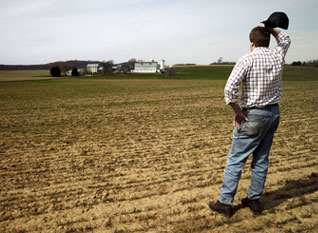
farmerMy pastor loves alliteration, metaphor, and rhyme. And so, it came as no surprise a couple of Sundays ago when he referred to himself as the “Dude with the Food,” another way of saying he was the one who had the job to distribute nourishment, the “word of God” and the “bread of life.” Another food-based role for the pastor appears in the parable of the seeds (Matthew 13:1-9).

Such large crowds gathered around him [Jesus] that he got into a boat and sat in it, while all the people stood on the shore. Then he told them many things in parables, saying: “A farmer went out to sow his seed . . . [Matthew 13:2-3, NIV]

This is a familiar parable to most people about the seeds that fell on the path, or landed in rocky places or in shallow places, as well as seeds that grew but among thorns, and finally, the seeds that landed in good soil where they did what they were supposed to do: flourish.

So much has been written about the seeds and many times we have been asked to compare ourselves and our understanding of the message to one of these groups of scattered seeds. But today, I am interested in the farmer.

You see, in my mind, it is the farmer’s intention, from the beginning, to throw and plant the seeds in good soil. After all, the farmer’s goal is to reap a plentiful harvest. It is not intentional that seeds go astray. They will. They do. The farmer may spend a lot of time in soil preparation, but inevitably, circumstances and the weather may alter his best intentions. If the wind comes up or a storm, the seeds will scatter, even those that may have landed in the best of places. Seeds are challenged. Seeds are damaged.

But the key understanding for me is that the farmer is not responsible for the outcome. The farmer can plan, prepare, plant, and even encourage, but ultimately, it’s between the seed and nature (or God, in this case) to actually break down and transform into something else, like a plant. The farmer envisions the best results, but things don’t always work out that way. The farmer can pray for rain and pray for sunshine; the farmer can take out weeds, but sometimes, there are nasty critters that destroy the roots anyway. The farmer is only one while the seeds are many.

We need to stop blaming these farmers for the losses.

farmhandsSometimes, I hear people talking about their farmers who are not good administrators. I guess that means those seeds are unhappy with the size of the fields, the design of the rows, the farmhands that the farmer hired to help deliver the message. Or others say the farmer spends too much time on the fields around the house and not enough time visiting the fields on the other side of the hill, or the special little garden just for organic seeds or sickly seeds. And still others criticize the farmer for not spending enough time planning the farm, or laying hands on the seeds, or purifying the water and so on.

I’m beating this metaphor to death, I ‘m sure.

You wanna help the farmer? Be a farmhand.


Read Full Post »

me and me and meRomans 8:7-8 says this, “So the attitude that comes from selfishness is hostile to God. It doesn’t submit to God’s Law, because it can’t. People who are self-centered aren’t able to please God.” [CEB] And never once did I think of selfishness as being offensive; I just thought being self-centered wasn’t “nice.” I suppose another reason I missed this truth is the translations I’ve used over the years where the phrase “living in the flesh” was used. I allowed that to mean a carnal life and I figured I had that one pretty much under control.

But no. I have fooled myself into a comfort zone.

Selfishness, self-centeredness, self-indulgence, and narcissism, they are all threats to the free-flowing of the Holy Spirit. Unfortunately, I am also living in the age and culture of the “self” and the “selfie.” [Our pastor is starting a series at Restore Church called Me, Myself & Selfie, this weekend — that’s no accident either.]  And worse, when I’m in that selfish place, I am actually preventing myself from entering into the secret places of God. I am putting up my own roadblock. I am shooting myself in the foot, as the saying goes.

None of us likes to take the blame for things that happen. It’s simply no fun to make mistakes and then own up to them. But I’m thinking this is a big one.

There are a few simple test questions for this: Do I think about the other person first before I act or speak? Do I register my thoughts within, with the Spirit before I indulge them further? Do I choose consciously or am I living out of a habit of selfishness?

I’m going to take this quiz today.

Read Full Post »

That is the point. Forgiveness. Unless you’re fine with all that, you know, fine with the things you’ve said and thought, fine with the choice you made that hurt someone else, fine with the way things worked out when you lied, fine with the time you looked away, fine with your plenty in the face of another’s scarcity, fine with the status quo. But if you’re not, if you want to turn a corner and do life differently, then, there’s this:

woman_crying_1Therefore, I tell you, her many sins have been forgiven—as her great love has shown. But whoever has been forgiven little loves little.” Then Jesus said to her, “Your sins are forgiven.” The other guests began to say among themselves, “Who is this who even forgives sins?” [Luke 7:47-49, NIV]

Who indeed?

We each have had a way in which we do life. For some, it was an upper middle class dream with plenty of food on the table, two (or more) cars in the driveway, and college tuition paid out of a well-thought out plan. Others grew up under a cloud of smoke and the smell of stale beer, got lost in math class and never caught up, accepted a minimum wage job and bolstered their income with a few illegal drug deals or sex for hire. Some of us skated and while others drowned.

To choose a savior, a kind of help that can turn a life’s direction requires an experience of awareness, a moment of revelation, an epiphany if you will, before forgiveness even comes into the picture, before surrender is possible, before faith can be born.

I cannot make that happen for anyone else. I can only tell you my story.

For, like the woman who drenched Jesus’s feet with her tears, I too have nothing but gratefulness for this same Jesus, who, by the power of Spirit, which makes this three-dimensional world  pale in its atmosphere, I capitulated my former understanding of the way of the world. I am changed. Forgiven.

And now I am asked to do likewise. To forgive the “you’s” in my life who failed me and hurt me and shamed me; to forgive myself for my self-indulgences and false starts. To forgive daily.

Read Full Post »

Well, it’s just this simple. Whatever it might mean for you or any other, I cannot really know. But when I say this well-worn verse, I understand it quite subjectively for myself because it is to this truth I literally surrendered when I prayed that “sinner’s prayer” so long ago and asked that Jesus become my personal savior, my atonement and my redemption, my portal to the God of the Universe.

I have been crucified with Christ and I no longer live, but Christ lives in me. The life I now live in the body, I live by faith in the Son of God, who loved me and gave himself for me. [Galatians 2:2]

It’s a contract of sorts because I gave permission to a spirit being, a very specific Spirit Being, to indwell within me. According to that contract, I also agreed, in theory at least, to give over authority to that Spirit, a right that Person actually earned through a blood covenant, the shedding of blood, which has been a symbol of agreement throughout the centuries of humankind. Interesting too, that this bloodletting was done preemptively, before I was even born. Impossible? Perhaps. But this I believe.

However, I am constantly meddling with the authority of this Presence: arguing and negotiating, ignoring and placating, lying and withholding. In essence, I spend a lot of time pulling on the threads of our contract and it’s only by sheer grace that I have not torn the thing to pieces.

And because I know these things about myself, I must often regroup, reconnect, recommit myself to that deal I made over thirty years ago. It’s shameful really, but true. Thanks be to God, there’s been a contingency plan for every misstep I have made.

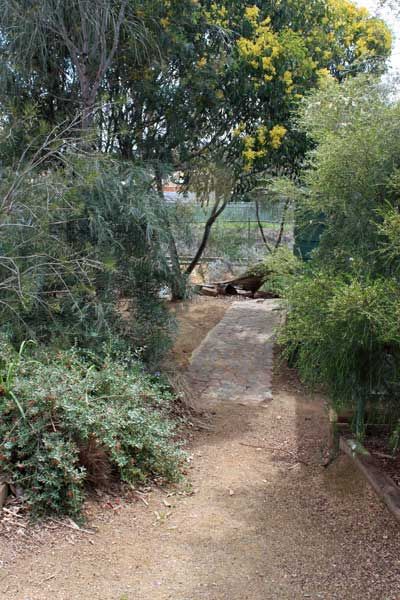
path crookedToday, I was walking a path I have walked many times but for the first time, I was walking it in reverse. I assume it’s for this reason I had never noticed that moment in the path where it looked like it came to a dead end. It was just a sharp right turn, but as I approached it, my brain didn’t compute that logic. Instead, I stopped in my tracks, pondering how it could be that the path would end. I hadn’t really reached that point yet, but I stopped anyway, thinking I might have to turn back. How often have I done this in life? How often have I assumed something was at the end, when the way was still there, I just couldn’t see it. The calm of knowing and trusting in that “other way,” comes from within, comes from the Presence of the Holy Spirit, who is more than willing to direct me. It is in this way, that I understood my foolishness yet again.

And it is in this small lesson that I remind myself to trust my God and the Holy Spirit yet again.

Read Full Post »

sprout in asphaltBe careful what you ask for. That’s the old saying when people ask for patience. . . . you know what you get? Trying and irritating situations that give us patience practice. Well, here’s another one, be careful about asking God to increase your faith, because it’s dire circumstances that build faith.

Gale-force winds arose, and waves crashed against the boat so that the boat was swamped. But Jesus was in the rear of the boat, sleeping on a pillow. They woke him up and said, “Teacher, don’t you care that we’re drowning?”He got up and gave orders to the wind, and he said to the lake, “Silence! Be still!” The wind settled down and there was a great calm. Jesus asked them, “Why are you frightened? Don’t you have faith yet?”
[Mark 4: 37 – 40; CEB]

They were nearly drowned. Despite having walked with Jesus and watched him heal hundreds of people (see verse 3:10), when they were in their own cataclysm, the challenge to “keep the faith” was much more difficult.

Perhaps they even tried. I can imagine the guys debating whether or not to wake Jesus up (who apparently was so unfazed by the situation that he slept like a baby). Did they know this was some kind of test of faith (after all, it was Jesus’s idea to cross over the lake)? Which of the twelve finally caved in and woke up the master with fear and trembling and even challenged Jesus, “Don’t you care . . .?” (Reminds of the character, Martin Udall, in the film, As Good As It Gets, who says, “I’m drowning here, and you’re describing the water!”)

We are driven by our circumstances. Despite knowing in our heads that the world does not revolve around us, we still tend to view the world from center of the universe. Look, what is happening to me! Where is God? Where is Jesus? This can’t be right! I’m suffering here, like another movie character, Ratzo Rizzo in MIdnight Cowboy, “I’m walkin’ here; I’m walkin’ here.” The implication, again, is that circumstances need to adjust to our presence.

But faith walks in the face of circumstances. Faith moves in a straight line no matter what is happening around us. Faith is the tortoise, undaunted by the wily hare or the long, long road.

Faith is not built on the easy life. In Matthew 5:43-48, we are reminded that it’s easy to love those who love you, it’s loving the enemies that becomes a challenge. So it is with faith. You want your faith to grow? Give thanks for the difficult days.

Read Full Post »

It was supposed to be such a big put-down to Barak, who Deborah, the prophet, called up to gather forces and attack Commander Sisera of Canaan. She was assured of their victory and yet Barak, although willing to go, would not go without Deborah. He must have believed that her presence would give me more credence. He didn’t care that he might be seen as a less of a leader by bringing a woman along.

“Certainly I will go with you,” said Deborah. “But because of the course you are taking, the honor will not be yours, for the Lord will deliver Sisera into the hands of a woman.” [Judges 4:9a]

But here’s where I cringe, just a little. We haven’t gotten much better in this culture. Oh, we’ve made some inroads, but truthfully, I still think people are surprised that a woman did this or that. It’s one of the reasons that Americans still hedge at the idea of having a woman president, as though her decisions might somehow be impeded by her sex. The glass ceiling still exists.

And the scriptures don’t help much. I am grateful for the many times that Christ, himself, opened doors for women in his age that were never open before. Women were called upon to be leaders and encouraged to embrace the Gospel fully, a promise of full participation. And yet, old laws held on to people’s minds, even Paul, who taught the old ways for women, to be silent and submissive and unengaged outside the home.

It’s still an insult to “run like a girl.”


Read Full Post »

« Newer Posts - Older Posts »