Feeds:
Posts
Comments

Posts Tagged ‘Moses’

I amSo many times I have read about the great “I AM,” the God of all Gods, the one God who cannot really be named or explained. When Moses asked who should I tell the Israelites in Egypt sent me to them, and he was told:

God said to Moses, “I am who I am. This is what you are to say to the Israelites: ‘I am has sent me to you.’”God also said to Moses, “Say to the Israelites, ‘The Lord [I AM], the God of your fathers—the God of Abraham, the God of Isaac and the God of Jacob—has sent me to you.’ [Exodus 3:14-15]

But in the notes, this I AM phrase has alternative meaning: I will be what I will be. And decidedly, in English at least, this brings up a whole new array of possibilities.

I am still working on a full engagement with the present. This idea crosses over into a variety of disciplines both Eastern and Western. It is accepting the now, being full in the now, and living it without remorse for what is past or fear of the future.

But now I am challenged to consider as well this more open-ended God who is and will be. Not that I didn’t know that of course, but I find it intriguing to ponder God, perhaps as a point within me for the now and then stretching outward my center self in an ever growing, ever widening funnel of “God Self.” God is now but also God is potential, forever.

God is telling Moses, “No worries: here now and here tomorrow.” All of time is God’s now.

How can we not be grateful for the invitation to be in relationship with this God of today and forever? There are not enough songs to sing, poems to recite, or words to say that can capture the wonder of God in me and in the universe, a personal God and a cosmic One. This is the reason we glorify God. This is the reason we praise. This is the reason we surrender.

Who sends you?

Read Full Post »

another-way“This is what the Lord says—he who made a way through the sea, a path through the mighty waters, who drew out the chariots and horses, the army and reinforcements together, and they lay there, never to rise again, extinguished, snuffed out like a wick . . . “ [Isaiah 43:16-17.

Whether you believe or not that God actually divided the Red Sea to allow the Israelites to walk through unharmed while destroying the Egyptian army that followed after them [Exodus 14], there is a message here for all of us.

It is God who makes the way in the midst of trials or darkness. It may not be the path we want to take; it may not be the most obvious path; it may feel dangerous. But God’s way is still the best way.

Of course, we can always argue with God if we disagree with the direction. But then, there are repercussions, a chain reaction if you will, when we choose another way. And, for a season, circumstances may seem dire. It’s important to see the situation for what it is. Change cannot happen without truth.

I wish I could figure these things out while they are happening instead of in hindsight. I look back, and say, “Oh, you meant for me to go that way!” Like Homer Simpson: “Doh!”

You see, because I am so friggin’ capable, I am quick to analyze the paths ahead and I often take the one that seems best to me (not necessarily best FOR me). And as I’m going along, I suddenly get this feeling,  this overwhelming sense that I have blown it, again. It is in this moment of recognition that I must stay for a season. In order to see clearly, I must live in it (not deny it). And then, God shows up. More than likely, I will never find my way back to the original way God intended, but another way is revealed. God is full of back doors. And I am grateful.

So, I just want to encourage others: even when we blow it, God doesn’t give up on us. There is no mistake or sin that God cannot rectify or redeem. I believe this wholeheartedly. I have to. Otherwise, life would indeed overwhelm me.

Read Full Post »

Seeking God’s Will

To whom do you go seeking God’s will? The “right” answer is that we go to God, but honestly, how many of us are very good at “hearing” God’s answers to the burning questions of our lives, our hopes, our futures, our decisions?

Exodus 18:15
Moses answered him [Jethro], “Because the people come to me to seek God’s will. . . . “

When Moses led the people out of Egypt, it was understood that he had communion with God, heard God’s voice, and was directed by God. The people believed in Moses and trusted him. Of course, this was before he disappeared up Mt. Sinai for forty days and forty nights. Nonetheless, at that point, they came to him for “judgments” in the midst of their disagreements. It was Jethro, Moses’s father-in-law, who observed the morning to evening ritual of “holding court” that Moses did for the people and it was Jethro who suggested Moses divide these responsibilities to other trusted leaders that Moses could appoint over “thousands, hundreds, fifties, and tens,” saving the more difficult cases for himself.

Here’s the point: As long as we give authority to someone to make a judgment on our behalf, we are accepting that judgment as God’s will.

This is the basis for our modern court system in which we have, as a culture, determined that controversies should be submitted to a judge (and sometimes a jury), to pronounce an answer, a judgment. Of course, in our world, we have now developed a complex appeal system. In essence, saying, “that’s not God’s will, that’s not the answer I wanted or needed or expected; that judgment wasn’t fairly determined, let’s try again, etc.”

To whom do you give the authority to make judgments in your life?

Is God sovereign or not? As a believer, can I make a judgment or take a path that is outside God’s ultimate will? OK, I’ll grant that my road could be shorter/smarter/leaner if my decisions were more in tune with the Holy Spirit. If I could slow down and ask God more often for direction, I’d probably stop wasting so much time and energy on detours. And yet, God does make the Way.

I have no Moses. Instead, I have the presence of the Holy Spirit within, given by God through the Christ. God’s will is not some floating pronouncement out of reach that requires intense prayer and fasting and study. It’s in the little things, the little daily judgments, the little decisions. And then, it’s on me to accept “what is” in order to move on to what can come next.

Today, I am in God’s will. I have given authority to Christ Jesus who dwells within as Spirit.

Read Full Post »

Paradox or miracle? How can anyone see the invisible? I looked it up: not perceptible by the eye. But of course, we’re not talking about the eyes, are we? It’s about “seeing” differently — probably the key to everything.

Hebrews 11:27
By faith he [Moses] left Egypt, not fearing the king’s anger; he persevered because he saw him who is invisible.

This kind of seeing is somewhere between the understanding that comes with “oh, I see!” to envisioning what is unknown. It takes both imagination and understanding to embrace the faith of a true Messiah, to relate with God, to engage outside the 3-D matrix in which we tend to live mindlessly.

In Hebrews 11, the author is reviewing a long litany of men (mostly) and women who stood out in history as people of faith. A short “typifying” moment or two is written about each one. For Moses, it meant going upstream (like most people of faith), but the costs were huge. Think about it: Moses lived in the household of one of the most powerful men of the known world. And long before Moses’s “burning bush” epiphany, he walked away from Pharaoh’s house to follow what he saw in the Invisible.

I wouldn’t say he used the best way of “walking away.” He operated as so many young people do when they are caught by the wonder of a sovereign God. They are bulls in a china shop, causing residual damage as they plow through their world to get through the door. For Moses, it was killing a man; for a friend of mine, it was becoming a missionary, determined to live by faith financially, along with a wife and three young children who were not in step with him: the family broke.

To see, feel, hear, smell or taste the invisible is mind-altering. I have had such glimpses, only a few, and they were exhilarating. It was easier when I was younger. But now, no matter how close I get to the invisible, my 3-D responsibilities pull me back. My feet are quite entrenched in the pragmatic. I am like an amusement ride that swings back and forth, my equilibrium challenged continually.

I believe we are called to engage in a harmony of both of these worlds: the visible and the invisible. Like the energy that flows within the body, there is energy that flows between us and others, us and things, us and nature. This is Holy Spirit teaching working within but also without.

Balance me out today Lord. Keep me mindful of your presence. Open my eyes to see the invisible.

Read Full Post »

I do it all the time. I start a diet, lose weight, and then go back to my old eating habits. I order my space and vow to keep it that way, and before I know it, it’s trashed. I judge someone, ask for forgiveness, and judge again. Am I so weak? I am.

Galatians 4:9
But now that you know God—or rather are known by God—how is it that you are turning back to those weak and miserable principles? Do you wish to be enslaved by them all over again?

What is the draw of the old way? I guess if I were an alcoholic or drug addict, I would be drinking and shooting up again. It’s destructive behavior and yet it’s familiar. It’s crazy-making [Albert Einstein defined insanity as doing the same thing over and over again and expecting different results.] It’s the path of least resistance.

I am the Israelites in the desert who complained about the new way and wanted to go back to Egypt and slavery: they thought that would be better than their current struggle in the present time [Exodus 16:1-3].

Is it forgetfulness or is it mindlessness? Or both? When God brings change into my life, I am so happy and full of energy. I am clear headed and I see the big picture. I am focused. I am motivated. But once I reach a certain plateau in the process, it’s like hitting a wall. There is no movement forward. I lose track of those initial feelings and strength. Oh, I might try to climb the wall for a bit, I might even try to walk around it. But my drive to persevere is sucked away and I am left with my old self for company.

I say mindlessness because it feels like the opposite of mindfulness. It takes mindfulness to stay aware of the Christ Spirit within and without. It takes effort. It is a special type of wakefulness.

When I was in acting school I learned how to walk a tightrope in our circus class. The clue to tightrope walking is maintaining a focus on the end of the rope, the junction point. As soon as I would take my eyes off that point, I would lose my balance. As I tried to do more complicated maneuvers, it became harder and harder to maintain that focus. My little life is not much different.

Put me back on the tightrope today, with Christ ahead, my focal point.

Christ with me, Christ before me, Christ behind me,
Christ in me, Christ beneath me, Christ above me,
Christ on my right, Christ on my left,
Christ when I lie down, Christ when I sit down,
Christ in the heart of every man who thinks of me,
Christ in the mouth of every man who speaks of me,
Christ in the eye that sees me,
Christ in the ear that hears me. (St. Patrick)

Read Full Post »

From cupids to angels floating over the beds of children, I think our culture has made angels into Tinkerbell. Nothing could be farther from the truth if angels were involved in “putting the law into effect.” These messenger/warriors work directly with God’s anointed on Earth. They are formidable.

Galatians 3:19
What, then, was the purpose of the law? It was added because of transgressions until the Seed to whom the promise referred had come. The law was put into effect through angels by a mediator.

I have a friend who believes she saw an angel in her house while she was in prayerful intercession for her adopted toddler who was being pulled from their family and returned to his bio-father. She said the angel was more male than not, but also gender neutral. The angel was tall and barely fit in her dining room. He stood in what she interpreted as warrior regalia, including a sword. He stood as a though he were a guardian. He stood watch. At the time, she thought the angel was a sign and they would keep their son, but that was not the case. Apparently, there was some other danger in this situation. And although this was one of the most devastating circumstance, she experienced the power of angelic presence.

Apparently, angels do not just appear to anyone. They are God’s worker bees and they have purpose. They are sent. They interact with humans as needed. Angels cannot be prayed to or called upon.

I’m thinking that people who think they have had experiences or manifestations on earth with Christ or the Holy Spirit, may have actually had contact with an angel.

I have never seen an angel. But I have known people who I believe are mediators, who are totally submitted to the spirit of Christ, who have, indeed, been touched by angels.

What about you? Do you have a story?

Read Full Post »

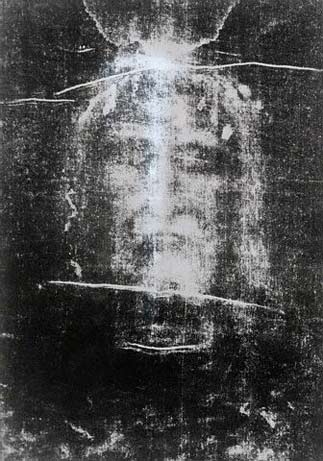
If I arrange a meet up with a previously unfamiliar person in a public place, we exchange identifiers: I’ll be wearing a red scarf or the other person will wear a straw hat. We do this to recognize one another. In the case of Christ, light recognizes Light. How will I know Jesus? “You’ll know,” God says, “you’ll know.”

II Corinthians 4:6
For God . . . made his light shine in our hearts to give us the light of the knowledge of the glory of God in the face of Christ.

This is of great comfort to me. We live in a world of charlatans and an array of “Elmer Gantrys,” who work hard to deceive the people around them. I have feared being deceived. But here, God promises the illumination of knowledge in my soul will guide me to recognize the true face of Jesus, the glory of God.

“When Moses finished speaking to them, he put a veil over his face. But whenever he entered the LORD’s presence to speak with him, he removed the veil until he came out. And when he came out and told the Israelites what he had been commanded, they saw that his face was radiant.” [Exodus 34:33b-35a]

The face of Jesus is luminous because of God’s glory within, not just reflected, like Moses. An object is either luminous (generates its own light) or illuminated (reflects light).

When a person’s face is relaxed and open, that face radiates and reflects warmth. Some examples that come to my mind are mothers with their newborn children, children in sleep, brides in love; we have all seen it at one time or another. When Jesus walked among the people, He had that look, that Light, all the time. It was catching. Jesus’s face reflected in the faces of the people.

“As light was the beginning of the first creation; so, in the new creation, the light of the Spirit is his first work upon the soul.” [Matthew Henry commentary]

I cannot stand face to face with the physical Jesus today. This illumination is now within. This Light is in the worship, in prayer, in contemplation.

My heart says of you, “Seek his face!”
Your face, LORD, I will seek. [Psalm 27:8]

Read Full Post »

« Newer Posts - Older Posts »