Feeds:
Posts
Comments

Posts Tagged ‘Paul’

Look inside and out before eating the holy meal. Communion is a combination of a corporate act [with other believers] and a personal examination. The encounter doesn’t work very well if we don’t really believe or accept that the bread & wine [or juice] have power.

I Corinthians 11:28-29
Let a {woman or} man [thoroughly] examine himself, and [only when he has done] so should he eat of the bread and drink of the cup. For anyone who eats and drinks without discriminating and recognizing with due appreciation that [it is Christ’s] body, eats and drinks a sentence (a verdict of judgment) upon himself.
[Amplified]

I encountered the word “examen” for the first time while reading Richard Foster’s book, Prayer: Finding the Heart’s True Home some years ago. It’s no “navel gazing,” far from it. Foster says, “In the examen of consciousness we prayerfully reflect on the thoughts, feelings, and actions of our days to see how God has been at work among us and how we responded. . . . God goes with us in the examen of conscience. It is a joint search. . . . if left to our own devices . . . our tendency is for self-flagellation.”

Examen is not about tying ourselves to the whipping post, it’s about seeing ourselves in truth, with love. It’s the time when we can begin to lay down our burdens and failures at the feet of the Christ.

In recent times, I have taken to the practice of examen at the start of my devotions each day. I ask forgiveness for my mistakes [sins] and give thanks for the successes, those times I responded to situations and people in loving way. Only then, can I really begin to pray forward.

Communion should be the same, but perhaps a little deeper, a broader swipe over the time since the last opportunity to eat and drink of Christ.

What has gone before is the foundation of who I am today. And my future is built on both, the past and present. If I ignore the past, then I may be setting myself up for repeating it, doing the same things again and again? It was Albert Einstein who said, “Insanity is doing the same thing over and over again and expecting different results.”

I cannot change unless I know what part needs changing. I cannot go on a diet and lose weight if I don’t know my starting weight, otherwise, how will I know the difference? I must be willing to face and accept my authentic self. Like the recovering alcoholic, we too must “Make a searching and fearless moral inventory of ourselves.” [step 4 of the 12 steps]
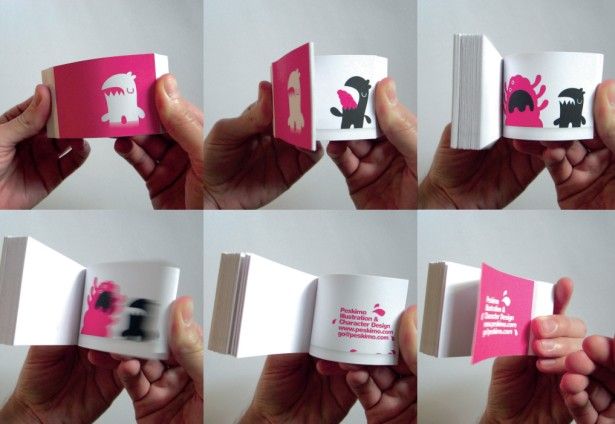
The prayer of examen, particularly at the time of communion, is a photograph. I must let God see the true picture, not one that’s been airbrushed or “photoshopped.” And like a flipbook, only God gets to see the flapping of pages and photos that represent my progress over the years. God knows my whole story.

Read Full Post »

Let us give meaning to the Bread and WineJesus loved to speak in stories, symbols and metaphors. The supernatural world is indescribable otherwise. Our language is unable to represent something we do not know or understand. The meaning is revealed over time.

I Corinthians 11:26
What you must solemnly realize is that every time you eat this bread and every time you drink this cup, you reenact in your words and actions the death of the Master. You will be drawn back to this meal again and again until the Master returns. You must never let familiarity breed contempt. [The Message Bible]

Bread and wine were used throughout Jewish history, from manna to unleavened bread to the Temple showbread. But, at the last supper, Jesus takes bread and intentionally breaks it and shares it with the disciples (and probably everyone else who was in the room, since I believe there were women and servers there as well, and it was not a “private” event as is so often depicted). He is setting up a symbol to be repeated and to have meaning throughout history.

So often, we think of the “bread” (what we now call communion bread) as something he is doing for us. We are consuming it, we are gaining. But today, I am thinking about the implications for him. He is symbolically cutting up his body for the sake of others. His death and sacrifice begins that night.

And all that He asks is that we remember and keep remembering. “Touch me, smell me, eat me, drink me, and be whole,” He says through the sacrifice. The Jewish rituals of old had prepared people for the New Covenant. It was still the same: sacrifice for sin, offerings for forgiveness, awareness for new beginnings.

Contemporary Christians have lost the deep significance in the consuming of Christ’s symbols of body and blood. Plastic drink cups and dry crackers are poor substitutes. In this regard, it’s very possible that “high church” folks have it right.

On Memorial Days, we consider the sacrifices of the men and women who gave their lives. It’s holy and solemn and thoughtful. Should Christ’s memorial be any less from week to week or month to month?

The body and blood, the bread and wine, has the power to transform us. I want to remember. I want to really remember today.

Read Full Post »

I was going to review some of the current exegesis on hair & head coverings for women and/or men and how it’s applicable today. Forget that. It’s massive and contradictory. So what is my “take away” today? Where is the nugget that will have meaning and application for me?

I Corinthians 11:2, 7
Now I want you to realize that the head of every man is Christ, and the head of the woman is man, and the head of Christ is God . . . A man ought not to cover his head, since he is the image and glory of God; but the woman is the glory of man.

With just a little reading about these passages, it’s clear to me that a great number of the verses are grounded in the culture of the day. There are modern day examples of coverings like the burqas of the Middle East, the “caps” worn by Mennonite and Amish women, or the veils worn by women in various high church services and masses. Some of these traditions have morphed into the custom of wearing hats in church, a practice still prevalent among many African American churches or seasonally in a variety of churches, like Easter Sunday.

But here’s the truth of it: I don’t wear head coverings. I don’t wear them to church (unless I am visiting a church where this is expected) and I don’t wear them to pray, sing, or worship. About the only time I wear a hat is to shield my face from the sun at the beach.

If I weigh the controversy over head coverings with the Jesus Creed, to love the Lord my God with all my heart, soul & strength and to love my neighbor as myself, could it possibly matter? Does God love me less? Do I cut myself off from the blessings of God?

Now, what about the sister verses that are slipped in between the head covering ones? That “man” is the image & glory of God while woman is the glory of man or that Christ is the head of man while man is the head of woman. Hiccup. Hiccup. I need to take a breath here.

All right, I can work through the headship scenario: since Christ is the head of man, well, then Christ is ultimately the head of woman too (If A=B and B=C, then A=C). That was easy.

But what about the glory piece? Am I the light of “man?” Do I, woman, reflect the character of “man” by who I am, what I do, and what I say? Do the men I know reflect the character of God in Christ?

If my previous post about the default of glory being both male and female believers reflecting the glory of God, then, wouldn’t we be the glory for one another, whether male or female. It’s about relationships, to God and to each other. If I am not in community with men and women, there is no reflecting going on anyway. I cannot be the glory for any person without being in relationship with him or her. I cannot sustain the light of Christ if I am not in relationship there either.

I’m sure there is plenty of room for debate about these verses and the “roles” of men and women, but I’m not going to spend more time trying to justify my stance. If I can be the light and glory of Christ in the world, then the rest will work out the way it is supposed to work out. If I love as Christ loved, then glory abounds. If I learn and practice authentic humility, then both man and woman are lifted up. This I believe.

Read Full Post »

Sometimes I hear people say they are doing this or that “for the glory of God” and I wonder, exactly, what does that mean? How can my puny acts glorify the King of the universe? Do I really have anything to offer?

I Corinthians 10:31
So whether you eat or drink or whatever you do, do it all for the glory of God.

As I considered this idea today, I decided it’s not so much that I’m doing one thing or another, but it’s all of me.

Some years ago, I got very interested in deaf ministry. I wanted learn American Sign Language and I wanted to learn how to sign worship songs. I studied for about two years and although I was never very good in basic conversations, I did learn a large body of songs. One of my favorite signs is “glory.” The arm is carried up and across the body and the fingers flutter like twinkling. And so, I think of the Glory of God, light that washes across the world.

As a believer, I have asked for the presence of Christ within me. This supernatural, mystical experience manifests in light–God’s Light. My transparency adds light to the glory. When I am in God’s will, when I am loving, when I am manifesting any and all of the fruits of the spirit, I am light as well. I am adding light to the glory light of God. I can be bright or I can be dim.

I dim the light when I go my own way, when I choose to act selfishly.

Let me say it again, more simply still. I am part of the light, by default, as a believer. Instead of thinking that I must do something for the glory of God this day, I need to realize that I am part of the glory of God. That is, until I choose unwisely or willfully sin or hurt another person. Then my light is shuttered like a theater lamp, the beam is narrowed.

For years, I have felt guilty that I wasn’t consciously saying, “This is for the glory of God” each time I started a project or left the house or taught a class or wrote an essay. It’s all for the glory.

And instead, I ask God to forgive me for the shallow times, for the shuttered times, for the sins.

Read Full Post »

This is a freedom I don’t practice as much as I should. It’s so easy to get caught up in tracking all the “shoulds” and “shouldn’ts” in our lives. What is it we fear so much? Why have we lost our confidence in grace?

I Corinthians 10:23-24
Looking at it one way, you could say, “Anything goes. Because of God’s immense generosity and grace, we don’t have to dissect and scrutinize every action to see if it will pass muster.” But the point is not to just get by. We want to live well, but our foremost efforts should be to help others live well. [The Message Bible]

My daughter was working with some dear counselor friends of mine the other day and in the course of their time together, she said she was planning to get a tattoo. Now, I am not a fan of tattoos at all. Five or six years ago, I told my three teens, “If any one of you goes out and gets a tattoo, I will cut it out with a spoon.” Yah, I’d say I had a bit of an attitude. But, over the years, it’s become evident that cultural acceptability of this practice is going to outweigh my threats and I can either fight it and watch them sneak into a tattoo parlor some weekend in Ocean City or I can speak lovingly, reasonably and simply abd ask them to plan it: plan it well, and to be sure it’s what they want. So far, no one has added one yet.

But that’s not really my point. Those friends ended up pulling out scriptures and telling her that getting a tattoo is a sin (I assume this is based on Leviticus 19:28, “Do not cut your bodies for the dead or put tattoo marks on yourselves…” and other similar Old Testament passages). But, aren’t we missing the phrase, “for the dead” in this passage. The cuttings and tattoos referenced here are cultural and clearly ritualistic. Most kids and young people are not participating in a satanic ritual any more than they are by going from house to house on Halloween saying, “trick or treat.”

This reminds me of other “do nots” that have been conveyed to me in the name of sin, such as practicing yoga or visualization. Can these things be abused? Of course, but then, so can practices in the name of Christ, such as “miracles” of gold dust floating off the hands of a “healer.”

What is essential here then? Motive and intent. Christ brought freedom and that freedom “completed” the law [Romans 8:1-2].

Needless to say, we must remember, if participating in an activity gives pain and anxiety to those around us, it’s probably best not to do it, for their sakes and out of our love for them, the other (the sacred other). We can’t always know that, though, and we can’t go through our lives second guessing these things. But when we do know, when a child chooses NOT to act in a particular way out of respect and love for parents, that is a good thing. And I’m sure there are other examples of these choices.

Read Full Post »

Tree outlined by the sunSt. Augustine wrote, “The New Testament lies hidden in the Old Testament and the Old Testament is revealed in the New Testament.” There are so many symbols, motifs and archetypes that were intended to prepare the people for the coming Messiah. I wonder if this isn’t true for every life?

I Corinthians 10:1b, 3-4
. . . our forefathers were all under the cloud and that they all passed through the sea. . . . They all ate the same spiritual food and drank the same spiritual drink; for they drank from the spiritual rock that accompanied them, and that rock was Christ.

I am not a theologian or an academic and I haven’t actually studied all the correlations between the Old Testament and the New. But Paul alludes to these relationships directly in this passage from I Corinthians 10 with his clouds and water and food and rocks. These words are powerful representations of presence, power, eternity, strength, and much more.

But what is the application of this passage for me? Were there clouds and water in my own short history before I came to the revelation knowledge of the Christ in my life? Did I eat God-food before I recognized it for what it was? Did I lean on a rock that was higher [Psalm 61:2]?

There are so many people and experiences that pass through a life outside of our control. Oh sure, I chose to go to New York to acting school, but I had no control over the makeup of the student body. Tom, who introduced me to the Bible as a living, breathing document, was part of that group. And maybe New Age stuff or fantasy reading may not be the best influence on an impressionable young woman, but it did set my mind on the “other world,” the world of Spirit where truer battles are waged, won and lost. In high school, I chose my friends, but how could I have known that it would be some of their parents who would impact my beliefs for a lifetime. I attended a predominately black public high school during some of the most tumultuous years of black history, led by Martin Luther King, Jr. As a result, I became much more sensitized and aware of cruelties and disparities between people, race to race, poor to rich, old to young. Later, in New York, I would go to school with his daughter, Yolanda, and my circle of understanding grew richer.

Symbols of meaning for me today that grew out of my past: small white lights on a Christmas tree, flowing waters of a stream, winter trees outlined by a setting sun, the purring of a cat, the smell of pine, unending circles like wreaths of fresh flowers or dancers or people holding hands, candles lighting a dark place, rain, stuffed bears, smooth stones, . . .

All of these have come to have much greater meaning to me as an adult. They can take me quickly into the secret place where I can commune. If I feel or hear or touch any of these things, I am with God. And I can only believe, back then, somewhere, somehow, God was with me before I even knew there was a God.

Read Full Post »

Tortoise and the Hare It’s not that I don’t know how to race; I’m racing all the time but my goal eludes me. Running, running but I forget to take care of myself along the way; I push myself–a little farther, just a little farther. But when I look down, I discover I’ve been on a treadmill the whole time. I’ve been in the wrong kind of race.

I Corinthians 9:24
Do you not know that in a race all the runners compete, but [only] one receives the prize? So run [your race] that you may lay hold [of the prize] and make it yours.
[Amplified]

In biblical times, running and racing were standards in sports. Everyone understood this metaphor and, more than likely, understood the emphasis was on preparation, consistency, and endurance. Certainly, fast was good and winning the prize was good, but just running the race required stamina, desire, and perseverance over the long haul.

I don’t think we’re supposed to be running this race just to be first at the gates of heaven. This race is a marathon. And our desire should be to run the best race that we can run as individuals.

I want to run my race with joy. I want to give myself over to the race, but not in a competitive way. I want to learn how to optimize my movements. I want to see the world around me. I want to invite others to join me. I want form over speed.

The tortoise is in the race by choice. The tortoise is not designed to run fast, just steady. The hare is quick but foolish. Who will I be today?

Read Full Post »

« Newer Posts - Older Posts »