Feeds:
Posts
Comments

Posts Tagged ‘promise’

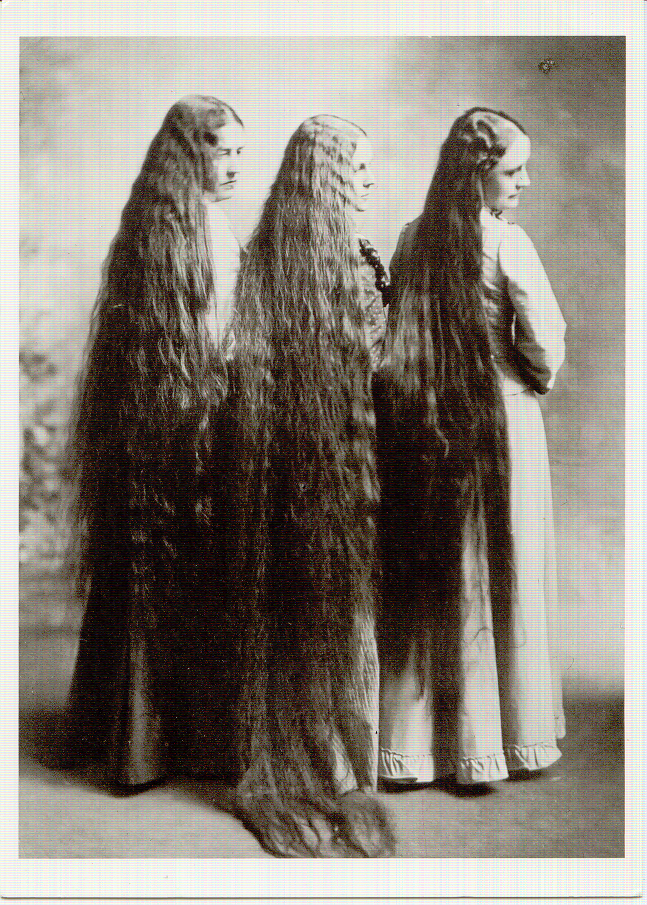
NaziriteI ever realized that women could become Nazirites until this reading of Numbers. All this time, I had assumed that this vow was made only by men. And clearly, the rules for the Nazirite have the feel of being for men what with the growing of hair and abstinence from drink. Nonetheless, women could do take such a vow as well.

The Lord said to Moses, “Speak to the Israelites and say to them: ‘If a man or woman wants to make a special vow, a vow of dedication to the Lord as a Nazirite, they must abstain from . . .'” [Numbers 6:1-3a, NIV]

In a nutshell, the Nazirite abstained abstained from alcohol, fermented drinks of any kind, grapes, or raisins; refrain from cutting one’s hair; and finally, avoid defilement by a dead body (or place that a dead body has been).

When I looked up additional information about the Nazirite vow, I was surprised to find that it evolved over time into three types of vows, depending on their length. In general, such a vow was made for a minimum of 30 days and for the common person, my guess is that this was the norm. However, there was a permanent vow (in which the Nazirite would cut his/her hair once a year for convenience) and there was a “Samson” Nazirite who was permanent, but did not have to abide by the dead body rule.

I believe, over time, these permanent Nazirites became known as monks. But isn’t it interesting that the Christian monks (and nuns) in later centuries were known for shorn hair and not long hair at all. Another reason why the Nazirite tradition ended was the loss of the Temple where the many sacrifices had to be made at the end of the vow. No temple : no end.

It’s a fascinating topic really and even includes some references to Jesus entering into a type of Nazirite vow at the Last Supper. But, of course, that is speculation as are many ideas about this tradition.

In any event, this ritual had to do with setting apart and holiness (see Holy Objects & Holiness post). The person perceived a need to separate himself or herself from the norm, even to the point of stepping away from family obligations (as might be the case in the event of a relative passing away). These vows were quite serious and if one was broken, the person had to “start over” again.

Jesus made some references to vows or promises in Matthew 5:37 in which he told the people to allow their “yes” to be yes and their “no” to be no. I believe he was alluding to people who made promises they did not mean or were unwilling to keep.
wedding ringsBut I would add, if we do make a vow, then we should treat them with more respect. Marriage vows have become the most abused of all. It is not enough to say, “well, I meant it at the time,” for that changes nothing except to imply that one did not know one’s own mind at the time or the implication of the promise. I would recommend people stop using the marriage vow at all if the intent is not binding. Or, perhaps like the Nazirites, the couple, if the vow is broken, starts over again.

Of all the many things that women were excluded from in Old Testament times, this is not one of them. Both men and women can experience holiness and set themselves apart for God. And secondly, their vows are still binding.

 

Read Full Post »

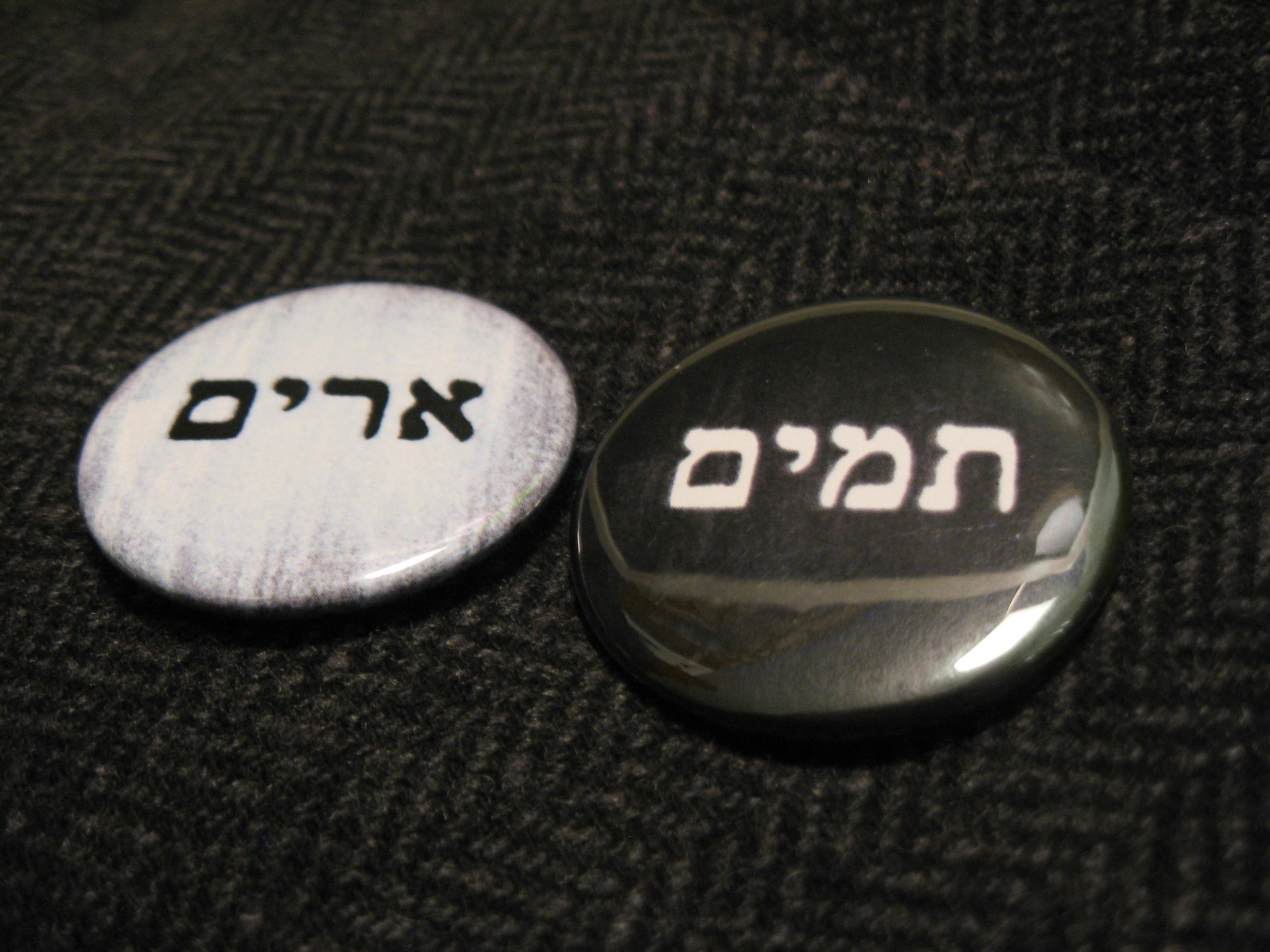
urim_thummimIt’s a fascinating idea really, the Urim and Thummim. Apparently, the priests used special stones to cast for a decision or divination. Some scholars translate the words as “revelation” and “truth” but I’m not sure that helps understand how they were actually used. Another interpretation is that the words essentially mean “innocent” or “guilty.” And in this way, groups of people or ideas where honed down by castings, Urim or Thummim, divided and divided until only one remained.

Also put the Urim and the Thummim in the breastpiece, so they may be over Aaron’s heart whenever he enters the presence of the Lord. Thus Aaron will always bear the means of making decisions for the Israelites over his heart before the Lord. [Exodus 28:30]

flip-coin_5Ultimately, it sounds a lot like flipping a quarter. The result is random except for one difference, the people who threw the stones as well as the people who asked the questions, wholeheartedly believed that God alone drove the results.

Would that make our lives easier today? Like the picking of daisy petals, “he loves me, he loves me not,” could we abide by the final outcome? Or would we hedge it? Wouldn’t we really just look for confirmation and not decision?

In some cases, the coin toss works very well, when nothing too particular is at risk. I mean, whether Harry or Sally go first in a game or the Ravens kick-off instead of the Colts, these are not a deal-breakers.

But what if it was life or death? What if it was getting married or not? What if it was to move our of state or not move? In today’s culture, could anyone give those decisions completely to God in such a manner?

Bottom line: do I believe in luck or destiny? Does God need the Urim & Thummim to drive my life?

If I gamble or play the lottery, I must still believe in luck. Or do I?

lottery ticketThere’s a joke about a man who prayed every day for months that God would allow him to win the lottery but he never did. Finally, he complained to God, “Why haven’t I won?” and God answered, “You should have bought a ticket.” Does God need the efforts of human?

It’s a complicated question and one I cannot fully unwrap.

So, truthfully, I can’t really say I don’t believe in luck at all, I’m sure God supersedes luck, but perhaps God allows luck too. So, I occasionally buy a lottery ticket, wondering if God would like to bless me this week, you know, when the prize is really, really, really big. But, in my gut, do I believe God would pick me for an undeserved splash of wealth at that magnitude? These purchases are really “just in case.” I’m hinting. I’m directing God: “Hey God, this would be a great way to bless me, if You have a mind do it. What do you say?” (And secretly, I even promise to tithe on it. Oh brother, what a conniver.)

Silliness.

love the lord your godLet me step back still further. God has been pretty clear about the best life for Human and summarized it in two sentences: “Love the Lord your God with all your heart and with all your soul and with all your strength and with all your mind; and, Love your neighbor as yourself.” [Luke 10:27] And every action we take, every decision we make, could be in answer to these directives.

Too many of my decisions are about me. Not God and not others. Lottery tickets included. Time to re-focus the heart.

Read Full Post »

promiseWhich is it? When we say we will do something, when we agree, when we say yes, is there power in it? Three months after their exodus from Egypt, they arrived at Mt. Sinai and before any commandments were given, before any rules were laid down, God said this:

Now if you obey me fully and keep my covenant, then out of all nations you will be my treasured possession. Although the whole earth is mine, you will be for me a kingdom of priests and a holy nation”. . . . [and they answered] “We will do everything the Lord has said.” [Exodus 19:5-6a, 8b, NIV]

It’s a similar response that a bride and groom make to one another. Sometimes the answer is “I do” and sometimes the answer is “I will,” but in both cases, they are responses to a question that might be something like this, “will you have ‘so and so’ to be your wedded husband/wife, to live together after God’s ordinance in the holy estate of matrimony; will you love him/her, comfort him/her, honor and keep him/her, in sickness and in health, and forsaking all others, keep yourself only for him/her so long as you both shall live?”

And God  basically asked the same of the Israelites. Will you obey me fully and they said we will.

But they did not. They thought they could. They thought they would. But they did not. And for this reason, for this “fail,” the history of these people was changed forever, yet again. And Jesus asked for no less, “Love the Lord your God with all your heart and with all your soul and with all your mind. This is the first and greatest commandment. And the second is like it: Love your neighbor as yourself.All the Law and the Prophets hang on these two commandments.” [Matthew 22:37-40, NIV]

And did we? We did not. We do not.

It’s not rocket science, this living within the parameters of God’s plan: love, obey, trust, believe. And why don’t we? I can say we are still like Eve and Adam. We want more than what God offers. We believe we know better. We believe we might miss something if we agree to this small world. I see myself kicking against the limitations I perceive God has made against me, not seeing that following with abandon, in trust, opens the world to me. I must let go to have. I must give to receive. The paradox continues.

Today, God is still asking me, will trust God to be God in my life?

Read Full Post »

Once Johnson & Johnson took over the word Pledge, it’s lost some of its power. Despite the fact that children and adults “pledge” allegiance to our flag, sometimes as often as daily, its meaning has been lost. The word is actually in the “vow” family, but that too has lost much of its significance, in an age of quick no-contest divorces. Most folks think of a pledge (perhaps it’s all those non-profits and churches) as a good-natured “I will if I can” kind of thing. But honestly, the definition is much more binding, a legal relationship, a solemn promise. I’m thinking that when we break a pledge, it sets all kinds of sowing/reaping and karma into motion.

This is how the birth of Jesus the Messiah came about: His mother Mary was pledged to be married to Joseph, but before they came together, she was found to be pregnant through the Holy Spirit. [Matthew 1:18, NIV]

pledged to marryThe word pledged in this passage is the NIV version of course, most standard translations render mnēsteuō  as “betrothed” and more reader friendly versions translate the Greek word to “engaged.” In our day and age, we treat this relationship equally lightly. Give back the ring, shed many tears, post it on Facebook, remove one’s relationship status, and we’re done.

But in the day of Mary and Joseph, the betrothal was virtually equal to the marriage vow itself. To break a pledge of this type required a formal divorce. And the only way a man could divorce a woman in those times was for the cause of infidelity (a one-sided benefit by the way, since a woman could not divorce a man). Joseph was within his rights to have Mary stoned.

It has been said that the church is the bride of Christ (see Revelation 19-7-9) and upon Christ’s return (whatever that might really mean), a great wedding will take place. So, if the wedding is yet to come, we, who have accepted Christ are actually betrothed or pledged to Christ. Will we take this role lightly then or consider it in its most serious form: a vow, a sacred promise to be faithful?

Read Full Post »

sleep angelAs the sun was setting, Abram fell into a deep sleep, and a thick and dreadful darkness came over him. . . . On that day the Lord made a covenant with Abram and said, “To your descendants I give this land, from the Wadiof Egypt to the great river, the Euphrates— [Genesis 15:12, 18]

Sometimes, it’s all too much to take in, to process. Abraham believed God would do as he promised but couldn’t fathom what part he would play in the promise, if any. God created a picture for him to hold onto: the ritual of covenant making at that time (the sacrifice of animals). God did not need this ritual, Abraham did. And for that reason alone it was done.

Like Abraham, we cannot see how God will work out the situations in our lives. And although we have some rituals, depending on the traditions we have embraced, they may not be enough. So, sleep on it.

I know this sounds flippant at first, but truly, there is so much more that can happen in our subconscious minds and often, our waking time does not give that part of us time to catch up. In our sleep, we are not so quick to edit and manipulate what we see and hear. The fantastic is possible. Even if we don’t remember our dreams, much is done within.

In this story of Abraham, the covenant was completed while he was in a deep sleep. The covenant promise rooted in his soul.

I have a tendency to try too hard to make things happen. Another way of saying this: I’m a bit of a control freak. I try to tell myself to “let go, let God” and a number of other cliche phrases, but they are easier said than done. But, in sleep, in rest, the Spirit is able to do a lot more sorting and clarifying.

So now, I have one last prayer before I rest each night: “Lord, I give this time to you. Teach and guide me within while my body rests.”

Read Full Post »

nose ringThey’re coming back into fashion, nose rings, but not with the same significance they had in ancient Israel. In fact, most circular jewelry spoke of a kind of protection and when Abraham’s servant (never named) gives Rebekah the nose ring and bracelets, she knows this is the beginning of a bridal negotiation.

Genesis 24:21-22
Without saying a word, the man watched her closely to learn whether or not the Lord had made his journey successful.When the camels had finished drinking, the man took out a gold nose ring weighing a beka [5.5 grams] and two gold bracelets weighing ten shekels [110 grams].

I tried to find some additional information about the significance of the nose ring in that era, but did not have much luck in a cursory search. However, I was surprised to find a bridal engagement ring offered on Ebay. Go figure, what goes around comes around.

In general, jewelry had a different significance in that time. It was easily transportable wealth and much like some contemporary tribes of today, women would wear their wealth both symbolically and intentionally. Jewelry is a sign of success.

But then, that still holds true today except that most of us don’t have the kind of wealth that allows us to wear authentic carat-laden diamonds or other precious stones. Instead, we have created imitations. We want the “look” without the reality.

Am I turning this tendency toward my spiritual life as well? Do I want merely the appearance of relationship with God, with Spirit within? Or do I want the more costly genuine version? Am I willing to make the necessary sacrifices to get it?

Unfortunately, I know my answer is still a wimpy “no.” I’d like to believe I am going in the right direction but I also feel myself holding back. God is offering me solid gold nose rings and I’m balking at how I might look. Plus, if I take the ring, doesn’t that indicate I am accepting the terms?

I am the bride of Christ, as a believer, it’s a unique description. But how often do I really walk that out and wear the complete garment, nose ring and all?

Read Full Post »

Photo of Beersheba by Leon Mauldin

Photo of Beersheba by Leon Mauldin

The making of oaths and treaties in ancient times was far more serious than it is today. When anyone swore an oath and broke it, the penalty was severe, even death. I cannot help but wonder how different our world would be if promises and vows had more significance. Not unlike Bonhoeffer’s “cheap grace,” we now have vows made with fingers crossed behind our backs.

Genesis 21:30-31
He replied, “Accept these seven lambs from my hand as a witness that I dug this well.” So that place was called Beersheba,because the two men swore an oath there.

Lack of trust is at pandemic proportions, the real core to our inability to make a vow or promise and keep it. We have all been betrayed so many times, we do not believe the word of others. Either we need lots of evidence or the cost for breaking trust must be so high that everyone is put in a fear position to uphold the agreement (hence, the Cold War).

Of course, those fear-based promises usually have loopholes and everyone is busy trying to find them.

Marriages have become the thing of mistrust and loopholes as well. I find it amusing, the angst over same-sex unions, while cheating, divorce, and secret lusts rage in society. How often are the ones who rail against the sins of others, forget their own?

A covenant is a binding oath, a promise that cannot be broken. An agreement with God, the acceptance of Christ as the Messiah, is on that level.

I forget this sometimes. I dishonor the agreement. I don’t hold up my end of the bargain, the treaty, the contract. In a secular world, if I broke a contract the number of times I have broken covenant with the Christ, I would be sued or forced to pay large sums of money or put in jail. But my contract, thanks be to God, is with Grace. And I get more chances to make it right.

I give “lip service” to my trust in God, but I’m afraid I don’t build my foundation on it. I am swayed and battered by the storms of life and I lose sight of trust I promised to have in God. I know intellectually that God is faithful and trustworthy, but still I stumble.

Sensitize me to Your Presence today Lord and give me courage to speak trust in the face of all circumstances. Help me build a Beersheba today, to remember my promise.

Read Full Post »

« Newer Posts - Older Posts »