Feeds:
Posts
Comments

Archive for the ‘Ordinary Time’ Category

Faith as a Verb

Faith has become static and no longer has the teeth that it should. They say, “growing old is not for sissies,” and I say an out-growing faith is not a cakewalk either. At least it shouldn’t be.

James 2:17-18
In the same way, faith by itself, if it is not accompanied by action, is dead. But someone will say, “You have faith; I have deeds.” Show me your faith without deeds, and I will show you my faith by my deeds.

Faith has become as boring as the verb “to be.” And although it may be trendy these days to spout clever phrases like, “I am not a human doing, I’m a human being” as a way of slowing our culture down, we are missing the boat in the faith department.

Faith is not only about meditation and contemplation, it must also be an expression of God within so that others can see God. Faith is not only about waving our hands and singing the songs in church, it must also be about touching others in such a way that they can feel God’s presence.

Faith is probably a circle and I can’t just plant myself on one spot in that circle. Sometimes I have to get from God and sometimes I have to give; sometimes I have to rest in God and sometimes I have to run.

My God faith creates the courage I need to have faith in myself and to have faith in you.

I faith God who faiths me for you.

Read Full Post »

For mercy to have its full power, it must be a two-way street: that is the God road. Same as forgiveness, whose power can cast a wide swath when it flows freely. I forgive, God forgives me. I show mercy, God shows mercy to me.


James 2:13
. . . because judgment without mercy will be shown to anyone who has not been merciful. Mercy triumphs over judgment!

The truth is that mercy and forgiveness are a type of twins really, aren’t they? In both cases, the person who needs forgiveness (or mercy) doesn’t deserve it. They are guilty. And yet, if I, whether it’s deserved or not, extend mercy and/or forgiveness to this rascal/deadbeat/handicapped heart, God will say, “Well done, good and faithful servant, where you have been faithful in a few things, I will put you in charge of great things.” [my paraphrase of Matthew 25:23]

Those are the significant few things: forgiveness and mercy. And once again, as in so many of my posts, it’s paradox that rears its goofy head again. We are encouraged to do the very last thing we want to do.

There is no guarantee, in fact, less than a guarantee, not even a promise or law or a mandate that my stepping out to forgive the other will mean he/she will forgive me (either for the same situation or another one). The process doesn’t work that way. The exchange is between me and Holy Spirit, not me and thee.

So, when I play “rock, paper, mercy,” it’s always got to be mercy. And it may look from the outside as though I’m losing every contest, God says I’m winning where it counts.

My daughter once asked me how my husband and I have managed to stay together for all these years; we are after all, quite different. And all I can say is that we have practiced two key concepts: acceptance of what is and mercy/forgiveness for what is not.

Read Full Post »

I have never noticed the phrase, “royal law” before. A brief swing through the commentaries explains its use: coming out of the kingly era, a pervasive and useful thing, a suitable thing for everyone. Nothing has changed.

James 2:8
If indeed you [really] fulfill the royal Law in accordance with the Scripture, You shall love your neighbor as [you love] yourself, you do well.
[Amplified]

This “royal law” continues to be as powerful today as it was in biblical times. And yet, I don’t follow even this basic of basic mandates from God as I should.

There are personal kindnesses that I give to myself that I withhold from others.

And despite my tendency to be hard on myself, pushing myself to limits of time and energy, I still extend more grace to myself than I do to others.

The “royal law” restated is similar to the “golden rule” or “golden law” to “do unto others as you would have them do unto you” [Matthew 7:12 and Luke 6:31]. But Jesus was not the first to speak this law, nor were the Jews in Leviticus 19:18. These can be found in ancient manuscripts of the Babylonians, Chinese, and Greeks.

This is a human law. This is a foundational law to people living and working amongst each other.

There was a time when it was very popular to wear wristbands and jewelry with the letters WWJD (What Would Jesus Do?) and ultimately, the answer would be the “royal law.” This law is for everyone: for every religious belief. It holds no boundaries.

And so, I wonder, why don’t humans use it, live it, abide by it? It’s not just evil in the world that throws this law under the bus. It’s regular people too, who have lost faith in the simplicity of kindness, generosity, and good will.

Read Full Post »

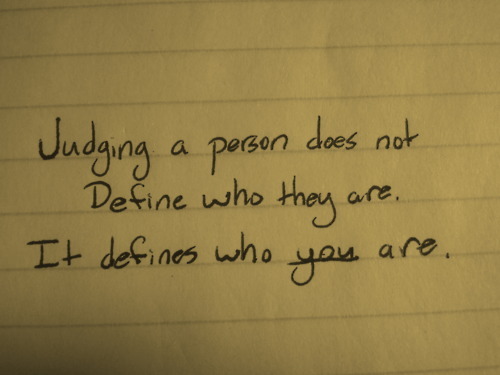
Favoritism with ice cream is a lot different than favoritism with people. Oh I might try not to judge people on first impressions but I find it inescapable. Can I overcome these moments with intentional action?

James 2:1, 4
My brothers [and sisters], as believers in our glorious Lord Jesus Christ, don’t show favoritism. . . . have you not discriminated among yourselves and become judges with evil thoughts?

Some years ago when we still lived in Atlanta, we attended a small church composed mostly of fellow believers who had been asked to split away from a larger denominational church because of our bent toward the charismatic. One of our leaders, Jim, was a wonderful man, kind and dignified, smart and loving. I will never forget the day he taught about enthusiasm: “If you want to be enthusiastic, sometimes you just have to act enthusiastic to feel it.” And then he proceeded to stomp and cheer and pump his arms around like a lunatic. It was hysterical but his message stayed with me.

Personally, enthusiasm comes easily to me. In fact, when I’m excited about a project, I’m quite the cheerleader, almost nauseatingly so, I’m sure. But how can I take that passionate commitment to action and use it to break down my internal tendencies toward judging others through intentional choices to change?

Some people call it a “besetting sin.” When I looked that up, it can also mean a type of harassment, or being surrounded, or an obsession. I can certainly relate to my judging of others in that way. My time in confessional prayers is dominated by asking forgiveness for my judgments. And in my way of thinking, judgment and favoritism go hand in hand. I cannot “favor” one person above the other without having made a negative of judgment of the other.

What to do? I know I can’t just tell myself to stop. If that worked, I’d be golden by now. Should I treat it as a bad habit and follow these 29 Tips for Changing a behavior?

Here are some suggestions from Oprah.com (go figure) written by Tim Jarvis. At first I was going to make a joke about it, but perhaps I need to take a few of these ideas to heart:

  • Like the Tipping Point by Malcolm Gladwell, it may take a number of efforts to get to the “boiling point” or threshold when things happen. So, in my case, the more I tackle this issue, the more aware I am and the more opportunities to get over the hump.
  • I need to think more about the other side, what it would look like and feel like to “not” be a judge so much. Instead of looking back at my failures, look ahead.
  • One of the approaches for change is to engage in community. This is why groups like Weight Watchers and Alcoholics Anonymous are so important: support and encouragement. Hmmm. Not sure how to translate my habit of the heart into a club of regenerated judges.

A friend of mine who struggles with food addiction says that this is one of the most difficult addictions to tackle. After all, unlike alcohol and drugs which can, to some degree be avoided, food is always with us. I think judging and dis-favoring others is similar. People are everywhere. I say that I love to “people watch,” but I wonder if that’s not just a buzz word for judging, mocking, and categorizing. Not a good thing.

What do you do? Honestly. Am I really alone out here?

Lord, forgive me again. Today. And right now, I’d appreciate it.

Read Full Post »

Photo by Natdiastok

Wikipedia states, “pollution is the introduction of contaminants into a natural environment that causes instability, disorder, harm or discomfort to the ecosystem i.e. physical systems or living organisms.” I do that.

James 1:26a, 27c
Those who consider themselves religious and yet do not keep a tight rein on their tongues deceive themselves, . . . keep oneself from being polluted by the world.

Language is a gift that humans have. With it, we can calm a child, paint word pictures, bring joy and laughter, or elicit memory and sorrow; we can also ruin a reputation, fill space with toxicity, hurt someone’s heart, start a fight, or destroy a relationship. Just with words.

Sometimes I think I have a good knack with words, but too often, I misuse my gift.

Some years ago, I went on a silent retreat at All Saints Convent. I had been there before for shorter retreats but never in full silence. I didn’t realize this silence would also mean no one would engage me – not with eyes or touch or anything. It was like I wasn’t there. In my loneliness, I sought out books and wrote in my journal.

But I wonder, were there still too many of those words? Did I really go into the silence?

My daughter asked me the other day if I have ever tried meditation and could I really sit and think of nothing? I said I had, more in the realm of contemplative prayer, but the battle with words was tough. I can do the flowing river routine for about a minute, maybe. No, truth be told, I am still a slave to the automatic typewriter in my head.

I have said some terrible things to people and I’ve said some terrible things about people. It’s all gossip and diarrhea of the mouth.

People always say, “think before you speak” and the joke for me is that I often speak so I can hear what I’m thinking.

On Wednesday, I went to an acupuncturist in hopes of getting some relief from hot flashes. After the treatment, she said the process is a kind of drawing out of heat from the body and often it leaves through body waste. I’d like to dump some of those mean words the same way and flush them down the toilet.

You, out there: you I know and you I don’t know . . . please forgive me.

Read Full Post »

Photo by Kimberly Kinrade

If hearing the word is like looking in a mirror at oneself, then it must be familiar when it’s happening. I look at myself and I recognize who it is. In the same way, I must be able to recognize truth. But then . . .

James 1:23-24
Anyone who listens to the word but does not do what it says is like a man who looks at his face in a mirror and, after looking at himself, goes away and immediately forgets what he looks like.

The idea of turning around and forgetting my own image is disturbing. But isn’t it true? How often I see photographs of myself and I am shocked by the person reflected. When did that happen? The other day I did a video spot and found my neck was doing a great Katherine Hepburn impression. Maybe, what I see in a mirror is not the whole truth after all.

But that sends me off point. What I’m really trying to catch is the idea of recognizing truth in one moment and then forgetting it the next. This happens to me every day. Writing echoes to the scriptures, as I do here, is the same.

I have epiphanies and revelations as I contemplate the word, pray, and write. I hit on a crucial truth, a flowering, a rush; and then I grab my bags, get into the car, go to work and I am someone else. I am the habit woman. I have already forgotten what I saw, what I learned, what I felt.

For a season, I was quite faithful at praying the hours, but I have lost the steady practice in recent weeks. I understand why this ritual has value though, it makes me stop what I was doing, just for eight minutes, and regroup around the Holy Spirit. It was a time to remember, to reconnect, to look into the mirror of the word.

Oh Lord, forgive me. This verse is me. Teach me how to carry your reflected truth with me throughout the night . . . throughout the day.

Read Full Post »

Photo by Victoria Potter

Anger is not a disease, it’s a choice that eventually builds into a habit. I should know, I’m really good at it. I’m getting better at the outside version of anger but it’s a cover up for what’s happening inside.

James 1:19b-20
Everyone should be quick to listen, slow to speak and slow to become angry, for man’s [and woman’s] anger does not bring about the righteous life that God desires.

I think of anger as a bus because it’s always taking me somewhere, and rarely if ever, does it take me where I want to go or where I should be. It’s not always a bus; I also ride the anger subway, the anger jet and the anger canoe. Each one goes a different speed, but the results are the same.

And most of those trips leave a wake or trail of damage that takes much longer to repair than it does to destroy.

When I lived in New York, I took the subway a lot. At first, it was confusing and I’d have to watch the map and keep checking the walls for the name of the stop. But pretty soon, I got so accustomed to the subway that I knew where I was just by the look of the station.

Just because anger is familiar doesn’t make it a good thing. I know that intellectually.

I know that “anger management” talks about transforming feelings of anger into healthy expressions, like assertiveness or redirecting it into some kind of constructive behavior, or intentionally and rationally calming oneself down. I’m sure these are all good mechanisms and I should look into them.

But I would like to get better at catching the moment BEFORE I get on the bus. What is it that makes me want to jump. One of my previous pastors said it was “fear” and I can certainly agree with that in many cases: fear of loss, self-esteem, worth, value, control, etc. I think there are other moments too that are driven by something else than fear. Maybe it’s disappointment.

I have written and talked about the power of disappointment before, particularly in women. It’s wrapped up in expectations and hopes and dreams and when that disappointment comes, particularly repetitive disappointment, I think it mutates into anger: displaced, misplaced, and often illogical in appearance.

No easy solution, but certainly, the advice from James is sound: be slow to speak. Maybe, just maybe, if I could slow the process down, just a little, I could recognize my triggers.

Read Full Post »

« Newer Posts - Older Posts »