Feeds:
Posts
Comments

Posts Tagged ‘hope’

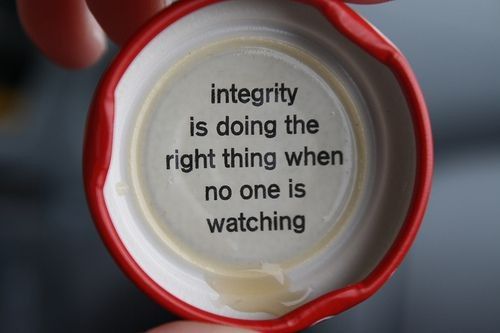
integrityEveryone around me appears so sure that the Bible is a clear exposition of right and wrong, but I say it is also full “gray areas.” Tamar, betrayed by her husband’s father and brothers, tricks the father into sleeping with her. She conceives a child by him and when she is found out is called a harlot until Judah fesses up to the deed. Then she is proclaimed righteous.

Genesis 38:25-26a
As she was being brought out [to be burned to death], she sent a message to her father-in-law. “I am pregnant by the man who owns these,” she said. And she added, “See if you recognize whose seal and cord and staff these are.” Judah recognized them and said, “She is more righteous than I . . .

I understand the concept since the law of that era proclaimed that the brothers should sleep with the widow to procure children in the dead brother’s name and provide a future for the widow. Without sons to protect her, she would be cast out into the street. She would be homeless unless her own family would take her in. It was a complex solution to a societal problem — widows.

Tamar did not have many–or perhaps I should say ANY–resources to repair the damage done by Judah’s offspring. Those brothers intentionally withheld from her what she needed: the seed to create a man-child who would care for her in her old age. They, by not participating honestly in the practice, condemned her. For this, they were undoubtedly killed. They were violating basic human rights, and worse, female rights, of which there were few.

Judah withheld the third and youngest son for fear he would be killed, since he didn’t really know why, only that relations with Tamar brought death. Oh, he promised her the boy when he came of age, but it never happened.

So, Tamar pretends to be a temple prostitute.

In today’s world, this is just another soap opera or bodice ripper romance. This is the clever woman making the man own up to his responsibilities. All true. But in her world? She was taking a huge risk. All that Judah had to do, in the moment of reveal, was deny the “pledge” he gave her belonged to him. This was the same Judah, remember, who just participated in the sale of his brother Joseph.

Judah did the right thing, despite himself.

And this is the message for me then. I can always choose rightly today, even if I chose poorly yesterday and the day before that and the day before that. I can do a reversal. I can do the right thing.

In that act of bravery, God can show up. God can make the switch. God is in the now.

Read Full Post »

Photo by Ed Rybczynski

Photo by Ed Rybczynski

Leaving is not easy. Starting over is never easy either. But sometimes, that’s all we can do. Circumstances and time and emotions come to a head, and it’s clear, something must change. At this time of year, we mockingly call them resolutions (and I say mocking, because we laugh at our poor resolve over the years). But true change is no joke. True beginnings are powerful and even painful.

Genesis 31:3; 17-18
Then the Lord said to Jacob, “Go back to the land of your fathers and to your relatives, and I will be with you.” . . . Then Jacob put his children and his wives on camels,and he drove all his livestock ahead of him, along with all the goods he had accumulated in Paddan Aram,to go to his father Isaac in the land of Canaan.

Meaningful change is rarely made overnight with a glass of champagne in one hand and horn in the other. It’s rarely a wish list; it’s a must list. That kind of break with the past comes after a build up, a collection of situations, a norm that is no longer acceptable.

Often it takes an epiphany or insight, a new view of an old way, that becomes the impetus for change or builds a desire or appetite for metamorphosis. We see with new eyes. We see reality. We see truth. And it is longer acceptable.

In Jacob’s world, it took more than fourteen years to realize that something had to change. He had achieved the short-term goal of acquiring wives and even children, but he was still dependent on Laban. It was time to grow up.

I remember making a very small discovery, probably in my late twenties, that there was no one who would be picking up after me. If I chose to leave dirty dishes, they would be there the next day. If I put my clothes on the floor, they would remain. If I forgot to water the plants, they would die. If I wanted my immediate environment to be pleasant and acceptable, I would have to do it.

But sometimes, the changes are more challenging, like women who have entered abusive relationships or tied themselves to addictive personalities or other enslavements (drugs, alcohol, food, sex, television, and other mind-numbing substitutions for living). To see these situations in their true form is beyond difficult and may require divine intervention.

For myself, I pray for open eyes this day, to see clearly. I pray for God’s revelation and direction. I pray for loved ones whose eyes are still closed. I pray for my role in their lives. I pray for grace and mercy and courage. I ask for epiphanies to abound.

Today. Not resolutions but meaningful change.

Read Full Post »

RebekahAbraham is old, really old, and decides to once again, take matters into his hands to find a wife for Isaac, who must be around forty by then. Abraham sends his highest ranking servant (unnamed throughout the story) to the land of his ancestors to find a wife. The servant puts out a kind of “fleece” to determine which maiden is the one. Rebekah, daughter of Bethuel, passes the test. And off she rides, maids & nurse in tow.

Genesis 24:67
Isaac brought her into the tent of his mother Sarah, and he married Rebekah. So she became his wife, and he loved her; and Isaac was comforted after his mother’s death.

I’m sure there are a number of wedding rituals that were still in place even in those times but unfortunately, these are not shared through this story. Rebekah agrees to travel right away (which smacks of “get me out of this family,” an escape route that many young women take) and takes on the adventure of a lifetime.

Rebekah is going to an unknown land just like Abraham did those many years earlier. She only has the promise from a servant, an array of fine gifts and gold, and the hope of a future. She had tremendous courage, I think, as well as curiosity. Rebekah embraced change.

I wish I knew more of what must have happened within the summary text, “Isaac brought her into the tent of his mother.” Was there a ceremony? Or was it merely a matter of having relations with the woman to secure their marriage bond? Is there significance to it being his mother’s tent, or did that simply signify the tent for women? Was it a harem like situation where all the women of the household lived together?

And more interesting still is that Rebekah became the woman who brought comfort to Isaac at the loss of his mother. I cannot help but think that Isaac was estranged from his father Abraham after the great testing on the mountain. At least, I don’t believe they were close. Instead, Isaac gave his heart to his mother. And when she passed, he felt alone and engaged in the building of his own herds and belongings. And although he did not take a wife, I’m pretty sure he was no “40 year old virgin.” There were slaves and concubines undoubtedly and maybe even children, but these would not inherit the promises of God. They were of such insignificance, they are not named or identified. Even Rebekah came from some wealth, since she traveled with her own entourage of nurse and maids.

And so it is, that the progression of God’s plan for building a nation is finally moving again. The entire process had stopped at Isaac’s apparent reluctance to take a wife.

But once Rebekah arrives, he accepts her, he marries her, and more importantly, he loves her. This love statement could have been excluded but it is here for a reason. At this point in the story, Isaac loves, that is, he cares about his new wife more than himself. He is sensitized to her needs and her desires. He wants to please her. He wants to nurture her. He wants her to thrive and be happy. He loves her.

How often does the story begin this way? My story did too. What happens? How do we lose that adventure and love? Did God change his mind? It was a match made in heaven. So was mine. How do we lose sight of God’s gift to one another? Why do so many life events cool our ardor, our belief, our joy?

Read Full Post »

Photo of Beersheba by Leon Mauldin

Photo of Beersheba by Leon Mauldin

The making of oaths and treaties in ancient times was far more serious than it is today. When anyone swore an oath and broke it, the penalty was severe, even death. I cannot help but wonder how different our world would be if promises and vows had more significance. Not unlike Bonhoeffer’s “cheap grace,” we now have vows made with fingers crossed behind our backs.

Genesis 21:30-31
He replied, “Accept these seven lambs from my hand as a witness that I dug this well.” So that place was called Beersheba,because the two men swore an oath there.

Lack of trust is at pandemic proportions, the real core to our inability to make a vow or promise and keep it. We have all been betrayed so many times, we do not believe the word of others. Either we need lots of evidence or the cost for breaking trust must be so high that everyone is put in a fear position to uphold the agreement (hence, the Cold War).

Of course, those fear-based promises usually have loopholes and everyone is busy trying to find them.

Marriages have become the thing of mistrust and loopholes as well. I find it amusing, the angst over same-sex unions, while cheating, divorce, and secret lusts rage in society. How often are the ones who rail against the sins of others, forget their own?

A covenant is a binding oath, a promise that cannot be broken. An agreement with God, the acceptance of Christ as the Messiah, is on that level.

I forget this sometimes. I dishonor the agreement. I don’t hold up my end of the bargain, the treaty, the contract. In a secular world, if I broke a contract the number of times I have broken covenant with the Christ, I would be sued or forced to pay large sums of money or put in jail. But my contract, thanks be to God, is with Grace. And I get more chances to make it right.

I give “lip service” to my trust in God, but I’m afraid I don’t build my foundation on it. I am swayed and battered by the storms of life and I lose sight of trust I promised to have in God. I know intellectually that God is faithful and trustworthy, but still I stumble.

Sensitize me to Your Presence today Lord and give me courage to speak trust in the face of all circumstances. Help me build a Beersheba today, to remember my promise.

Read Full Post »

Art by Jonas Gerard

God blessed Ishmael because he was the son of Abraham. And although it may not seem like a blessing at first blush, those many tribes that descended from Ishmael only to become enemies to the progeny of Isaac: but there was still fruitfulness. And God is honored in fruitfulness.

Genesis 17:18, 20; 21:11-12a,  And Abraham said to God, “If only Ishmael might live under your blessing!” . . .  “And as for Ishmael, I [God] have heard you: I will surely bless him; I will make him fruitful and will greatly increase his numbers. He will be the father of twelve rulers, and I will make him into a great nation. . . . But God said to him [Abraham], “Do not be so distressed about the boy and your slave woman. . . .  I will make the son of the slave into a nation also, because he is your offspring.”

But the blessing of Ishmael is not simply about childbearing and big families, it is about enlarging the place of one’s tent (e.g. one’s influence).

Enlarge the place of your tent,
stretch your tent curtains wide,
do not hold back;
lengthen your cords,
strengthen your stakes.
For you will spread out to the right and to the left;
your descendants will dispossess nations
and settle in their desolate cities.  [Isaiah 54:2-3]

Children are the hope of the future, whether we have them in our immediate family or we serve them through school, church, neighborhood, or work. It is the children who carry the message of our lives into their own. If our lives are loving and giving and caring, then they will respond to the model we provide them. But the opposite is true as well.

They say, if you want to know where a person’s priorities are, look at the list of things in which they invest their money. I say, the same is true for the way money, time, knowledge, and energy are invested in children. They cannot love if they have not been loved. They cannot give grace if they never received it. They will not show compassion if they have not seen compassionate behaviors around them. What we pass to children of all ages is only limited by our own misplaced preferences and choices.

I wish I could say that my children are bearing the fruit of the blessings of God. In some ways, they are: instead of an orphanage, they live in a family and a country of great opportunity. Instead of a proscribed future dealt to them through poor diet, alcoholism, and abandonment, they do know they are loved unconditionally. But in my enthusiasm for having children, I spoiled them too. I wanted them to have some of the things I missed and I created a distorted view of value, of appreciation for the little things, of comfort. Like most Americans, they reflect a world where “need” means another car, not another meal.

So now, I am sorry dear children, what I failed to pass along, you will have to discover on your own. Life will teach you and in that life, God will teach  you. For the blessings of God are still there, the promise of good things still available, but the road may be a little longer.

Read Full Post »

Despite the fact the Ishmael means “God hears” or “God listens,” the name has become symbolic for being cast out or cast aside. And, isn’t it fascinating that Abraham, the father/patriarch of nations, was also the father of the Arab nations as well as Israelites? If you think the Adam and Eve story caused havoc in Human, what about this one?

Genesis 16:11-12
The angel of the Lord also said to her [Hagar]: “You are now pregnant and you will give birth to a son. You shall name him Ishmael, for the Lord has heard of your misery. He will be a wild donkey of a man; his hand will be against everyone  and everyone’s hand against him, and he will live in hostility towardall his brothers.”

So here are the traits of a donkey [originally wild ass]: hard working (have been used for work over 5000 years); used as pack animals and able to carry large weight for long distances; associated with the idea of people living at or below subsistence levels [the animal of the poor]; they can live anywhere from 10 years to 50 years, depending on their lifestyle and owners; adaptable; solitary; a male donkey’s [jack] bray can be heard over long distances — as much as 3 kilometers; hear well; fight defensively and persistently; they can interbreed which accounts for mules [bred with a horse]; and above all, stubbornness.

The stubbornness of a donkey is based on self-preservation. If a donkey believes circumstances are dangerous, it will resist. Otherwise, donkeys are also known for being friendly, intelligent, playful, and willing to learn.

So, is this such a terrible comparison, to be called a donkey of a man? It wouldn’t have to be except that the dominance of stubbornness seems to prevail over all of the other things. And stubbornness in anyone is a recipe for disaster. In a way, both Abram and Sarai were also stubborn. For Abram, it was called faithfulness, his conviction that God would follow through on His promises.

For Sarai, her stubbornness came into play by taking circumstances into her own hands. She may have believed God as well, but she appears to have been a practical woman. She waited ten years for her “miracle” child and decided that was long enough. Abram did not exactly try to dissuade her either. Abram, like Adam, passed over any responsibility to his spouse. Even when things went awry and Hagar, elevated from mere handmaid to surrogate, began testing the waters of her authority; Abram cast the solution back on Sarai.

I have always aligned myself with Sarai. I have her tendencies. I have her stubbornness. Once I believe I have the the answer or the solution and the track has been laid, I walk it with a vengeance.

I remember standing at the end of the aisle (at 18) waiting to walk toward my first marriage. In that moment, I knew I was making a terrible mistake. But of course, the path had been laid, and so I walked it. We lasted five years, but in the end, I was too immature to handle it and unfortunately, another dream became my obsession and I pursued that one (to move to New York and acting school) with the same singleness of purpose.

Most of the time, I believe we [Human] err because of our sense of time.

Even today, my husband (of 30 years by the way), bemoaned a familiar truth: “everything I start to do always takes longer than I think it will, whether it’s editing a video or fixing a faucet.” So true. It is “time” itself that we try to manipulate. But “time” will not bend to our will. “Time” is God’s domain and His alone to metamorphose.

Here’s the short of it. I accept my stubbornness and realize there are occasions when that is useful (when it’s called persistence) and instances when it gets in the way. Now I want to know and practice the difference,  to remember that I cannot control the outcomes of every situation: to trust God’s time.

Mary Karr, in her memoir Lit, tells of a fellow AA goofball she asked about “God’s will.” How to know when to act. And his answer is so apropos, we wait and stay the course until God tells us to do something else.

Most of us bemoan not knowing or hearing God’s voice because we act before the time. Simple.

Read Full Post »

Although Abram could believe that God would provide him with descendants as numerous as the stars, he questioned God’s ability to give him the land. Perhaps there were enough loopholes in the promise to make a baby, but land was solid; land was imperishable; land was enduring. And in this case, the land was occupied.

Genesis 15:7-8; 18a
He also said to him, “I am the Lord, who brought you out of Ur of the Chaldeans to give you this land to take possession of it.” But Abram said, “Sovereign Lord, how can I know that I will gain possession of it?” . . . On that day the Lord made a covenant with Abram and said, “To your descendants I give this land . . .

Whereas the baby was a promise, the land became the end result of a contract, a covenant. It was formal and branded with the blood of animals. When blood is spilled over a promise, then it is unbreakable.

In some ways, this sign is still with us today; we hear of it in other cultures like blood oaths and blood rituals. These are done with the same intent, a promise, a loyalty, a trust, are exchanged.

There are a number of blood covenants in scripture and of course, the most important one to believers and Jesus followers, is the blood of the Christ, the Messiah, spilled once for all.

The Israelites gained and lost the land through poor judgment and sin. All through the history, kings fought over the land and by the time of Solomon, it had been taken back and restored to the people of the promise, the people of the covenant. And yet, in not so many generations later, the land was lost again. Today’s Israel is still fighting, for good or not, I do not know, but it is in their DNA to pursue the land that was lost.

The Christ, the very Son of a Holy God, spilled blood as a substitute for our own blood in place of those conscripted animals who annually paid the price in times long past for the sins and bad choices of Human. But just as the Israelites lost their land, despite the promise, Human is loosing everlasting life through distraction, unbelief, division, and tunnel vision.

Too many times, we, Human, we act as though the covenant is failing or no longer powerful. But I know that is not so. I know this deep in my soul.

And so, forgive me Father, when I look elsewhere for the “solutions” to my problems, when I look elsewhere for direction, when I don’t look at all. Forgive me Covenant maker.

Read Full Post »

« Newer Posts - Older Posts »