Feeds:
Posts
Comments

Posts Tagged ‘James’

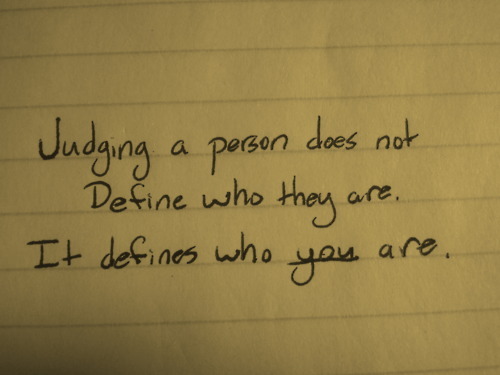
Favoritism with ice cream is a lot different than favoritism with people. Oh I might try not to judge people on first impressions but I find it inescapable. Can I overcome these moments with intentional action?

James 2:1, 4
My brothers [and sisters], as believers in our glorious Lord Jesus Christ, don’t show favoritism. . . . have you not discriminated among yourselves and become judges with evil thoughts?

Some years ago when we still lived in Atlanta, we attended a small church composed mostly of fellow believers who had been asked to split away from a larger denominational church because of our bent toward the charismatic. One of our leaders, Jim, was a wonderful man, kind and dignified, smart and loving. I will never forget the day he taught about enthusiasm: “If you want to be enthusiastic, sometimes you just have to act enthusiastic to feel it.” And then he proceeded to stomp and cheer and pump his arms around like a lunatic. It was hysterical but his message stayed with me.

Personally, enthusiasm comes easily to me. In fact, when I’m excited about a project, I’m quite the cheerleader, almost nauseatingly so, I’m sure. But how can I take that passionate commitment to action and use it to break down my internal tendencies toward judging others through intentional choices to change?

Some people call it a “besetting sin.” When I looked that up, it can also mean a type of harassment, or being surrounded, or an obsession. I can certainly relate to my judging of others in that way. My time in confessional prayers is dominated by asking forgiveness for my judgments. And in my way of thinking, judgment and favoritism go hand in hand. I cannot “favor” one person above the other without having made a negative of judgment of the other.

What to do? I know I can’t just tell myself to stop. If that worked, I’d be golden by now. Should I treat it as a bad habit and follow these 29 Tips for Changing a behavior?

Here are some suggestions from Oprah.com (go figure) written by Tim Jarvis. At first I was going to make a joke about it, but perhaps I need to take a few of these ideas to heart:

  • Like the Tipping Point by Malcolm Gladwell, it may take a number of efforts to get to the “boiling point” or threshold when things happen. So, in my case, the more I tackle this issue, the more aware I am and the more opportunities to get over the hump.
  • I need to think more about the other side, what it would look like and feel like to “not” be a judge so much. Instead of looking back at my failures, look ahead.
  • One of the approaches for change is to engage in community. This is why groups like Weight Watchers and Alcoholics Anonymous are so important: support and encouragement. Hmmm. Not sure how to translate my habit of the heart into a club of regenerated judges.

A friend of mine who struggles with food addiction says that this is one of the most difficult addictions to tackle. After all, unlike alcohol and drugs which can, to some degree be avoided, food is always with us. I think judging and dis-favoring others is similar. People are everywhere. I say that I love to “people watch,” but I wonder if that’s not just a buzz word for judging, mocking, and categorizing. Not a good thing.

What do you do? Honestly. Am I really alone out here?

Lord, forgive me again. Today. And right now, I’d appreciate it.

Read Full Post »

Photo by Natdiastok

Wikipedia states, “pollution is the introduction of contaminants into a natural environment that causes instability, disorder, harm or discomfort to the ecosystem i.e. physical systems or living organisms.” I do that.

James 1:26a, 27c
Those who consider themselves religious and yet do not keep a tight rein on their tongues deceive themselves, . . . keep oneself from being polluted by the world.

Language is a gift that humans have. With it, we can calm a child, paint word pictures, bring joy and laughter, or elicit memory and sorrow; we can also ruin a reputation, fill space with toxicity, hurt someone’s heart, start a fight, or destroy a relationship. Just with words.

Sometimes I think I have a good knack with words, but too often, I misuse my gift.

Some years ago, I went on a silent retreat at All Saints Convent. I had been there before for shorter retreats but never in full silence. I didn’t realize this silence would also mean no one would engage me – not with eyes or touch or anything. It was like I wasn’t there. In my loneliness, I sought out books and wrote in my journal.

But I wonder, were there still too many of those words? Did I really go into the silence?

My daughter asked me the other day if I have ever tried meditation and could I really sit and think of nothing? I said I had, more in the realm of contemplative prayer, but the battle with words was tough. I can do the flowing river routine for about a minute, maybe. No, truth be told, I am still a slave to the automatic typewriter in my head.

I have said some terrible things to people and I’ve said some terrible things about people. It’s all gossip and diarrhea of the mouth.

People always say, “think before you speak” and the joke for me is that I often speak so I can hear what I’m thinking.

On Wednesday, I went to an acupuncturist in hopes of getting some relief from hot flashes. After the treatment, she said the process is a kind of drawing out of heat from the body and often it leaves through body waste. I’d like to dump some of those mean words the same way and flush them down the toilet.

You, out there: you I know and you I don’t know . . . please forgive me.

Read Full Post »

Photo by Kimberly Kinrade

If hearing the word is like looking in a mirror at oneself, then it must be familiar when it’s happening. I look at myself and I recognize who it is. In the same way, I must be able to recognize truth. But then . . .

James 1:23-24
Anyone who listens to the word but does not do what it says is like a man who looks at his face in a mirror and, after looking at himself, goes away and immediately forgets what he looks like.

The idea of turning around and forgetting my own image is disturbing. But isn’t it true? How often I see photographs of myself and I am shocked by the person reflected. When did that happen? The other day I did a video spot and found my neck was doing a great Katherine Hepburn impression. Maybe, what I see in a mirror is not the whole truth after all.

But that sends me off point. What I’m really trying to catch is the idea of recognizing truth in one moment and then forgetting it the next. This happens to me every day. Writing echoes to the scriptures, as I do here, is the same.

I have epiphanies and revelations as I contemplate the word, pray, and write. I hit on a crucial truth, a flowering, a rush; and then I grab my bags, get into the car, go to work and I am someone else. I am the habit woman. I have already forgotten what I saw, what I learned, what I felt.

For a season, I was quite faithful at praying the hours, but I have lost the steady practice in recent weeks. I understand why this ritual has value though, it makes me stop what I was doing, just for eight minutes, and regroup around the Holy Spirit. It was a time to remember, to reconnect, to look into the mirror of the word.

Oh Lord, forgive me. This verse is me. Teach me how to carry your reflected truth with me throughout the night . . . throughout the day.

Read Full Post »

Photo by Victoria Potter

Anger is not a disease, it’s a choice that eventually builds into a habit. I should know, I’m really good at it. I’m getting better at the outside version of anger but it’s a cover up for what’s happening inside.

James 1:19b-20
Everyone should be quick to listen, slow to speak and slow to become angry, for man’s [and woman’s] anger does not bring about the righteous life that God desires.

I think of anger as a bus because it’s always taking me somewhere, and rarely if ever, does it take me where I want to go or where I should be. It’s not always a bus; I also ride the anger subway, the anger jet and the anger canoe. Each one goes a different speed, but the results are the same.

And most of those trips leave a wake or trail of damage that takes much longer to repair than it does to destroy.

When I lived in New York, I took the subway a lot. At first, it was confusing and I’d have to watch the map and keep checking the walls for the name of the stop. But pretty soon, I got so accustomed to the subway that I knew where I was just by the look of the station.

Just because anger is familiar doesn’t make it a good thing. I know that intellectually.

I know that “anger management” talks about transforming feelings of anger into healthy expressions, like assertiveness or redirecting it into some kind of constructive behavior, or intentionally and rationally calming oneself down. I’m sure these are all good mechanisms and I should look into them.

But I would like to get better at catching the moment BEFORE I get on the bus. What is it that makes me want to jump. One of my previous pastors said it was “fear” and I can certainly agree with that in many cases: fear of loss, self-esteem, worth, value, control, etc. I think there are other moments too that are driven by something else than fear. Maybe it’s disappointment.

I have written and talked about the power of disappointment before, particularly in women. It’s wrapped up in expectations and hopes and dreams and when that disappointment comes, particularly repetitive disappointment, I think it mutates into anger: displaced, misplaced, and often illogical in appearance.

No easy solution, but certainly, the advice from James is sound: be slow to speak. Maybe, just maybe, if I could slow the process down, just a little, I could recognize my triggers.

Read Full Post »

Here’s the little truth that came to me through this verse about doubt: no one forces us to pray, there is no mandate, we pray by choice. And if that is so, why pray if we don’t believe God hears, receives, responds?

James 1:6-7
But when you ask, you must believe and not doubt, because the one who doubts is like a wave of the sea, blown and tossed by the wind. That person should not expect to receive anything from the Lord.

We are living today, the result of our prayers of faith. Whoa! you say, but honestly, could it be any other way? Did you pray? Didn’t I? Or, am I living the life of a doubtful prayer?

I don’t think it’s a bad thing to question things we hear or read; it’s reasonable to challenge ideas that don’t line up with our understanding. Without questions, we cannot learn and grow. Without examination, we become dull and follow blindly, sometimes to our own detriment.

But prayer is different because it’s personal. If I choose to pray, to engage with the Holy Spirit, to enter into the realm outside of time and space, then I should do this with the force of conviction that prayer is real, meaningful, and effective.

I think I have been expecting the Christ to cherry-pick through my requests: this one is valid, this one makes sense, this one isn’t a good idea, this one is beyond reason and so forth.

The important factor here is giving up my interpretation of the results as well as my time table. This is essential reasoning behind the classic phrase, “give thanks for all things” [I Thessalonians 5:18] because whatever is happening in the now is part of the answer of a prayer. I’m speaking in broad strokes now. I understand how devastating that would be in the face of a horrible illness, loss of life, or unexpected tragedy. How could these things be part of an answered prayer? I don’t know. It simply could be that one thing had to happen before something else could.

But let me go back to the start of this idea, the moment of prayer and the decision to ask. I saw it so clearly in my quiet time. (And yet I don’t pretend to know all the ins and outs of the meaning.) Yesterday, I had an epiphany about wisdom being part of a daily dose, through prayer. This is a given. I ask, God gives: wisdom for the day. As a result, I can choose better, understand better, and answer better.

But wisdom is not alone in this package, as a brother articulated, much of these requests lie within a prayer we say all the time: the Lord’s prayer. We have simply lost its depth of power and meaning through familiarity.

And what about those people we have held up in the light of prayer? Isn’t God moving and working there? Is God waiting for a finite number of prayers before moving? I don’t think so. We just can’t see the results so we doubt. It’s a human soul with free will. God will not run hilter skilter over that person’s own choices and desires. As my pastor said in services, “God is working both ends of every situation.” And I would add, God is working the middle too.

For me, the point of this discovery is to pray with care, with consciousness, with confidence [Hebrews 10:19-23], with intention. If I doubt God’s ability to move in a situation, then I should save those prayers for another day.

Read Full Post »

Photo by P Dorowski

I don’t know about the rest of you, but I’m pretty clear that my wisdom quotient (WQ) is way below my IQ. Doesn’t everyone need more wisdom? Is there such a thing as too wise? Don’t think so.

James 1:5
If any of you lacks wisdom, you should ask God, who gives generously to all without finding fault, and it will be given to you.

So, why don’t I ask for wisdom every day? There are so many things I put before my God: guidance, help, protection, transformation, and so on. But I don’t specifically ask for wisdom. Wouldn’t that particular answered prayer help with all the other ones? Doh!

Based on James, God doesn’t find fault or hold back wisdom in the face of our mistakes. God doesn’t say, “No wisdom for you today, you’ve made too many mistakes.” There’s a lot of grace, then, in the gift of wisdom. It’s a helper, just like Eve was intended to be in the first story about men and women.

I’ve often wondered if Solomon was disappointed with his gift of wisdom and simply stopped using it? I mean, how else does a person go from doing everything right to accumulating so many women (700 wives & 300 concubines) and so much stuff that he finally tears the kingdom in two by the time of his death. Clearly, his WQ hit rock bottom by then.

I’m wondering today, is wisdom a like Manna? Does it have to be refreshed each day, given each day anew, or it becomes corrupt if someone tries to hold on to it beyond the time, the moment, the day?

I could really use some wisdom just to get through this night. And tomorrow, I think I’ll check in on the wisdom handout again. Thank you God.

Read Full Post »

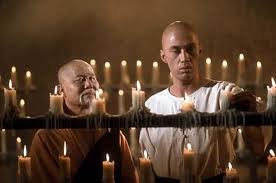
I don’t want to sound like Master Po from the popular television show, Kung Fu by saying, “Grasshopper, wisdom is the highest level of understanding.” And then a chime dings. But maybe, just maybe, wisdom is just another word for character or plain authenticity?

Ephesians 5:15-16
Be very careful, then, how you live—not as unwise but as wise, making the most of every opportunity, because the days are evil.

For me, it’s still a challenge to live wisely: I have thought about wisdom for a long time. I even had a bible study group for a time, seeking wisdom, studying the words of wisdom, and the promises from operating in wisdom.

I’m putting the cart before the horse, as they say. Wisdom, or character, evolve as a by-product from our individual days and choices. There are no wise children. Their life experiences are not fully formed.

And yet, it’s not about the age of a person. It is our responses to life, to people, to God, that grows wisdom.

I’ve become so caught up in Solomon’s request for wisdom [I Kings 3:1-28] and the scriptures that encourage me to “ask” for wisdom [James 1:5], that I keep thinking of it as an anointing. If I ask, God will answer and wisdom will drop onto me like a mantle.

In verse 18b of this chapter in Ephesians, Paul says, “. . . be filled with the Spirit.” This is more likely the true foundation of all things wise.

Potentially, anyone can have wisdom from life’s challenges, sorrows, and successes. This kind of wisdom is rooted in the mind. But God’s way of wisdom involves the Spirit. And when Paul speaks of making the most of every opportunity, it’s about our relationship with Spirit. Historically, I have thought about being filled with the Holy Spirit as a “swooshy” kind of thing. I had that initial experience as a young Christian and I know it does happen. It’s a kind of anointing, an empowering presence, a wind.

But, Paul is talking about a different kind of filling here. I believe it’s part of this journey of the inner way, keeping all avenues open by avoiding those things, situations, and people that block the light and draw veils over the soul.

Most people know the proverb passage that says, “The beginning of wisdom is the fear of the Lord. . . ” [Proverbs 9:10] but we sometimes forget that this word for fear is closer to reverence than anything else. And where and when do we experience true reverence for God?

Photo by Irm Brown

In my mind, the desire for “places of reverence” encouraged the initial designs of beautiful churches and cathedrals. Intentionally, they were created as places where people could feel awed almost immediately. I can appreciate this reasoning today so much better than I could before. Our contemporary churches have lost this aspect of the worship experience.

In that first study group, I asked them, where do you experience that kind of reverence or fear of God? Their answers were varied but clearly, their answers were all choices to be in those places, with those things or people, and there we are filled with the Spirit.

What conscious choice can I make today to enter the wise way, to be in a place of reverence?

(FD6)

Read Full Post »

« Newer Posts - Older Posts »