Feeds:
Posts
Comments

Posts Tagged ‘prayer’

Photo by Paula Tatarunis

I had always assumed the “House of the Lord” meant the church or temple, a place for corporate worship. I interpreted this scripture (well worn by many of the faithful) to mean, show up every Sunday. Eyes opened today: it means the family place of God, to live or exist within the family, bound by the blood.

Psalm 27:4
One thing I ask from the LORD, this only do I seek: that I may dwell in the house of the LORD all the days of my life, to gaze on the beauty of the LORD and to seek him in his temple.

I’ve never been that comfortable when church leaders refer to their constituents (or members) as family. I’m sure I’ve been tainted by a less than ideal family history. As immigrants, we had no relatives nearby. In fact, most were locked behind the iron curtain and Berlin wall until 1991. Family was a small corps of people, only three (since my father died when I was nine). I was always envious of those large family gatherings that people would have each holiday and I was delighted when our small family was embraced into a larger one, even briefly.

But the church family thing never really resonated. I suppose I couldn’t be myself in those gatherings. It was still too much like a public venue. I had to put on my “church face.”

Now, there is a different family to consider. This “family of God” is not the Church alone; it is not only the people who meet Sundays and weekdays, who have placed themselves under the banner of a particular denomination or church name (although they are included). No, I believe this family is within where the Spirit resides.

The “shelter of his sacred tent” [vs 5], is within.

This is the world of prayer, meditation, and contemplation. This is the place of creativity and imagination, music and color, beauty and light. This is the world outside of time.

And when two or more are gathered here [Matthew 18:20], God is in the midst of them: in the house of the Lord.

Read Full Post »

When people are grieving or anxious, they will often say, “I just keep busy to keep my mind off of it.” And, in those situations, being busy sounds reasonable. But I’m thinking this filling up of the mind with stuff may be interfering with the healing work of God.

Psalm 10:4
In his pride the wicked man does not seek him;
in all his thoughts there is no room for God.

Another example is the memory and RAM needed in a computer. I suppose this is on my mind because of the computer parts all over my desk here at home. I knew my computer was on its last legs, but I wanted to get the data off and transferred to the new computer before it was too late. I got all the right cables, the PC Mover software, made all the right connections but when I tried to load the software, I got a blue screen. It was all over. There was simply no more room on the old computer for anything. Even though the PC Mover software would help the situation, would open up space, the computer was too full already.

How many times have I told my kids to leave room at the top of a cup of coffee if they want to add cream and sugar. Instead, there’s a mess all over the counter from spilled liquid while they try to stir it or carry the brimming cup to the sink.

We do the same thing in our brains. Well, at least, I know I do. I max out my head and my calendar. I keep adding and adding and then I wonder why I start to forget things and become more and more stressed out.

Leaving room for what comes next must be intentional.

If I want God to do a work, to help me solve a problem, to transform my habits, then I’d better leave some extra time, energy, and place for that to happen.

De-cluttering is a good example. Surely, everyone knows that things look and feel worse before they feel better when trying to move from chaos to order. To organize a messy closet, everything has to come out first. The stuff ends up all over the floor and bed. And if I don’t leave enough time to return those items methodically to the closet, I have just expanded my problem.

God also needs my time and attention to de-clutter me within.

Read Full Post »

If I am afraid of being abandoned (or forsaken), I will begin looking for signs of it. Although I want that person to remain close, I will put him under the microscope and scrutinize every action and word. My fear morphs into expectation and soon, it’s just a matter of time before he is gone.

Psalm 9:10
Those who know your name trust in you,
for you, LORD, have never forsaken those who seek you.

Throughout scripture, God speaks promise and comfort particularly in the area of abandonment. God promises to remain with us, to stand behind us, to live within us [Deuteronomy 31:6; Joshua 1:5b; I Chronicles 28:20; Psalm 94:14; Hebrews 13:5]. Over and over again, one promise after another about forgoing abandonment. It’s not God’s way. So, why must these affirmations be repeated so much? Because we don’t believe it.

There are any number of reasons we expect God to abandon us. In my case, it began with my father’s death when I was nine years old. As a child I could not really understand the circumstances. I only knew or felt that he had left me. And then there was the string of boyfriends who came and went. They, too, added to the pattern, not to mention a dearth of friends when I was young.

As a believer, things got a little better and early on, I gravitated to those verses that promised the steadfastness of God. But even those declarations were chipped away over the years by deep disappointments and failures. Later, depression itself threatened my peace of mind and trust in God. A cloud of loneliness, even in the midst of family and activity, became another secret menace to my heart. And then the inner voices became the same kind of microscope I had used in relationships. “If God really loved you, would He allow you to be in this marriage? If God really loved you, wouldn’t you be able to have children? If God really loved you, wouldn’t you be more successful as an actress, director, playwright, realtor, salesman, manager?” On and on and on.

It can be a slow slog back to faith: a daily choice to believe despite circumstances; a commitment to read and contemplate the promises; a time of quiet and meditation; a courage to confront what appears with what can be.

Read Full Post »

After 70 years, when Jewish exiles returned to Jerusalem and the Second Temple reconstruction was completed and dedicated by the shedding of much animal blood, they celebrated the Passover, eager to seek God through their age-old rituals and traditions. They were home.

Ezra 6:21
So the Israelites who had returned from the exile ate it [Passover lamb], together with all who had separated themselves from the unclean practices of their Gentile neighbors in order to seek the LORD, the God of Israel.

What is my first order of business upon returning home from a long absence? Although I have no hard and fast religious practices to resume, I am anxious to get back into my routine. There is comfort in the familiar. I am happy to greet my dogs and take them outside. I peruse the mail, I make a cup of tea.

There are very few things that I can only do at home and yet, when I do, I am more contented. I can pray anywhere, but when I sit in my favorite chair, I fall into a quick communion with Christ. I can read scripture when I am away, any access will get me there, but my well-worn black leather Bible still comforts me by feel and sound, as the thin pages crackle.

Returning to church after a time away is also consoling with the familiar music and warm engagement with friends. For me, even my work, which can feel redundant and tedious sometimes, breathes into me when I walk through the door, breathes welcome.

There are amazing stories of families who have been separated by years and years through political insanity, such as the Berlin wall that divided East and West Germany or the Iron Curtain or the North Korean Demilitarized Zone, still active today. But when those barriers came down, families found one another again and fell upon each other joy and weeping. The touch of a beloved one.

Even I, when I met my half sister (who lives in Estonia) for the first time in 1996, we embraced fiercely, for we were bound by blood, the same father, and it sustained us. On the same trip, I met my aunt, my mother’s sister for the first time, and her heart exploded when we clung to each other. I was in foreign lands where I did not speak the language well, where homes were completely different from my own, where the culture had suffered from the cruel and powerful through communism, and yet, I was also home.

In May of this year, I will be retracing my steps and re-uniting again my half-sister and aunt. And my heart craves for that time together.

This is a type of longing that God wants me to have for the Holy Spirit every day.

“Come away, my beloved . . . ” [Song of Solomon 8:14a]; come home.

Read Full Post »

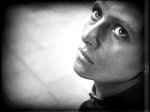
Joan of Arc as played by Renee Jeanne Falconetti, 1928

The Lectionary readings for this day, the Second Sunday of Lent, are Genesis 17:1-7, 15-16; Psalm 22:23-31; Romans 4:13-25; and, Mark 8:31-38 or Mark 9:2-9.

From these readings comes a theme of covenant, promise, and faith. From it also comes this verse in Romans 4:16b-17: He [Abraham] is the father of us all. As it is written: “I [God] have made you a father of many nations.” He is our father in the sight of God, in whom he believed—-the God who gives life to the dead and calls into being things that were not.

The God who calls into being things that were/are not. For me, this phrase is worth holding onto forever, this is a game changing verse.

But, what is even more intriguing is the crossover of events and messages that I experienced today. First, in church, our pastor started a new series on praying boldly, which means to pray the big things, the larger than life prayers. If those prayers come to fruition, there is no doubt that God is in the results. Elijah was known for these kinds of prayers. And like Abraham’s faith, it’s believing God can bring things that are not, into existence.

Secondly, I went to Voices of Light: the Passion of Joan of Arc, an oratorio with Silent Film presented by the Baltimore Symphony, the Baltimore Choral Arts Society, and four soloists. The original music was composed by Richard Einhorn who was also present at the concert and introduced afterwards. The film, from 1928, was directed by Carol Theodor Dreyer and starred French actress, Renee Jeanne Falconetti, who, incidentally, never acted in another film after this one. The film was based on the actual court record of questions that religious authorities asked Joan D’Arc and her subsequent answers. And although her story ends in her death at the stake, her short life, driven by her voices and visions from God, crowned a king (Charles VII) and turned an army in despair into hope. Her faith was so authentically depicted, I could only weep at her inner battle. We saw her fears and faith seeking dominance.

Can I walk with such faith? Can I pray boldly? Can I challenge my fears and overcome them with my faith? Can I trust in the covenant I have made with God through the Christ?

Read Full Post »

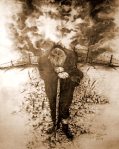
Art by Joseph Liner

Thirty two years ago, I responded to a nation-wide call to Christians around the country to fast and pray in Washington, D.C. II Chronicles 7:14 was the keystone verse to that call and that day became known as Washington for Jesus. I arrived with national hope for healing but left with disappointment.


II Chronicles 7:14
“. . . if my people, who are called by my name, will humble themselves and pray and seek my face and turn from their wicked ways, then I will hear from heaven, and I will forgive their sin and will heal their land.”

I had taken the call seriously. I traveled a long way, prepared myself to fast, and meditated on the scriptures. In my imagination, the Mall would be filled with prayer like in the days of David and Solomon and the Shekinah glory would fall. Instead, there was amplified praise music and prayer from the stage area, political rhetoric, picnics, vendors selling “Jesus Junk,” street proselytizing, and tracts, tracts, tracts. Hope was being directed to a political agenda and not to the instruction and promises God had given to Solomon.

Granted, it is much more difficult to turn a country’s focus. Change begins at the grass roots level, it begins with the individual.

So, here are the steps to healing that I have gleaned from this scripture. This is where I must begin:

  1. Know who you are. God is speaking to the “people called by my name.” Am I a child of God? I am. I have accepted God’s authority over my life.
  2. Humble yourself. As long as I believe my way is the best way, I can interfere with the divine plan. Humility with others is tough; with God, moreso.
  3. Pray. There are thousands of ways to pray, from casual chat to ritualized liturgy. They are all useful as long as the heart is bent toward God.
  4. Seek God’s face. A little different from prayer, but certainly an aspect of prayer, this seeking implies expectation. If I am told to seek then I am expected to find. The key is understanding that God’s face is reflected in a myriad of ways including the faces of human beings.
  5. Turn aside from the old ways and habits. This is probably the most difficult step if it’s done out of order. It’s not just a quarter turn, it’s a 180. It’s a decision. I don’t even have to walk in that new direction, just turn, and God will show up.

These are steps that will bring healing to any situation. And physical healing? I don’t know, perhaps that too. Perhaps, as the heart and soul are healed, the body follows. But I can’t speak with any authority about that, I have not yet grappled with serious illness.

The promises are threefold if we follow the five steps: God will hear, God will forgive, and God will heal.

I am reminded of the four friends who broke through a ceiling to lower their paralyzed friend down to Jesus [Mark 2:3-5] and it’s revealing to me that Jesus forgave his sins first.

I don’t know how to bring a nation around, but I believe we could start with our own lives. The “land” is basic, it’s the foundation of our Earth. What is foundational in our daily lives?

Read Full Post »

How often do people say, “Did you pray about it?” or “Did you ask God first?” and although I may or may not specifically seek God’s favor or direction, can I hear truth if I have already made up my mind on what I want to hear, on what I want to do? Am I just looking for a stamp of approval?

I Kings 22:5
But Jehoshaphat also said to the king of Israel [Ahab], “First seek the counsel of the LORD.”

When Jehoshaphat came to ask Ahab to join forces against the King of Aram [Damascus], they both knew they needed God’s go-ahead. Despite hearing his standard 400 prophets affirm the plan, Ahab (evil as he was) still wanted one more proof, a endorsement from the prophet Micaiah who served the one God. They went through the motions and Micaiah even played along and agreed with all the other prophets. But Ahab didn’t believe him and made him give the true message from God. It wasn’t a good message: both armies would be scattered and Ahab would lose his life.

Despite dressing in disguise for the battle, a random arrow shot Ahab anyway. He stood and watched the battle and the destruction of his army as blood filled his chariot before he died.

Ahab believed he could trick the prophecy by disguising himself. He actually believed in the words of Micaiah enough to do that, but not enough to halt the plan, to change his mind.

I don’t have a prophet to come to my house and tell me God’s answers to my questions. But I have written often and believe the presence of the Holy Spirit within me is my source of inspiration and prophetic expression. As a result, I am respectably good at hearing affirmation from the Spirit when I seek a sanction to proceed. But I am not no sure I recognize the stop signs, the tug of holding back, the cautions. Sometimes, I will take silence as an approval. It’s because I want that thing to happen; I want to will it to be so, to be OK.

My single focus on what I want closes my interior hearing. I am no better than Ahab in that regard.

Forgive me Lord. Help me sustain those times of confusion or “not knowing” long enough to hear truth, to recognize truth whether it be a yes or no, a now or later, a different answer than I want.

Read Full Post »

« Newer Posts - Older Posts »