Feeds:
Posts
Comments

Posts Tagged ‘prayer’

And God pricked my spirit saying, you can’t just write about prayer. You must actually “do it.” This is where wisdom is born of knowledge and understanding.

So I turned to the most well known prayer of all. My first stumble was on the first word: Our. And then, it came to me that every prayer, really, is an “our” prayer because I am asked to pray on behalf of all humans. This is a prayer for humanity:

And so I prayed this way:

prayer2Our Creator, God who made us: You are heaven (we are still earth).
A mere name cannot hold all that You are. Holy. Father. Mother. Creator. God.
We need heaven here and we need Your authority.
We accept and surrender to You here.
To transform ourselves and our world into You, into heaven.
Allow us the nourishment we need to sustain our bodies, our minds, and our souls for one more day.
Forgive our abuses of your grace.
We will forgive others too. We must. Because we are no better than they are.
Keep drawing us away from the selfish choices, the rebellious preferences, the well-traveled roads;
And instead, shepherd us into Your Presence.
When we willfully continue the wrong way and entangle ourselves in the web of evil: save us.
We acknowledge You, Heaven, Holy Other and Hope.
You have the power and love to do and will what is best for humanity, for us, and really, for me.

This is my prayer.

Psalm 8:1

Read Full Post »

When evildoers came upon me to devour my flesh,
My adversaries and my enemies, they stumbled and fell.
Though a host encamp against me,

My heart will not fear;
Though war arise against me,
In spite of this I shall be confident.

One thing I have asked from the Lord, that I shall seek:
That I may dwell in the house of the Lord all the days of my life,
To behold the beauty of the Lord
And to meditate in His temple.
For in the day of trouble He will conceal me in His tabernacle;

In the secret place of His tent He will hide me;
He will lift me up on a rock.  [Psalm 27:2-5, NAS]

enemy proverbI am to walk in confidence and pray so since the promise is plainly spoken, my enemies will fall before and I will dwell safely. But there is no promise of the timetable. And I must remember this. I may be safe in the stronghold, but the outer keeps and lands around my stronghold may suffer pain or loss or injury. There is no promise of a pain-free life, just a promise that no enemy will prevail.

Who are these enemies anyway?

Are there, literally, people out there who want to specifically do “me” harm? Are there people who would intentionally hurt me? I don’t think so, not really. Of course, if I put myself in dangerous places, if I travel in war-torn areas or walk the streets of brutalized neighborhoods, I might indeed become a representative of everything someone hates: while, middle-class, Christian female. For some, that might be enough. I cannot say or expect that I, as an individual, would be excused from misfortune or injury in that situation.

Anyway, I’m pretty sure my biggest enemy is within, that “old self” who continues to look for footing and place where none should be. It is that untamed part of me that kicks against surrender to the Christ Spirit. That part of me continues to behave like a stubborn step child, unwilling to adapt to change, and unwilling to live under spiritual authority.

The prayer, then, makes sense: to remain in the “house” of the Lord (that inner stronghold). For me, this passage has more depth than simply going to church on Sunday mornings. The words ring truer when I consider the house of God within me, that shelter of the most high, where the Spirit meets me willingly and lovingly. This is the place for I have free access to the God of the Universe, where I can see and feel the light ad beauty of God.

The more familiar I become in this place, the more clearly I can experience true peace, and that clamoring enemy and the traps of the worldly concerns have less and less power. Here is the core of worship.

Read Full Post »

The Lord is my light and my salvation—whom shall I fear?
The Lord is the stronghold of my life—of whom shall I be afraid?  [Psalm 27:1, NIV]

Antelope Canyon, Wikipedia Commons

Antelope Canyon, Wikipedia Commons

Three words drove my prayers from this verse: light, stronghold, and fear.

There are so many different kinds of light but they all get similar results: they transform the appearance of a place or thing by illuminating it. Light pushes back darkness. Light is often a reflection of energy. “God is light, and in God, there no darkness at all.” [I John 1:5] Light reveals things that are hidden. Light is no respecter of persons. Light does not judge, Light is.

And apparently, the presence of Light (the Light) gives confidence against the people, situations or causes I might fear.

A stronghold is best described as a fortified place which has been created as the best (and often the last) line of defense. It is like safe within a bank or a tower within a castle. It is built with defense and safety in mind. This, then, is within me as well. There is a location within me that is protected by the Holy Spirit. This place cannot be breached without permission, an open door or window, opened from within. This is where God’s Spirit dwells in tandem with my own spirit.

But fear is also a strong word and it manifests most often through people. It is unfortunate how often I engage people (and my fear) before I engage my place of strength within or before I shed the Light on the situation. This task is to be done daily, hourly, and even minute by minute. Some people call it centering.

I want to stop “reacting” and simply be fully in the moment and allow that moment to be what it is and me to be who I am in Christ. That’s one of the reasons why it’s called “the peace that passes understanding.” That place is not always apparent if I don’t practice being there.

It is prayer from the place of strength. It is prayer of abandon and trust. It is authentic and transparent.

Read Full Post »

“. . . search your hearts and be silent. Offer right sacrifices and trust in the Lord.” [Psalm 4:4b-5, NIV 1984]

examenBefore anyone starts the blame game, God says look at ourselves first. That’s right. Look at our own hearts because it’s very possible that our circumstances are an outgrowth of our own intentions, our own motives, camouflaged as self-righteousness.

Richard Foster calls it the “prayer of examen,” with two parts: the examen of consciousness and the examen of conscience.

The first asks me to reflect on the “thoughts, feelings, and actions of my day to see how God has been at work . . . and how I responded.” In other words, did God speak through others, through nature, through print, through image, or through circumstance; did I notice? Was I aware of Presence? Did I recognize God and how did I respond? Did I assume it was “not” God and respond with anger, disgust, or judgment? Did I stop long enough to see a need, a sorrow, or a joy? Did I walk through my day with blinders, dark glasses, or binoculars? Did I remember God?

In the second type of examen (conscience), I am to invite the Lord to search my heart to its very depth, but to remember it’s a “scrutiny of love.” Foster states, “without apology and without defense we ask to see what is truly in us. It is for our own sake that we ask these things. It is for our good, for our healing, for our happiness.” This search is done with God, otherwise, we will either justify our actions and find excuses or we will self-flagellate, finding ourselves unworthy. Neither is the point.

And why do we do these examinations? To know ourselves in the light of God’s grace, because it is only from the truth that God can build human as we were always intended to be. “Through faith, self-knowledge leads us to a self-acceptance and a self-love that draw their life from God’s acceptance and love.” (Foster, Prayer: Finding the Heart’s True Home, p. 31)

It is in this process that words and complaints lose their import. Silence is listening.

When understanding dawns, then it is time for right sacrifice. Of course, in the time of King David, sacrifices were specific to sin: a particular animal, a type of grain, a wave, and so on. Each sacrifice was tuned to the sin for which it was offered. But Christ completed that sin offering for us, once and for all. So what is an appropriate sacrifice from us today? The first verse that comes to my mind is  Hebrews 13:15, “Through Jesus, then, let us keep offering to God our own sacrifice, the praise of lips that confess His name without ceasing. ” [The Voice translation] Another is Romans 12:1 [also in the Voice], “Brothers and sisters, in light of all I have shared with you about God’s mercies, I urge you to offer your bodies as a living and holy sacrifice to God, a sacred offering that brings Him pleasure; this is your reasonable, essential worship.”
With these sacrifices, there is an intention then. There has to be, an expression of trust. The path might look something like this: Search, Confess, Sacrifice, Trust. And perhaps, finally, Rest.


Read Full Post »

Psalm 4

trustThis Psalm begins, ” Answer me when I call to you . . . Give me relief from my distress. . . have mercy on me and hear my prayer.”

How often have I cried out in this way: Do Something! Anything!

It’s a kind of command and a kind of plea. The words carry a feeling of desperation as though God has not been answering, has not given relief, has not been merciful, and has not heard any of my prayers. Not true, of course. I know it, but when I am overwhelmed, I feel abandoned by God, alone, and sometimes, even drowning.

In these moments, it is the critical time to stop and think and consider. Am I child of God or not? Have I surrendered my soul to God or not? Do I believe God is in this life of mine or not? No matter what I might have said or done to get myself here, is God still sovereign?

When I am unwilling to pray, I do the greatest damage to myself. I can convince myself that God is not listening, why bother? I can display my life and use it as evidence that God does not answer. I can choose to embrace the arguments of the enemy to my spirit to deafen my ears, to blind my eyes, to dull my senses.

God hears my prayers if I speak them from the heart. Whether they are well spoken or not, desperate or not, flowery or not, God hears because I asked God to be in my life. I accepted the Presence of Christ’s Holy Spirit within me.

When my circumstances seem out of control, I must take a break and change up my image of prayer. It’s like pounding on a locked door, crying and anxious, while God is calling me to turn away, take a walk, take a breath, engage trust. Believe in the “answers” that come from the most unlikely places, that are far more creative than my requests.

I want to stop making my prayers a list of recommended solutions.

Read Full Post »

I have been contemplating today how I will continue my path. I have just completed creating a six-week study of the Book of Ephesians in Bible lesson/question format; and as a result, I knew I wanted to spend some time in prayer and perhaps study prayer along the way, but how? I prefer grounding any of my efforts in scripture, no matter how far afield I may go along the way. The most logical place to start appeared to be the Psalms.

I didn’t want to simply start at Psalm 1 and plow through them one by one; instead I wanted the selections to more closely reflect my state of being that day or week. As a result, I have discovered a number of web sites that lay out the psalms by the church calendar (Book of Common Prayer Psalter), by topics, and by summary statements. I will begin with these, looking for revelation and, hopefully, an inner journey that will manifest in a more joyful, peaceful, and moderated outer life.

It is the Spirit I am pursuing in prayer. It is the Presence. It is an intimacy I believe is attainable; a listening place where direction is palpable and rooted in the holiness of God in Christ’s Spirit.

Read Full Post »

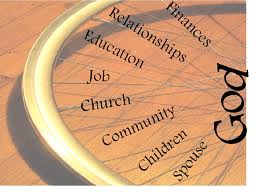
prioritiesThis summer, I have moved most of my writing energy to a new online project called Bible Study Together. It started as a request from my pastor to experiment with creating a Bible Study through a Facebook group. That venue proved problematic because of the way the posts bounce around when a person comments on a particular post. As a result, I moved everything to the blog which has proved far more successful.

The process is quite different from devotional work and although the learning and appreciation I have for the book of Ephesians has grown immeasurably, I would not say it has enhanced my quiet time.

How do people balance all of the possibilities? I never seem able to get the percentages right. I enjoy new experiences but they come at a cost. My home environment has reached “chaos” standing, particularly the office. With the kids all in “adulthood” but still living at home, there is a scatteredness to our schedules that makes dinners or “family” time an anomaly. Church time now has additional responsibilities and it is rare to find time for reflection. Besides, our services aren’t even structured for that. I knew that going in.

I remember going on a personal retreat to a convent. It was a wonderful experience in the end, but it took a full day and a half before I really managed to settle into a routine of true contemplation and prayer. The first hours I slept heavily or made lists of all the things I needed to do when I got back. My mind whirred.

So, here I am, making myself another promise: two more weeks of the study and I’ll get back to my first love. But who knows, really, what the next two weeks will hold?


Read Full Post »

« Newer Posts - Older Posts »