
Feeds:
Posts
Comments

Posts Tagged ‘seeking’

When people are grieving or anxious, they will often say, “I just keep busy to keep my mind off of it.” And, in those situations, being busy sounds reasonable. But I’m thinking this filling up of the mind with stuff may be interfering with the healing work of God.

Psalm 10:4
In his pride the wicked man does not seek him;
in all his thoughts there is no room for God.

Another example is the memory and RAM needed in a computer. I suppose this is on my mind because of the computer parts all over my desk here at home. I knew my computer was on its last legs, but I wanted to get the data off and transferred to the new computer before it was too late. I got all the right cables, the PC Mover software, made all the right connections but when I tried to load the software, I got a blue screen. It was all over. There was simply no more room on the old computer for anything. Even though the PC Mover software would help the situation, would open up space, the computer was too full already.

How many times have I told my kids to leave room at the top of a cup of coffee if they want to add cream and sugar. Instead, there’s a mess all over the counter from spilled liquid while they try to stir it or carry the brimming cup to the sink.

We do the same thing in our brains. Well, at least, I know I do. I max out my head and my calendar. I keep adding and adding and then I wonder why I start to forget things and become more and more stressed out.

Leaving room for what comes next must be intentional.

If I want God to do a work, to help me solve a problem, to transform my habits, then I’d better leave some extra time, energy, and place for that to happen.

De-cluttering is a good example. Surely, everyone knows that things look and feel worse before they feel better when trying to move from chaos to order. To organize a messy closet, everything has to come out first. The stuff ends up all over the floor and bed. And if I don’t leave enough time to return those items methodically to the closet, I have just expanded my problem.

God also needs my time and attention to de-clutter me within.
Read Full Post »

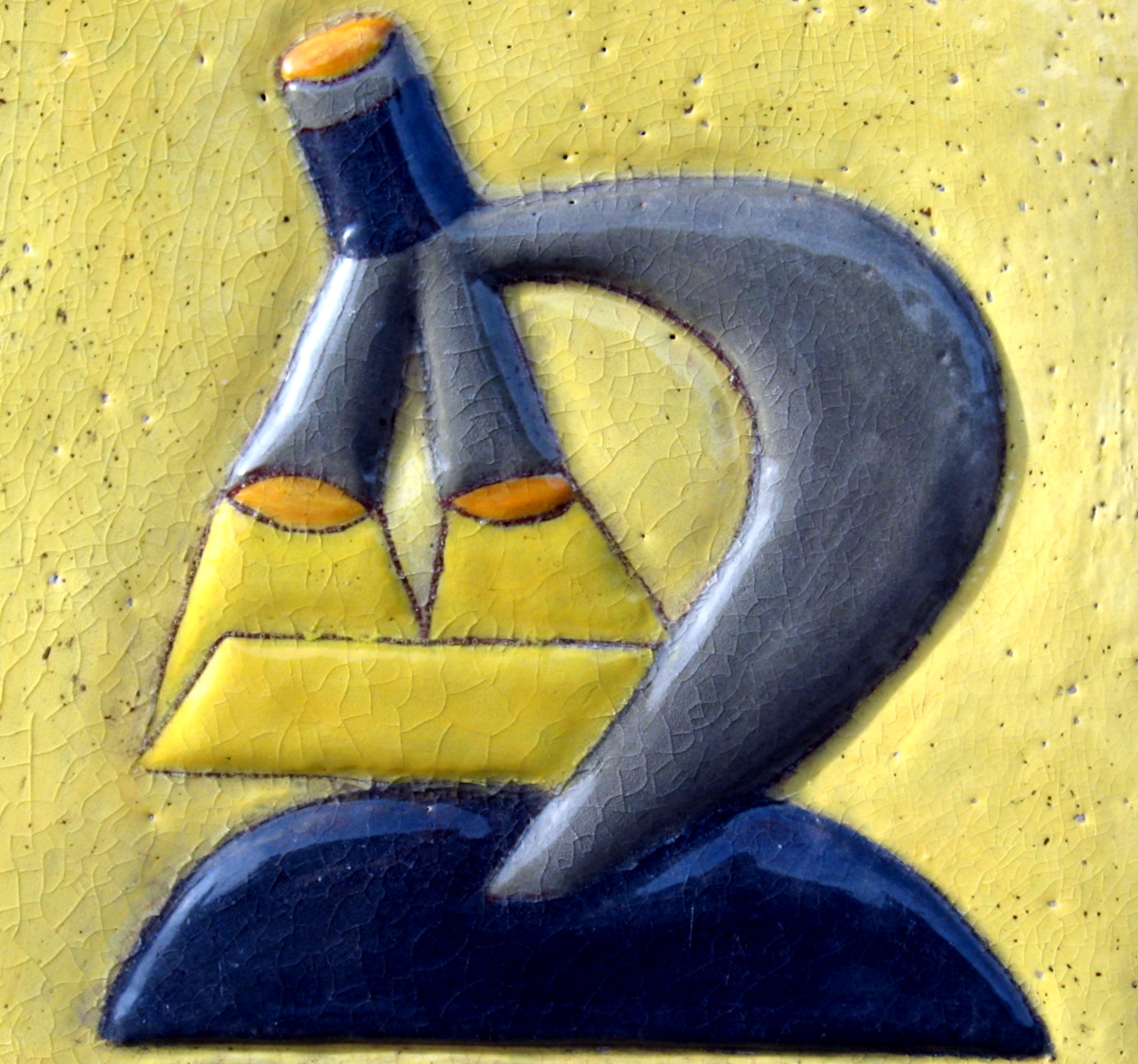
If I am afraid of being abandoned (or forsaken), I will begin looking for signs of it. Although I want that person to remain close, I will put him under the microscope and scrutinize every action and word. My fear morphs into expectation and soon, it’s just a matter of time before he is gone.

Psalm 9:10
Those who know your name trust in you,
for you, LORD, have never forsaken those who seek you.

Throughout scripture, God speaks promise and comfort particularly in the area of abandonment. God promises to remain with us, to stand behind us, to live within us [Deuteronomy 31:6; Joshua 1:5b; I Chronicles 28:20; Psalm 94:14; Hebrews 13:5]. Over and over again, one promise after another about forgoing abandonment. It’s not God’s way. So, why must these affirmations be repeated so much? Because we don’t believe it.

There are any number of reasons we expect God to abandon us. In my case, it began with my father’s death when I was nine years old. As a child I could not really understand the circumstances. I only knew or felt that he had left me. And then there was the string of boyfriends who came and went. They, too, added to the pattern, not to mention a dearth of friends when I was young.

As a believer, things got a little better and early on, I gravitated to those verses that promised the steadfastness of God. But even those declarations were chipped away over the years by deep disappointments and failures. Later, depression itself threatened my peace of mind and trust in God. A cloud of loneliness, even in the midst of family and activity, became another secret menace to my heart. And then the inner voices became the same kind of microscope I had used in relationships. “If God really loved you, would He allow you to be in this marriage? If God really loved you, wouldn’t you be able to have children? If God really loved you, wouldn’t you be more successful as an actress, director, playwright, realtor, salesman, manager?” On and on and on.

It can be a slow slog back to faith: a daily choice to believe despite circumstances; a commitment to read and contemplate the promises; a time of quiet and meditation; a courage to confront what appears with what can be.

Read Full Post »

What is a promise? I know what it should be. I know that it should be binding and carries with it an expectation. If I promise to do something, the person expects me to follow through. A covenant is the next step up and just below law. Our culture has never mastered covenant.

II Chronicles 15:12
They [Asa and the people of Judah] entered into a covenant to seek the LORD, the God of their ancestors, with all their heart and soul.

Covenant is harder. Despite the promises and the expectations and outward signs of agreeing to a covenant, it can be broken with no apparent ill effects. At least that’s what people seem to think. The most controversial covenant is the marriage. Couples stand before witnesses and make vows, they agree, they promise, they share ritual, and yet, divorce statistics range near 50% for first time marriages and higher for second and third marriages.

I am one of those statistics. I married for the first time at eighteen. And although I was “in love,” I also had this reasoning in the back of my mind: if it doesn’t work out, I’ll just get a divorce. It’s not a good start to a promise.

As a parent, I have tried to avoid the “I promise” phrase because I know how easy it is for things to go awry, for circumstances to change, for promises to be broken.

But today, as I traverse then Lenten time, I feel compelled to make and hold to some promises. I have committed time to God in prayer, meditation, and writing. I have promised to seek God throughout this journey. And I feel the weightiness of this agreement in a way I never have before.

When I was twelve, my mother had tried to find a new spouse by answering personal ads in the Latvian newspaper. One of those men invited us to visit him in Niagara Falls, Canada. I didn’t like this man at all and one night, when the two of them had gone out on a date and stayed out very late, I prayed fervently and made many deals with God if would break up this couple. I believe this was a girl’s version of a foxhole conversion. My mother never remarried, but I didn’t follow through either. Or did I? Was my rediscovered faith at 28, a consequence after all? Did my promise bear fruit?

Sometimes, I think it does work out that way.

The things we say, the words we speak, have power, particularly if they are heartfelt. In that other world, inhabited by spirits and angels and so forth, what happens to the promises we make?

Read Full Post »

Art by Joseph Liner

Thirty two years ago, I responded to a nation-wide call to Christians around the country to fast and pray in Washington, D.C. II Chronicles 7:14 was the keystone verse to that call and that day became known as Washington for Jesus. I arrived with national hope for healing but left with disappointment.


II Chronicles 7:14
“. . . if my people, who are called by my name, will humble themselves and pray and seek my face and turn from their wicked ways, then I will hear from heaven, and I will forgive their sin and will heal their land.”

I had taken the call seriously. I traveled a long way, prepared myself to fast, and meditated on the scriptures. In my imagination, the Mall would be filled with prayer like in the days of David and Solomon and the Shekinah glory would fall. Instead, there was amplified praise music and prayer from the stage area, political rhetoric, picnics, vendors selling “Jesus Junk,” street proselytizing, and tracts, tracts, tracts. Hope was being directed to a political agenda and not to the instruction and promises God had given to Solomon.

Granted, it is much more difficult to turn a country’s focus. Change begins at the grass roots level, it begins with the individual.

So, here are the steps to healing that I have gleaned from this scripture. This is where I must begin:

  1. Know who you are. God is speaking to the “people called by my name.” Am I a child of God? I am. I have accepted God’s authority over my life.
  2. Humble yourself. As long as I believe my way is the best way, I can interfere with the divine plan. Humility with others is tough; with God, moreso.
  3. Pray. There are thousands of ways to pray, from casual chat to ritualized liturgy. They are all useful as long as the heart is bent toward God.
  4. Seek God’s face. A little different from prayer, but certainly an aspect of prayer, this seeking implies expectation. If I am told to seek then I am expected to find. The key is understanding that God’s face is reflected in a myriad of ways including the faces of human beings.
  5. Turn aside from the old ways and habits. This is probably the most difficult step if it’s done out of order. It’s not just a quarter turn, it’s a 180. It’s a decision. I don’t even have to walk in that new direction, just turn, and God will show up.

These are steps that will bring healing to any situation. And physical healing? I don’t know, perhaps that too. Perhaps, as the heart and soul are healed, the body follows. But I can’t speak with any authority about that, I have not yet grappled with serious illness.

The promises are threefold if we follow the five steps: God will hear, God will forgive, and God will heal.

I am reminded of the four friends who broke through a ceiling to lower their paralyzed friend down to Jesus [Mark 2:3-5] and it’s revealing to me that Jesus forgave his sins first.

I don’t know how to bring a nation around, but I believe we could start with our own lives. The “land” is basic, it’s the foundation of our Earth. What is foundational in our daily lives?

Read Full Post »

Ceramic tile by Katherina Short

Imagine being in that early flush of honeymoon love and waking in the morning. The first thing I do is turn to look at my beloved. A wonder. If he has risen beforehand, I might call out the name or simply rise to seek him out. I know he is there. So it can be with God.

I Chronicles 16:10-11
Glory in his holy name; let the hearts of those who seek the LORD rejoice. Look to the LORD and his strength; seek his face always.

To seek God does not need to be a quest, it’s just turning my head to look, to really look. It’s like being at a party and for a moment, losing sight of my date. I look for that familiar head of hair or the clothes I know he wore. There he is. All is well. I don’t need to rush over and clutch at his sleeve. We are in the same room. We are together.

Sometimes seeking God is simply a reawakened awareness of God’s proximity to me.

As children grow into toddlers, the first thing they want to do is stretch the boundaries of their independence. One of two things happen, the child ventures away but keeps checking back to make sure Mom or Dad can be seen, can be reached in need. Often, the toddler will make a number of trip back and forth, out into the bigger space and back to Mom. Yep, he knows the way and he fees secure. The next foray may be further and maybe out the door. But, if the toddler goes too far, the parent senses his absence and will follow.

I want to capture this truth today. Not just now as I’m writing, I want to pull myself away from what I’m doing and intentionally look for God–in the eyes of a friend, the walk of a stranger, the wet nose of my dog, in a handshake, in a flight of birds, in the wind or warmth of the sun.

Look! Look!

Read Full Post »

How often do people say, “Did you pray about it?” or “Did you ask God first?” and although I may or may not specifically seek God’s favor or direction, can I hear truth if I have already made up my mind on what I want to hear, on what I want to do? Am I just looking for a stamp of approval?

I Kings 22:5
But Jehoshaphat also said to the king of Israel [Ahab], “First seek the counsel of the LORD.”

When Jehoshaphat came to ask Ahab to join forces against the King of Aram [Damascus], they both knew they needed God’s go-ahead. Despite hearing his standard 400 prophets affirm the plan, Ahab (evil as he was) still wanted one more proof, a endorsement from the prophet Micaiah who served the one God. They went through the motions and Micaiah even played along and agreed with all the other prophets. But Ahab didn’t believe him and made him give the true message from God. It wasn’t a good message: both armies would be scattered and Ahab would lose his life.

Despite dressing in disguise for the battle, a random arrow shot Ahab anyway. He stood and watched the battle and the destruction of his army as blood filled his chariot before he died.

Ahab believed he could trick the prophecy by disguising himself. He actually believed in the words of Micaiah enough to do that, but not enough to halt the plan, to change his mind.

I don’t have a prophet to come to my house and tell me God’s answers to my questions. But I have written often and believe the presence of the Holy Spirit within me is my source of inspiration and prophetic expression. As a result, I am respectably good at hearing affirmation from the Spirit when I seek a sanction to proceed. But I am not no sure I recognize the stop signs, the tug of holding back, the cautions. Sometimes, I will take silence as an approval. It’s because I want that thing to happen; I want to will it to be so, to be OK.

My single focus on what I want closes my interior hearing. I am no better than Ahab in that regard.

Forgive me Lord. Help me sustain those times of confusion or “not knowing” long enough to hear truth, to recognize truth whether it be a yes or no, a now or later, a different answer than I want.

Read Full Post »

Seeking God’s Will

To whom do you go seeking God’s will? The “right” answer is that we go to God, but honestly, how many of us are very good at “hearing” God’s answers to the burning questions of our lives, our hopes, our futures, our decisions?

Exodus 18:15
Moses answered him [Jethro], “Because the people come to me to seek God’s will. . . . “

When Moses led the people out of Egypt, it was understood that he had communion with God, heard God’s voice, and was directed by God. The people believed in Moses and trusted him. Of course, this was before he disappeared up Mt. Sinai for forty days and forty nights. Nonetheless, at that point, they came to him for “judgments” in the midst of their disagreements. It was Jethro, Moses’s father-in-law, who observed the morning to evening ritual of “holding court” that Moses did for the people and it was Jethro who suggested Moses divide these responsibilities to other trusted leaders that Moses could appoint over “thousands, hundreds, fifties, and tens,” saving the more difficult cases for himself.

Here’s the point: As long as we give authority to someone to make a judgment on our behalf, we are accepting that judgment as God’s will.

This is the basis for our modern court system in which we have, as a culture, determined that controversies should be submitted to a judge (and sometimes a jury), to pronounce an answer, a judgment. Of course, in our world, we have now developed a complex appeal system. In essence, saying, “that’s not God’s will, that’s not the answer I wanted or needed or expected; that judgment wasn’t fairly determined, let’s try again, etc.”

To whom do you give the authority to make judgments in your life?

Is God sovereign or not? As a believer, can I make a judgment or take a path that is outside God’s ultimate will? OK, I’ll grant that my road could be shorter/smarter/leaner if my decisions were more in tune with the Holy Spirit. If I could slow down and ask God more often for direction, I’d probably stop wasting so much time and energy on detours. And yet, God does make the Way.

I have no Moses. Instead, I have the presence of the Holy Spirit within, given by God through the Christ. God’s will is not some floating pronouncement out of reach that requires intense prayer and fasting and study. It’s in the little things, the little daily judgments, the little decisions. And then, it’s on me to accept “what is” in order to move on to what can come next.

Today, I am in God’s will. I have given authority to Christ Jesus who dwells within as Spirit.

Read Full Post »

« Newer Posts - Older Posts »