Feeds:
Posts
Comments

Posts Tagged ‘worship’

 servingThe devil led him up to a high place and showed him in an instant all the kingdoms of the world. And he said to him, “I will give you all their authority and splendor; it has been given to me, and I can give it to anyone I want to. If you worship me, it will all be yours.” Jesus answered, “It is written: ‘Worship the Lord your God and serve him only.”  [Luke 4:5-8]

This is a disturbing passage; not because Jesus resists the enemy but the devil’s claim that the earth belongs to him. In essence, until the great coming of the Christ, there was little opposition to the presence of evil. The prophets would warn and encourage the following of God’s laws as a bulwark against the arrows of Satan and his demonic forces. But, this was a losing proposition. The longer evil ruled, the more difficult the light was to find and follow.

And so, God sends the Son to become the ultimate sacrifice for everyone. Grace instead of the law is offered to the people. The presence and indwelling of the Holy Spirit is the new way to fight the good fight against evil.

But still evil is not defeated. The Hitlers (Germany), Mugabes (Zimbabwe), Gadhafis (Libya), Husseins (Iraq), Castros (Cuba), Jong-ils (North Korea), and Stalins (Russia) poured out much bloodshed; the terrorists continue to frighten and murder; people die of hunger [25,000 a day] and disease such as AIDS [1 every 20 seconds] all over the world. Where is hope for victory? Where is the new Ruler of this Earth? How much longer will the earth groan [Romans 8:22]?

I can choose to keep my head in the sand and pretend that my extravagant living makes no difference in the world (one of the techniques expounded in C. S. Lewis’s wonderful book, The Screwtape Letters, or I can stop. I can open the door of my heart to the pain around me and touch it with the truth of the Spirit in me. Do I believe that God within, Christ died and risen, changes every day life or not?

Joshua asked, “choose for yourselves this day whom you will serve . . . ” [Joshua 24:15] but really, this is the question I am asked every day.

Perhaps I can’t transform the whole world, but I can metamorphose my use of time and impact my circle of friends, colleagues, and family by being a vessel for Spirit. I can pray with intent and not just lists of names. I can show up. I can be present. I can be open. I can choose life.

This day I call the heavens and the earth as witnesses against you that I have set before you life and death, blessings and curses. Now choose life, so that you and your children may live and that you may love the Lord your God, listen to his voice, and hold fast to him.”
[Deuteronomy 30:19-20]

Read Full Post »

Anointing His Feet 2
by Wayne Forte

Worship, in English, can mean to “declare worth.” That’s comfortable. However, in the original Greek, proskynéō means to kiss the ground while falling prostrate to a superior. When was the last time you fell to your knees before someone or something of such awesome worth or value?

Revelation 22:8b-9
I [John] fell down to worship at the feet of the angel who had been showing them [the prophecies] to me. But he said to me, “Don’t do that! I am a fellow servant with you and with your fellow prophets and with all who keep the words of this scroll. Worship God!”

The angel is saying to John, don’t fall down before me, but fall down before the One God, individually and corporately.

In some ways, the Muslim expression of worship is more in keeping with the intent of the word. Other faiths like the Orthodox denominations, Catholics, and some Eastern religions practice deep bowing and submissive movements. In recent years, some charismatic believers have found their deepest experience of prayer when it is coupled with lying prone, face down.

But most of us have lost the physicality of worship. A high church may still have kneelers (to make the submissive act more agreeable) but generally, the most common form of respect is standing up, not kneeling. Some church congretations stand to sing and some stand to pray while still others stand to hear a gospel passage spoken. There are denominations who do lots of standing up and sitting down (with a kneel or two in between) and there are denominations who have made the standing part optional, for those who find standing difficult.

And yet, for little children, the cliche for night time prayers is on the knees at the side of the bed. Perhaps even that has gone a bit out of style, I don’t really know, although figurines still abound with cherub children, hands sweetly folded, and eyes closed. It’s sweet. It’s innocent. But is it worship? Is it prayer? Is it surrender? Why do we encourage children to do this kneeling bit but not we ourselves?

In more contemporary churches, worship has come t mean the singing part of a service: a series of songs, starting with fast praise and then followed by a gradual slow down into devotional melodies and words of adoration. And repetition has become a sign of a deeper experience.

I’m not putting any of these “expressions” down. I faithfully attend a contemporary church. I’m right in there.

But, if I take any time at all to think about it, I do find most forms of Western worship to be very predictable and perhaps, if truth be told, a bit colorless and watered down. We keep boiling down the experience of worship into the most common denominator. Whether the service is a lively 60 minutes or a filibustering three to four hours, we are no closer to kissing the ground before God in adulation and acknowledgment of a divine presence.

After visiting several churches of the Middle Ages up through the Renaissance periods in Europe, I can understand why they designed them that way: they were attempting to remind us of the enormousness of God and smallness of Human. Whether sitting, standing, or kneeling, a person feels the divergence between self and the vaulted representation of all that is above and beyond. What do we have in the U.S.? Mauve chairs, blue carpet and artificial flower arrangements. Comfort, comfort, comfort, to the eye as well as the buttocks.

Everything is so controlled in our churches. Either it’s a repetitive liturgy or it’s an “order of service” that is constrained by the clock. Even those services not confined to time are confined to set rituals.

How many times have I really felt and expressed my absolute surrender to God, Spirit God, Father God, Holy God? When has my body responded spontaneously to my soul’s understanding? When did I ever put my life in danger and touch the hem of the Master’s cloak or wash His feet with tears and dry them with my hair? When did we moderns lose our ability to relinquish self to the Holy Spirit?

Read Full Post »

Kingdom Within by Raymond Andrews

Jesus speaks innumerable times about the kingdom of God, what it’s like, where it is, and what it means to His followers. But it is in Hebrews where we are reminded that this is an unshakeable (indestructible) kingdom: eternal and purified by fire (and blood).

Hebrews 12:28-29
Therefore, since we are receiving a kingdom that cannot be shaken, let us be thankful, and so worship God acceptably with reverence and awe, for our “God is a consuming fire.”

Over the past few years, as I have methodically read through the New Testament and looked for personal applications, I have become more and more secure in my belief that this kingdom of God is not of the 3-D world we can see and touch but it is in that “other” reality – that place within, that place outside our senses, that place of Holy Spirit, that place that defies logic and that place which was opened to humankind through the mediation of the Christ/Messiah whose act of sacrifice tore the veil asunder [Matthew 27:51].

I try to imagine the power and glory that was on Mount Sinai, where the Israelites fled from Egypt and stood to hear from their God, what they should do next. And from there, they wandered the desert, carrying the “glory of God” with them in the Ark of the Covenant. And finally, with King David and his son, Solomon, the great temple was built in Jerusalem and the ark was given a final resting place in the Holy of Holies [II Chronicles 7:1], where only the high priest could enter once a year. This is all symbolic and intentional.

Now, the Messiah comes, the veil is torn, the ark is opened and all of this glory is placed within the kingdom and we are invited to participate in it through the Christ.

Is this not worthy of awe and reverence?

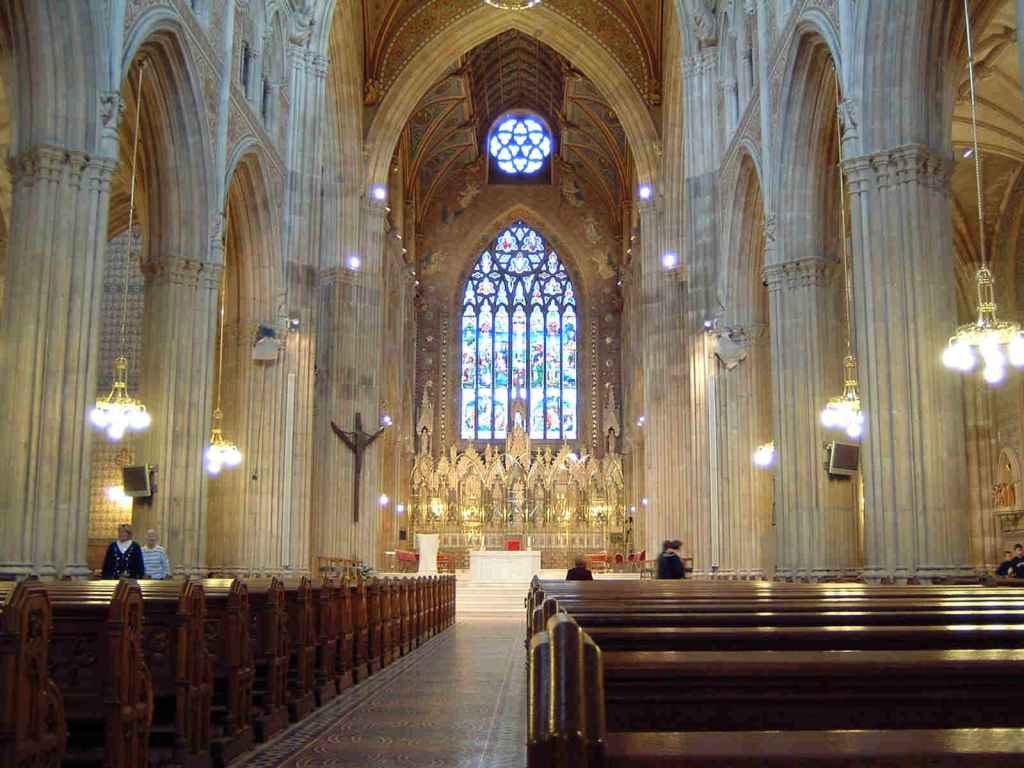
Despite all the horrendous things the Church may have done throughout the centuries, the cathedrals they built to immortalize our King make sense. I know they were not built in a righteous way, the poor were taxed and unholy deals were made with the rich, but there is a breath of God that remains in these places even today.

Whenever I visit a city that has a cathedral, I want to go. I want to walk through and sit and be silent there. I am awed in these places.

Of course, there are nature locations that give the same feeling: water falls, canyons, hot springs, lakes, oceans, forests, mountains… just to name a few.

As much as I enjoy contemporary Christian worship, there is a part of me that misses the wonder, the intense quiet, and the Holy Presence that permeates high church worship.

If I could describe that kingdom within me (which is impossible) but perhaps, just a color, a shape, a smell, a sound: what would it be? I don’t know. I just don’t really know.

Read Full Post »

Just as the early Jews got hung up in the first covenant, today’s believers have created a version of the second covenant that resembles the first: earthly sanctuaries, regulations and time-honored traditions.

Hebrews 8:13 – 9:1
By calling this covenant “new,” he has made the first one obsolete; and what is obsolete and outdated will soon disappear. Now the first covenant had regulations for worship and also an earthly sanctuary.

Of course, it’s even more complex in our religious world of today. There is not just one version of the tabernacle, but many, depending on the sect or denomination. The worship regulations are more rigid if one is affiliated with a high church but even the seemingly “free” new churches have developed mores and practices that eventually become similarly rigid by repetition.

Until I read Pagan Christianity by Frank Viola and George Barna a few years ago, I considered contemporary churches as spontaneous and unrestricted by “ritual.” But truly, haven’t these services become equally predictable and patterned in structure? Isn’t there still a type of “call to worship,” music, prayer, announcements, and sermon structure every week?

Is that necessarily bad? Of course not. But I do wonder if we’re missing something by our focus on buildings and “ministries” and committees of various authority.

Several months ago, my family made a huge leap and ventured away from our church of twenty years just to see “what else is out there.” We visited several other churches, some larger and some smaller. We would attend for several services in a row if we felt attracted to the service. It usually takes longer than a visit or two to get a sense of a place or the priorities. In one case, we were intrigued by a very high-tech, seemingly culture-relevant church. Only to be turned off a few Sundays later when the price tag for this type of savvy “presentation” was revealed as their next “strategic” goal was announced: $14 million!

I don’t have any answers, just a lot of questions. What is important to the Church: the body of Christ? Who really requires weekly “discipleship” with state of the art video and music? Are we competing with the world? Or can we simply stand in within our culture like Jesus among the tax collectors and prostitutes and be agents for change by our steadfast faith and Holy Spirit presence? Does a Christ follower of 10 or 15 or 30 years need to hear sermons every Sunday or should he/she be the one equipping the poor and lost. . . out there?

Shouldn’t prayer and worship be a constant companion? Shouldn’t every gathering of people be a celebration of God with us, Emmanuel?

I have just started reading Brian McLaren’s new book, Naked Spirituality, and I cannot recommend it enough. He uses a single word in each chapter as an exploration into the faith journey. The first word is “here.” And I re-discovered that “here” is about “here I am.” I can choose to be aware of myself in God right now, right where I am: sitting at a computer or taking a shower or getting ready for work. Call to worship isn’t me asking God to show up, it’s me telling God I am present and ready to listen and learn and experience God in the moment.

There are no regulations for “here.”

Read Full Post »

Paul wrote letters to the various churches and places he visited. Sometimes he wrote admonishments and sometimes encouragement, but in all cases, he wrote because of his love for those who shared in his faith, who believed what he believed, that Jesus was the Christ.

Colossians 1:1-2a
Paul, an apostle of Christ Jesus by the will of God, and Timothy our brother, To the holy and faithful brothers in Christ at Colosse . . .

I can almost imagine what it must have been like. Many did not know how to read in those ancient days and so the letters were read aloud. They were a corporate experience. I can imagine a letter was read once initially and then, again and again, more slowly. I can imagine those gathered there talked about what they heard, what they understood, and what they didn’t understand.

What would it have been like if it was my name mentioned specifically? What would that be like?

In some ways, a sermon could be like one of these letters. Unfortunately, we have moved away from corporate discussion of what is shared from the pulpit. The sizes of congregations and traditions over the years prevent echoes to the sermons or questions of the speakers. There is an inherent assumption that the sermon is somehow God-breathed truth and therefore beyond reproach.

Either the sermon is a typed out set piece that has no wiggle room or it’s a spontaneous and often repetitious “inspiration” to a few notes.

That’s not to say that sermons aren’t anointed at times and a truth or phrase or even a just a word, hits deeply in the heart. But there’s something wrong if people are falling asleep in the pews. There’s something wrong if people don’t want to discuss the message.

What is this to me? I don’t really know. I just want to be part of the love letters and I want a kind of corporate experience that allows for “permission to speak freely.” (Also the title of a new book by Anne Jackson.)

Read Full Post »

I need to lighten up about the various gospel message venues that are outside my sense of propriety or taste. If St. Paul is not concerned about motive, then shouldn’t I have more confidence in the ultimate message? God doesn’t need me as a defense attorney.

Philippians 1:18
But what does it matter? The important thing is that in every way, whether from false motives or true, Christ is preached. And because of this I rejoice.

I confess, I struggle with the propriety of those who promote Christ in conjunction with goofy sounding miracles like “gold dust” or body spasms or hysterical laughing. And yet, who am I to say this isn’t God too?
Maybe every miracle appears insubstantial or faked to one person or another.

But the point is that God can bring down the liars without my help. God chooses when to weed the garden, not me.

In my own church, there are people who are moved to tears and confession by the waving of flags, a procession of women in white dresses carrying gold crowns, or children carrying an array of palm branches or country flags. These symbols do not touch me but that doesn’t mean they don’t have value or power.

The conduct of worship or the method of preaching or the way of the witness will be and must be unique to the individuals who do it. The only true mistake is when others try to overlay these ideas on everyone as the best way, the only way, or the surefire way to bring people into the faith.

There is really only one surefire way: authenticity and love.

Paul was confident in his own faith and knew without a doubt that he was in the right place at the right time. God was with him and God was using him. Everything else was a by-product.

I can only know my own God arena. And all the rest is about grace.

Read Full Post »

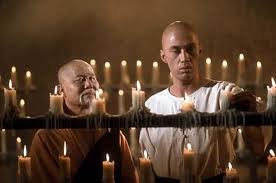
I don’t want to sound like Master Po from the popular television show, Kung Fu by saying, “Grasshopper, wisdom is the highest level of understanding.” And then a chime dings. But maybe, just maybe, wisdom is just another word for character or plain authenticity?

Ephesians 5:15-16
Be very careful, then, how you live—not as unwise but as wise, making the most of every opportunity, because the days are evil.

For me, it’s still a challenge to live wisely: I have thought about wisdom for a long time. I even had a bible study group for a time, seeking wisdom, studying the words of wisdom, and the promises from operating in wisdom.

I’m putting the cart before the horse, as they say. Wisdom, or character, evolve as a by-product from our individual days and choices. There are no wise children. Their life experiences are not fully formed.

And yet, it’s not about the age of a person. It is our responses to life, to people, to God, that grows wisdom.

I’ve become so caught up in Solomon’s request for wisdom [I Kings 3:1-28] and the scriptures that encourage me to “ask” for wisdom [James 1:5], that I keep thinking of it as an anointing. If I ask, God will answer and wisdom will drop onto me like a mantle.

In verse 18b of this chapter in Ephesians, Paul says, “. . . be filled with the Spirit.” This is more likely the true foundation of all things wise.

Potentially, anyone can have wisdom from life’s challenges, sorrows, and successes. This kind of wisdom is rooted in the mind. But God’s way of wisdom involves the Spirit. And when Paul speaks of making the most of every opportunity, it’s about our relationship with Spirit. Historically, I have thought about being filled with the Holy Spirit as a “swooshy” kind of thing. I had that initial experience as a young Christian and I know it does happen. It’s a kind of anointing, an empowering presence, a wind.

But, Paul is talking about a different kind of filling here. I believe it’s part of this journey of the inner way, keeping all avenues open by avoiding those things, situations, and people that block the light and draw veils over the soul.

Most people know the proverb passage that says, “The beginning of wisdom is the fear of the Lord. . . ” [Proverbs 9:10] but we sometimes forget that this word for fear is closer to reverence than anything else. And where and when do we experience true reverence for God?

Photo by Irm Brown

In my mind, the desire for “places of reverence” encouraged the initial designs of beautiful churches and cathedrals. Intentionally, they were created as places where people could feel awed almost immediately. I can appreciate this reasoning today so much better than I could before. Our contemporary churches have lost this aspect of the worship experience.

In that first study group, I asked them, where do you experience that kind of reverence or fear of God? Their answers were varied but clearly, their answers were all choices to be in those places, with those things or people, and there we are filled with the Spirit.

What conscious choice can I make today to enter the wise way, to be in a place of reverence?

(FD6)

Read Full Post »

« Newer Posts - Older Posts »