Feeds:
Posts
Comments

Posts Tagged ‘God’

The right words at the right moment touch the heart and something happens. It can be a moment in a play or a movie, a speech or a book, even a casual conversation or in the midst of instruction. And when that word pierces the inner self, we are changed.

I Corinthians 14:24-25a
But if an unbeliever or someone who does not understand comes in while everybody is prophesying, he will be convinced by all that he is a sinner and will be judged by all, and the secrets of his heart will be laid bare.

I saw this happen some years ago while in a church service. I had a friend who had been struggling with lifestyle decisions. He was like a feather being tossed about, looking for a safe place to land. I invited him to a Vineyard church service in Atlanta (back then, such services were cutting edge and specifically geared for the younger set). After the service, one of the guys asked my friend if a small group could pray for him and my friend agreed. It was during this prayer that someone in the group spoke a “prophecy” over my friend about an impending choice in his life. She told him of his past and his fears. She spoke specifics about his life and my friend’s heart was laid bare. It was the most amazing thing to observe. He knew, in that moment, beyond any doubt, that he had been touched by the divine.

That day is seared into my own memory, not only because of the time in church, but the deep soul searching my friend had the rest of the afternoon. He would go through periods of shaking and crying and even laughing. He would sit silently and then he would talk, deeply and honestly, about his life, his future, his mistakes, his losses, his hopes and his disappointments. He turned a corner that day and for many years, he followed a new dream because of that day.

I remember a different experience, also in my late twenties, when my own heart was ripped wide open. It is not a particularly pleasant memory as it was a searing, rending of emotions that brought me to my knees. I had only been a follower of Christ for about two years when I had a terrible row with a creative, yet highly volatile man, with whom I was trying to build a dance/theater company in New York. His harsh words stripped me bare of any illusions about my craft, my direction, my role. I left our rehearsal and walked the parking lot, sobbing, crying out to God, stripping myself of assumptions, and casting myself at the feet of Christ. That day changed my path forever.

When the heart is truly laid bare, it can happen gently with love or it can happen with wrenching pain. Often, the pain comes from our own efforts to keep the heart’s shield up, to attempt to protect ourselves.

“Lift up your heads, O you gates; be lifted up, you ancient doors, that the King of glory may come in.” [Psalm 24:7] For me, this verse refers to the gates and ancient doors of my heart that must be open to allow the King of glory to come in. I have to trust God will not hurt me. I have to permit entry. And only when my heart is laid bare, the doors open, can I be renewed.

I would like to report that my heart has been open the whole time since that fateful day, but it has not. In fact, each time my heart has been trashed by someone, I tend to add locks and bars to those doors. God forgive me.

Today, I am being called to begin this process once more: the unlocking of doors, the lifting up of gates, the laying bare of my inner heart again. It’s a risk. It’s always a risk. It’s another paradox: to find safety, I must be more vulnerable. So be it.

Read Full Post »

It’s a journey, the way of love. And like any journey, initially, we make a plan based on what we know in the moment, but along the way, the directions may change. There will be detours and road work. There will be fallen trees and washed out streets. But the way is still the way.

I Corinthians 14:1a
Go after a life of love as if your life depended on it—because it does. [The Message Bible]

This theme of love has bee with me now for several days and I am embracing it as best I can. But I see the challenges right away. It’s one thing to talk about love and it’s another to walk it day to day and minute to minute. Even if I choose to love, it doesn’t change the other guy. Loving in the way can be a lot of one-way streets at first. There’s a reason why Paul says in I Corinthians 13:4 that “love is patient” first. It requires all the patience in the world to love.

All of the “ways” in scripture are the same really: the way of Jesus, the way of God, the way of love. These are just words to help us understand the direction and the intent.

Sometimes, I feel like I’m on some kind of busy on ramp and a little fearful to enter the highway. Once I’m really on this way, once I commit fully, things will change. My life will change.

I am afraid of the way of the way of love.

Read Full Post »

Power in the basics. There is such a simplicity to the message: love God, love others. One builds on the other. One is enhanced by the other. And along the way, the love itself creates a momentum for the ages. Love is like energy: it never disappears.

I Corinthians 13:8a, 13
Love never fails. . . . And now these three remain: faith, hope and love. But the greatest of these is love.

I know about energy intellectually, but it’s not something I think about every day. Energy is bouncing around us all the time. Energy is transformed from one state to another, always moving, morphing, or actively waiting. And so is love.

This is how love never fails. Love is resilient and creative. Love is strong and gentle. Love is comfortable in the world of paradox.

Love is the most powerful force in the universe. And instead of harnessing it, we have cheapened it with images of Valentine hearts, cupids, and “Precious Moments” figurines. We have allowed love to become sex. We have watered down the strength of love.

But it is still there. Love is still available, because love never fails. Love is not just the words. Love is a space where energy can flow back and forth. I can’t really love pizza, it’s an inanimate object.

God is love [I John 4:8]. God is light [I John 1:5]. God is energy. God cannot be destroyed. To love others is to “god” others.

If we want to introduce God to others, then we’d better start at the ground level with love. And if we’re not sure what that means, then we need to learn I Corinthians 13 by heart, ground it in the heart, move it through the heart: kindness, generosity, patience, humility, caring, calm, soothing, forgiving, unassuming, and contented.

Love is a practice.

Read Full Post »

Look inside and out before eating the holy meal. Communion is a combination of a corporate act [with other believers] and a personal examination. The encounter doesn’t work very well if we don’t really believe or accept that the bread & wine [or juice] have power.

I Corinthians 11:28-29
Let a {woman or} man [thoroughly] examine himself, and [only when he has done] so should he eat of the bread and drink of the cup. For anyone who eats and drinks without discriminating and recognizing with due appreciation that [it is Christ’s] body, eats and drinks a sentence (a verdict of judgment) upon himself.
[Amplified]

I encountered the word “examen” for the first time while reading Richard Foster’s book, Prayer: Finding the Heart’s True Home some years ago. It’s no “navel gazing,” far from it. Foster says, “In the examen of consciousness we prayerfully reflect on the thoughts, feelings, and actions of our days to see how God has been at work among us and how we responded. . . . God goes with us in the examen of conscience. It is a joint search. . . . if left to our own devices . . . our tendency is for self-flagellation.”

Examen is not about tying ourselves to the whipping post, it’s about seeing ourselves in truth, with love. It’s the time when we can begin to lay down our burdens and failures at the feet of the Christ.

In recent times, I have taken to the practice of examen at the start of my devotions each day. I ask forgiveness for my mistakes [sins] and give thanks for the successes, those times I responded to situations and people in loving way. Only then, can I really begin to pray forward.

Communion should be the same, but perhaps a little deeper, a broader swipe over the time since the last opportunity to eat and drink of Christ.

What has gone before is the foundation of who I am today. And my future is built on both, the past and present. If I ignore the past, then I may be setting myself up for repeating it, doing the same things again and again? It was Albert Einstein who said, “Insanity is doing the same thing over and over again and expecting different results.”

I cannot change unless I know what part needs changing. I cannot go on a diet and lose weight if I don’t know my starting weight, otherwise, how will I know the difference? I must be willing to face and accept my authentic self. Like the recovering alcoholic, we too must “Make a searching and fearless moral inventory of ourselves.” [step 4 of the 12 steps]

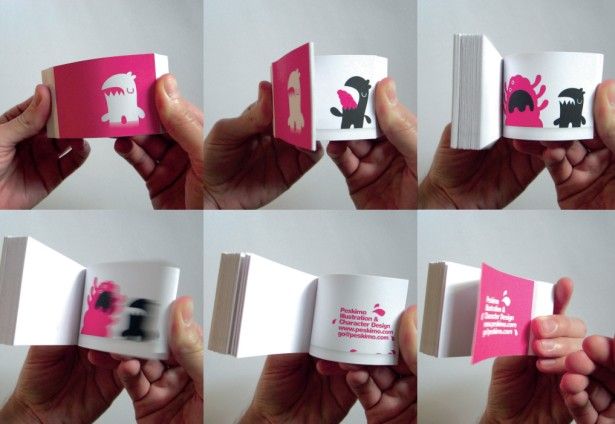
The prayer of examen, particularly at the time of communion, is a photograph. I must let God see the true picture, not one that’s been airbrushed or “photoshopped.” And like a flipbook, only God gets to see the flapping of pages and photos that represent my progress over the years. God knows my whole story.

Read Full Post »

Tim Keller, in the book Counterfeit Gods, writes that idolatry is anything that isn’t God and yet, put in the place of God. That gives me pause.

I Corinthians 10:7
Do not be idolaters, as some of them were; as it is written: “The people sat down to eat and drink and got up to indulge in pagan revelry.”

The author goes on to say that one of the central principles of the Bible is rejection of idols.

Makes sense. It also puts more light on another verse that appears to come out of nowhere in I John 5:21, the last verse of the book, “Little children, keep yourselves from idols. Amen.” With some thought, I realize it’s an amazing summation. And, like, Keller, I’m seeing the simple truth of this idea.

How many times do I say I don’t have “time” to do this or that for the building up my faith, you know, things like prayer, study, meditation, contemplation, service to others. Oh yeah, and why don’t I have time? Because other things are “more important.” Other things have taken place, taken root, in my calendar and my heart.

Our culture offers a plethora of idols. Take your pick: they all do the job. They all have the power (which we endow them) to suck up our time and our energy.

I used to think some of my post-millennial friends (or were they pre-millenial?), were being ridiculous as they identified things in our culture as a “Beast” from revelation–things like television. But, are they so off? I’m not talking about that kind of literalness, but doesn’t a lot of entertainment become addictive and consuming? How many people order their lives around watching a particular television show? (Apparently, they have not found TIVO yet.)

So what is my time suck? And why do I need it?

Internet. Facebook. Over-committed volunteerism. Hobbies. Old movies. Re-runs. Yard sales. Lattes. Reading. Work.

None of these things are inherently bad or necessarily “idols.” But I do fill up my day. I fill up my mind with planning.

There are 330,000 gods in India. How about me? How many do I have?

I have a friend who married an African man and recently, had his child here in the United States. However, in a few days, they will be returning to Namibia, with no real jobs waiting for them (they used to work at an orphanage we support which is how we met them). So, she will be entering into a much more rustic lifestyle, she will be living, truly, more closely to the norm of African families in small cities: a new simplicity. She will be confronting her personal “idols” soon.

Why do we need idols? I think it’s part of our culture. To let go of many of them would mean stepping back from the lifestyle to which we have become accustomed.

“. . . let us throw off everything that hinders and the sin that so easily entangles, and let us run with perseverance the race marked out for us. Let us fix our eyes on Jesus . . . [Hebrews 12:1b-2a]

Read Full Post »

Tree outlined by the sunSt. Augustine wrote, “The New Testament lies hidden in the Old Testament and the Old Testament is revealed in the New Testament.” There are so many symbols, motifs and archetypes that were intended to prepare the people for the coming Messiah. I wonder if this isn’t true for every life?

I Corinthians 10:1b, 3-4
. . . our forefathers were all under the cloud and that they all passed through the sea. . . . They all ate the same spiritual food and drank the same spiritual drink; for they drank from the spiritual rock that accompanied them, and that rock was Christ.

I am not a theologian or an academic and I haven’t actually studied all the correlations between the Old Testament and the New. But Paul alludes to these relationships directly in this passage from I Corinthians 10 with his clouds and water and food and rocks. These words are powerful representations of presence, power, eternity, strength, and much more.

But what is the application of this passage for me? Were there clouds and water in my own short history before I came to the revelation knowledge of the Christ in my life? Did I eat God-food before I recognized it for what it was? Did I lean on a rock that was higher [Psalm 61:2]?

There are so many people and experiences that pass through a life outside of our control. Oh sure, I chose to go to New York to acting school, but I had no control over the makeup of the student body. Tom, who introduced me to the Bible as a living, breathing document, was part of that group. And maybe New Age stuff or fantasy reading may not be the best influence on an impressionable young woman, but it did set my mind on the “other world,” the world of Spirit where truer battles are waged, won and lost. In high school, I chose my friends, but how could I have known that it would be some of their parents who would impact my beliefs for a lifetime. I attended a predominately black public high school during some of the most tumultuous years of black history, led by Martin Luther King, Jr. As a result, I became much more sensitized and aware of cruelties and disparities between people, race to race, poor to rich, old to young. Later, in New York, I would go to school with his daughter, Yolanda, and my circle of understanding grew richer.

Symbols of meaning for me today that grew out of my past: small white lights on a Christmas tree, flowing waters of a stream, winter trees outlined by a setting sun, the purring of a cat, the smell of pine, unending circles like wreaths of fresh flowers or dancers or people holding hands, candles lighting a dark place, rain, stuffed bears, smooth stones, . . .

All of these have come to have much greater meaning to me as an adult. They can take me quickly into the secret place where I can commune. If I feel or hear or touch any of these things, I am with God. And I can only believe, back then, somewhere, somehow, God was with me before I even knew there was a God.

Read Full Post »

There is a bottom line truth here: if a person sacrifices his/her time, dedication, and/or expertise for the sake of others, he/she deserves to be compensated or, at the very least, receive some benefit for that service. They shouldn’t have to ask.

I Corinthians 9:10b
. . . the plowman ought to plow in hope, and the thresher ought to thresh in expectation of partaking of the harvest.
[Amplified]

In the 9th chapter of Corinthians, Paul is really letting them have it for not supporting materially, the very people who brought light into their dark place. I’m not even sure he’s talking just about himself, although he does sound pretty feisty in these passages. I think he’s addressing a situation that, quite honestly, hasn’t changed much over the centuries. He’s writing about all of those who are sacrificing for the sake of others.

The modern trap is to assume every compensation is financial. I’m not saying that isn’t important. Obviously, in our society, money is essential to accomplishing almost anything. Money pays the bills. Money opens doors. But there are other compensations that have to do with sharing the harvest, the fruit of the venture. Poor people and third world cultures seem to get this while westerners are blinded.

Whatever the task at hand, those who serve and participate in the process should receive a portion of the fruit. It helps connect people, to create unity, and buy-in.

As Jesus and his disciples walked their world, healing and teaching, people opened their homes and shared what they had. It was enough.

If someone works at your restaurant, let them eat. If someone works at your bookstore, let them read or get books cheap. If someone works in your office, let them make copies. If someone takes care of your yard, let them have flowers, seed, or seedlings. If someone cares for your children, let them participate in celebrations. As soon as we work in community, we become part of that community. Each person deserves full respect for the part he/she plays or contributes to the greater effort.

Freely give it so it’s not taken on the sly.

Usually, most people use these passages to rally the believers into sending more and more funds to support missionaries. And I understand that is important. But I tell you, I believe the full participation in that ministry is even more important. The fruit of participation is greater with the gift of time and energy, prayer and communication, advocacy and visits.

It’s a different kind of bartering that we need to re-energize.

God is giving to me all the time. And what do I have that God might want in return? Access to my heart. Participation in my life.

Read Full Post »

« Newer Posts - Older Posts »