Feeds:
Posts
Comments

Posts Tagged ‘Jesus’

Body of Christ 2I like putting jigsaw puzzles together. My family thinks this hobby is one of the lamest activities of all time. The only other person who enjoys them is my brother when he visits for the holidays or comes along to the beach.

Usually, it’s just me and a thousand little pieces. And yet slowly, even the most difficult puzzle, will come together. A whole emerges from all the slivers. I love putting in that last piece, always with a breath of satisfaction. But nothing is worse than a missing piece: disappeared as the result of cat sprawl or a son and his pizza box.

All the pieces are needed, even the seemingly identical blue ones from the sky or the monotonous gray from the shadows. A finished picture is ruined by the loss of even one small fragment. It doesn’t matter where the gap lies in the puzzle, it’s loss is felt, the eye straying to the tiny abyss.

But God has put the body together, giving greater honor to the parts that lacked it, so that there should be no division in the body, but that its parts should have equal concern for each other. If one part suffers, every part suffers with it; if one part is honored, every part rejoices with it. Now you are the body of Christ, and each one of you is a part of it.  [I Corinthians 12:24b-27, The Voice translation]

If I can understand this concept in a puzzle, why is it so hard to really embrace the idea when it comes to the Body of Believers? Is it just because some (most) are different from me? Can’t I suspend my judgments long enough to allow them to play out their role, their part in the “God Scheme” of things?

Wretched truly am I.

When I start working on a puzzle, I usually tackle it the same way every time: edge pieces first, then I look for the most vibrant colors or stand out images in the overall picture, then I look for patterns and long lines, and slowly, my box of remaining pieces becomes more and more monochromatic.

This is how I must look at the Body too. I am easily drawn to the people with clearly defined gifts and abilities, then there are the very talented ones who shine in any group, and then there are the organized ones who work to bring order out of chaos. But the rest become a blur.

In a puzzle, in order to figure out where the same color pieces go, it’s a matter of looking for a tiny, but identifiable mark or a specific shape that will only snug up to its likely friends.

I need to give much more attention to Body who have been indistinguishable. It’s time to honor their individuality by even the smallest gift because everyone has something to give to community. And as each gift comes forward, something beautiful begins to emerge. And soon, it’s not just flat sky, but clouds and mist and rain even. It’s time to look. It’s time to honor the pieces of the whole and give thanks for them.
Read Full Post »

Painting: Age of Wisdom by Alphonse Mucha, 1938.

Painting: Age of Wisdom by Alphonse Mucha, 1938.

At one point, several years ago, I actually started a small home group and bible study called “Wisdom Seekers;” that’s how serious I have been over the years in my quest for wisdom. And yet, the truth has been here a along, in a single phrase : ask, but without doubt.

If any of you lacks wisdom, you should ask God, who gives generously to all without finding fault, and it will be given to you. But when you ask, you must believe and not doubt . . .  [James 1:5-6a]

It’s not that God would discourage doubt since it can mean a person is truly seeking for truth, particularly when that doubt surrounds a destructive lifestyle, an act of violence, or downward spiraling behaviors. That kind of doubt, the questions that give a person pause before repeating oneself. That doubt is healthy and could be life-changing.

But there are other kinds of doubt; and those of the believer who questions God’s sovereignty. These doubts are usually an inability to integrate one’s circumstances with faith or a tendency toward wanting to “run the show.”

Integration, in my mind, is a form of acceptance that God is God, no matter what is happening in our day to day lives, God is in the midst of it, there is purpose in it, and our journey has been so directed. This is a lot easier to talk about than live, particularly when it involves illness or unexpected trauma. I understand, for myself, this is somewhat theoretical. However, I do have experience in deep disappointment and that point of view is also lack of integration (lack of surrender to the moment). It could come out of the sorrows of a failed marriage, children making dangerous or troubling choices, etc.

The second, a controlling personality or sensibility, is equally dangerous (and I am guilty here as well), when we “disagree” with God’s plan and try to move things along. Old Sara (Abraham’s wife) is a prime example, when she gave her maidservant, Hagar, to her husband to have a male child [Genesis 16], in an attempt to fulfill God’s promise for children as numerous as the stars in heaven. This “let me help God” syndrome is not wise. Besides scripture warning us that God’s way is usually not the human way [see Isaiah 55:8-9], the entire New Testament confirms that the new covenant is a paradox at best. It’s usually the opposite of what we think it should be (e.g. turn the other cheek, love your enemies, give the second cloak, an so on).

James (that is, the human brother to Jesus), writes that wisdom is available for the asking, given generously and without disapproval – in other words, don’t feel bad about asking for it. If you need help applying what you know about faith, about God, about love, about hope, about anything that God has spoken to you through scripture, through prayer, or teachings, then by golly, ASK!

And so, this is what I am doing today. I am asking God in public, “give me wisdom” for this day and every day, to speak well and with love, to stop judging others, to embrace truth, to pray for others, to give generously, to trust God in all things. Open the wisdom gates dear God, dear Christ., dear Holy Spirit. Pour it upon me that I might serve you well.

Read Full Post »

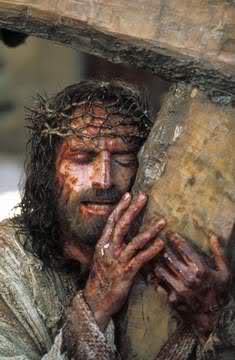
PiercedHandOn that resurrection day and for 40 days thereafter, Jesus appeared to his disciples and to others. I call this the “Second Forty,” and will be doing another systematic walk through these days. But today, this Easter day, I share three experiences I had mirrored a day the followers had:

 On the evening of that first day of the week, when the disciples were together, with the doors locked for fear of the Jewish leaders, Jesus came and stood among them and said, “Peace be with you!” After he said this, he showed them his hands and side. The disciples were overjoyed when they saw the Lord. Again Jesus said, “Peace be with you! As the Father has sent me, I am sending you.” And with that he breathed on them and said, “Receive the Holy Spirit.” [John 20:19-22]

The doors were locked and the followers were hiding from authorities still, and yet, Jesus revealed himself to them. He was no longer limited by time and space. He appeared. (He was the first one to really experience the Star Trek-like transporter.) And his first words were a blessing for peace. He showed him some tell-tale signs, like the nail prints, but I always wonder if there were other prints: did his back show the scars from the lashes of the whip, did his head show the gashes from the thorns?

And so, with his appearance, they believed again; their faith was reborn in that moment and their fears abated. For some, it was a confirmation (for they never gave up — particularly the women) while for others, they did an about face (they had started to doubt, like Thomas). How long could they have sustained themselves without his appearance? We’ll never know. Like Peter had to carry his public denials of Christ, they would carry their secret ones in the heart.

And then, just like that, they were given their commission: Go! And with that commission came the companion: the Holy Spirit – given through the breath of the Christ. Jesus breathed out and we are asked to breathe in.

Today, when I woke, I had such a lightness of being, and a Presence: the nearness of Christ Jesus. And with that revelation of the Jesus resurrection, came a renewal within, one I have needed for some weeks. And so, I breathed in and filled up again.

And so, I was one with the followers of the Messiah who had been locked up in that room, afraid to take the next step. And Christ came to me with peace and confirmation and hope. Alleluia.


You Won’t Relent by the Jesus Culture.

Read Full Post »

Jesus and the crossWhen he [Judas] was gone, Jesus said, “Now the Son of Man is glorified and God is glorified in him. If God is glorified in him,God will glorify the Son in himself, and will glorify him at once.
“My children, I will be with you only a little longer. You will look for me, and just as I told the Jews, so I tell you now: Where I am going, you cannot come.
“A new command I give you: Love one another. As I have loved you, so you must love one another.
By this everyone will know that you are my disciples, if you love one another.” [John 13:31-35]

Surely they were all thinking that, “Where are you going, Jesus, that I can’t go? Haven’t we gone everywhere with you?” Well, except for all those times he went to pray alone or that time he walked on the water or that time he brought Lazarus from the dead or the time he overturned the tables of the moneychangers?

I think the real question they asked in those times may have been more like, “What are you doing?”

Isn’t that the natural response to someone (particularly a child/teen) who is participating some activity that is outside one’s personal “norm?” Or worse, illegal? Or worse, stupid! “What are you doing!?” It’s as though we actually believe, that perpetrator will turn around, look at us, and see the light! “Oh, of course, I shouldn’t be doing this.”

But that’s not how it works. Rarely does the observer, the other person get what is going on, whether it’s using a beer pong in your parents’ basement or predicting one’s death at the hand of the authorities. Or maybe it’s even less clear, like a toddler artistically decorating the hallway walls or a dog marking the new furniture or a kid experimenting with a raw egg in the microwave.

In that moment of discovery, it’s chaos in the head. How could, why would, when did, where did, who’s idea was this anyway?

As much as Jesus tried to explain how it would all work, the understanding of the acts, the miracles, the symbols, the sacrifices, the lectures, the parables, all of it… came later. There was too much to process. They’d be contemplating that event from the morning and then something else would happen at Noon. How do you respond to a miracle? How do you respond to a man who claims blood line with God? How do you believe that the same guy who raised people from the dead would die himself? Brain freeze.

When any pair of friends or now, children of friends, tell me they are planning to get married, I have one piece of advice: really look and remember. It will pass by you like a whirlwind and the next thing you know, the ceremony is over, the reception is over, and you’re sitting in at the pool or beach and wondering what just happened. It’s hard to pay attention when it’s happening to us!

The disciples and writers of Jesus’s life did the best they could. They tried to capture what it felt like not to understand, what it meant in the moment without projecting out to the end.

Today, I want to imagine the moment, the feeling of the first time, the loss of Jesus without the expectation of third day. But I also want to cherish human contact today, the touch of a hand, the look in the eye, the corporateness of faith.

I want to love God and love others.

Read Full Post »

Print by Julius Schnorr von Carolsfeld's (1794-1872)

Print by Julius Schnorr von Carolsfeld’s (1794-1872)

Jesus knew that the Father had put all things under his power, and that he had come from God and was returning to God; so he got up from the meal, took off his outer clothing, and wrapped a towel around his waist. After that, he poured water into a basin and began to wash his disciples’ feet, drying them with the towel that was wrapped around him. . . . “No,” said Peter, “you shall never wash my feet.”  Jesus answered, “Unless I wash you, you have no part with me.”  [John 13:3-5, 8]

Jesus wanted to make a lasting impression. It’s not like he hadn’t talked about service and humility and lifting up others above oneself. But like so many of the parables and stories, he decided to create a picture, not just with words, but with actions. And yet, only John shares this story. Was it so humiliating? Did they fear the story would belie their claims of Jesus as the Messiah? After all, would the Messiah wash the feet of a mere fisherman? But for John, this was a critical illustration that could not be ignored.

And yet, the symbolic sharing of bread and wine at the meal is excluded by John. Clearly, for him, the foot washing was the most significant. And before that, the anointing of Jesus’s feet by Mary is told in detail. This too is bypassed by the other storytellers, except Luke, who doesn’t even identify the woman.

The significance of leadership and the self-abasement of feet is somehow important.

I never realized how much I under-appreciated my feet until I started having pain in the big toe of my left foot. Sometimes, it was so miserable, I couldn’t walk but a few steps. Every shoe had to pass the pain test before I would leave the bedroom. I tried everything from heat to cold to massage and acupuncture. I started wearing sandals everywhere (and not flipflops because the band would cut directly across the pain spot). Pretty soon, the pain started waking me up at night. Finally, I gave in and went to the doctor. The podiatrist was a little stumped because nothing really showed up in my x-rays or cat scan. In the end, he went ahead and did a bunionectomy even though my baby bunion was not the real problem. I think he just wanted to get in there and look around. It took almost three months to recover full use of my foot again . . . and of course, within a few months, the pain was back, not as acute, but still, there.

The podiatrist was not happy to see me again and said there was nothing more he could do. He gave me a referral to a physical therapist. I delayed that appointment for weeks out of embarrassment. I mean, really, a physical therapist for my toe??? And yet, I finally had no choice. Almost a year after my surgery, I gave in and went to the therapist. He was a really nice guy and I even told him my tale of embarrassment. The prescription was primarily deep massage.

The healing came through touch.

We don’t touch each other very much in our culture. Oh, we may hug and air kiss and we might shake hands or pat someone’s back. But a genuine touch, a focused touch, a touch with intent; now that makes a difference.

I have had massages off and on throughout the years, but only once did I have a massage by a believer who prayed over me throughout the experience. It was literally, life changing.

When Jesus washed the feet of the disciples, I don’t think he poured water out of a measuring cup or use handy wipes. He prepared them for the journey ahead. He healed them from the bottom up. He made them part of himself through touch: intimate and necessary.

I have written and will perform a monologue tomorrow evening at our Good Friday service and at one point, she says, “And if they [sinners and the the sick] were lucky, he would touch them: just so, just so.”

Touch me Lord. Wash my feet. Heal me. Prepare me for the days to come. The journey I have yet to walk.


Read Full Post »

Laying down cloakAs he went along, people spread their cloaks on the road. When he came near the place where the road goes down the Mount of Olives, the whole crowd of disciples began joyfully to praise God in loud voices for all the miracles they had seen:
“Blessed is the king who comes in the name of the Lord!
Peace in heaven and glory in the highest!”  [Luke 19:36-38]

Was this a little thing? Laying down one’s cloak on the road for Jesus to be trampled underfoot, not only by Jesus on a donkey but also the disciples and who knows how many more were in the entourage. And then, if my imagination is anywhere close to accurate, usually a crowd swells in behind the leader in the parade. By the time someone might return to the road, after the crowds have dissipated, poor cloak might be in quite the disarray. In fact, it might be good for nothing, only a rag.

I wonder, did their hope feel the same way when they realized that Jesus was not going to manifest as the Messiah in the way they thought he would? Did they look at those rags and begin to feel less enthusiastic, less sure. Perhaps the cloak was a gift from a friend or purchased with hard earned money. Would there be second thoughts? So often people get caught up in the crowd’s enthusiasm, only to find the aftermath less glorious.

I’m just saying.

I can’t help but think of other more contemporary masses: remember Woodstock? In the wonder of all that freedom, people did all kinds of crazy things, like take off their clothes, roll in the mud, get blind stoned, and so forth. I wonder how that felt when the pictures came out. Or what about soccer stadiums where anger and fury drive fans onto the field and sometimes trampling people? Or New Years celebrations with fireworks and guns shooting off but unknowingly striking a child who dies? It happens all the time. The crowd.

Our laying down cannot be driven by the crowd. If I am going to give up my coat (or anything else of value), then I have to give it so freely that it won’t matter if it comes back to me. I have to let go with intent, with consciousness, with understanding. I have to lay my stuff down with trust. Only in this way, will I avoid standing outside of Pilate’s palace yelling “crucify him.”

So often, in a kind of self-possessive way, I hear people say they don’t give money to the homeless because of what that person might do with it. After all, their money is what? Precious? Or, even worse, people who don’t give to the local church because they disagree with the use of the funds (like the color of the carpet or the size of the flowers on the altar). It’s kept back in the name of “stewardship.” But I am beginning to believe that attitude is like trying to retrieve the cloak laid down on the road on Palm Sunday.

If we give, we give freely and trust God to use the gift. If I lay down my stuff, I am not to pick it up again. If I am acknowledging that Jesus is truly the Messiah, the King of Kings, the Lord of my life, then what is the cloak in comparison to that? Who is asking? Who is this Jesus?

Read Full Post »

 servingThe devil led him up to a high place and showed him in an instant all the kingdoms of the world. And he said to him, “I will give you all their authority and splendor; it has been given to me, and I can give it to anyone I want to. If you worship me, it will all be yours.” Jesus answered, “It is written: ‘Worship the Lord your God and serve him only.”  [Luke 4:5-8]

This is a disturbing passage; not because Jesus resists the enemy but the devil’s claim that the earth belongs to him. In essence, until the great coming of the Christ, there was little opposition to the presence of evil. The prophets would warn and encourage the following of God’s laws as a bulwark against the arrows of Satan and his demonic forces. But, this was a losing proposition. The longer evil ruled, the more difficult the light was to find and follow.

And so, God sends the Son to become the ultimate sacrifice for everyone. Grace instead of the law is offered to the people. The presence and indwelling of the Holy Spirit is the new way to fight the good fight against evil.

But still evil is not defeated. The Hitlers (Germany), Mugabes (Zimbabwe), Gadhafis (Libya), Husseins (Iraq), Castros (Cuba), Jong-ils (North Korea), and Stalins (Russia) poured out much bloodshed; the terrorists continue to frighten and murder; people die of hunger [25,000 a day] and disease such as AIDS [1 every 20 seconds] all over the world. Where is hope for victory? Where is the new Ruler of this Earth? How much longer will the earth groan [Romans 8:22]?

I can choose to keep my head in the sand and pretend that my extravagant living makes no difference in the world (one of the techniques expounded in C. S. Lewis’s wonderful book, The Screwtape Letters, or I can stop. I can open the door of my heart to the pain around me and touch it with the truth of the Spirit in me. Do I believe that God within, Christ died and risen, changes every day life or not?

Joshua asked, “choose for yourselves this day whom you will serve . . . ” [Joshua 24:15] but really, this is the question I am asked every day.

Perhaps I can’t transform the whole world, but I can metamorphose my use of time and impact my circle of friends, colleagues, and family by being a vessel for Spirit. I can pray with intent and not just lists of names. I can show up. I can be present. I can be open. I can choose life.

This day I call the heavens and the earth as witnesses against you that I have set before you life and death, blessings and curses. Now choose life, so that you and your children may live and that you may love the Lord your God, listen to his voice, and hold fast to him.”
[Deuteronomy 30:19-20]

Read Full Post »

« Newer Posts - Older Posts »