Feeds:
Posts
Comments

Posts Tagged ‘miracles’

ImpossibleIt’s been the word of the season at Restore Church this year: impossible. And it’s a word that all believers must hear, should hear, need to hear and understand. This word is about us today and our faith. This word is about the extent to which God will do something from nothing. Thanks Pastor Jess Bousa for this word, now illuminated.

It sounds impossible, but listen—you know your relative Elizabeth has been unable to bear children and is now far too old to be a mother. Yet she has become pregnant, as God willed it. Yes, in three months, she will have a son. So the impossible is possible with God. [Luke 1:36-37, The Voice]

The concept is a simple one, that the impossible cannot be expected: it is a miracle after all. And yet these miracles are among us every day but we fail to give them their due. Isn’t it a miracle that a man, like Jess, could be transformed from full-blown drug addict to pastor of a thriving church? Or that I, a self-indulgent, pot-smoking, foul-mouthed actress wannabe could become a follower of the Christ? Or that my children, all adopted, would be “the ones” out of a million orphans to come into our family? All of our lives are filled with the miracles of impossible when God takes the raw material of “nothing” and makes something. Whether one sees the Genesis story as word for word real or symbolic, the message is the same: Creator God is a Maker God, who uses building blocks that none of us can really fathom. Something from nothing. Possible from impossible.

In Greek, impossible is adynateō with meanings that bridge the distance between weakness, inability, and powerlessness to the bottom line: it cannot be done. And God asks me, when will I see and understand the adynateō in myself? Not weakness in what I want to do, my dreams and ambitions. No. This is the weakness in the face of what God wants to do. In Corinthians 12:9, God speaks through Paul saying, “My grace is sufficient for you, for my power is made perfect in weakness.” God is talking about the God Plan in Paul’s life and ultimately, in my life too.

God’s power manifests in doing God’s plan. 

impossible triangleOh, silly me. I have missed this obvious all along. I keep trying to get the blessing (and success) for my ideas, my plans, my ambitions, my projects. But there has been little room in my masterminding for the impossible, the unexpected, the miracles of God.

How many sermons and teachings have we heard about knowing God’s will for our lives, as though we might be able to figure out the impossible?

This is the only time I can truly say that the cliche, “whatever,” used by teens for the last decade or so, is truly the correct word in this situation. Our surrender to God is a “whatever.” That is, whatever God wants to do, whatever the Holy Spirit wants to manifest, whatever is possible in God’s cosmos, I choose to embrace today.

Don’t misunderstand me. I am sure this is not a passivity where we simply lie down on a bed and wait for a miracle. If anything, it’s a reckless abandonment of my narrow views in favor of the expansive potentialities of God.

Read Full Post »

There’s a word that conjures an immediate response I’m sure. From billboards, “Virgin : Teach Your Kid it’s Not a Dirty Word,” to Virgin America Airlines to put-down, “You’re still a virgin?” What does this hot word mean in your world? Or mine?

Our Lady of Guadalupe by Pristine Cartera-Turkus

Then Isaiah said, “Hear now, you house of David! Is it not enough to try the patience of humans? Will you try the patience of my God also? Therefore the Lord himself will give youa sign: The virgin will conceive and give birth to a son, andwill call him Immanuel. [Isaiah 7:13-14, NIV]

Of course,  theologians have since uncovered a less than miraculous explanation of Isaiah’s prophecy since Jewish culture assumed that all young women were virgins. They had a good reason for this assertion since sex outside of wedlock was punishable by death. The Hebrew word for virgin as it is used in Isaiah is Alma, or young woman. When the these verses were translated into the Greek, the word Parthenos was selected which had only one meaning, virgin. (By the way, small piece of trivia, the Parthenon’s name came from this same word and one of the reasons was that this temple was filled with temple prostitutes that were virgins – and apparently disposable after a single use.)

The point in the nativity story, I suppose, is not that Mary was a virgin, since that was the norm, the point was that she was impregnated supernaturally. In fact, scripture articulates that Joseph, her fiancee did not have sex with her until after the birth of Jesus [Matthew 1:25]. And for many people, this miracle stops them in their tracks. And some denominations take Mary’s virginity to the next level, saying she was made sinless as well, creating an immaculate conception. [For more on this topic, see Let Us Reason Ministries online.]

We’re living in a time of science and reason and miracles of any kind are always suspect. In my mind, the entire concept of God providing a propitiation or atonement for the choices that created a state of human separation from God is a gigantic miracle in and of itself. The methodology would have to be out of our ken in order to make it work.

Ancient humans seemed to naturally understand the idea of atonement, sacrificing all kinds of animals and daughters to appease the gods, the sun, the weather, or whatever else they could not understand. They seemed quite clear about the basic idea of sowing and reaping. Even Karma, an Eastern idea of cycles, supports the supposition that there are repercussions to our choices (both good and bad).

The virgin birth is actually somewhat inconsequential to me. The idea that God became fully human is much more intriguing. The idea that fully human God (as Jesus), came as an atonement is even more absorbing.

I just want to think about that today.

Read Full Post »

Art by Brad Moody

Art by Brad Moody

Honestly, it never occurred to me that walking on water might be normal behavior. Think about it. The way the story goes, Jesus finished praying and then headed out by the most direct route (across the water) to meet up with his friends. It’s not like he stood at the shore and said to himself, “wait til they see this!” It was simply a means to an end. It could have been a true turning point for the disciples. Instead, it was one more picture lesson in faith.

O you of little faith. Why did you doubt and dance back and forth between following Me and heeding fear? [Matthew 14:31b, The Voice translation]

Most Christians, when they get a hold of the possibility that miracles are still possible today, focus on healing. After all, Jesus did a lot of healing and when faced with the pain and suffering of those around us, we want to help, we want to save them, we want to keep our loved ones with us. Heal them Father, we cry out. Have mercy.

When danger is before us, we cry out. When death is near, we shout. When fear feeds on our hearts, we beg for relief.

But no one, at least no one in my circle of friends, asks to walk on water. What’s the point? Walking on water won’t change the world around me, it won’t heal or alleviate suffering, it won’t bring the dead back to life, it won’t change anything. Except for myself.

That’s right. Walking on water is a personal transformation. It’s an assurance of faith within. It’s a breakthrough in surrender, full and complete. All in.

If I walk on water, then all is possible. It’s not the cliche of being perfect at all. It’s something totally different: it’s trust and fearlessness in the face of the natural laws of nature. It is outside 3-D experience. It is Spirit leading flesh, in charge. What it really means is to live in mutuality with the Holy Spirit. “At that time, you will know that I am in the Father, you are in Me, and I am in you.” [John 14:20

Walking on water is the antithesis of fear. Perfect love casts out fear [I John 4:18] and sets the stage for that journey.

Miracles and water walking are a natural outgrowth of a focused faith: love God, love others. This is our part of the bargain–the covenant. Simple. Impossible? Possible.


Read Full Post »

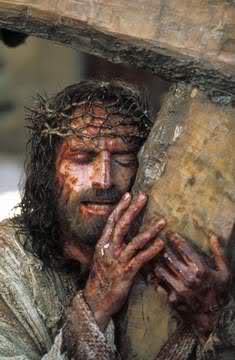
Jesus and the crossWhen he [Judas] was gone, Jesus said, “Now the Son of Man is glorified and God is glorified in him. If God is glorified in him,God will glorify the Son in himself, and will glorify him at once.
“My children, I will be with you only a little longer. You will look for me, and just as I told the Jews, so I tell you now: Where I am going, you cannot come.
“A new command I give you: Love one another. As I have loved you, so you must love one another.
By this everyone will know that you are my disciples, if you love one another.” [John 13:31-35]

Surely they were all thinking that, “Where are you going, Jesus, that I can’t go? Haven’t we gone everywhere with you?” Well, except for all those times he went to pray alone or that time he walked on the water or that time he brought Lazarus from the dead or the time he overturned the tables of the moneychangers?

I think the real question they asked in those times may have been more like, “What are you doing?”

Isn’t that the natural response to someone (particularly a child/teen) who is participating some activity that is outside one’s personal “norm?” Or worse, illegal? Or worse, stupid! “What are you doing!?” It’s as though we actually believe, that perpetrator will turn around, look at us, and see the light! “Oh, of course, I shouldn’t be doing this.”

But that’s not how it works. Rarely does the observer, the other person get what is going on, whether it’s using a beer pong in your parents’ basement or predicting one’s death at the hand of the authorities. Or maybe it’s even less clear, like a toddler artistically decorating the hallway walls or a dog marking the new furniture or a kid experimenting with a raw egg in the microwave.

In that moment of discovery, it’s chaos in the head. How could, why would, when did, where did, who’s idea was this anyway?

As much as Jesus tried to explain how it would all work, the understanding of the acts, the miracles, the symbols, the sacrifices, the lectures, the parables, all of it… came later. There was too much to process. They’d be contemplating that event from the morning and then something else would happen at Noon. How do you respond to a miracle? How do you respond to a man who claims blood line with God? How do you believe that the same guy who raised people from the dead would die himself? Brain freeze.

When any pair of friends or now, children of friends, tell me they are planning to get married, I have one piece of advice: really look and remember. It will pass by you like a whirlwind and the next thing you know, the ceremony is over, the reception is over, and you’re sitting in at the pool or beach and wondering what just happened. It’s hard to pay attention when it’s happening to us!

The disciples and writers of Jesus’s life did the best they could. They tried to capture what it felt like not to understand, what it meant in the moment without projecting out to the end.

Today, I want to imagine the moment, the feeling of the first time, the loss of Jesus without the expectation of third day. But I also want to cherish human contact today, the touch of a hand, the look in the eye, the corporateness of faith.

I want to love God and love others.

Read Full Post »

poor with usSo the Lord brought us out of Egypt with a mighty hand and an outstretched arm, with great terror and with signs and wonders.He brought us to this place and gave us this land, a land flowing with milk and honey;and now I bring the first fruits of the soil that you, Lord, have given me.” [Deuteronomy 26:8-10a]

I am no different from my kids when it comes to appreciating what God has done for me.

It makes me so furious when I feel I have given and given and given so much to my children and they barely seem to appreciate it. Instead, they seem to have developed an attitude of expectation as though they deserve more and more. I’ve created a monster that rears its ugly head almost daily asking, “What have you done for me lately?” (like in the last hour).

But am I any different? Just like the Israelites really, who were miraculously whooshed out of Egypt after a series of plagues and deaths that bypassed them and only affected the Egyptians; after escaping through the parting waters of the Red Sea; after manna from heaven and water from a dead rock . . . still it was not enough to sustain their belief. They could not even wait for Moses to come down from the mountain before they created their own golden God who would give them license to do whatever they wanted to do.

When you have eaten and are satisfied, praise the Lord your God for the good land he has given you. Be careful that you do not forget the Lord your God, failing to observe his commands, his laws and his decrees that I am giving you this day. Otherwise, when you eat and are satisfied, when you build fine houses and settle down, and when your herds and flocks grow large and your silver and gold increase and all you have is multiplied, then your heart will become proud and you will forget the Lord your God, who brought you out of Egypt, out of the land of slavery. [Deuteronomy 8:10-14]

I have become equally complacent with the blessings of God. I have lost sight that I live in a land where anything is possible, where water comes out of faucets (both hot and cold), where food is purchased with the swipe of a plastic card, where heat comes out of slats in the floor, where travel is in a car, where clothing is bought and given away in the same year, where illness is an inconvenience and going to work every day is often tedious and renders a justified “mental health day.”

Spoiled believer. I am. Spoiled by the blessings. Giving thanks at a meal is a ritual with little authentic appreciation of the cost to others.

Forgive me Father for my callous and blind day to day living without earnest thanksgiving. All you ask is that I give back some of it for the sake of others, an offering of “first fruits” from the harvest, a tithe from my income, an acknowledgment of your provision. I give but I am cavalier. I donate but not the best part.

Forgive me Father. Keep me mindful this day. And the next day. And the next. Order my day, show me the way.


Read Full Post »

miraclesA man in the crowd called out, “Teacher, I beg you to look at my son, for he is my only child ” . . . Even while the boy was coming [toward Jesus], the demon threw him to the ground in a convulsion. But Jesus rebuked the impure spirit, healed the boy and gave him back to his father. And they were all amazed at the greatness of God. [Luke 9:38; 42-43]

Oh, I know. It’s uncomfortable to talk about demons, the devil, miracles, and all that stuff outside our normal understanding of how stuff works. Some people can’t even stand the word “evil” as though excluding it from one’s vocabulary will make it non-existent.

And yet, I contend, if we have accepted any part of the Christ story, we must be willing to consider the reality of the other parts. In other words, there are ways that our lives can and are impacted outside of a three-dimensional world. There is a spirit world and within it, forces move in a way that we may not understand, but that does not mean they don’t exist.

In recent weeks, I was instructed by a doctor to read a book about the importance of the mind in regards to pain in my body. It’s not that the pain isn’t real, it’s that the pain is camouflage of other things going on and the mind, can indeed, intercept it. But I must be aware of this possibility before anything can happen differently. And I’m thinking miracles fall within this category, we have to have knowledge and acceptance of the possibility. This is the groundwork for healing. This is the groundwork for transformation.

It’s not important to know the “how,” but simply to surrender to the power of God to do.

What is even more interesting is that Christ empowers believers to do the same for others. Whoa! Prior to Jesus meeting up with the father and the demon-possessed boy, a few of the disciples had been given a crack at it. Nada. There was still a disconnect. This story is actually told in three of the gospels (Mark 9:37-45 and Matthew 17:14-23) and Jesus explains that both faith and prayer are the cornerstones of miracles. Not faith in ourselves, but faith in the God who has the power to do (or not do).

Of course, there is another truth I’m seeing in this passage. I know that miracles are wonderful, particularly for the suffering human. But I don’t believe that miracles happen for the sake of the person. They have to be within God’s purposes, God’s scope, God’s plan. That may sound harsh, but let’s be honest, if it were otherwise, ALL would be healed. We are not all healed. Sometimes the human journey is full of heartache, illness, poverty, and sorrow. I don’t understand that any more than the next person.

So, what is my role? Do I ask for the miracle or not? Do I ask for the demon to be cast out or not? Do I ask for the healing or not?

One mistake in this asking process is to add the little insurance statement at the end, “if it be your will.” Well, that covers all the bases then, doesn’t it? I have a little back door when the healing doesn’t happen: must not have been God’s will. Yada, yada, yada. It doesn’t, however, do much for the faith angle though, does it?

So here’s the bottom line for me: “Don’t ask if I don’t believe it IS God’s will.” And if I don’t know, then don’t pray, because honestly, that’s perverse. That’s so maybe. It’s a disservice to my God who can heal and cast out demons in a moment. Silence is better. Prayer is better in private then, asking God for clarity and faith, courage and heart, vision and transparency. These then, would set the stage for God to work through me (or you).

Read Full Post »

No.

Genesis 18:14-15
 Is anything too hard for the Lord? I will return to you at the appointed time next year, and Sarah will have a son.”Sarah was afraid, so she lied and said, “I did not laugh.” But he said, “Yes, you did laugh.”

Why did Sarah lie? It says straight out that she laughed to herself and doubted her old body could have a baby. And yet, when confronted by the visitor for laughing, she lied.

But then I knew. Her laugh said “I don’t believe.” And her fear came from another place, the place of hope, that it could true and did she blow it just then. Did she block the promise with her unbelief?

Fortunately, the measure of our faith does not drive the hand of God.

And yet, there is a measure since Jesus states several times [Luke 17:6, Matthew 17:20, and 21:20-21] that the smallest amount of faith can move mountains and fell fig trees. In other words, more can be done with faith. I could, with faith, participate in the transformation of the world. But that doesn’t mean it can’t happen without me. In fact, God’s will is what it is with me or without me.

I am invited into the realms of God; I am invited into fellowship of Spirit; I am invited to follow the Way that appears like paradox to me. I am invited to the banquet. [Matthew 22:1-14]

And if I say no to this invitation, the amazing truth is that God will invite me again, like the prodigal son, there will a table. But will the table be the same one, will it be the experience of moving mountains? Probably not.

I can laugh at God’s plan and God will forgive but I might be missing a miracle.

Read Full Post »

« Newer Posts - Older Posts »